The Russian-led Collective Security Treaty Organization is conducting its “Rubezh (Frontier) 2026” military exercises from September 12-19.
Those exercises are designed with Afghanistan in mind, a country that the CSTO has been talking about frequently in 2026, and also one where militant groups pose a shared threat to its members.
And even the Taliban are no longer viewed as the threat they once were.
Frontier 2026
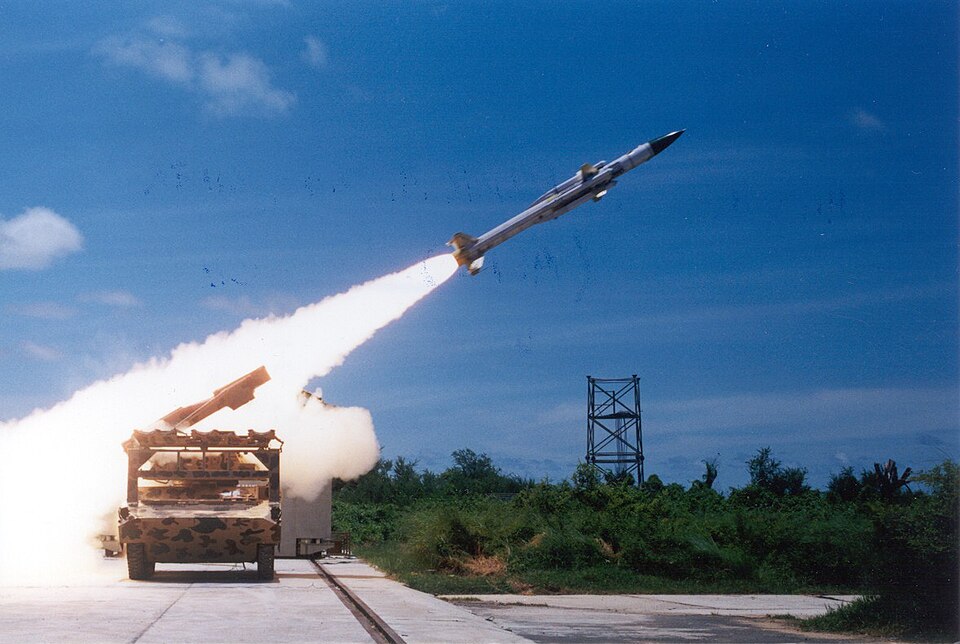
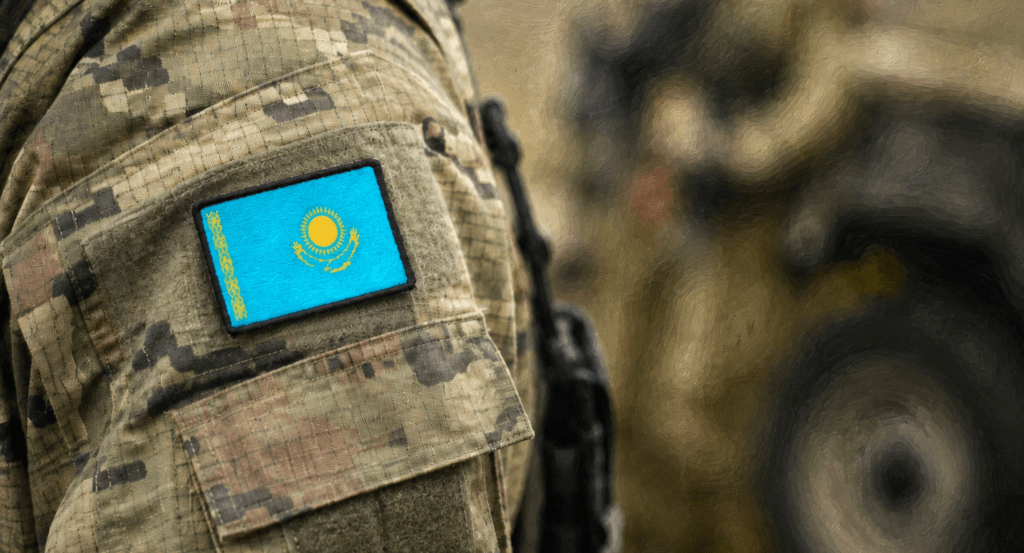
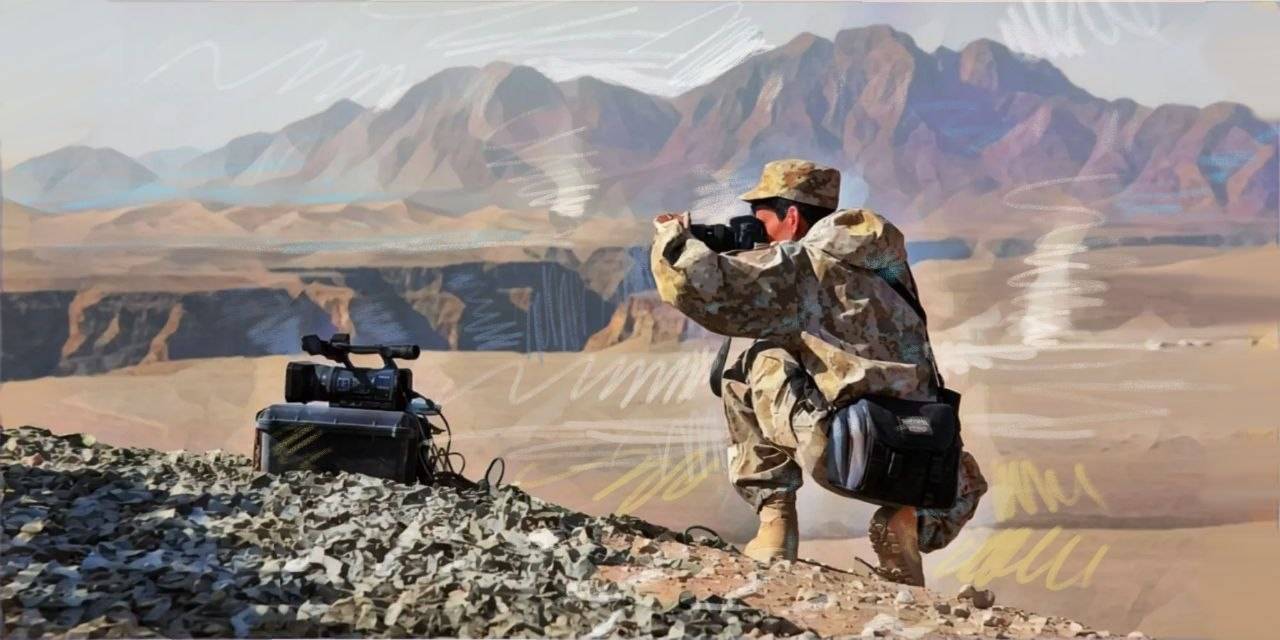
The Frontier 2026 exercises are taking place at the Koktal training ground in southeastern Kazakhstan’s Zhetysu Province. The CSTO’s Rapid Deployment Force is practicing to repel cross-border incursions in mountain and desert terrain.
The exercises come this time as concerns about infiltration by militants in Afghanistan into CIS territory are increasing. Russian Defense Minister Andrei Belousov said on September 8 that Russia is paying special attention to strengthening Tajikistan’s border with Afghanistan.
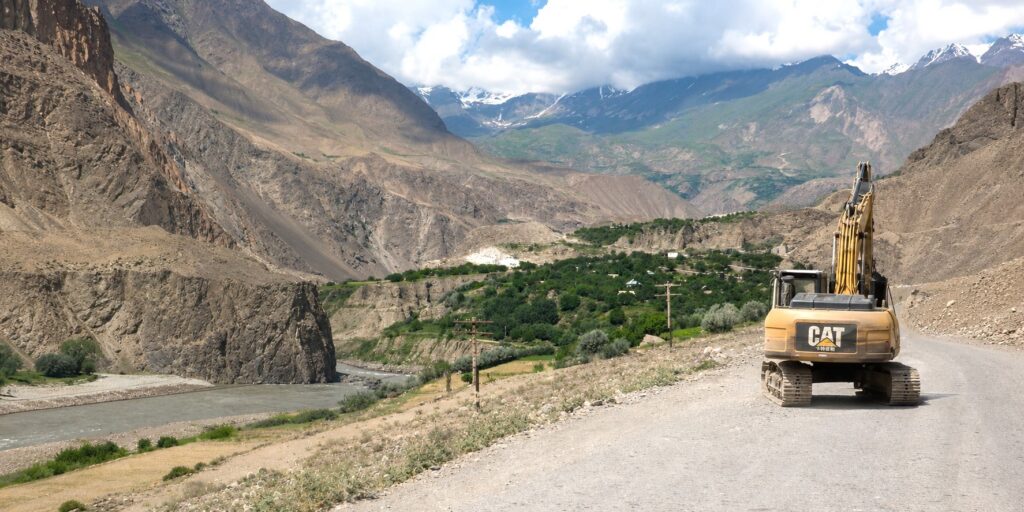
The Tajik authorities have been calling for additional aid for the country’s border forces since a series of attacks from Afghanistan in November 2025 left five Chinese workers in southern Tajikistan dead, followed by an attack in December that killed two Tajik border guards.
Tajikistan has regularly asked for international help in guarding its frontier with Afghanistan since independence in 1991. But after the violence at the end of 2025, the Tajik government appealed especially to its fellow members in the CSTO for increased assistance.
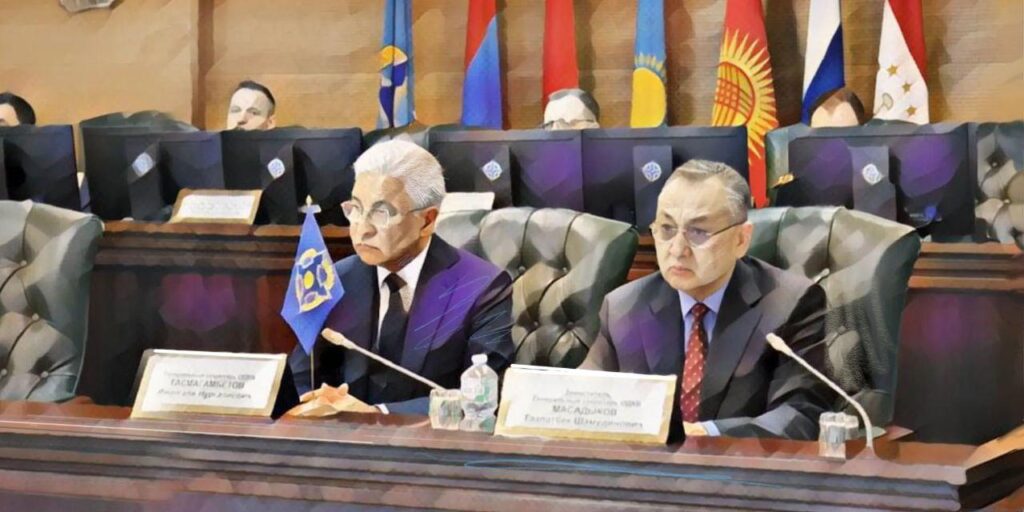
CSTO Secretary General Taalatbek Masadykov said at the end of August that the first shipment of weapons and equipment would be sent to Tajikistan this autumn.
Raison D’être
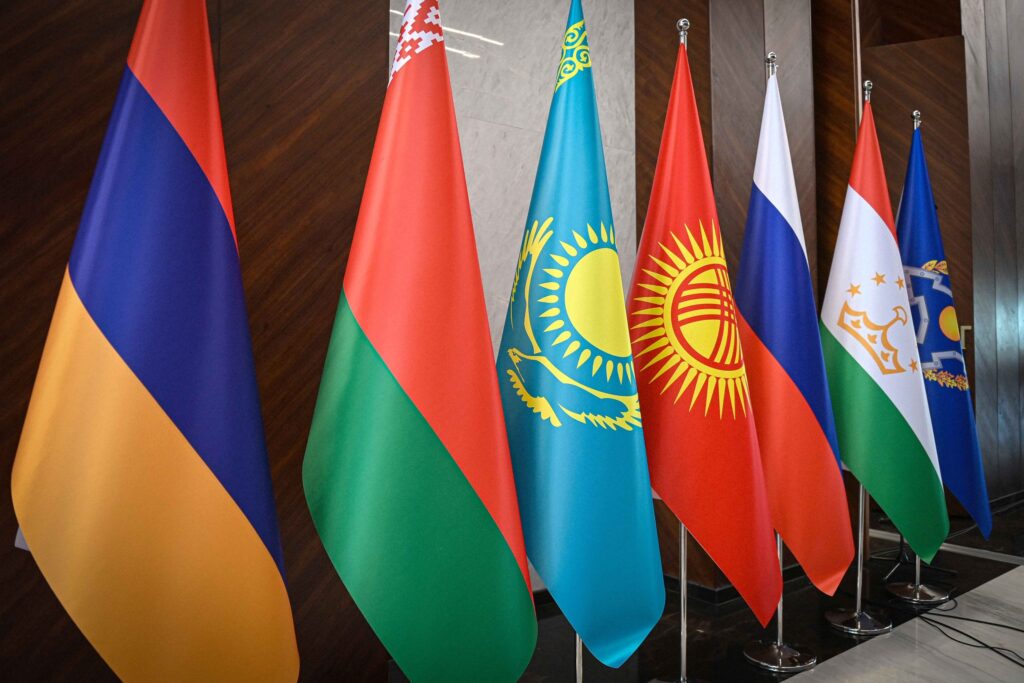
The Collective Security Treaty was signed in Tashkent, Uzbekistan, in 1992 by representatives from Armenia, Kazakhstan, Kyrgyzstan, Russia, Tajikistan, and Uzbekistan. In 1993, Azerbaijan, Belarus, and Georgia joined.
The purpose was simple. If any of the member states was attacked by an external enemy, that state could request aid, including military assistance, from the other members.
In the early 1990s, there were potential enemies for the Treaty members in practically every direction.
The Soviet Union had collapsed in late 1991. There were questions about how the former Communist Bloc countries and their new Western allies might act.
The theocratic regime in Iran was a possible threat to the South Caucasus and Central Asia, and the latter region had unstable Afghanistan to worry about also.
China was a concern for Central Asia and Russia.
Back then, banding together made sense for the nine newly independent states that signed the treaty.
When Azerbaijan, Georgia, and Uzbekistan dropped out in 1999, it appeared the Collective Security Treaty was on the brink of becoming irrelevant.
After Vladimir Putin became Russia’s president, he put a new emphasis on a security bloc within the CIS, and in 2002, the remaining six treaty members signed a new charter.
However, now, in 2026, the list of the CSTO’s potential external threats is greatly reduced. Far from being a security concern, China is now a leading trade partner for Russia, Kazakhstan, Kyrgyzstan, and Tajikistan, and provides military assistance to all four countries.
Iran’s relations with the West remain deeply strained. Iranian-Russian relations are not warm, but they are solid, founded mainly on the two countries having common enemies in the West.
Tajikistan’s ties to Iran draw on their common Persian heritage, despite past diplomatic rifts.
Kazakhstan and Kyrgyzstan have been improving their relations with Iran as those two Central Asian countries seek to expand their trade networks to Turkey, the Middle East, and India. Iran’s role as a transit country in those trade routes provides a basis for warming ties in recent years between Iran and all the Central Asian states.
Iran, Russia, Kazakhstan, Kyrgyzstan, and Tajikistan (along with China) are also members of the Shanghai Cooperation Organization.
However, recent history shows the CSTO is not useful for some members in combating external threats, while it is useful in propping up the governments of member states during times of domestic unrest.
The CSTO did not provide military assistance to member Armenia following Azerbaijan’s attacks on Armenian territory in 2022. That led Armenia to freeze its participation in the CSTO in 2024.
The CSTO did send units to guard key facilities in Kazakhstan during widespread protests and unrest in January 2022. The Kazakh authorities claimed at the time that foreign militants were involved in the turmoil, providing the stated justification for CSTO intervention against an “external” threat.
There was some speculation that Russia could try to invoke the CSTO Charter after the Kremlin launched its full-scale war on Ukraine. But even though Ukraine was later able to launch drones and missiles at facilities on Russian territory, there is no indication the CSTO has any plans to come to Russia’s aid, or that Russia would even request CSTO help.
The Process of Elimination
While Russia might consider countries in Europe, particularly NATO members, to be a potential threat, Central Asia’s relations with Europe are good and only getting better.
The European Union, as a bloc, is Kazakhstan’s leading trade partner and investor. All the Central Asian countries, including CSTO members Kazakhstan, Kyrgyzstan, and Tajikistan, stand to benefit hugely from the continued expansion of the Middle Corridor connecting Europe to China.
So, who does that leave as a potential threat to the CSTO members?
It appears Afghanistan has been left in that role, and even that comes with caveats.
The Taliban were considered a major threat to members of the original Collective Security Treaty in the late 1990s.
When Uzbekistan voiced concern back then about the Taliban’s approach to the Central Asian border, Belarus President Aleksandr Lukashenko said his country would not send even one soldier to defend Central Asia.
Uzbekistan withdrew from the treaty in 1999, later joining the CSTO in 2006 before suspending its membership in 2012.
Since the Taliban returned to power in Afghanistan in August 2021, all the Central Asian states have opened a dialogue with them.
Even Tajikistan, which has been reluctant to engage with the Taliban and continues to warn about threats emanating from Afghanistan, has slowly been establishing lines of communication with the Taliban.
Russia, of course, is the only country so far to officially recognize the Taliban government.
So, the military drills in Koktal are simulating an incursion by militants, with extremist groups currently inside Afghanistan in mind.
There are certainly militant groups inside Afghanistan, and some, such as the Islamic State Khorasan Province (ISKP), represent a threat to all the CSTO countries. Islamic State claimed responsibility for the attack on Moscow’s Crocus City Hall in March 2024 that left more than 140 people dead.
But ISKP is unlikely to mass its forces and stage an incursion into a country neighboring Afghanistan, and Russia already has a military base in Tajikistan.
Tajikistan is the country that has been calling on the CSTO to pay more attention to Afghanistan after the violence in late 2025. But border security involves more than repelling military incursions. Countering narcotics trafficking is also part of the CSTO’s remit.
The CSTO training drills in southeastern Kazakhstan are part of a series of joint exercises the CSTO is conducting this year, and that the organization regularly holds every year. Most of these exercises envision fighting against conventional forces, but they are aimed at hypothetical threats, and militant groups in Afghanistan remain a shared concern.
But as the CSTO conducts its drills in southern Kazakhstan, more relevant than ever is the question: against whom are they preparing their forces?