• KZT/USD = 0.00225
  • TJS/USD = 0.10830
  • UZS/USD = 0.00009
  • TMT/USD = 0.29760
  • KZT/USD = 0.00225
  • TJS/USD = 0.10830
  • UZS/USD = 0.00009
  • TMT/USD = 0.29760
  • KZT/USD = 0.00225
  • TJS/USD = 0.10830
  • UZS/USD = 0.00009
  • TMT/USD = 0.29760
  • KZT/USD = 0.00225
  • TJS/USD = 0.10830
  • UZS/USD = 0.00009
  • TMT/USD = 0.29760
  • KZT/USD = 0.00225
  • TJS/USD = 0.10830
  • UZS/USD = 0.00009
  • TMT/USD = 0.29760
  • KZT/USD = 0.00225
  • TJS/USD = 0.10830
  • UZS/USD = 0.00009
  • TMT/USD = 0.29760
  • KZT/USD = 0.00225
  • TJS/USD = 0.10830
  • UZS/USD = 0.00009
  • TMT/USD = 0.29760
  • KZT/USD = 0.00225
  • TJS/USD = 0.10830
  • UZS/USD = 0.00009
  • TMT/USD = 0.29760
25 September 2026

Our People > Timur Serikuly

Timur Serikuly's Avatar

Contributor

Articles

Interview: Berik Aryn on Kazakhstan’s Role in a Regional Food Reserve

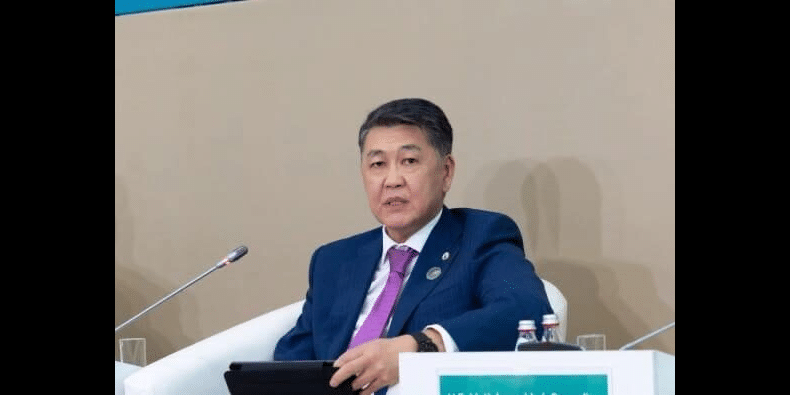
Kazakhstan could anchor a Central Asian food reserve intended to help participating countries respond to shortages without giving up control of their national stocks. The proposal comes from the Astana-based Islamic Organization for Food Security (IOFS), an institution affiliated with the Organization of Islamic Cooperation (OIC). Rather than establish a single supranational stockpile, it would connect existing national reserves through agreed rules for monitoring supplies and releasing food during a crisis. Food security is closely tied to water in Central Asia, where irrigation depends on rivers shared across borders. The five states are already seeking an agreement on regional water management, while climate change is making supplies less predictable. IOFS Director General Berik Aryn, who has led the organization since April 2024, was previously Kazakhstan’s ambassador to Saudi Arabia and permanent representative to the OIC. In an interview with The Times of Central Asia, he explains what must happen before the reserve becomes operational, why Kazakhstan is central to the plan, and how international support for Afghanistan could move from emergency aid toward agricultural recovery. TCA: During periods of severe water scarcity, how should Central Asian states reconcile the competing demands of agriculture, energy, and ecosystems? Should food security guide interstate decisions on water allocation? Berik Aryn: Food security is a fundamental pillar of regional stability and human dignity, and IOFS firmly believes it must be recognized as a core criterion in interstate water allocation decisions, particularly during periods of acute scarcity. However, in the complex landscape of Central Asia, food security cannot be treated in isolation. It is part of an inseparable water-energy-food-ecosystem nexus. To reconcile these competing demands during severe droughts, regional mechanisms must move away from zero-sum competition over water volumes. Instead, the focus must shift toward mutual optimization, safeguarding basic human needs, protecting vital ecological flows, and honoring energy requirements through holistic, cross-sectoral cooperation. To achieve this reconciliation in practice, Central Asian states would benefit from a formal, data-driven regional drought management framework. IOFS advocates for a strategy in which water allocation during crises is guided by real-time hydrological data, transparent information exchange, and joint seasonal forecasting. Rather than asking nations to compromise on their development goals, the solution lies in maximizing water productivity. By investing in modern transboundary irrigation infrastructure, broadly deploying water-saving technologies, including drip irrigation, adopting digital precision agriculture, and transitioning to high-yield, drought-resistant crops, the region can significantly reduce water losses. Headquartered in Astana, IOFS stands ready to mobilize international green investment and facilitate technology transfers to help Central Asian states transform water challenges into a shared opportunity for long-term food security and climate resilience. TCA: IOFS has developed a model for regional food reserves and is considering a pilot involving Central Asian and other OIC states. How close is the initiative to implementation, and what obstacles remain? Aryn: The establishment of the OIC Regional Food Security Reserve represents a flagship institutional milestone for IOFS and is aimed at developing a more flexible and interconnected regional mechanism for responding to food crises....

3 days ago

What Could Come Next in Kazakhstan-South Korea Relations

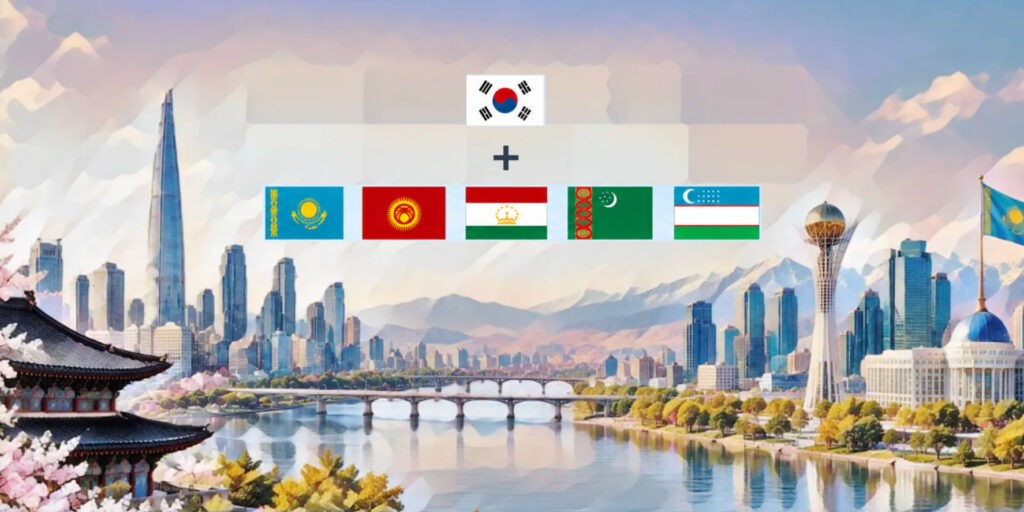
The first Central Asia-Republic of Korea Summit in Seoul on September 16 will elevate South Korea’s multilateral cooperation with the five countries of the region to heads-of-state level. The Korea-Central Asia Cooperation Forum has existed since 2007 but until now has remained primarily a ministerial mechanism. Seoul is now seeking to establish a sustainable multilateral framework at the leaders’ level. The summit’s agenda is broad, with a focus on innovation, prosperity, and connectivity. One of its main outcomes is expected to be the Seoul Declaration, setting out a medium- and long-term vision for cooperation in supply chains, emerging industries, and people-to-people exchanges. The economic agenda is already taking more concrete shape. South Korea wants to connect Central Asia’s mineral resources with its technologies for geological exploration and processing, while expanding cooperation in artificial intelligence, digital technologies, and science. Seoul also sees infrastructure, water resources, climate, and industry as potential areas for new projects. On September 16, about 500 representatives of government and business will gather alongside the five leaders. The business summit should offer the first indication of how much of the broad political agenda can be translated into investment, contracts, and joint production. Don’t Copy the Korean Miracle South Korea’s experience inevitably comes up in discussions about Central Asia’s development. But the economy that enabled Korea’s industrial breakthrough in the second half of the 20th century was built in a very different international and historical environment. Professor German Kim, director of the Institute for Asian Studies at Al-Farabi Kazakh National University and one of the founders of Korean studies in Central Asia, told The Times of Central Asia that South Korea’s development experience should not be treated as a model that can simply be copied. “South Korea’s accelerated modernization took place under completely different historical and international conditions. Kazakhstan should therefore study not so much the Korean model of the past as today’s mechanisms for supporting talented young people, startups, venture capital, and technological entrepreneurship,” Kim said. From this perspective, the value of the Korean experience lies more in individual mechanisms that work – from financing technology businesses to linking universities, research, and industry. Critical Minerals and Joint Production Critical minerals have become one of the central elements of South Korea’s agenda in Central Asia. South Korean industry needs reliable supplies of raw materials, while the region holds significant reserves of metals used in electronics, batteries, energy, and other high-tech industries. Seoul is already discussing projects individually with countries in the region. In August, South Korea’s Ministry of Trade, Industry and Resources held talks with Tajikistan on industrial cooperation and possible critical-mineral projects. The Korean side also proposed making meetings between the industry ministers of South Korea and the five Central Asian countries a regular mechanism. That proposal has since moved forward. On September 14, the six countries held their first C5+1 Industry Ministers’ Meeting in Seoul, agreeing to strengthen cooperation across critical-mineral supply chains. The plan explicitly extends beyond extraction to local refining and smelting, materials processing, and...

1 week ago

What to Expect from the First Central Asia South Korea Summit

The first summit of Central Asian and Republic of Korea leaders will take place in Seoul on September 16-17. Behind the diplomatic novelty of the meeting is a highly practical agenda: South Korea is seeking more resilient sources of critical minerals and new manufacturing partnerships, while Central Asian countries are looking for technologies and investment to process raw materials within the region. The summit continues a trend that has taken shape in recent years. Central Asia is building relations with major external partners through regional formats while preserving national sovereignty and avoiding the creation of supranational institutions. This approach is already being used in relations with the European Union, China, the Gulf states, Japan, and India. Relations with Seoul have long developed along a similar model. The Central Asia – Republic of Korea Cooperation Forum has existed since 2007, but meetings have so far taken place below the level of heads of state. The September summit will elevate this mechanism to the presidential level for the first time. Preparations have been underway for several months. Meetings between representatives of the five Central Asian countries and the Republic of Korea have focused on industrial cooperation, supply chains, critical minerals, artificial intelligence, and digital manufacturing. South Korea’s Ministry of Trade, Industry and Resources has also proposed establishing a regular C5+Korea Industry Ministers’ Meeting. A business summit is expected to take place in Seoul alongside the leaders’ summit. For South Korea, interest in the region is closely tied to the structure of its own economy. The country is a major producer of semiconductors, batteries, automobiles, and electronics, but depends on imports for many types of mineral resources. Central Asia has globally significant reserves and production of uranium, chromite, and antimony, as well as substantial copper resources. The Korean government already describes Central Asia as an important partner in strengthening strategic mineral supply chains. In December 2025, Korea’s Ministry of Trade, Industry and Resources identified critical minerals, energy, and industrial projects among the main areas for cooperation with the region. Preparations for the summit show that Seoul is looking for specific projects in individual countries. With Tajikistan, discussions focus on the country’s gold, silver, and antimony resources. The first Korea-Tajikistan Minerals Forum was held in Seoul in August. With Kyrgyzstan, Seoul is discussing cooperation on antimony and tungsten. With Uzbekistan, talks cover critical minerals, artificial intelligence, digital manufacturing, and industrial complexes. At a roundtable in June, Korean companies operating in Uzbekistan raised concerns with South Korean officials over investment conditions, permits and approvals, and infrastructure. For Kazakhstan, one of the central issues is also the shift from supplying raw materials toward processing them domestically. Kazakhstan’s Deputy Foreign Minister Arman Isagaliyev told The Times of Central Asia that digitalization and artificial intelligence, industrial cooperation, critical minerals, and green energy could become new drivers of cooperation. “We see significant potential in introducing advanced Korean technologies and digital solutions in industry, energy, transport, and urban management,” Isagaliyev said. According to him, cooperation on critical minerals should extend into deeper stages...

3 weeks ago

Opinion: Why Central Asia Cannot Afford to Abandon the Iranian Route

Kazakhstan had barely secured a foothold in Iran’s largest commercial port when renewed military escalation made the southern route risky again. The problem for Central Asia is that Iran is more than a trading partner. For a region without direct access to the open sea, it provides one of the few overland routes to the Persian Gulf and the Indian Ocean. On June 28, Kazakhstan and Iran signed a 27-year build-operate-transfer (BOT) agreement for a Kazakh transport and logistics terminal at Shahid Rajaee Port in Bandar Abbas. The agreement allocates two years for construction and the following 25 for operation. Astana expects the terminal to provide more direct access to markets in the Gulf, South and Southeast Asia, and East Africa. The project almost immediately found itself in a different reality. In July, U.S. strikes hit Iranian railway and coastal infrastructure. The Aq Taqeh Khan bridge on a rail route connecting Iran with Turkmenistan and, further north, with Kazakhstan, was damaged. There was no confirmed halt to Central Asian freight traffic, but military risk was no longer an abstract concern for carriers. That risk has now been compounded by a new U.S. sanctions campaign. On August 24, U.S. Treasury Secretary Scott Bessent launched what Washington calls Operation Economic Outcast, combining direct sanctions with pressure on Iran’s foreign economic partners. The United States said it would set timelines for other countries to shut down economic activity with Iran, while the scope of secondary sanctions was expanded to cover five areas: digital assets, technology, gold, aviation, and shipping. Nearly 60 Iran-linked individuals, entities, and vessels were also sanctioned. The United States has not publicly identified which countries could face penalties first. War and sanctions can make the Iranian route more expensive, slower, and more dangerous. They cannot change geography. Iran gives Central Asia overland access to ports on the Persian Gulf and Gulf of Oman. From Bandar Abbas and Chabahar, cargo can move onward toward India, the Gulf states, and East Africa. Iran also provides a western overland route toward Turkey. This is one of the fundamental differences between the Iranian route and the Middle Corridor, which crosses the Caspian Sea before continuing through Azerbaijan, Georgia, and Turkey. The Middle Corridor requires cargo to move between rail and maritime transport. Iran offers the possibility of a continuous overland chain while also providing access to ports connected to the Indian Ocean. For Kazakhstan, the southern route is already more than a plan. Trade with Iran increased by 26.4% in 2025 to $430.2 million. Freight traffic along the International North-South Transport Corridor reached 3.5 million tons, while rail traffic between Kazakhstan and Iran increased by 69%. It is this expanding transport network that is now exposed to greater military and sanctions risks. There is another factor. A free trade agreement between Iran and the Eurasian Economic Union, which includes Kazakhstan and Kyrgyzstan, entered into force on May 15, 2025. It significantly reduced tariff barriers to trade in goods between the two sides. Uzbekistan offers...

4 weeks ago

Kazakhstan Peace Talks: Basel Al-Haj Jassem on Syria and the South Caucasus

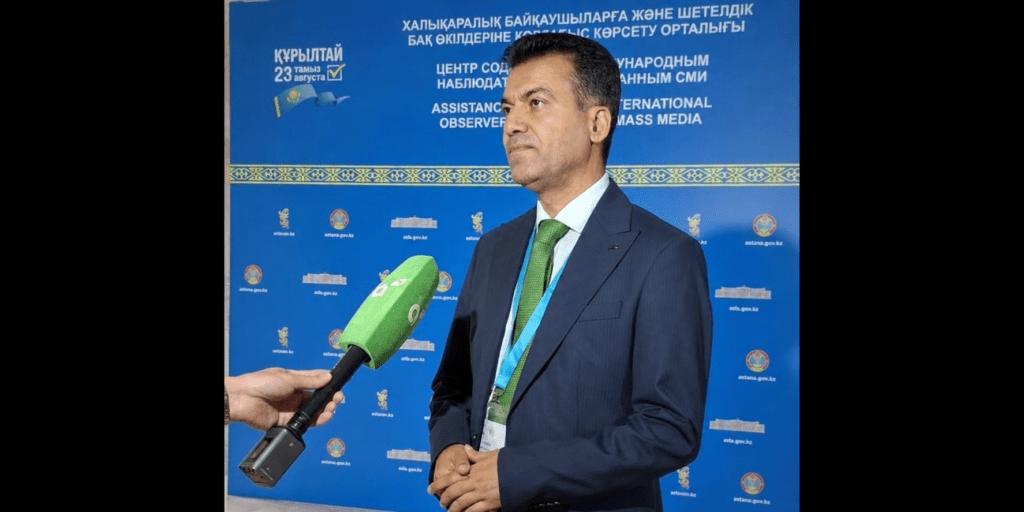
Basel Al-Haj Jassem, a Syrian political adviser and analyst, has worked on the Middle East, the Caucasus, Russia, and Central Asia for many years, with a particular focus on peace processes. He is the author of the Arabic-language book Kazakhstan and the Syrian Astana, which examines Kazakhstan’s role in the Astana Process on Syria. While Al-Haj Jassem was in Kazakhstan as an observer of the first elections to the country’s new unicameral parliament, the Kurultai, The Times of Central Asia spoke with him about Kazakhstan’s international standing and the country’s possible role as a mediator in the South Caucasus and the Middle East. He described the elections as well organized and “a new stage in the development of Kazakhstan’s political system,” although he added that “in a year it will already be possible to give a more concrete assessment of the Kurultai’s work.” TCA: You have known Kazakhstan for many years and have observed the country from different professional perspectives. In your view, how have Kazakhstan’s role and international standing changed over the past two decades? Al-Haj Jassem: I think the changes that have taken place in Kazakhstan over the past two decades go far beyond economic growth or the expansion of foreign relations. The country has gradually moved from being an important Central Asian state to one whose political and diplomatic presence extends beyond its immediate geographical surroundings. Several factors have contributed to this: its geographical position, balanced relations with Russia, China, the West, and the Islamic world, as well as its ability to avoid becoming rigidly aligned with opposing political blocs. But what I consider most important is that Kazakhstan has built a reputation as a state capable of maintaining dialogue with different parties, including those that are sometimes opposed to one another. TCA: One of your books is devoted to Kazakhstan and the Astana Process on Syria. That experience demonstrated Kazakhstan’s potential as a venue for negotiations. What further role could the country play in the Middle East? Al-Haj Jassem: The experience of the Astana Process on Syria was important because it showed that a state that is not itself a direct party to a conflict can provide space for dialogue that cannot be achieved elsewhere. Kazakhstan, of course, was not a party determining decisions on the Syrian issue, but it created a political and diplomatic environment that helped maintain channels of communication between participants who found it difficult to sit at the same table. I think this experience can be developed further, but it is not necessarily a matter of literally reproducing the Astana Process model. Today, the Middle East needs different forms of mediation, including quiet diplomacy, humanitarian initiatives, and support for dialogue between religious and cultural communities. Kazakhstan’s advantage is that it carries no colonial legacy in the region and is not part of traditional intra-Arab rivalries. At the same time, the country maintains good relations with various Arab and Islamic states. This gives Kazakhstan a certain freedom of action, particularly in situations where a settlement requires, above...

1 month ago

Kazakhstan Interfaith Center Chair Gulsana Kozhabay: Astana Congress Must Turn Dialogue into Action

Kazakhstan wants the Astana Congress of the Leaders of World and Traditional Religions to take a more active role in conflict prevention and postwar reconciliation, including through permanent expert engagement and a possible Islamic-Jewish roundtable in Israel in 2027. In an interview with The Times of Central Asia, Gulsana Kozhabay, chair of the board of the International Center for Interfaith and Interreligious Dialogue, explains how the Congress could expand its work between its triennial gatherings while remaining politically neutral. Speaking in a personal capacity, she discusses the limits of religious diplomacy in the conflict in Gaza. She also addresses Kazakhstan’s ambition to develop its own school in this field and explains why she believes interfaith dialogue must increasingly lead to practical action rather than declarations alone. TCA: What role can Kazakhstan’s humanitarian and spiritual diplomacy play in promoting peace, and how can the International Center contribute? Kozhabay: Let us begin by explaining in simple terms what spiritual diplomacy means. In the context of this interview, we primarily understand it as religious diplomacy. It has several layers. It includes relations between different religions, dialogue within a single religion, engagement among the Abrahamic faiths, and work at local, regional and international levels. Religious leaders and organizations can work with states, international organizations and civil society, or act independently. Many researchers believe that we are living in a post-secular period. Jürgen Habermas is one of the principal theorists associated with this approach. Modernization and technological development have clearly not pushed religion to the margins. Religions continue to play an important role in society, culture, and even politics. In many countries, including the Vatican, states in the Middle East, Egypt, Israel, the United States, and Russia, religious leaders command considerable trust, exercise influence in society, and have direct access to very large audiences. Habermas’s work is widely associated with the concept of a post-secular society and the continuing place of religion in public life. Religious diplomacy cannot, of course, prevent or resolve every conflict and crisis, or replace political negotiations. Its main value lies in preserving channels of communication alongside political dialogue, or when that dialogue becomes difficult. Reducing mistrust, countering hate speech, and explaining to the public the value of peace and human life are important elements of religious diplomacy and are reflected in the Astana Peace Declaration 2025. In his ecological encyclical Laudato si’, Pope Francis wrote that religions should engage in dialogue to protect nature, defend the poor, and build networks of respect and fraternity. Kazakhstan has always supported peaceful dialogue and a constructive international agenda. This is one of our strengths. We do not claim the role of a great power and do not seek to impose our decisions on other countries. Kazakhstan acts as a middle power that can build bridges, bring different parties to the same table, and offer neutral venues for dialogue. This is also part of Kazakhstan’s soft power. Kazakhstan is trusted as a state that consistently supports dialogue at the political level and among cultures,...

2 months ago

Central Asia Rethinks Energy Security After the 2026 Fuel Crisis

The summer of 2026 marked a turning point for energy security in Central Asia. In July, drone strikes temporarily halted crude oil receipts and loadings at the Caspian Pipeline Consortium’s (CPC) marine terminal in Novorossiysk. Although CPC resumed normal operations on July 27, the incident exposed the vulnerability of one of the region’s principal export routes to external security risks. Russia, which for decades has been Central Asia’s principal supplier of refined petroleum products, has also faced prolonged pressure in its domestic fuel market. Reduced utilization at some refineries and rising domestic demand have created longer-term challenges. Restrictions on gasoline and diesel exports have added to the pressure, affecting the Russian economy and neighboring states that have traditionally relied on Russian supplies. For three decades, Central Asia’s system for supplying refined fuels remained relatively stable. Russian refineries covered shortages in local markets, providing fuel that was both comparatively affordable and predictable in volume. The events of 2026, however, reaffirmed a basic principle of national security: during large-scale crises, governments tend to prioritize domestic stability over external trade commitments. For Central Asian states, this has prompted a fundamental reassessment of long-established approaches to energy security. Any strategy dependent on a single external supplier ultimately becomes vulnerable to disruptions beyond its control, regardless of their origin. The current crisis has also revealed significant differences in how well prepared the region’s governments are to protect their domestic fuel markets. Kyrgyzstan has proved the most vulnerable. The country consumes around 1.6 million metric tons of fuel annually, with 90-95% of supplies imported from Russia. Faced with a sharp reduction in available supplies during May and June 2026, the Kyrgyz authorities were forced to begin urgent negotiations with alternative suppliers, including Kazakhstan, Uzbekistan, Turkmenistan, Azerbaijan, and Belarus. Uzbekistan has been in a somewhat stronger position. Until recently, Russian companies dominated the country’s imported gasoline market. During the first five months of 2026, Uzbekistan spent more than $1 billion on imports of crude oil and petroleum products, while spending on motor gasoline imports increased by 85.1% compared with the same period a year earlier. Tashkent has responded by prioritizing strategic fuel reserves. Ahead of the coming autumn and winter season, the government has begun building a 120,000-metric-ton reserve of motor gasoline. Kazakhstan, meanwhile, enjoys a considerably higher degree of energy self-sufficiency thanks to its developed refining sector, centered on the modernized refineries in Atyrau, Pavlodar, and Shymkent. It is therefore unsurprising that Bishkek turned first to Astana when seeking emergency fuel supplies. Kazakhstan’s potential to serve as a regional supplier nevertheless has clear limits. The country’s domestic fuel market periodically comes under structural pressure during the spring and autumn agricultural seasons and when planned maintenance is carried out at its refineries. As a result, Astana must balance support for its regional partners with maintaining stability at home. Although Kazakhstan annually agrees with Russia on duty-free import quotas of up to 1.12 million metric tons of Russian petroleum products under the indicative fuel balance mechanism, the current...

2 months ago

Opinion: Kazakhstan’s Demining Expertise Could Provide Boost to Afghanistan

According to the United Nations Office for the Coordination of Humanitarian Affairs (OCHA), Afghanistan remains one of the most heavily mined countries in the world. During the first five months of 2026 alone, 175 people were killed or injured by landmines and unexploded ordnance, with children accounting for approximately 75% of the victims. Behind these figures lies a daily reality of fear: farmers cannot safely cultivate their fields, children cannot walk to school without risk, and road construction equipment cannot reach critical transport routes. In practice, this continues to hinder the development of the entire region. Mine-contaminated land prevents the recovery of agriculture, blocks the construction of roads, complicates the return of displaced populations, and significantly increases the cost of infrastructure projects. According to the Landmine and Cluster Munition Monitor, Afghanistan ranks among the world’s most heavily mined territories, alongside Bosnia and Herzegovina, Cambodia, Ethiopia, Iraq, and Ukraine.  A Barrier to Central and South Asian Integration For Kazakhstan and the other countries of Central Asia, this issue also carries  strategic significance. Without stability in Afghanistan, the implementation of Eurasian transport projects and the expansion of trade links with South Asia become increasingly difficult. Globally, humanitarian demining is no longer viewed simply as a charitable activity. Today, it represents the starting point of any major infrastructure project. Railways cannot be laid, nor can high-voltage transmission lines be built, where the ground itself remains hostile to human activity. Virtually every prospective transport corridor connecting Central Asia with ports on the Indian Ocean passes through Afghan territory, including major projects such as the development of the Trans-Afghan Corridor and the CASA-1000 project electricity project. International experience demonstrates that humanitarian demining in Cambodia, Bosnia and Herzegovina, Croatia, and Azerbaijan created the conditions for economic recovery, the return of displaced populations, and the attraction of foreign investment. From Kazbat’s Experience to a New Humanitarian Mission Unlike most countries in the region, Kazakhstan possesses substantial practical experience in conducting mine-clearance operations. Between 2003 and 2008, Kazakhstan’s military engineering unit, Kazbat, participated in the international mission in Iraq, destroying approximately 4.5 million explosive devices. Initially, Kazakh sappers cleared residential neighborhoods and agricultural land of unexploded ordnance. Later, they expanded their operations to locating and destroying underground and above-ground weapons depots abandoned after the conflict. These operations prevented millions of rounds of ammunition from falling into the hands of terrorist organizations. The mission came at a cost. In January 2005, 29-year-old Captain Kairat Kudabayev was killed when munitions detonated during preparations for disposal, while several other Kazakh servicemen were injured. Kazakh specialists also supplied local communities with purified drinking water and provided medical assistance, demonstrating a comprehensive approach to post-conflict recovery. More than 5,000 Iraqi civilians received medical treatment, while approximately 7,000 cubic meters of drinking water were purified. The expertise Kazakhstan accumulated could now evolve into a civilian-focused mission centered on protecting civilian populations and supporting Afghanistan’s long-term economic recovery. How a New Regional Platform Could Operate Kazakhstan’s international development agency, KazAID, could serve as the national...

2 months ago

Opinion: Middle Powers and the “Voice of the Region” – Is Central Asia Becoming a Coordinated Actor?

Against the backdrop of growing global fragmentation and the weakening of universal international institutions, the role of so-called middle powers is increasing. These are states able to influence regional agendas without possessing great-power status. In this changing system, Central Asia is gradually moving beyond its long-standing image as a geopolitical periphery and is beginning to act more like a region with shared interests. For decades, the region was viewed mainly as a space where the interests of external powers, including Russia, China, the U.S., and others, intersected. Today, that paradigm is beginning to shift. Central Asia is showing greater signs of agency through what may be described as a cluster effect: individually, the countries have limited influence, but collectively they form an important transit hub between Europe and Asia, a growing market, a significant resource base, and a strategic security zone. This creates the conditions for a more coordinated regional position, even if a single regional voice is still emerging rather than fully formed. C5+Azerbaijan as a Foundation for Regional Architecture The institutional foundation of this process is the Central Asian leaders' consultative format, which is now expanding through Azerbaijan's participation. That is turning what was once a C5 dialogue into a looser C5+Azerbaijan, or C6, framework focused on transport, energy, and practical cooperation. Within this framework, the countries of the region are learning to act in a more coordinated manner without supranational pressure. In practice, this process is developing through three main areas. The first is transport and logistics. Azerbaijan's participation has strengthened efforts to make the Middle Corridor more coherent, though the route still faces bottlenecks in capacity, customs coordination, and Caspian crossings. Through tariff coordination, simplified border procedures, and investment in port and rail infrastructure, Central Asia and the Caucasus are increasingly functioning as parts of a single transport artery. That gives the region a faster option for cargo between China and Europe, even if it remains far smaller than traditional maritime routes. Shipping goods via the Suez Canal or the northern route can take between 35 and 45 days, whereas the Middle Corridor can reduce transit times to around 13-21 days under favorable conditions. According to forecasts cited by BCG, shipping volumes along the route could increase three- to fourfold during the current decade. Beyond logistics, the project is creating a new economic framework for the region. Its status as a crossroads is attracting investment in transport hubs and manufacturing facilities along the route, with the potential to turn transit corridors into zones of economic growth. This gives participating countries not only transit revenue but a stronger basis for long-term strategic resilience. The second major area is energy integration, where historical disputes over water and fuel resources are increasingly being supplemented by models of joint development. The Kambarata HPP-1 hydropower project in Kyrgyzstan, being developed with Kazakhstan and Uzbekistan, has created an important precedent for shared management of water and energy interests. The project is expected to support cleaner electricity generation while helping stabilize irrigation flows...

4 months ago

Opinion: The Southern Dimension of the Middle Corridor – Afghanistan’s Role in Eurasia’s New Logistics Landscape

Afghanistan’s integration into the Trans-Caspian International Transport Route (TITR) is extending beyond local logistics and evolving into one of Eurasia’s key geo-economic projects. Amid the global transformation of supply chains, Central Asia has an opportunity to move beyond its role as a transit periphery and become an active participant in shaping new economic corridors, creating a full-fledged “southern dimension” of Eurasian connectivity. Two Routes: Strategic and Operational Two main directions for Afghanistan’s integration into the Eurasian transport system are currently under discussion, each reflecting a distinct development logic: strategic and pragmatic. The “Eastern Branch” (Termez-Mazar-i-Sharif-Kabul-Peshawar) is traditionally viewed as the primary trans-Afghan route. Its key advantage is direct access to the ports of Karachi and Gwadar, providing the shortest connection between Central Asia and the Indian Ocean. At the same time, geography makes the project highly complex. The route passes through the central and eastern regions of Afghanistan, including the Hindu Kush mountain range, where long tunnels and bridges would be required. This would sharply increase construction and maintenance costs, extend implementation timelines, and heighten security and infrastructure risks. According to available estimates, the project could cost around $5 billion and handle 15-20 million tons of cargo annually. However, the lengthy investment cycle and dependence on political stability mean implementation remains a long-term prospect. The “Western Branch” (Turgundi-Herat-Kandahar-Spin Boldak) represents an alternative logistics corridor based on more favorable geography. Western Afghanistan is characterized by predominantly flat, semi-arid terrain, reducing the need for complex engineering structures and allowing the project to be implemented in phases. This significantly lowers capital costs, shortens construction timelines, and reduces infrastructure risks. The western route’s initial capacity is estimated at 7-10 million tons of cargo annually, making it the more realistic option for medium-term planning. An additional advantage is its geo-economic flexibility. Via Herat, the route could be integrated not only southward through Pakistan, but also westward through Iran, providing access to Persian Gulf ports. This would transform it into a multi-directional corridor capable of serving several logistics flows simultaneously. The Eastern Branch, therefore, remains the strategic option offering the shortest route to the ocean but requiring substantial investment and time. The Western Branch, meanwhile, presents a more pragmatic solution: faster to implement and more flexible from a geo-economic standpoint. The Role of Turkmenistan and Kazakhstan in the “Western Maneuver” The implementation of the western trans-Afghan corridor depends on close coordination between two key regional players, Kazakhstan and Turkmenistan, which form the northern foundation of the future route by providing access to the Caspian Sea and, beyond it, global markets. Astana and Ashgabat are effectively creating a new geo-economic framework that could transform Central Asia from an isolated region into a strategic crossroads linking the Caspian Sea with the Indian Ocean. In 2026, Kazakhstan moved toward deeper institutionalization of the initiative, making the route through Herat and Kandahar a government priority. Astana’s strategy is multifaceted. In addition to establishing a permanent interdepartmental commission, Kazakhstan is actively seeking to attract international operators such as the Emirati AD...

4 months ago