• KGS/USD = 0.01144 0%
  • KZT/USD = 0.00210 0%
  • TJS/USD = 0.10528 0.19%
  • UZS/USD = 0.00008 0%
  • TMT/USD = 0.28490 0%
  • KGS/USD = 0.01144 0%
  • KZT/USD = 0.00210 0%
  • TJS/USD = 0.10528 0.19%
  • UZS/USD = 0.00008 0%
  • TMT/USD = 0.28490 0%
  • KGS/USD = 0.01144 0%
  • KZT/USD = 0.00210 0%
  • TJS/USD = 0.10528 0.19%
  • UZS/USD = 0.00008 0%
  • TMT/USD = 0.28490 0%
  • KGS/USD = 0.01144 0%
  • KZT/USD = 0.00210 0%
  • TJS/USD = 0.10528 0.19%
  • UZS/USD = 0.00008 0%
  • TMT/USD = 0.28490 0%
  • KGS/USD = 0.01144 0%
  • KZT/USD = 0.00210 0%
  • TJS/USD = 0.10528 0.19%
  • UZS/USD = 0.00008 0%
  • TMT/USD = 0.28490 0%
  • KGS/USD = 0.01144 0%
  • KZT/USD = 0.00210 0%
  • TJS/USD = 0.10528 0.19%
  • UZS/USD = 0.00008 0%
  • TMT/USD = 0.28490 0%
  • KGS/USD = 0.01144 0%
  • KZT/USD = 0.00210 0%
  • TJS/USD = 0.10528 0.19%
  • UZS/USD = 0.00008 0%
  • TMT/USD = 0.28490 0%
  • KGS/USD = 0.01144 0%
  • KZT/USD = 0.00210 0%
  • TJS/USD = 0.10528 0.19%
  • UZS/USD = 0.00008 0%
  • TMT/USD = 0.28490 0%

Major Kazakh Oil Company Fined Over Fire that Wasn’t Extinguished for 200 Days

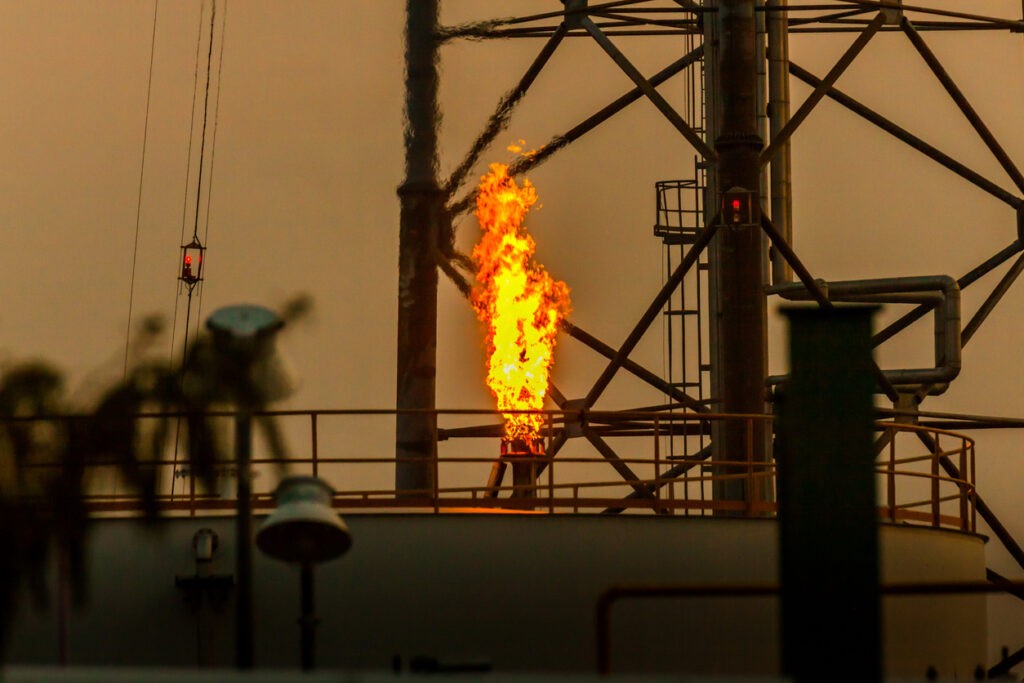
The Buzachi Oil Company has been fined 350 million tenge ($777,536) over a fire at the Karaturun field that burned for 200 days. As a result of a large methane leak at the field in June 2023, natural gas ignited at well number 303.  The fire was finally extinguished on December 25th.

Consequently, representatives from a regional Department of Ecology office conducted an unscheduled inspection of Buzachi Oil LLP, and according to the data gathered, the maximum permissible concentration (MPC) of methane in the air in the vicinity of the field was 480-times higher than normal. Furthermore, the concentration of petroleum products in the soil was 168.13 mg/kg higher than the permissible limit.

According to a since deleted post on petrocouncil.kz, the fire started on June 9th when a gas-water mixture was released during the lifting of the drilling tool and ignited. Members of Parliament subsequently called on the government to terminate the contract with Buzachi Neft and return the field to the state. It transpired that the well had been drilled a year earlier than it should have been – not in 2024, as indicated in the permit, but in May 2023.

“Based on the results of the inspection, the enterprise was issued a prescription on the need to develop a remediation program to eliminate the environmental damage caused, as well as compliance with the norms of emissions into the environment. Four administrative protocols were drawn up. According to preliminary calculations, the fine will amount to more than 350 million tenge,” the Ministry of Ecology and Natural Resources said.

Experts estimate the volume of methane leakage at the field in Mangistau region amounted to 127,000 tons. If these estimates are correct, the methane leak at Karaturun may be the second largest in the history of observed leaks.

Speaking to The Times of Central Asia, environmentalist Timur Yeleusizov said that Kazakhstan needs to open a full-scale inspection of multiple enterprises, hold them accountable, and fine them. Yeleusizov claims that multi-million dollar fines are imposed in theory, but it’s not known how many of them have been levied in practice.

“This is not the first such case. Last year Kazzinc dumped cement dust, then the Ulba River was colored white, and now it is green,” Yeleusizov told TCA. “How long will this continue and how long will our state inactivity last? Recently, there have been frequent cases of waste discharged into water bodies and rivers from which people drink. This problem concerns all the enterprises of Kazakhstan, because the issue of waste processing has not been solved so far. Moreover, companies can [afford to] pay these multi-million dollar fines without harming themselves.”

Yeleusizov also emphasized that the areas where hotels and resorts are located are in great danger, as none of them meet environmental standards. “I’ve repeatedly raised this issue with the Ministry of Ecology and Natural Resources. We are now developing ecological tourism – glamping and camping in specially protected areas. Nevertheless, not a single mountain resort in Kazakhstan meets the standards for the disposal of fecal waste. It all [goes] into rivers, springs, and groundwater. Thus, people are poisoned. We have no specific regulatory legislation that would oblige these resorts to install treatment facilities and remove waste,” he said. “In essence, we are destroying our people in favor of commercial structures.”

Nearly 750,000 Students in Kazakhstan to Get a New School

Three hundred and sixty-nine new schools, accommodating 740,000 students, will open in Kazakhstan in 2024 and 2025, the minister for education Gani Beisembayev said at a February 20th government meeting about the “Comfortable School” project. 

The minister added that 163 of these schools will be built in rural areas, and 217 of them will open their doors this year.

The new schools will be constructed using only domestically produced building materials, and all furniture will be purchased from Kazakh companies. 

The schools will be equipped with modern equipment, and increased security will be ensured with advanced technical means. They will also provide a barrier-free environment for children with special educational needs.

Prime minister Olzhas Bektenov, who chaired the meeting, emphasized that the “Comfortable School” project should resolve the problem of overcrowded schools, and replace old schools that have fallen into disrepair.

Eco-Activists Tackle Dust Storms on Karakalpakstan’s Aral Sea

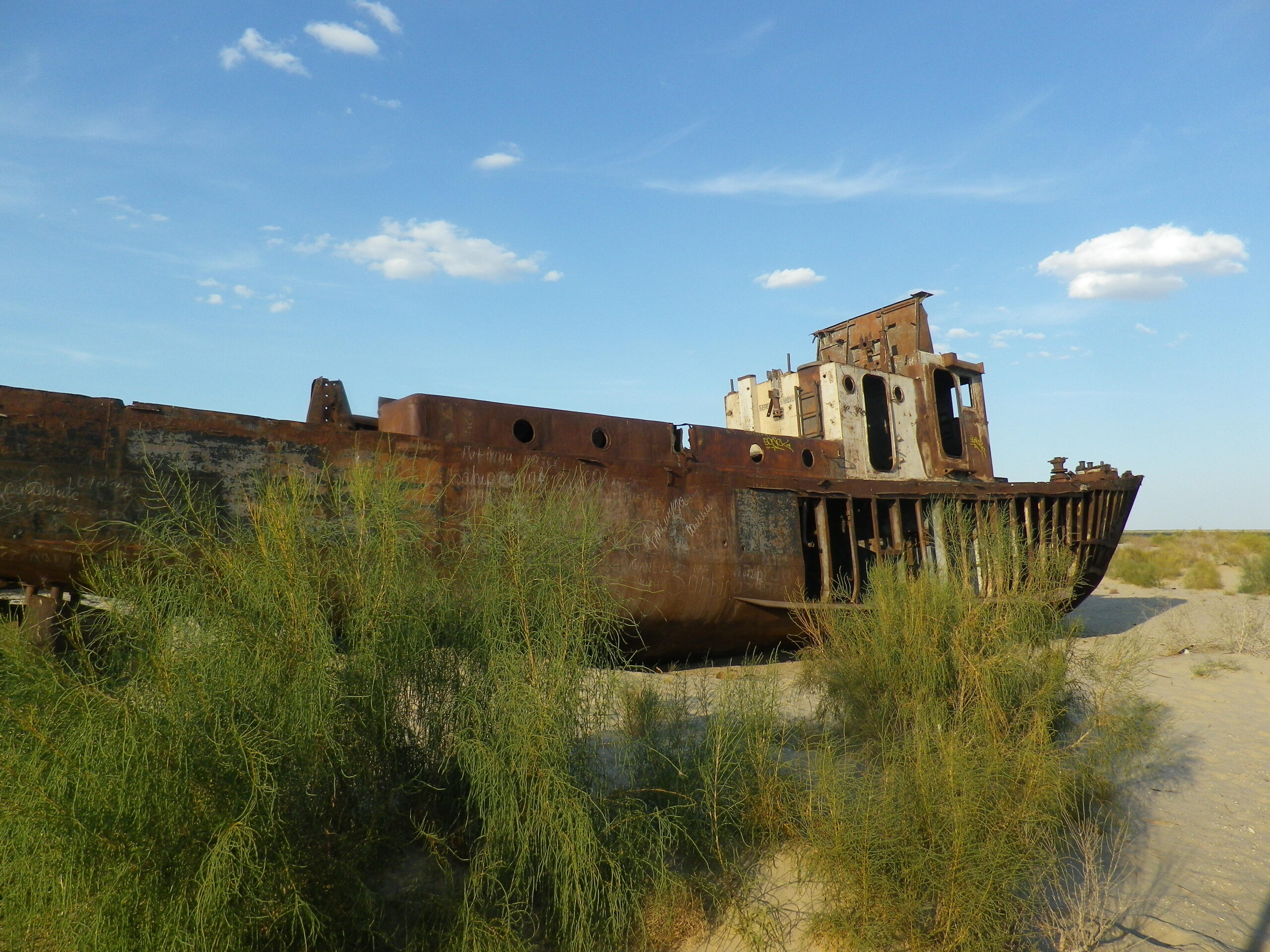
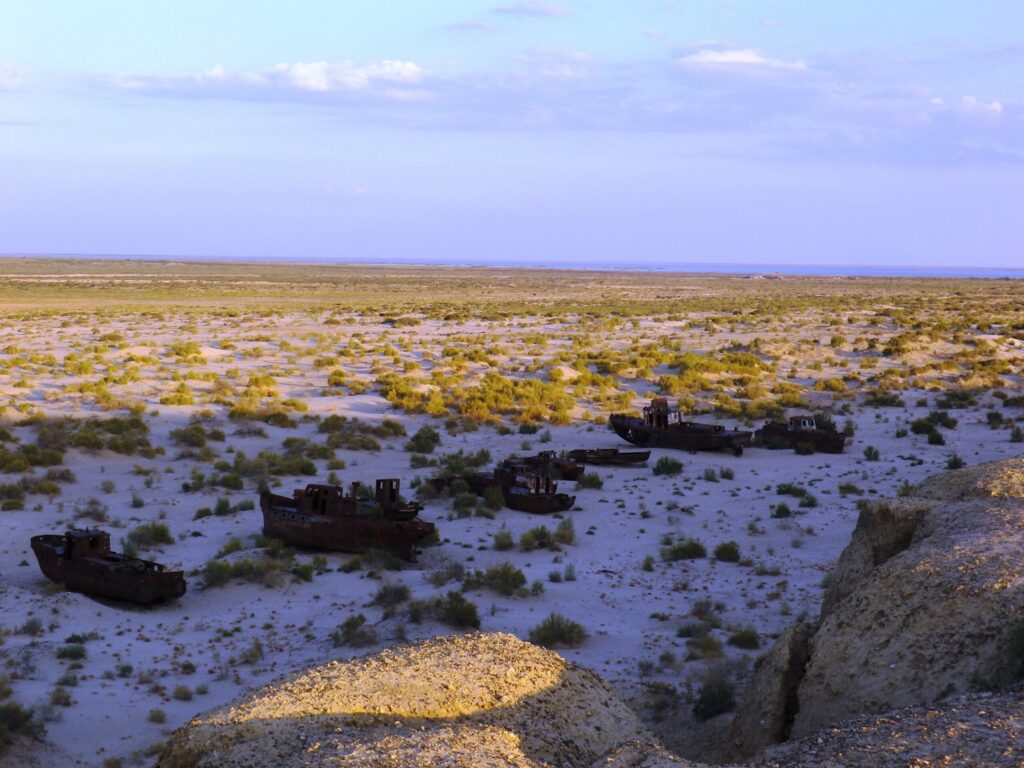
Forestry workers and ecological activists in Uzbekistan’s northwestern Karakalpakstan region have begun planting desert plants on dried up sections of the Aral Sea. 

Salt and dust carried in the wind cause significant damage to areas adjacent to the Aral Sea and their inhabitants. Every year more than 100 million tons of salt, dust and sand are blown from the bottom of the former Aral Sea and mix into the air. 

Up until the late-1990s, the land surrounding the Aral Sea was still cotton fields; today, it’s largely an expanse of salinized grey emptiness. The desiccation of the landscape has led to these vast toxic dust-storms that ravage around 1.5 million square kilometers. Spreading nitrates and carcinogens, these storms – visible from space – used to occur once every five years, but now strike ten times a year.

Once a thriving agricultural center, Karakalpakstan, home to the remaining section of the so-called Large Aral Sea, is now one of the sickest places on Earth. Respiratory illness, typhoid, tuberculosis and cancers are rife, and the region has the highest infant mortality rate in the former USSR.

“This year we plan to create green plantations in the most vulnerable places, where the winds with salt and sand come from,” said Zinovy Novitsky, a project manager from the Research Institute of the State Forestry Committee. “We plan to plant trees on 150-200,000 hectares. The country is introducing an effective policy to combat this problem.” 

Between 2018 and 2023, 1.7 million hectares of forests were planted on the bottom of what used to be the Aral Sea. To date, forestry enterprises have collected and prepared for sowing 192 tons of desert plant seeds, including 71 tons of saxaul seeds.

Similar plans are being undertaken across the border in Kazakhstan, where, according to the International Fund for saving the Aral Sea in the Republic of Kazakhstan, the so called “Green Aral Sea” being created will make a massive contribution to the process of achieving carbon neutrality. “One saxaul retains up to 4 tons of sand, 1 hectare of four-year-old saxaul absorbs 1,158.2 kg of carbon dioxide and releases 835.4 kg of oxygen per year, [whilst] the shrubby plant, salsola richteri kar absorbs 1,547.8 kg of carbon dioxide and releases 1,116.4 kg of oxygen per hectare. Accordingly, 1.1 million hectares will consume about 1.3 million tons of carbon dioxide.”

Kazakhstan Receives $46 Million Grant From World Bank’s Pandemic Fund

An official ceremony was held in Astana with the Ministry of Health of Kazakhstan, UN Resident Coordinator in Kazakhstan, Mikael Friberg-Storey, Executive Director of the Pandemic Fund, Priya Basu, representative of the World Health Organization (WHO), Skender Sila, and representatives of diplomatic missions in attandance, according to the press service of the Ministry of Health of Kazakhstan.

Recently the Ministry of Health of Kazakhstan and the WHO signed an agreement for a grant of $46 million. The terms provide Kazakhstan with a country grant in the amount of $19 million, and multi-country grant in the amount of $27 million for three years.

Aside from Kazakhstan, 35 countries of the WHO European Region received grant funding for the development of medicines and healthcare systems. In total, according to the World Bank, the Pandemic Control Fund received 179 applications from 133 countries around the world. About 30% of the grant funds went to projects from countries in Africa.

The specialized agency said that this money will be used to improve the healthcare system in Kazakhstan, namely the development of epidemiological surveillance, laboratory security, border control, early detection, and response and training of medical personnel.
The WHO’s country office in Astana will oversee the implementation of the grant in Kazakhstan and provide general technical support to the Ministry of Health.

The Pandemic Fund was established in September 2022. It’s considered to be the first multilateral financing mechanism to provide long-term, grant-based financial assistance to low- and middle-income countries to improve their preparedness for future pandemics. By the middle of last year, the fund had raised $2 billion in seed capital from 25 nations and philanthropic organizations.

China Replaces Russia as Kazakhstan’s Biggest Trade Partner

In 2023, China became Kazakhstan’s top trading partner, relegating Russia to second place. This is according to data from the Ministry of Trade and Integration of Kazakhstan, which summarized last year’s foreign trade data.

The main importers of Kazakhstani products were China, Russia and Italy. The Russian Federation held the top spot in 2022. The total trade volume grew in 2023 to $139.8bn. Trade with China amounted to $31.5bn, with Russia — $26bn, with Italy — $16.1bn, and South Korea and Turkey — $6bn apiece.

Last year Kazakhstan’s export markets totaled 135, and the number of traded commodity items was almost 4,000. Crude oil and petroleum products were the top exports ($43.4bn), followed by industrial goods ($9.8bn), non-precious metals ($9.6bn), agro-industrial goods ($5.4bn), ores ($4.9bn), uranium ($3.4bn), and natural gas ($2.1bn). At the same time, Kazakhstan imported equipment and electrical machinery more than anything else ($15.5bn), followed by motor vehicles and auto parts ($7.8bn), non-precious metals ($5.6bn), and food and textiles ($4.8bn each).

In 2023 Kazakhstan increased non-resource exports to its East Asian trade partners: to Vietnam by 64%, to Hong Kong by 34%, to South Korea by 30%, and to China by 10%.

U.S. Company Takes Over Kazakh Locomotive Plant

The American company Wabtec has exercised its right to purchase the 50% stake in JSC “Locomotive Kurastyru Zauyty” that it didn’t already own for $81m. In doing so Wabtec has become the full owner of the enterprise.

Separately, Kazakhstan’s national railway company, Kazakhstan Temir Zholy, plans to upgrade 15% of its locomotive fleet by borrowing $900m from U.S. lender Citibank to buy 240 Wabtec locomotives.

Ahead of the deal, Wabtec’s CEO Rafael Santana traveled to Kazakhstan to meet with the country’s president, Kassym-Jomart Tokayev. The meeting discussed important issues concerning the prospects of cooperation between Kazakhstan and the American company, as well as the process of further refurbishments and improvements to Kazakhstan’s railroad industry.