• KGS/USD = 0.01144 0%
  • KZT/USD = 0.00218 0%
  • TJS/USD = 0.10610 -0.09%
  • UZS/USD = 0.00008 0%
  • TMT/USD = 0.28530 0%
  • KGS/USD = 0.01144 0%
  • KZT/USD = 0.00218 0%
  • TJS/USD = 0.10610 -0.09%
  • UZS/USD = 0.00008 0%
  • TMT/USD = 0.28530 0%
  • KGS/USD = 0.01144 0%
  • KZT/USD = 0.00218 0%
  • TJS/USD = 0.10610 -0.09%
  • UZS/USD = 0.00008 0%
  • TMT/USD = 0.28530 0%
  • KGS/USD = 0.01144 0%
  • KZT/USD = 0.00218 0%
  • TJS/USD = 0.10610 -0.09%
  • UZS/USD = 0.00008 0%
  • TMT/USD = 0.28530 0%
  • KGS/USD = 0.01144 0%
  • KZT/USD = 0.00218 0%
  • TJS/USD = 0.10610 -0.09%
  • UZS/USD = 0.00008 0%
  • TMT/USD = 0.28530 0%
  • KGS/USD = 0.01144 0%
  • KZT/USD = 0.00218 0%
  • TJS/USD = 0.10610 -0.09%
  • UZS/USD = 0.00008 0%
  • TMT/USD = 0.28530 0%
  • KGS/USD = 0.01144 0%
  • KZT/USD = 0.00218 0%
  • TJS/USD = 0.10610 -0.09%
  • UZS/USD = 0.00008 0%
  • TMT/USD = 0.28530 0%
  • KGS/USD = 0.01144 0%
  • KZT/USD = 0.00218 0%
  • TJS/USD = 0.10610 -0.09%
  • UZS/USD = 0.00008 0%
  • TMT/USD = 0.28530 0%

Kazakhstan Receives $46 Million Grant From World Bank’s Pandemic Fund

An official ceremony was held in Astana with the Ministry of Health of Kazakhstan, UN Resident Coordinator in Kazakhstan, Mikael Friberg-Storey, Executive Director of the Pandemic Fund, Priya Basu, representative of the World Health Organization (WHO), Skender Sila, and representatives of diplomatic missions in attandance, according to the press service of the Ministry of Health of Kazakhstan.

Recently the Ministry of Health of Kazakhstan and the WHO signed an agreement for a grant of $46 million. The terms provide Kazakhstan with a country grant in the amount of $19 million, and multi-country grant in the amount of $27 million for three years.

Aside from Kazakhstan, 35 countries of the WHO European Region received grant funding for the development of medicines and healthcare systems. In total, according to the World Bank, the Pandemic Control Fund received 179 applications from 133 countries around the world. About 30% of the grant funds went to projects from countries in Africa.

The specialized agency said that this money will be used to improve the healthcare system in Kazakhstan, namely the development of epidemiological surveillance, laboratory security, border control, early detection, and response and training of medical personnel.
The WHO’s country office in Astana will oversee the implementation of the grant in Kazakhstan and provide general technical support to the Ministry of Health.

The Pandemic Fund was established in September 2022. It’s considered to be the first multilateral financing mechanism to provide long-term, grant-based financial assistance to low- and middle-income countries to improve their preparedness for future pandemics. By the middle of last year, the fund had raised $2 billion in seed capital from 25 nations and philanthropic organizations.

China Replaces Russia as Kazakhstan’s Biggest Trade Partner

In 2023, China became Kazakhstan’s top trading partner, relegating Russia to second place. This is according to data from the Ministry of Trade and Integration of Kazakhstan, which summarized last year’s foreign trade data.

The main importers of Kazakhstani products were China, Russia and Italy. The Russian Federation held the top spot in 2022. The total trade volume grew in 2023 to $139.8bn. Trade with China amounted to $31.5bn, with Russia — $26bn, with Italy — $16.1bn, and South Korea and Turkey — $6bn apiece.

Last year Kazakhstan’s export markets totaled 135, and the number of traded commodity items was almost 4,000. Crude oil and petroleum products were the top exports ($43.4bn), followed by industrial goods ($9.8bn), non-precious metals ($9.6bn), agro-industrial goods ($5.4bn), ores ($4.9bn), uranium ($3.4bn), and natural gas ($2.1bn). At the same time, Kazakhstan imported equipment and electrical machinery more than anything else ($15.5bn), followed by motor vehicles and auto parts ($7.8bn), non-precious metals ($5.6bn), and food and textiles ($4.8bn each).

In 2023 Kazakhstan increased non-resource exports to its East Asian trade partners: to Vietnam by 64%, to Hong Kong by 34%, to South Korea by 30%, and to China by 10%.

U.S. Company Takes Over Kazakh Locomotive Plant

The American company Wabtec has exercised its right to purchase the 50% stake in JSC “Locomotive Kurastyru Zauyty” that it didn’t already own for $81m. In doing so Wabtec has become the full owner of the enterprise.

Separately, Kazakhstan’s national railway company, Kazakhstan Temir Zholy, plans to upgrade 15% of its locomotive fleet by borrowing $900m from U.S. lender Citibank to buy 240 Wabtec locomotives.

Ahead of the deal, Wabtec’s CEO Rafael Santana traveled to Kazakhstan to meet with the country’s president, Kassym-Jomart Tokayev. The meeting discussed important issues concerning the prospects of cooperation between Kazakhstan and the American company, as well as the process of further refurbishments and improvements to Kazakhstan’s railroad industry.

Uzbekistan Ranks First in Central Asia in Number of Marriages and Last in Divorces

The Commonwealth of Independent States (CIS) Interstate Statistical Committee has published its compendium for 2022 on its website.
Getting acquainted with the statistics of marriages and divorces of the collection, one sees that in 2022, there were 8.4 marriages and 1.4 divorces for every 1,000 people in Uzbekistan. The marriage indicator is 6.5 in Kazakhstan, and there were 2.3 divorces per 1,000; in Kyrgyzstan the data indicates 7.0 marriages and 1.8 divorces.

Also of note was data on the intensity of internal migration, with Kazakhstan leading in this category with 41.3 per 1,000 people moving internally in 2022. In Kyrgyzstan and Uzbekistan, the indicator was 6.0, respectively. Tajikistan’s data for 2021-2022 is not provided; the country showed 3.7 results per 1,000 people for 2020.

At the same time, the State Statistics Committee of Uzbekistan reports that in 2023, there were 283,800 marriages and 49,200 divorces in the nation. In Kazakhstan, 90,300 marriages were registered between January and September of 2023, an 8.1% decrease from the same period in 2022. Based on the data that was submitted, there were 12,400 divorces in the first nine months of last year, and also an 8.1% decrease in divorces year-on-year.

In Kyrgyzstan, 12,552 couples filed for divorce in 2023, while 45,495 marriages were registered before the law.

Statistics for Tajikistan in 2021 (data for 2022 isn’t yet available) showed that there were 7.6 marriages and 1.4 divorces per thousand. In 2023, 76,444 marriages and 10,298 divorces were officially registered.

The statistical collection also includes data on these nations’ populations, rates of illness and disability, educational attainment and cultural practices, economic activity, the material and housing circumstances of the populace, the environment, and crime.

EBRD and Shinhan Bank Upgrade Almaty’s Atakent Conference Hub

The European Bank for Reconstruction and Development (EBRD) and Shinhan Bank Kazakhstan are financing an ambitious upgrade of the Atakent Business Cooperation Centre in Almaty, to help Central Asia’s leading conference hub build world-class sports facilities. 

The EBRD on February 19th announced it will share half of the risk of a KZT 3bn ($6.6m) loan provided by SBK, a fully owned subsidiary of Shinhan Bank Korea, to Atakent under the risk-sharing agreement between the two banks. The first risk-sharing transaction between the EBRD and SBK will finance the construction of a new sports and health facility, which will allow the Atakent hub to host national and international sports events. 

The new sports complex will have a modern gym, various indoor and outdoor training facilities, two 25-metre swimming pools, and world-class arenas for a broad range of sport activities. The new facility will be open to professional athletes and the general public.

The building – the construction of which is being supported by a $172,200 grant under the EBRD’s Resource Efficiency Transformation Program, funded by the Global Environment Facility Special Fund – will meet class A international energy efficiency standards. The grant will help introduce energy-efficient solutions, including LED lighting, insulation, and modern heating and cooling equipment.

Central Asians Continue Working in South Korea Despite Legal Issues

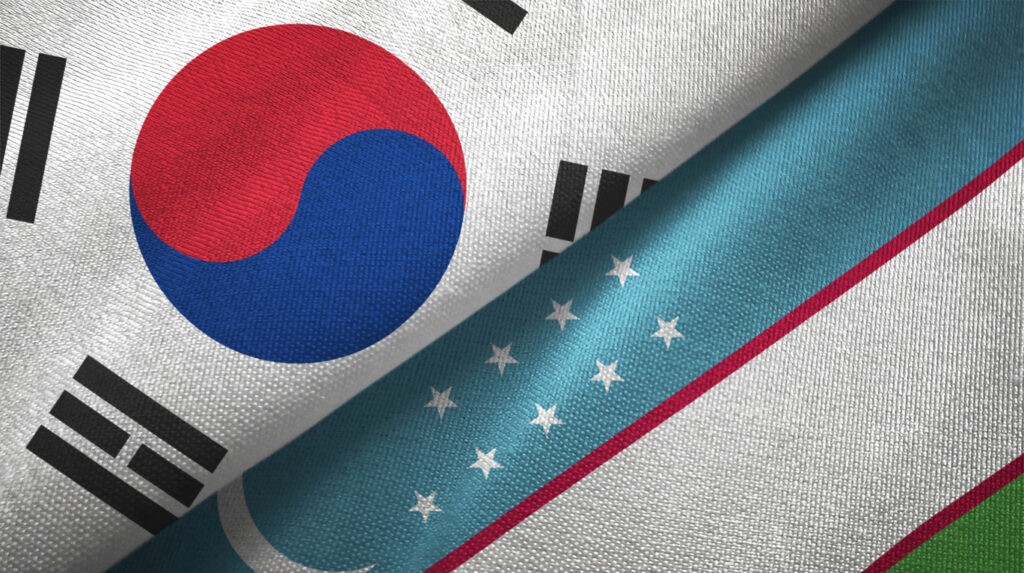
The authorities in the Republic of Korea have offered an option to citizens of Uzbekistan who are in the country illegally to return home without facing legal repercussions. To do this, they must voluntarily leave South Korea by February 29th to avoid being subject to deportation rules and be able to return legally in the future.

According to the Agency for External Labor Migration of Uzbekistan, illegal migrants can apply for voluntary departure with the immigration service of Korea up until three working days before the expected date of departure. Applicants need to present their passport and an airline ticket. The service will then issue the migrant an identity card, with which Uzbekistani nationals will be able to return to their home country without hindrance.

South Korea is one of the most popular destinations for Uzbeks, both for work and studies, with Uzbeks occupy fifth place by size of foreign diaspora in the country and numbering more than 69,000. Among them are a large number who are in Korea illegally; according to this indicator, Uzbekistan ranks third. The most popular scheme involves obtaining a D-4 visa, which is granted to foreign citizens who study the Korean language. Having received this and reached the Korean peninsula, citizens of Uzbekistan then start working and stay in the country illegally.

In recent years, the Government of Uzbekistan has established regulations for legal and safe labor migration to South Korea, and at the start of 2024, the republic announced its intention to attract 100,000 Uzbeks to work in the country. Workers are required in sectors such as manufacturing, agriculture, services, and construction. To enter the South Korean workforce legally, Uzbeks need to pass language qualification exams and interviews.

Labor migration to South Korea is also well established in neighboring Kyrgyzstan. Over the past 16 years, 5,000 Kyrgyz have been employed. Citizens of Kyrgyzstan can work there under a contract for four years and nine months, and receive more $2,000 per month. This year, Korea has allocated a quota for labor migrants in the amount of 3,300 people – an increase of 18% on 2023.

By contrast, the issue of labor migration to South Korea from Kazakhstan is still at the negotiation stage. If the parties reach an agreement, Kazakhs will be able to work in Korea for three years – provided they successfully pass the language and professional tests. However, the lack of an agreement does not stop those who wish to earn money in Korea: according to the immigration service of Korea, since the beginning of 2023 about 7,000 Kazakh citizens have been staying in the country without labor visas.

The number of companies interested in hiring illegal migrants in South Korea is constantly expanding for one simple reason: it’s profitable. Migrants are not protected in any way in case of labor disputes, and they earn much lower wages than legal workers. Accordingly, the number of migrants who die working in dangerous industries is also increasing. From 2019 to 2022 alone, 61 Kazakh citizens died in South Korea due to non-compliance with workplace safety and sanitation regulations.