• KGS/USD = 0.01144 0%
  • KZT/USD = 0.00192 -0%
  • TJS/USD = 0.10849 0.37%
  • UZS/USD = 0.00008 0%
  • TMT/USD = 0.28571 0.28%
  • KGS/USD = 0.01144 0%
  • KZT/USD = 0.00192 -0%
  • TJS/USD = 0.10849 0.37%
  • UZS/USD = 0.00008 0%
  • TMT/USD = 0.28571 0.28%
  • KGS/USD = 0.01144 0%
  • KZT/USD = 0.00192 -0%
  • TJS/USD = 0.10849 0.37%
  • UZS/USD = 0.00008 0%
  • TMT/USD = 0.28571 0.28%
  • KGS/USD = 0.01144 0%
  • KZT/USD = 0.00192 -0%
  • TJS/USD = 0.10849 0.37%
  • UZS/USD = 0.00008 0%
  • TMT/USD = 0.28571 0.28%
  • KGS/USD = 0.01144 0%
  • KZT/USD = 0.00192 -0%
  • TJS/USD = 0.10849 0.37%
  • UZS/USD = 0.00008 0%
  • TMT/USD = 0.28571 0.28%
  • KGS/USD = 0.01144 0%
  • KZT/USD = 0.00192 -0%
  • TJS/USD = 0.10849 0.37%
  • UZS/USD = 0.00008 0%
  • TMT/USD = 0.28571 0.28%
  • KGS/USD = 0.01144 0%
  • KZT/USD = 0.00192 -0%
  • TJS/USD = 0.10849 0.37%
  • UZS/USD = 0.00008 0%
  • TMT/USD = 0.28571 0.28%
  • KGS/USD = 0.01144 0%
  • KZT/USD = 0.00192 -0%
  • TJS/USD = 0.10849 0.37%
  • UZS/USD = 0.00008 0%
  • TMT/USD = 0.28571 0.28%
11 December 2025

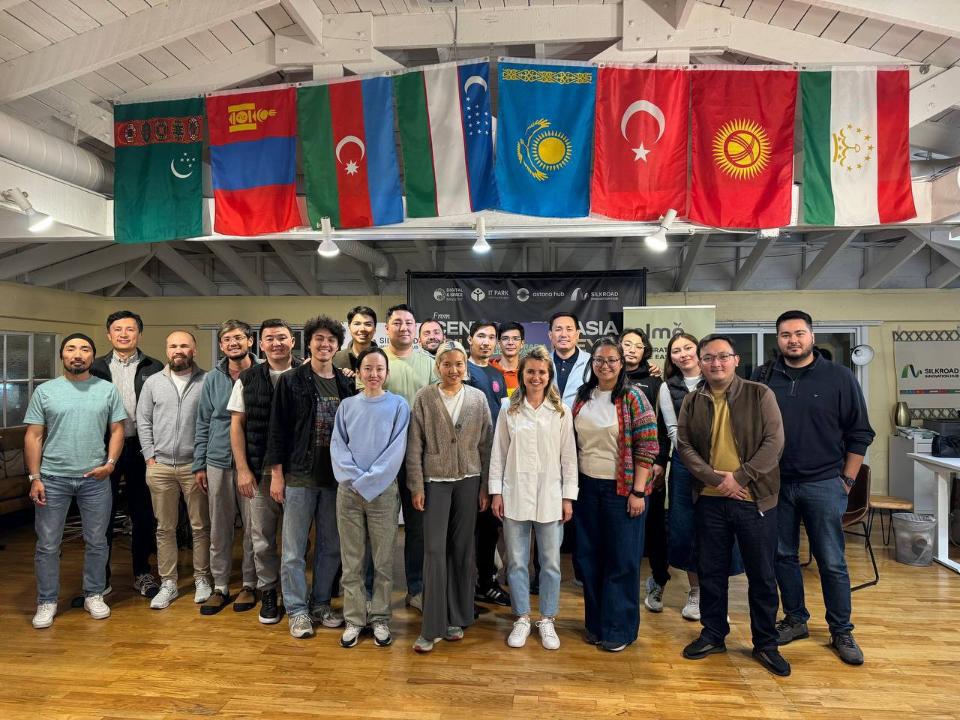
24 Central Eurasian Startups Join Silicon Valley Programs

This fall, 24 startups from Central Eurasia and other regions will join the AlchemistX and Silicon Valley Residency programs, set to begin on September 3. The selected teams will gain direct access to the U.S. venture ecosystem, top investors, and leading technology companies.

In 2025, a total of 225 startups from 20 countries applied, but only 24 were selected. Of these, 10 teams from Kazakhstan and Uzbekistan were accepted into the AlchemistX program, while 14 others, representing Qatar, the U.S., Singapore, Georgia, and Mongolia, joined the Silicon Valley Residency.

“AlchemistX & Silicon Valley Residency is a strategic corridor linking Central Eurasia with Silicon Valley,” said Kazakhstan’s Minister of Digital Development, Zhaslan Madiev. He highlighted the importance of tangible results, noting that in 2024, 22 participating startups generated $380,000 in revenue within four months and secured $1.4 million in funding.

Over the course of the four-month program, participants will receive mentorship from venture partners, attend workshops on U.S. market entry, and pitch their startups to investors at Demo Day. Teams will also have the opportunity to register their companies in the U.S. and become part of the Silkroad Innovation Hub, Kazakhstan’s official innovation outpost in Silicon Valley.

“Silkroad Innovation Hub was created as a bridge between Central Eurasia and Silicon Valley, and today we see this mission becoming a reality,” said Asset Abdualiyev, the hub’s founder.

The programs are organized by Astana Hub in partnership with IT Park Uzbekistan, Silkroad Innovation Hub, and Alchemist Accelerator, with the support of the digital development ministries of Kazakhstan and Uzbekistan, as well as regional venture funds.

The participation of Kazakh and Uzbek startups in Silicon Valley underscores Central Eurasia’s growing presence on the global tech stage and offers new pathways for integration into the international innovation economy.

At the first Central Eurasia at Silicon Valley conference held in October 2024, industry leaders projected that the region could give rise to major global IT companies within the next 10 to 15 years.

Organizers cite the region’s untapped potential: a population of over 100 million, an average age of 27, and around 200,000 STEM graduates each year. With a maturing startup ecosystem, active universities, growing venture capital networks, and an international presence in Silicon Valley, Central Eurasia is poised to become a new tech frontier.


World Bank Warns of Slowing Tajikistan Economy

Tajikistan’s economic growth may slow in the coming years due to mounting foreign policy and regional risks, according to a new report from the World Bank. 

Vulnerability to External Shocks

The report highlights several external vulnerabilities that could impact Tajikistan’s economy. These include shifts in Russia’s migration policies, heightened global instability, and ongoing armed conflicts. 

“Tighter migration policies and restrictions on Tajik workers in Russia threaten to significantly reduce remittance flows, leading to lower economic growth, increased poverty, and worsening fiscal and external balances,” the World Bank stated.

Growing global protectionism is also expected to raise Tajikistan’s foreign trade costs. The report notes that recent U.S. tariff increases on imports from several of Dushanbe’s key trading partners have triggered retaliatory measures from countries like China. These developments could drive up import costs and intensify logistical pressures.

Additionally, volatility in global commodity prices is expected to impact Tajik exports. While falling oil and raw material prices could reduce export earnings, especially for aluminum, zinc, and ores, high global gold prices in 2025 may provide a partial offset through increased revenues.

Impact of Regional Conflicts

The World Bank also warns that ongoing conflicts in Ukraine and the Middle East could further disrupt global supply chains, raising energy and logistics costs. These challenges would translate into higher import prices for Tajikistan.

Conversely, the report suggests that a potential easing of sanctions and normalization of relations between the U.S. and Russia could destabilize Central Asian economies. However, the implications of such a shift remain uncertain and difficult to forecast.

Medium-Term Outlook

Despite these headwinds, the World Bank expects Tajikistan’s economy to remain stable, albeit with a decelerating growth trajectory:

  • 8.4% in 2024
  • 7.0% in 2025
  • 4.9% in 2026
  • 4.7% in 2027

The projected slowdown is gradual and not expected to result in a recession.

Similar concerns have been echoed by other institutions. The Asian Development Bank and the Eurasian Fund for Stabilization and Development have also forecast a gradual slowdown in Tajikistan’s economic growth over the medium term.

Uncategorized

Archaeologists Uncover 80,000-Year-Old Arrowheads in Uzbekistan

Archaeologists in northeastern Uzbekistan have discovered stone arrowheads in the Obi-Rahmat cave that could significantly alter current understandings of early human hunting practices. The findings, published in PLOS ONE, date back approximately 80,000 years and represent some of the earliest known examples of long-range hunting technology in Central Asia.

The excavation site, located in the western foothills of the Tian Shan Mountains, yielded a collection of small, triangular stone points embedded within sediment layers representing 40,000 years of human occupation. Researchers concluded that the arrow-like tips are too slender to have served any purpose other than as projectiles, making them among the oldest ranged hunting tools ever found in the region.

Until now, such finely crafted projectile points had been primarily associated with later Homo sapiens sites in Europe, dating back only 25,000 years. Their presence in Uzbekistan suggests that sophisticated hunting techniques involving lightweight weapons may have developed far earlier than previously believed.

The arrowheads were uncovered alongside a broader assemblage of Early Middle Paleolithic tools, including blades, bladelets, and flakes. The toolset reflects both continuity with Levantine lithic traditions and unique adaptations specific to Central Asia. Researchers used microscopic trace analysis to identify impact damage patterns on the points, clear evidence of high-speed delivery mechanisms such as arrows or darts.

Experts note that ranged weapons would have provided early humans with significant evolutionary advantages, allowing them to hunt more efficiently and with reduced risk. This technological innovation may have been crucial in supporting human migration and adaptation across Eurasia.

Broader Archaeological Context

This discovery adds to a growing body of archaeological breakthroughs in Uzbekistan. In October 2024, researchers using advanced laser scanning technology revealed two lost cities in the country’s southeast. These urban centers, which thrived between the 6th and 11th centuries AD, include a site believed to have been a metalworking hub and another that showed early Islamic cultural influences, underscoring the importance of Uzbekistan along ancient trade routes.

Further excavations in December at Mengchaktepa, a key Silk Road settlement on the northern bank of the Syr Darya River, yielded new insights. Known as the “Living Fossil of the Silk Road,” the site has been under continuous investigation since 2012 through a joint expedition by the Chinese Academy of Social Sciences (CASS) and Uzbekistan’s Institute of Archaeology.

Uncategorized

“I Came To Pay the Fine”: In Kazakhstan, a Bear Pays an Unexpected Visit to a Government Office

Efforts to protect wildlife in Kazakhstan, particularly rare and endangered species, have begun yielding results. Animals listed in the national Red Book are increasingly venturing into human settlements. While some encounters are harmless or even humorous, others pose real dangers.

A Curious Visitor in Serebryansk

On August 18, a large brown bear wandered into the central square of Serebryansk, a city in East Kazakhstan. CCTV footage captured the bear approaching the city administration building. 

The bear had previously been seen on the city’s outskirts in early August, prompting residents to alert the forestry and hunting emergency response team. These teams are typically dispatched to relocate animals in distress or posing threats. However, the inspectors were unable to locate the bear, and it eventually made its way to city hall.

Local residents responded with humor, joking on social media that the bear had come to pay a fine or meet the mayor. Despite the levity, city officials issued a serious warning, urging residents to stay indoors after 6 p.m. until the bear could be safely relocated. They also cautioned that feeding the bear or attempting selfies could be fatal.

The authorities also reminded the public of basic safety rules in areas inhabited by predators: never approach bear cubs, as their mothers may become aggressive, and do not attempt to run from a bear unless immediate shelter is available. Even well-fed bears can reach speeds of up to 60 km/h.

Bear sightings are relatively common in East Kazakhstan, with reports this summer from Ridder, the Sibinsk Lakes area, and the village of Bobrovka in Glubokovsky district.

Bears in the Red Book and Beyond

Two subspecies of brown bears inhabit Kazakhstan: the Tianshan brown bear, which lives in the Tian Shan and Dzungarian Alatau mountains, and the South Siberian brown bear, found in the Altai region. The Tian Shan brown bear is listed in Kazakhstan’s Red Book of endangered species, while the South Siberian bear is still legally hunted under regulated conditions. 

According to the Ministry of Ecology, the South Siberian brown bear population rose from 3,265 in 2022 to 3,578 in 2023. Hunting is permitted in limited numbers and only under supervision. 

The red-listed Tianshan brown bear population remains smaller. As of 2023, experts estimated 500-600 individuals nationwide. 

In Ile-Alatau National Park, partly located within Almaty city limits, about 70 Tianshan bears were recorded in 2022. The park regularly hosts educational events to raise awareness of the species. Elsewhere, roughly 270 Tianshan brown bears inhabit Kazakhstan’s portion of the Tien Shan, and more than 350 live in the Zhetysu Alatau. 

Dangerous Neighbors

Despite conservation gains, human-bear encounters can end tragically. A tourist in Serebryansk recalled that in 2023, a female bear and her cubs foraged for food in summer cottages, destroying gardens and evading attempts to drive them away.

A more serious incident occurred in May 2020 in the Almaty region, when a Russian man was fatally attacked by a bear while returning from a fishing trip. Mistaking a bear cub for small game, he approached on foot, prompting a deadly defensive attack from the mother. Authorities later confirmed that the bear was not killed, as the attack had been provoked. 

Snow Leopards Making a Comeback

Kazakhstan has also seen a resurgence in its population of snow leopards (irbis), another species listed in the Red Book. Hunting them is a criminal offense. According to the Ministry of Ecology, the number of snow leopards has doubled since 2020, reaching approximately 180 individuals by 2024. 

Protected areas covering 3.6 million hectares now shelter about 70% of the snow leopard’s habitat. Conservationists use camera traps and satellite telemetry to monitor the animals, and eleven individuals have been fitted with tracking collars.

In 2023, a female snow leopard and her three cubs were captured on camera in East Kazakhstan. Several more sightings were recorded in the Almaty region. In March 2024, a snow leopard was photographed by a tourist on a snow-covered slope in the Shymbulak Mountains near Almaty. 

Uncategorized

Kazakhstan’s Automotive Industry Boosts Revenues by Over 50% in July

Kazakhstan’s automotive industry posted strong growth in July 2025, producing 11,700 vehicles valued at KZT 164.9 billion ($305.3 million), according to the Kazakhstan Automobile Union. This represents a 50.1% increase in production volume compared to July 2024.

Data from the National Statistics Bureau shows that in July 2024, the country produced 7,800 vehicles worth KZT 100.9 billion ($186.8 million). Over the past year, the industry has not only expanded output but also significantly boosted revenue.

From January to July 2025, Kazakhstan produced 83,200 vehicles valued at KZT 1.16 trillion ($21.4 billion), marking a 16.7% year-on-year increase. The automotive sector now accounts for 40.7% of the national engineering industry. Passenger cars led the growth, with 75,400 units produced, up 19% from the same period last year.

Bus production also saw a 5.5% uptick, totaling more than 1,300 units. In contrast, truck output declined by 10.5% to 4,100 vehicles. Manufacturers also turned out 1,900 trailers and semi-trailers, along with 453 special-purpose vehicles.

Regional Breakdown

Kostanay remains the top manufacturing hub, producing 45,700 vehicles, a 6.9% increase, at Allur’s facilities. In Almaty, the Hyundai Trans Kazakhstan and Hyundai Trans Almaty plants reported a record 41.8% increase, assembling 31,200 vehicles.

Production trends varied in other regions:

  • Semey: Down 17.5% (2,400 units)
  • Karaganda region (QazTehna): Up 28.1%
  • Kokshetau (KAMAZ-Engineering): Up 34.6%

Top Brands and Models

The most produced brands from January to July were:

  • Hyundai: 30,800 units
  • Chevrolet: 16,500
  • Kia: 14,800
  • Jetour: 7,100
  • Jac: 5,600

Leading models included the Chevrolet Cobalt (13,600 units), Hyundai Tucson (11,900), Kia Sportage (nearly 7,000), Hyundai Elantra (4,900), and Hyundai Mufasa (4,600).

Anar Makasheva, President of the Kazakhstani Automobile Union, credited the industry’s progress to the expertise of more than 8,000 specialists:

“The growth in production strengthens the position of the domestic automotive industry and opens up new opportunities for enterprises.”

She also announced the upcoming launch of two new plants: the multi-brand Astana Motors Manufacturing Kazakhstan facility in Almaty and a new KIA production line in Kostanay. Together, these projects are expected to create over 5,000 jobs.

As previously reported by The Times of Central Asia, Kazakhstan set a record for car sales in 2024. Domestic automotive production is projected to reach approximately 150,000 vehicles in 2025.

Uncategorized

In Kyrgyzstan, Nearly 50,000 Hectares of Arable Land Left Fallow Due to Water Shortages

In 2025, approximately 50,000 hectares of agricultural land in Kyrgyzstan were left uncultivated, according to the National Statistical Committee. This figure represents a significant portion of the country’s total arable land area, which stands at 1.292 million hectares. 

Experts attribute the sharp decline primarily to a lack of moisture during the spring growing season. More than half of the affected land, over 25,000 hectares, suffered from irrigation failures due to the deteriorating state of the country’s water infrastructure. An additional 5,000 hectares lie in inaccessible or rocky terrain, while about 8,000 hectares were previously reassigned for industrial or urban development.

The committee also noted a year-on-year increase of 1,100 hectares in the area of fallow land. In the Talas region alone, 25% more land could have been cultivated under better conditions. Across Kyrgyzstan’s regions, the share of idle arable land currently ranges between 10% and 20%.

The Ministry of Economy and Commerce reported that the water shortage not only reduced the amount of cultivated land but also impacted crop yields. Many crops ripened several weeks earlier than usual, accelerating the harvest period. As a result, the growth rate of gross agricultural output slowed by more than 2% in the first half of 2025.

However, not all sectors were negatively affected. The gross harvest of melons and gourds rose by nearly 13%, vegetable production increased by 12%, and potato yields were up 10% compared to the previous year.