• KGS/USD = 0.01143 -0%
  • KZT/USD = 0.00192 -0%
  • TJS/USD = 0.10820 0.19%
  • UZS/USD = 0.00008 0%
  • TMT/USD = 0.28575 0%
  • KGS/USD = 0.01143 -0%
  • KZT/USD = 0.00192 -0%
  • TJS/USD = 0.10820 0.19%
  • UZS/USD = 0.00008 0%
  • TMT/USD = 0.28575 0%
  • KGS/USD = 0.01143 -0%
  • KZT/USD = 0.00192 -0%
  • TJS/USD = 0.10820 0.19%
  • UZS/USD = 0.00008 0%
  • TMT/USD = 0.28575 0%
  • KGS/USD = 0.01143 -0%
  • KZT/USD = 0.00192 -0%
  • TJS/USD = 0.10820 0.19%
  • UZS/USD = 0.00008 0%
  • TMT/USD = 0.28575 0%
  • KGS/USD = 0.01143 -0%
  • KZT/USD = 0.00192 -0%
  • TJS/USD = 0.10820 0.19%
  • UZS/USD = 0.00008 0%
  • TMT/USD = 0.28575 0%
  • KGS/USD = 0.01143 -0%
  • KZT/USD = 0.00192 -0%
  • TJS/USD = 0.10820 0.19%
  • UZS/USD = 0.00008 0%
  • TMT/USD = 0.28575 0%
  • KGS/USD = 0.01143 -0%
  • KZT/USD = 0.00192 -0%
  • TJS/USD = 0.10820 0.19%
  • UZS/USD = 0.00008 0%
  • TMT/USD = 0.28575 0%
  • KGS/USD = 0.01143 -0%
  • KZT/USD = 0.00192 -0%
  • TJS/USD = 0.10820 0.19%
  • UZS/USD = 0.00008 0%
  • TMT/USD = 0.28575 0%
13 December 2025

North Caspian Operating Company Preparing for Onshore Oil Production at Kashagan

The drop in the surface level of the Caspian Sea has been of particular concern recently. The situation has led the North Caspian Operating Company (NCOC) — which pumps oil at the Kashagan field in the northern part of the Caspian Sea — to decide to implement onshore oil production.

The current water level drop in the Caspian Sea has contributed to a decrease in the depth of the Ural River delta of up to 50cm in some places — as well as the appearance of islands in the pre-delta area.

Previously, NCOC had carried out improvement works and started dredging around the field’s production facilities to ensure safe access for marine vessels. This increased the water depth to 4.3 meters from 2.5 meters.

The NCOC’s fleet consists of owned and chartered marine vessels, including hovercraft, and barges. The largest of them have a draft of 2.4-2.8 meters, which require an extra depth under the keel of 50cm for safe navigation. Emergency evacuation vessels have a draft of 2.2 meters. There have been no cases of stranding so far.

The operator’s representatives have stated that NCOC is constantly monitoring the level of the Caspian Sea, considering various possible scenarios, and ensuring proper conduct of operations at Kashagan.

Kashagan is the largest oil & gas project in Kazakhstan. The level of oil production at Kashagan in 2023 showed record data of 18.8 million tons, or almost 380,000 barrels per day on average. In January of this year, total output from the field reached the milestone of 100 million tons of oil since the launch of production in 2013.

Kazakhstan to Expand Trade Cooperation with Chinese Provinces

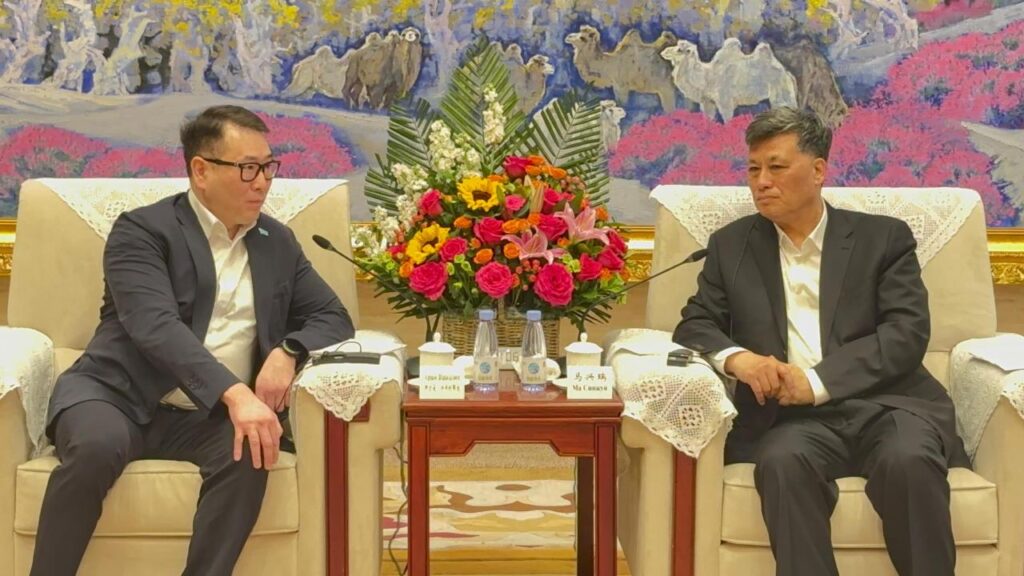
On March 19th, Kazakhstan’s Minister of Trade and Integration Arman Shakkaliev met Ma Xingrui, Communist Party Secretary of China’s western Xinjiang Uyghur Autonomous Region (XUAR) to discuss strengthening Kazakh-Chinese trade cooperation and the opening of a Kazakh trade mission in XUAR’s main city of Urumqi.

In 2023, trade turnover between Kazakhstan and China reached $31.5 billion, with the XUAR accounting for over 64% or $20.3 billion of the total.

Referencing his country’s focus on trade cooperation with China, the Kazakh minister stated, “Targeted work is being carried out with each province and a joint action plan is being developed to increase trade and attract investment in projects in priority areas. Kazakh businesses are showing more and more interest in supplying products to the Chinese market. We very much appreciate the support of the XUAR leadership in resolving issues of access of Kazakh goods to China.”

The minister further reported, “To increase trade between our countries, especially with the XUAR, the Kazakh Head of State has instructed the opening of a trade mission in Urumqi. The QazTrade organization, which is subordinate to the Ministry of Trade and Integration, will be involved in the activities of this representative office. In the future, it will become a conduit between our manufacturers and Xinjiang companies interested in purchasing products.”

The parties also discussed prospective joint investment projects and in particular, interest from Kazakh businesses in Chinese investment in the construction of feedlots for cattle, the creation of meat processing facilities and processing of cereals.

EDB Boosts Investment in Kazakh Projects

In 2024, the Eurasian Development Bank (EDB) will invest no less than $1 billion in Kazakhstan, with priority sectors listed as transportation, industry, energy and environmental improvements, agribusiness, and the construction and modernization of social infrastructure.

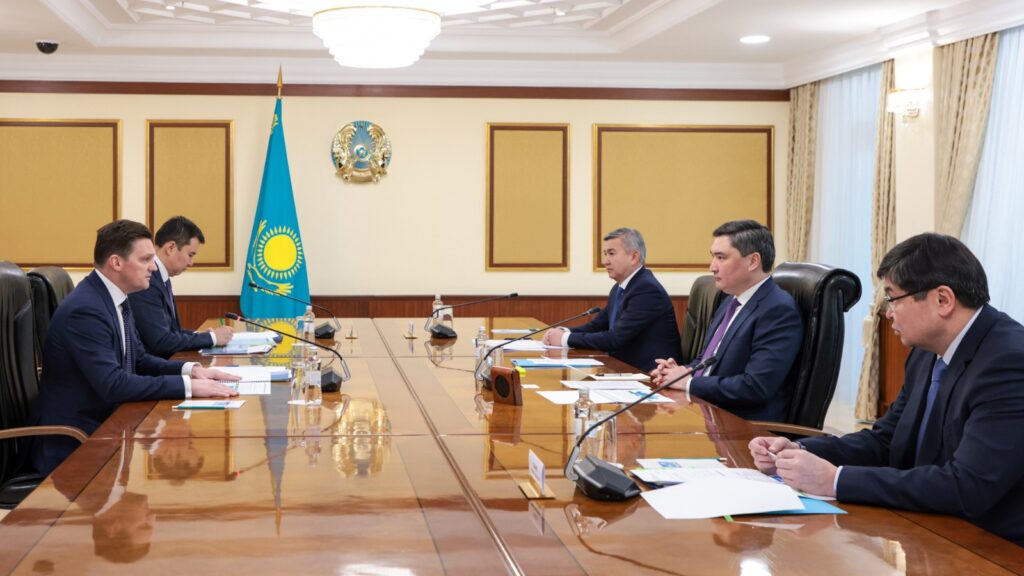
The announcement was made during a meeting on March 18th between Kazakhstan’s Prime Minister Olzhas Bektenov and Nikolai Podguzov, Chairman of the EDB Management Board.

EDB is an international financial institution whose members include Armenia, Belarus, Kazakhstan, Kyrgyzstan, Russia, and Tajikistan.

Podguzov reported that last year, the EDB financed several investment projects in various sectors of Kazakhstan’s economy, including the construction of a polypropylene plant, the procurement of diesel locomotives, and the development of wind farms in the Kostanay region. Kazakhstan’s share of the EDB’s annual investment surged from 48.5% in 2022 to 59% in 2023.

The prime minister stressed the significance of investment in large-scale infrastructure initiatives recently listed by Kazakhstan’s president as the development of roads, housing construction, utility upgrades, and gasification of cities and villages.

“The bank should prioritize major infrastructure projects,” stated Bektenov. “We are ready to enhance cooperation with the bank on mutually beneficial terms.”

EBRD Finances Wastewater Treatment Plant in Kazakhstan

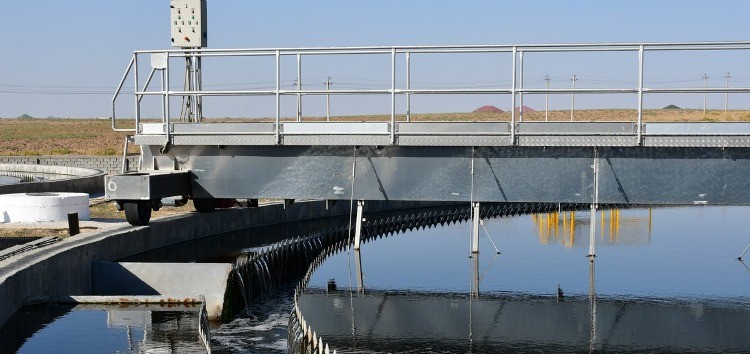
The European Bank for Reconstruction and Development (EBRD) has announced its commitment to financing the construction of a new wastewater treatment plant and associated infrastructure in Aktobe. The initiative is aimed to address pressing water treatment and environmental issues in Kazakhstan’s fourth-largest city.

The EBRD is extending a sovereign loan of up to KZT 47.4 billion (€ 96.4 million) to state-owned JSC Aqtobe Su-Energy Group, a company responsible for centralized water supply, wastewater treatment and district heating in the city. The loan by the EBRD, its largest to date for any municipal project in Central Asia, will also finance the construction of a sludge treatment facility with a biogas-fuelled power generation unit.

The new treatment plant will replace the current facility which commissioned in 1984, is now obsolete. With capacity to process up to 100,000 cubic metres of contaminated water per day, it will satisfy the needs of Aktobe’s population of 600,000.

The proposed sludge treatment facility, which includes a waste-to-energy unit for the production of green energy to partially cover the area’s electricity consumption, will eliminate odour-related problems, and help reduce annual greenhouse gas emissions by 23,000 tons of CO2 equivalent.

It is anticipated that once in operation, the plant will provide a model for replication across Kazakhstan where almost a third of cities are currently without effective wastewater treatment facilities

What Bank Loan Data Can Tell Us About Kazakh Business in 2023

After being severely tested by the pandemic in 2020-21, several thousand companies in Kazakhstan closed due to decreased demand and supply chain disruptions. Though the problems of local businesses began long before the pandemic, the two years of lockdown wiped out many good players and made those that survived more dependent on government orders and projects.

Overall, Kazakhstan has a primarily commodity-driven economy (crude oil, metals and petrochemicals account for the majority of export earnings), and the country’s economic fortunes have tracked the prices of a short list of major commodity exports.

Thus, the government finds it hard to diversify the economy. Oil price volatility affects the national currency, and the ups and downs in the tenge exchange rate versus hard currencies make it difficult to be in a business with an investment cycle longer than one and a half to two years, as you have lower revenues amid dollar investments. This is one of the reasons why launching long-term projects in the country is difficult when there are no guarantees of sales, while currency risks can hit any project.

The government has been active in attracting foreign investment, offering state support and protection, but only relatively recently did it begin to pay the same attention to the demands of domestic investors. However, this is only the beginning of a very long journey towards reducing dependence on imports and expanding the range of exports to stabilize the economy.


A debt-driven economy

The share of the private sector in Kazakhstan is difficult to measure. If we take SMEs (small to medium-sized enterprises) as the core of private business, in different years it fluctuates between a range of 20-30% of GDP. However, since state capitalism is entrenched in the country, even among SMEs there are contractors working for state and quasi-state structures, receiving funds from state companies and agencies.

One-hundred-percent private companies that do not depend on government contracts finance their operations from their own or borrowed capital. This is why, in a transparent economy like Kazakhstan’s, looking at loan data can reveal the main trends in business and which niches have not yet been occupied and could be interesting for investment by both foreign and local players.

It is best to look at the country’s economy through the loan portfolio of banks that are subject to international banking regulation, whose indicators meet an easily understandable standard.

There is a caveat: in Kazakhstan there is also the Development Bank of Kazakhstan, which is not included in the table below. It is technically not a bank, but rather a development institution financed from the quasi-public sector by Baiterek National Management Holding, which receives budgetary funds.

In addition, most extractive-industry companies in Kazakhstan – due to their high capital expenditures and the shallowness of the country’s financial market – raise funds in the U.K., Switzerland, the U.S. and Russia. Chinese banks rarely lend to 100%-Kazakh companies, limiting themselves to trade credits (in the form of equipment) or loans to joint ventures with Chinese participation. Thus, even though up to 80% of foreign direct investment in Kazakhstan goes to the extractive industry, it is not reflected in the below table.

The table below shows data from the central bank on the loan portfolio of the country’s banks, reflecting changes over the course of 2023.

Note: a USD/KZT exchange rate of 450 is used in this table

Loans issued by Kazakh commercial banks in 2023 Jan 1, 2024 ($ bln) Jan 1, 2023

($ bln)

y-o-y change

($ bln)

y-o-y change (%)
Loans 66.3 53.9 12.4 23.1%
Inter-bank loans 0.3 0.2 0.1 24.9%
Reverse repo 1.2 0.5 0.7 139.7%
Loans to non-bank legal entities and individual entrepreneurs (including nonresidents), excluding SMEs that are residents of Kazakhstan, incl.: 10.7 9.7 1.0 10.7%
For the acquisition and construction of real estate 0.3 0.3 0.0 0.0%
Other loans 10.5 9.4 1.0 11.0%
Loans to non-bank legal entities and individual entrepreneurs – SMEs that are residents of Kazakhstan, incl.: 17.0 14.2 2.8 19.9%
For the acquisition and construction of real estate 0.8 0.6 0.1 23.5%
Other loans 16.2 13.6 2.7 19.7%
Loans to individuals (including nonresidents), excluding loans to individual entrepreneurs for business purposes, incl.: 37.1 29.3 7.8 26.7%
For the construction and purchase of housing, incl.: 12.1 10.7 1.4 13.1%
mortgage loans 11.8 10.3 1.5 14.2%
Consumer loans 22.9 17.1 5.8 34.2%
Other loans 2.1 1.5 0.6 37.5%


The total loan portfolio grew 23.1% from KZT24,254.7 trillion to KZT29,853.7 trillion in 2023, which could indicate higher risks related to the quality of banks’ assets amid the expansion in lending. The president and the government have persistently tried to force banks to expand lending to businesses, but this is often impossible, otherwise banks could find themselves in violation of prudential regulation. Moreover, as long as banks can make a risk-free profit of 1-2% through treasury operations with government securities, an expansion of business lending is unlikely. Moving forward, in an attempt to boost risk appetite and awaken animal spirits, the regulator (in Kazakhstan this is the Agency for Regulation and Development of the Financial Market) plans to limit banks’ access to risk-free assets.

The growth of banks’ loan portfolio in 2023 was driven mostly by two lines: unsecured loans in the form of consumer loans and corporate loans to SMEs subsidized by the state fund, Damu, which subsidizes half the amount of at least half these loans. At the current corporate interest rate of 15-20% (in tenge), a business receiving a subsidized loan pays only 6-8%.

The growth in inter-bank loans and reverse repo, meanwhile, reflects heightened activity between banks and the use of tools for liquidity management, as they prefer to borrow locally rather than in the international capital market due to the high currency risks.

Finally, loans to legal entities and individuals (including consumer loans) rose significantly, especially in the retail segment, where mortgage and consumer loans increased by more than 35%.

There are obvious risks related to the rise in loans to individuals amid slow real income growth:

  • If the creditworthiness of borrowers does not correspond with the rapid growth in consumer loans, this could lead to more nonperforming loans.
  • The increase in mortgage loans may make the banking system more sensitive to market fluctuations, in particular to real estate price dynamics. Excessive state involvement in the mortgage market, especially through preferential mortgages, could eventually cause pain for households in the form of a shortage of free funds and therefore make retail lending more attractive for banks.

Banks have yet to release local earnings, meaning we still do not have a sector breakdown of loans, but in previous periods most loans went to the trade sector (retail and wholesale trade) – usually import distributors (distributing everything from consumer goods to food products) – while working capital loans to producers ranked second. Mortgages and loans to other spheres usually come in third and fourth, respectively.

The main sector that banks lend to – directly and indirectly (through consumer loans) – remains trade. Against this backdrop, in 2022-23 the president and the government promised cheap raw materials and subsidies to local producers, as well as special support measures for those who invest in the processing of commodities (oil and gas, metals, agriculture, etc.). For this reason, in 2024 banks’ loan portfolio will most likely swing toward production and processing, for which the government is ready to allocate billions of dollars in subsidies.

For this and other purposes, in August 2023 the Kazakh state pension fund allocated KZT1.5 trillion (about $3 billion) so that construction of new production facilities could commence in 2024. Of the Central Asian countries, Kazakhstan spends the most money (in relative and absolute terms) to support local production, and this year we should see the first results.
 

Rassul Rysmambetov

Rassul Rysmambetov is an Almaty-based expert in distressed assets. 

Uzbekistan to Increase Production and Export of Agricultural Produce

At a government meeting chaired by President Shavkat Mirziyoyev on March 18th, it was reported that in 2023, Uzbekistan produced 23 million tons of fruit and vegetables, but exports reaped just $2 billion, far short of the anticipated $5 billion.

Over the past year, over ten new markets have opened for Uzbek agricultural exports, including Australia, New Zealand, Singapore, Colombia, and Indonesia, raising the number of countries importing agricultural products from Uzbekistan to 85.

There are however, shortfalls in the sector. The potential of one million hectares of land previously used for grain and earmarked for the cultivation of fruit and vegetables is yet to be exploited. The same applies to 508,000 hectares of household plots plus a further 260,000 hectares of land lying barren.

At the meeting, the head of state expressed his readiness to consider any steps necessary for increasing agricultural and food exports in the coming year: “Controlling inflation and ensuring currency stability are directly related to exports. If we do not expand the conditions for export along with an increase in production, the result will not meet expectations.”

To that end, the head of state supported the proposal to boost agricultural exports by opening Uzbekistan’s trading houses in major port cities such as Nagoya, Mersin, Rotterdam, Qingdao, Klaipeda, and Doha.

One of the most vital issues is the certification of Uzbek agricultural produce for export. Following the launch of the first private laboratory with international accreditation at the Agricultural Services Centre in Yukorichirchik, $8 million will be invested in similar modern laboratories in Zangiata, Fergana, and Samarkand this year. A reference laboratory will also be opened in Tashkent to ensure that private laboratories comply with international standards.