• KGS/USD = 0.01143 -0%
  • KZT/USD = 0.00192 -0%
  • TJS/USD = 0.10820 0.19%
  • UZS/USD = 0.00008 0%
  • TMT/USD = 0.28575 0%
  • KGS/USD = 0.01143 -0%
  • KZT/USD = 0.00192 -0%
  • TJS/USD = 0.10820 0.19%
  • UZS/USD = 0.00008 0%
  • TMT/USD = 0.28575 0%
  • KGS/USD = 0.01143 -0%
  • KZT/USD = 0.00192 -0%
  • TJS/USD = 0.10820 0.19%
  • UZS/USD = 0.00008 0%
  • TMT/USD = 0.28575 0%
  • KGS/USD = 0.01143 -0%
  • KZT/USD = 0.00192 -0%
  • TJS/USD = 0.10820 0.19%
  • UZS/USD = 0.00008 0%
  • TMT/USD = 0.28575 0%
  • KGS/USD = 0.01143 -0%
  • KZT/USD = 0.00192 -0%
  • TJS/USD = 0.10820 0.19%
  • UZS/USD = 0.00008 0%
  • TMT/USD = 0.28575 0%
  • KGS/USD = 0.01143 -0%
  • KZT/USD = 0.00192 -0%
  • TJS/USD = 0.10820 0.19%
  • UZS/USD = 0.00008 0%
  • TMT/USD = 0.28575 0%
  • KGS/USD = 0.01143 -0%
  • KZT/USD = 0.00192 -0%
  • TJS/USD = 0.10820 0.19%
  • UZS/USD = 0.00008 0%
  • TMT/USD = 0.28575 0%
  • KGS/USD = 0.01143 -0%
  • KZT/USD = 0.00192 -0%
  • TJS/USD = 0.10820 0.19%
  • UZS/USD = 0.00008 0%
  • TMT/USD = 0.28575 0%
13 December 2025

Italian Company to Begin Cultivating Snails in Kazakhstan

Lumacheria Italiana, the global leader in snail production, announced its plans to start industrial production of snails in Kazakhstan. Representatives of the company outlined their plans during a meeting with the Akim of the Zhambyl Region, Dauletkozha Mamyrov.

At the meeting it was noted that the Zhambyl Region is located in a favorable environmental and climatic zone, one that’s ideal for snail farming on an industrial scale and helps reduce production costs fourfold compared to the world market. The project will make the region the first in Central Asia that hosts snail farming on an industrial scale.

Furthermore, representatives of Lumacheria Italiana said they’ll be cooperating with the Kazakh company Meragro on the project, and that farming infrastructure be built in several stages. Lumacheria Italiana also expressed its readiness to train local farmers. Investment in the initial phases of the project alone will amount to more than €2,000,000.

Breaking Down Kazakhstan’s Claims Against International Oil Consortiums

The total amount of claims brought against the consortiums, North Caspian Operating Company (NCOC) and Karachaganak Petroleum Operating (KPO) is the largest in the history of Kazakhstan.

In March 2023, PSA LLP, the authorized state institution overseeing these projects, brought forward claims in international arbitration in relation to Kashagan and Karachaganak for $13.5 billion and $3.0 billion, respectively. In addition, the Atyrau Region environmental regulator filed a claim for $5.1 billion against the NCOC consortium for storing too much sulfur on site, discharging wastewater without treatment, etc.

The claims of PSA LLP cover the period 2010-19 and relate to the oil consortiums’ costs for carrying out large projects, as well as tenders and insufficient work completed.

The shareholders of NCOC, which is developing the offshore Kashagan Field, include: KMG Kashagan (16.877% stake), Shell Kazakhstan Development (16.807%), Total EP Kazakhstan (16.807%), Agip Caspian Sea (16.807%), ExxonMobil Kazakhstan (16.807%), CNPC Kazakhstan (8.333%) and INPEX North Caspian Sea (7.563%). Their total investments over the period have not been disclosed, but, according to various estimates, exceed $60 billion – meaning the state is currently calling into question about 23% of all costs.

The KPO consortium is Shell (29.25%), Eni (29.25%), Chevron (18.0%), Russia’s Lukoil (13.5%) and Kazakhstan’s state-owned KazMunayGas (10.0%). Investments in this oil and gas condensate field are estimated at $27 billion, hence the filed claim is significantly smaller both in absolute terms and as a percentage of costs, standing at about 11%.

A production sharing agreement was signed in 1997 for Karachaganak and in 1998 for Kashagan, with the contracts to be in effect for 40 years. In 2022, the sole participant in PSA LLP became Samruk-Kazyna Trust Corporate Fund, part of the state holding National Welfare Fund Samruk-Kazyna, while Kazakhstan’s Ministry of Energy is currently entrusted to run PSA LLP.
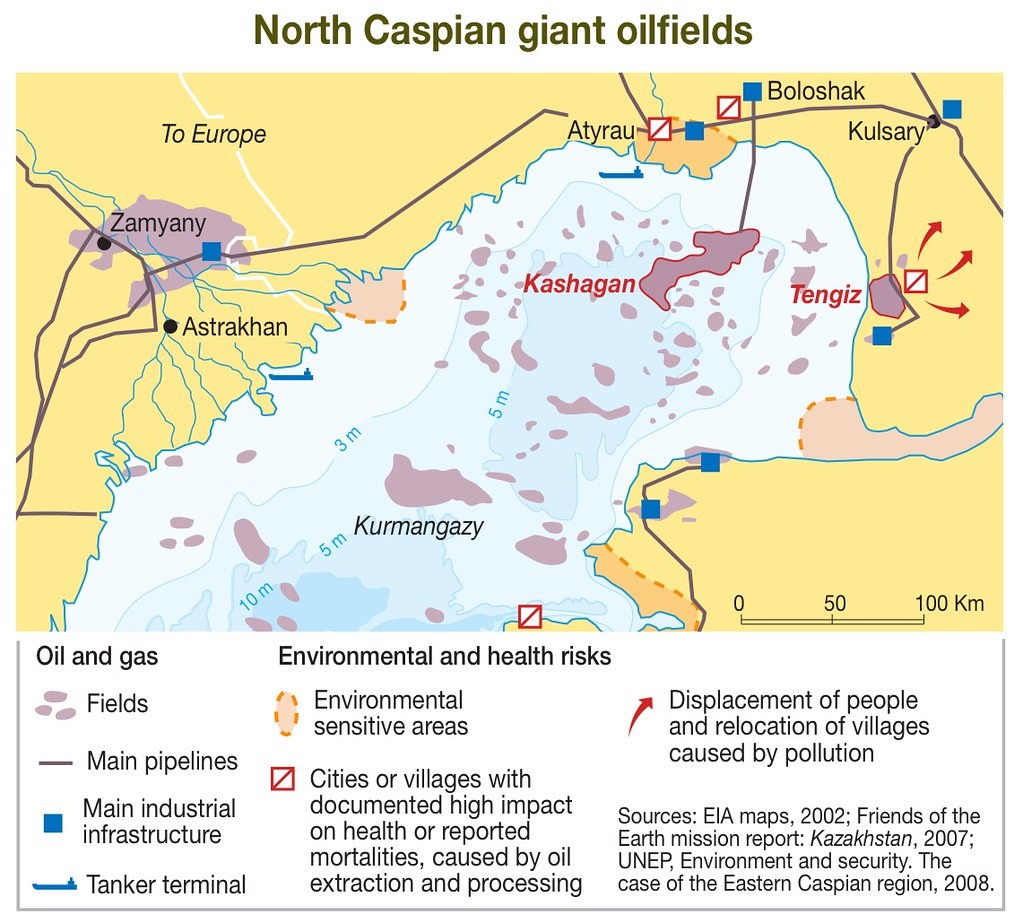
NCOC and KPO dominate the industry through control of three fields. Tengiz, Kashagan and Karachaganak are the largest oil and gas fields in Kazakhstan. The country’s oil and gas condensate production in 2023 amounted to 89.9 million tons (about 1.8 million barrels per day), with the share of the “three whales” – as these projects are called – accounting for 67% of oil production:

  • Tengiz with 28.9 million tons, down 1% versus the 2022 level;
  • Kashagan with 18.8 million tons, a 48% increase;
  • Karachaganak with 12.1 million tons, up 7% year-on-year.

The stabilization contract for Tengiz was one of the first signed at the dawn of Kazakhstan’s independence in 1993, also for a term of 40 years, meaning it should be the first to expire in 2033.

The shareholders of the Tengizchevroil JV are Chevron (50%), ExxonMobil (25%), KazMunayGas (20%) and Lukoil (5%). After completion of its FGP (Future Growth Project), Tengiz should produce about 900,000 barrels per day, a significant figure even by world standards.

It is surprising that Kazakhstan has not yet raised or voiced any claims against TCO, even though the FGP budget has swelled from an initial $12 billion to $25 billion – due to the addition of the WPMP (Wellhead Pressure Management Project) – then to $37 billion, and now, according to the latest information, to $46.7 billion, with the capacity expansion pushed back to the second quarter of 2025.

Meanwhile, a PSA LLP deputy general director, on an April 2023 episode of the Baidildinov.Oil YouTube program (titled “NCOC, KPO: Battle for the Future”), said the claims are not aimed at revising the contracts, but rather the state is merely pursuing fairness in its relations with the investors, and only through legal channels.

Such attention to NCOC and KPO against a backdrop of silence on Tengiz may be attributable to the fact that Kazakhstan’s share in TCO is owned and managed by the state-owned, KazMunayGas, not PSA LLP. Also of note is that Tengiz has turned out to be such a rich field that American companies are reported to want to extend the agreement for another 20 years. According to unconfirmed reports, consent in principle has been received, with the details now supposedly being discussed with the Kazakh Government.


Oil supplies and petroleum product shortages

Despite its high oil production and big hydrocarbon reserves, Kazakhstan continues to rely on Russian imports of petroleum products. According to the indicative plan of the Ministry of Energy, last year 5 million tons of diesel fuel should have been produced and about 800,000 tons imported, with an almost equal volume of gasoline production at 5 million tons and imports guided at 300,000-350,000 tons. In addition, the domestic market imports 30-40% of the tar and bitumen it needs for road work, with the same being true for jet fuel.

Meanwhile, Kazakhstan’s oil refineries are already operating at capacity (18 million tons per year), and a new refinery is needed. To fill that void, higher volumes of crude oil will be required.

The government has resolved that to meet growing needs, the Shymkent Oil Refinery in the south of the country (operated by PetroKazakhstan Oil Products) will be expanded. It is 51% owned by the Chinese state oil concern, CNPC, and 49% by KazMunayGas. Options to expand the refinery’s capacity from the current 6 million tons per year to 9 or 12 million tons per year are being considered.

However, over-regulation of the domestic market makes it unattractive for suppliers of crude oil. Currently, the state regulates crude oil prices in the domestic market, obliging extractive-industry companies to supply it at $20-25 per barrel.

Excluding the oil and gas condensate production of the “three whales,” production by other companies in Kazakhstan was down 3% in 2023 at 30.1 million tons. Currently, 60% of their production goes to the domestic market, while TCO, NCOC and KPO do not supply oil domestically under the agreements signed in the 90s.

At the end of 2022, President Kassym-Jomart Tokayev instructed the government to look at how an additional 5 million tons per year could be supplied to the domestic market by the large foreign operators. Therefore, a scenario in which Kazakhstan’s claims against NCOC and KPO are related to this should not be ruled out. Nevertheless, the question of regulated domestic prices, as well as how crude oil should be transported to refineries in the country’s south remains open.

It will be a while before we know whether Kazakhstan’s claims will be satisfied in international arbitration, as such proceedings can drag on for years. That said, the country’s ability to meet domestic demand and support budget revenues is limited and largely depends on the “three whales.”

 

Olzhas Baidildinov is an oil and gas industry expert, member of the Public Council of the Ministry of Energy of the Republic of Kazakhstan, author and presenter of the program “Baidildinov. Oil”, and founder of the Telegram channel, “Baidildinov. Oil”

Uzbekistan’s Upper House of Parliament Undergoes Structural Changes

In April 2023 a new version of Uzbekistan’s constitution was adopted following a national referendum. The country’s legislation is still being amended, and the composition of government is being molded to these new laws.

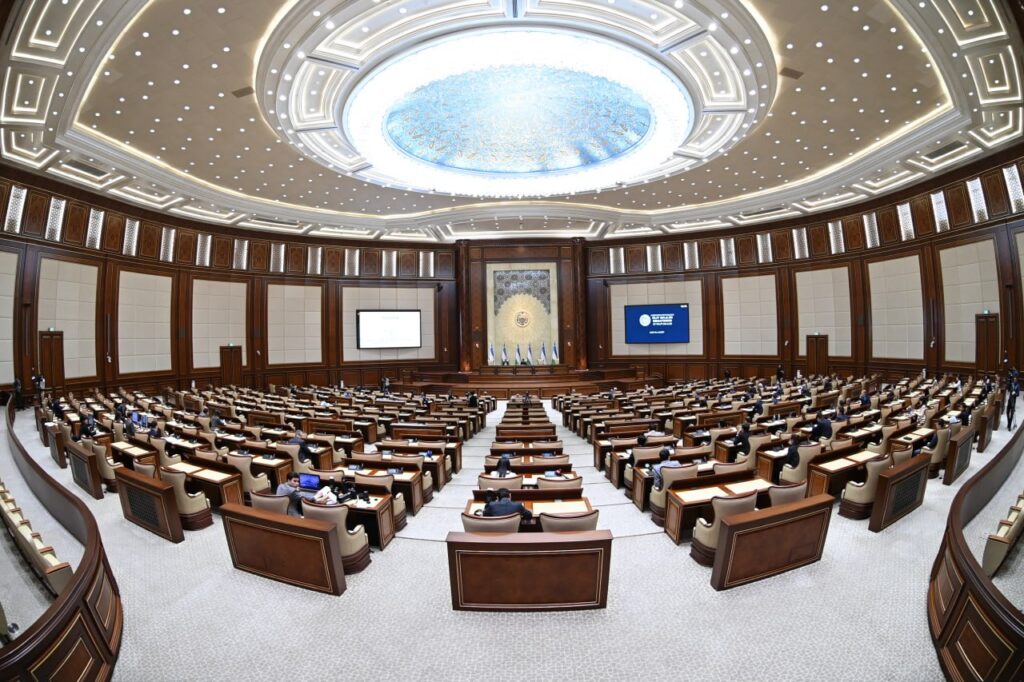
At the 49th plenary session of the Senate of the Oliy Majlis of Uzbekistan, senators approved a law that gives the Senate the right of self-dissolution. At the same time, new elections to the Legislative Chamber will be held within two months, and the new Senate will be formed within one month.

They also reduced the number of Senate members by a third — to 65 from 100 previously. Senators will now be elected proportionately from the Republic of Karakalpakstan, the regions and Tashkent city — four people each — and nine are appointed by the president himself. Previously, there were six and 16, respectively.

The number of deputy speakers of the Legislative Chamber has also been reduced — now there are only two compared to the previous seven. This was done because many of the powers of the upper house are duplicated. The number of permanent senators hasn’t changed; it remains at 25.  From now on, a representative holding the post of speaker must suspend their membership of a political party.

One important innovation is that now a bill submitted by a group of 100,000 voters, the Senate, the Ombudsman or the Central Election Commission can be submitted to the Legislative Chamber for consideration. Members of the Legislative Chamber and members of the Senate, as part of a special commission, may conduct a parliamentary inquiry.

Representatives also approved a number of exceptional powers for the Senate. Now the upper chamber of the country’s parliament, among other things, can cancel the decisions of local representative bodies of state power — if it concludes that they don’t meet the letter of the law. Also, the Senate has the right to strip any of its members of immunity at the request of Uzbekistan’s Prosecutor General.

 Uzbekistan Signs $246 Million Loan Agreement With Japanese Agency

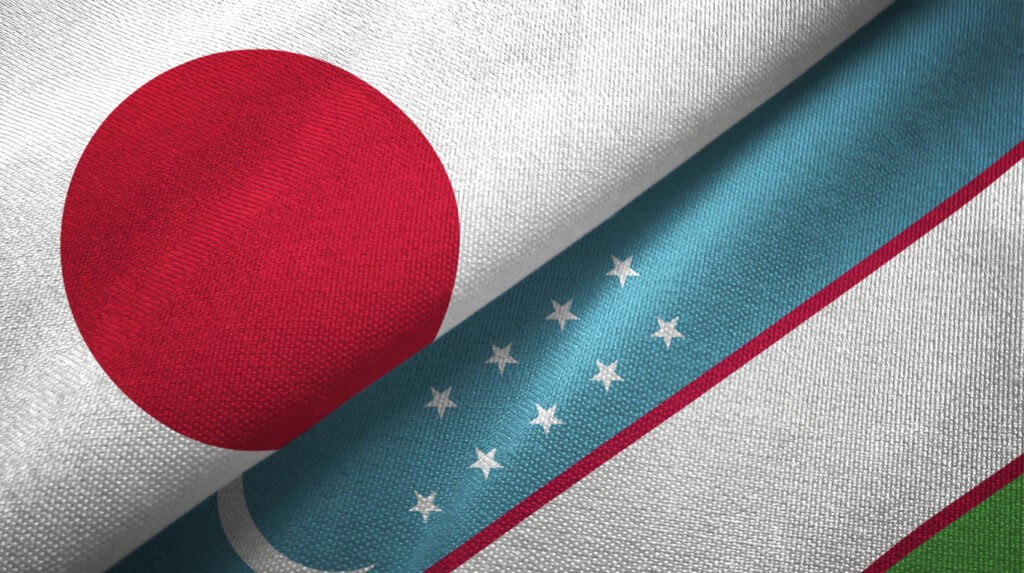
Uzbekistan and the Japan International Cooperation Agency (JICA) have signed a loan agreement, this time for lending by the Sustainable Economic and Social Development Support Program in Japan, worth up to ¥37 billion ($246 million).

The loan will help the Uzbek government continue its reforms to make the country’s economy more market-driven. Its objective is to safeguard social cohesion and stability, encompassing the citizens who are susceptible to fluctuations in financial circumstances. JICA supports enhancing market institutions and the conditions that allow the private sector to flourish — as well as enhancing state-owned enterprise governance, promoting social inclusion, and promoting sustainability.

Moreover, the line of credit contributes to the Sustainable Development Goals (SDG) of poverty eradication, promoting gender equality, work safeguards and economic growth. The Ministry of Economy and Finance is designated as the executive agency of the agreement on the part of Uzbekistan. The loan is provided for a period of 30 years.

In January 2022, at a meeting between the Director of the Cultural Heritage Agency of Uzbekistan Shahriyor Nurulloyev and first deputy head of the JICA office in Uzbekistan Yoshimasa Takemura, JICA allocated ¥55.9 million yen ($490,000) to their Uzbek counterparts. Funds were given to preserve and digitize cultural heritage archives and to strengthen cooperation between the two countries in the field of cultural heritage preservation.

Chinese Hackers Accessed Kazakh Telecoms Data for Two Years 

A Chinese company engaged in cyberintelligence operations in a number of countries has also operated in Kazakhstan, according to the Center for Analysis and Investigation of Cyberattacks (TSARKA).

Secret data from the company iSoon (also known as Anxun) were published by unknown persons. The company is a contractor of China’s Ministry of Public Security. There are also rumors that iSoon is linked to Chengdu 404, China’s notorious cyberintelligence structure also known as APT41.

“The leak sheds light on the forms and methods of Chinese intelligence, which include infiltrating and obtaining information. The attackers targeted both general information, such as databases, and pinpointed information of specific individuals: monitoring correspondence, calls and movement. Data analysis showed that the volume of stolen information is measured in terabytes,” TSARKA reported.

Cyberattacks were launched at the infrastructure of a number of countries, among them Kazakhstan. The hacker group had access to the infrastructure of Kazakhstani telecom operators Kcell, Tele2, Beeline and others for two years. The hackers had access to the operators’ event logs, call duration, IMEI of devices and call billing. The leak includes files with information about subscribers of the telecom operators. The cybercriminals also knew the user data of IDNET, IDTV with personal data of subscribers, their logins and passwords, and even logs of individual subscribers with details of all calls and activities.

Furthermore, data from Kazakhstan’s Unified Accumulative Pension Fund (JSC UAPF), information on the mail server of the Kazakh Ministry of Defense, and data from airline Air Astana were also among those accessed by iSoon.

TSARKA found screenshots of correspondence between members of the cybercriminal group, in which they discussed the hacked subscribers and their information. Investigations revealed that targeted attacks were also carried out on employees of law enforcement agencies.

“The Trojan Horse (malware) could pull out all host information, manage processes, files (view, delete, execute, modify), execute commands (CMD operations), take screenshots, record every button pressed on the keyboard, and more. The authors claim that 95% of antivirus programs will not be able to detect this trojan, including Kaspersky, Symantec and others. At the same time, the Trojan Horse is able to uninstall and restart on its own,” TSARKA claims.

Moreover, the hackers had a Mac OS version of the trojan. They could also control iOS and Android systems. However, the functionality for iOS was much smaller than Android. In addition, the hackers had Linux versions and an implantable Wi-Fi device.

TSARKA noted that the Chinese group had access to Kazakhstan’s data for at least two years. The group suggested creating an independent cybersecurity agency. TSARKA experts believe that as long as the information security committee is subordinate to the Ministry of Digitalization, the structure of the state will be vulnerable.

The Unified Accumulative Pension Fund denies any knowledge of a data breach concerning ordinary Kazakhs. “UAPF, in connection with the spread of information in the network about the leakage of personal data of Kazakhstanis from the database of the EAPF, which allegedly posted by unknown persons in documents on the site GitHub, makes an official statement that this does not correspond to reality. The security services of the EAPF conducted a detailed analysis of the data posted on the GitHub site. As a result, it was found that the published catalog contains only a description of the enpf.kz website. At the same time, the site is an open source of information and does not contain personal data of depositors and recipients,” the EAPF said in a statement.

Uzbekistan Plan to Invest $470 Million to Increase Gas Imports From Russia

State natural gas pipeline company, Uztransgaz plans to use loans from international banks to fund upgrades to the country’s gas pipelines at a cost of $470 million dollars. The upgraded pipelines are intended to handle increased natural gas imports from Russia. The objective is to boost Uzbekistan’s natural gas intake to 32 million cubic meters per day from the current 9 million cubic meters. This plan is in accordance with Decision #92, adopted by the Cabinet of Ministers on February 14th.

Following a Moscow event on October 7th, 2023, the presidents of Uzbekistan, Kazakhstan and Russia began the process of supplying Uzbekistan with Russian gas through Kazakhstan. The group planned the reversal of the “Central Asia-Center” trunk-line gas network in order to make these deliveries. The network was constructed in the 1960s to transport gas from Turkmenistan and Uzbekistan to Russia.

Uzbekistan’s gas trading company, UzGasTrade and Russia’s Gazprom Export signed a two-year commercial contract which outlines the purchases.