• KGS/USD = 0.01144 0%
  • KZT/USD = 0.00194 0%
  • TJS/USD = 0.10872 0.18%
  • UZS/USD = 0.00008 0%
  • TMT/USD = 0.28571 0%
  • KGS/USD = 0.01144 0%
  • KZT/USD = 0.00194 0%
  • TJS/USD = 0.10872 0.18%
  • UZS/USD = 0.00008 0%
  • TMT/USD = 0.28571 0%
  • KGS/USD = 0.01144 0%
  • KZT/USD = 0.00194 0%
  • TJS/USD = 0.10872 0.18%
  • UZS/USD = 0.00008 0%
  • TMT/USD = 0.28571 0%
  • KGS/USD = 0.01144 0%
  • KZT/USD = 0.00194 0%
  • TJS/USD = 0.10872 0.18%
  • UZS/USD = 0.00008 0%
  • TMT/USD = 0.28571 0%
  • KGS/USD = 0.01144 0%
  • KZT/USD = 0.00194 0%
  • TJS/USD = 0.10872 0.18%
  • UZS/USD = 0.00008 0%
  • TMT/USD = 0.28571 0%
  • KGS/USD = 0.01144 0%
  • KZT/USD = 0.00194 0%
  • TJS/USD = 0.10872 0.18%
  • UZS/USD = 0.00008 0%
  • TMT/USD = 0.28571 0%
  • KGS/USD = 0.01144 0%
  • KZT/USD = 0.00194 0%
  • TJS/USD = 0.10872 0.18%
  • UZS/USD = 0.00008 0%
  • TMT/USD = 0.28571 0%
  • KGS/USD = 0.01144 0%
  • KZT/USD = 0.00194 0%
  • TJS/USD = 0.10872 0.18%
  • UZS/USD = 0.00008 0%
  • TMT/USD = 0.28571 0%
22 December 2025

Kozy Korpesh – Bayan Sulu: Kazakhstan’s Valentine’s Day

February 14th may be the international Valentine’s Day which is celebrated all over the world, but Kazakhstan has its own unique day dedicated to love and devotion, Kozy Kөrpesh – Bayan Sulu, which is celebrated on April 15th. The holiday is centered on a legend from an epic poem from the 13th-14th century, which conveys a story of love and strength of spirit.

Sometimes likened to a Kazakh Romeo and Juliet, the story tells of two heroes – a young man named Kozy Korpesh and a girl called Bayan Sulu – who fight against prejudice and confront an unrighteous ruler to be together. Their story symbolizes the power of courage in the face of obstacles.

In honor of the pair, who, according to a folk legend, were buried in a mausoleum near the village of Tansyk in the East Kazakhstan region, a memorial structure was erected which has been included in the list of historical and cultural monuments and under state protection since 1982. Another monument was erected in the city of Ayagoz in 2013.

Each Kazakhstani has his or her own approach to this day. Some, like Valeria from Astana celebrate it with friends. For them, it’s not only a day of love, but an opportunity to remember their culture and traditions. “I learned about this legend back in high school. Now, even though I study abroad, I try to get together with friends to celebrate it. For me, it’s a reminder of my homeland.”

Others, like Sarzhanbek from Almaty, came to appreciate the story later. “The first time I learned about it I was still in school, but I didn’t pay much attention to it,” he told TCA. “However, one day, I went to the theater for a production based on this legend. It was very interesting; it’s amazing how rich the history of Kazakhstan is.”

Alua, a student of the Faculty of Pedagogy from Taraz, told TCA that she thinks events dedicated to Kazakhstan’s Valentine’s Day should be introduced in schools. She believes it is important to preserve and pass on this holiday to younger generations so they can know and respect the traditions of their country. “We should celebrate it, because it’s our traditional holiday,” she told TCA. “Traditions should be remembered and honored.”

U.S. and Central Asian Countries Launch C5+1 Critical Minerals Dialog

On February 8th, the U.S. Department of State hosted the inaugural meeting of the C5+1 Critical Minerals Dialog (CMD), an initiative announced by Joe Biden and the presidents of Kazakhstan, Kyrgyzstan, Tajikistan, Turkmenistan, and Uzbekistan at their C5+1 summit in New York in September 2023.

The C5+1 Critical Minerals Dialog aims to increase the region’s involvement in global critical minerals supply chains, strengthen economic cooperation, and advance the transition to clean energy, while also protecting Central Asia’s unique ecosystems, the U.S. Department of State said.

The United States Under-Secretary for Economic Growth, Energy, and the Environment, Jose W. Fernandez, chaired the CMD meeting, and Assistant Secretary of State for Energy Resources, Geoffrey Pyatt moderated the event, accompanied by Deputy Assistant Secretary of State for Central Asian Affairs, John Mark Pommersheim, and colleagues from across the U.S. government who work on critical minerals. 

Senior officials from each of the Central Asian governments shared their interest in developing investment opportunities in critical minerals that meet the highest environmental standards.

The participants of the meeting underscored the benefit of working together to advance their countries’ shared critical minerals objectives including diversification of markets and development of technologies. 

Kazakhstan’s Government aims For 6% Economic Growth

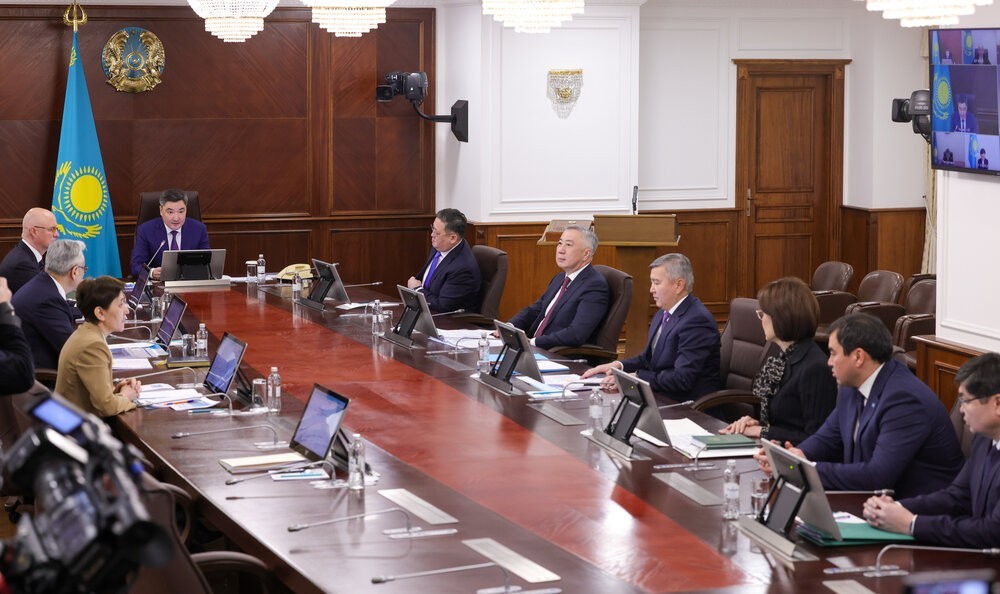
In January 2024, Kazakhstan’s economic growth was 3.9%, it was announced at a government meeting on February 13th. The country’s new prime minister, Olzhas Bektenov emphasized that the government’s priority task for this year is to ensure growth of no less than 6%.

Bektenov stressed that priority should be given to manufacturing products with high added value, as well as to exporting manufactured products. “Financial support should be provided proportionally depending on the level of technological complexity of production. That is, the more complex the production and the more technologically advanced, the lower the loan rate or the longer the loan term,” the prime minister said.

Bektenov also announced that there will be no increase in the value-added tax rate. “We must look for other ways to replenish budget revenues,” he said. 

On February 9th, at the first government meeting after he was appointed Kazakhstan’s prime minister, Bektenov outlined urgent tasks for his new cabinet, emphasizing that state budget expenditures must be clearly prioritized with an emphasis on obtaining full economic returns, and unproductive expenses should be completely excluded. 

The prime minister demanded that large industrial enterprises, primarily in the extractive industries, submit specific plans for the creation of new facilities manufacturing products with high added value. He also recommended domestic industrial giants increase the purchases of Kazakh goods, works, and services.

Uzbekistan’s Lake Julturbas Added to List Of Vital Wetlands

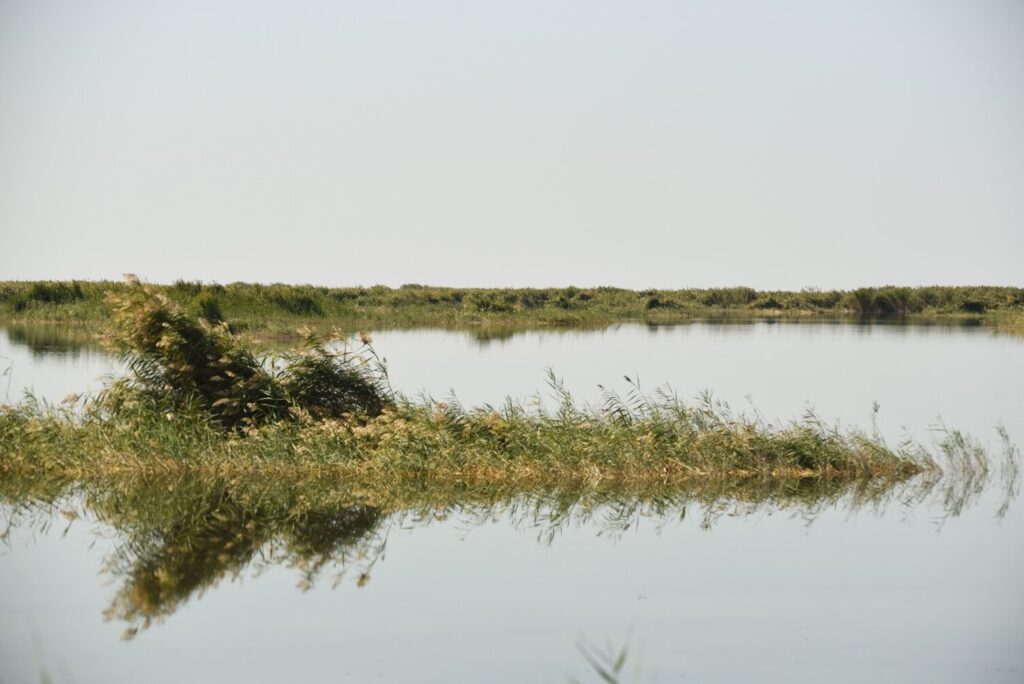
Lake Julturbas in Uzbekistan’s northwestern Karakalpakstan region has been added to the List of Wetlands of International Importance by the Ramsar Convention on Wetlands – the intergovernmental treaty that governs the conservation and wise use of wetlands and their resources. This was announced on February 12th during the 14th Conference of the Parties to the Convention on Migratory Species of Wild Animals (CMS COP14), which is taking place in Samarkand, Uzbekistan this week. 

Lake Julturbas was once part of a bay of the Aral Sea, the fourth-largest lake in the world until around 1960, along with the nearby Sudochye Lake System, which is also a Wetland of International Importance. 

Since the severe reduction in the Aral Sea area, Lake Julturbas has become an important stopover for many birds migrating along the Central Asian and African-Eurasian flyways. It supports about 25,000 waterbirds annually, and 1% of the regional populations of at least seven bird species, including ferruginous duck, red-crested pochard, and white-headed duck. 

There are 15 species of fish, and five of them are endemic to the Aral Sea region, including two critically endangered species – the dwarf sturgeon and the Amu Darya sturgeon. There are also some land animals living around the periphery of the lake, such as the vulnerable goitered gazelle. 

Activities such as cattle grazing, reed harvesting, fishing and hunting are allowed for the local communities living around the lake. 

Kazakhstan to Build Supercomputer

On February 12th, Kazakhstan’s Ministry of Digital Development, Innovation and Aerospace Industry, and the national welfare fund Samruk-Kazyna, signed an agreement with Presight aI Ltd., a United Arab Emirates-based software and artificial intelligence (AI) company. The parties will join together for a project to create a supercomputer and build a data processing center in Kazakhstan. 

Kazakhstan’s Minister for Digital Development, Innovation and Aerospace Industry, Bagdat Musin, earlier spoke about the importance of creating Kazakhstan’s own LLM (large language model) for introducing AI into all spheres of the economy, as well as into e-government. He also commented that AI will significantly boost the development of the financial services, healthcare, energy and manufacturing industries.

It is hoped that the launch of a supercomputer will consolidate Kazakhstan’s place as Central Asia’s AI leader, and will make it possible for the country to rent computing power to its neighboring states.

Why Are You Allowed and We Are Not? Japarov Responds to U.S. on Foreign Agents Law

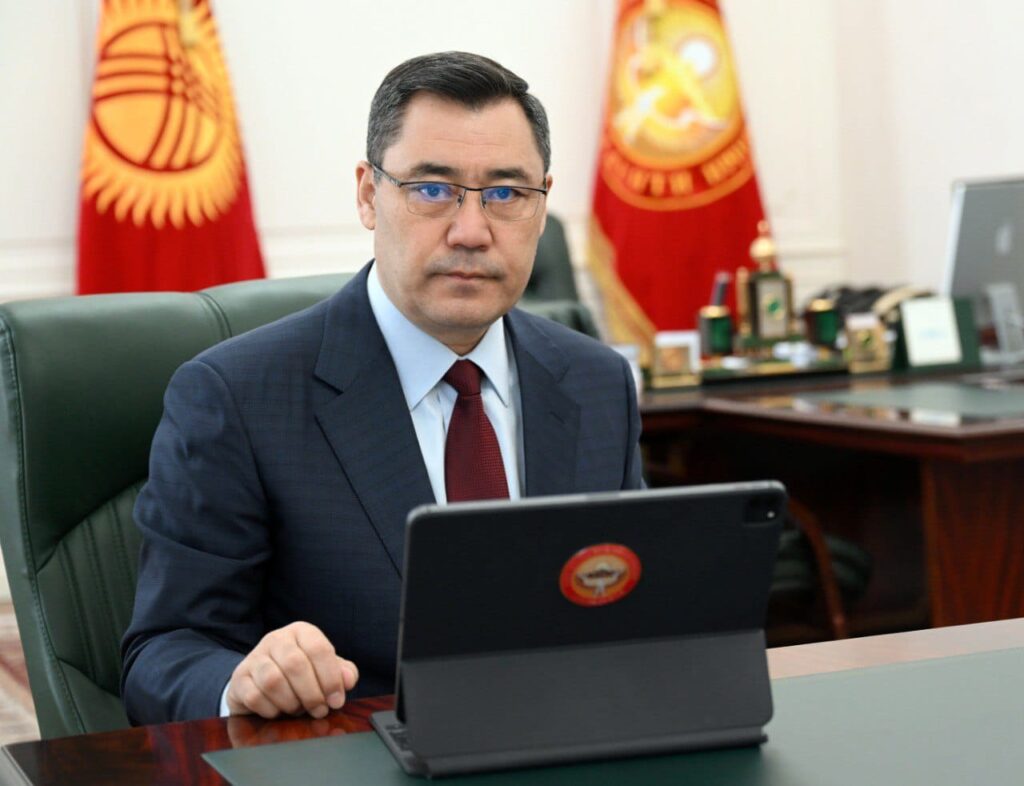
The Kyrgyz presidential administration published a letter of response from Sadyr Japarov to U.S. Secretary of State, Antony Blinken. It follows a letter to the Kyrgyz leader in which the top U.S. diplomat expressed concern about the draft law titled “On Non-Profit organizations,” which tightens control over their activities in Kyrgyzstan.

In his response letter to Blinken, Japarov thanked the American official for his appreciation of the work of the 78th UN General Assembly last September, where the Kyrgyz President urged the international community to support Kyrgyzstan’s environmental and green projects. But, he also noted with regret that U.S. authorities are interfering in Kyrgyzstan’s internal affairs, emphasizing that the desire for justice and freedom is a distinctive feature of his home nation.

“Regarding your concerns about the draft law on foreign agents… there are tens of thousands of non-governmental (NGOs)/non-profit organizations (NPOs) that are successfully working throughout Kyrgyzstan, addressing many problems on which the state previously had neither the will nor the desire to do something. At the same time, it should be recognized that some NGOs/[NPOs] receive funding from abroad, and not only from the U.S. and EU countries,” the president wrote.

According to Japarov, the Kyrgyz state, by legal definition, intends to control such organizations – namely, where their money comes from and for what purposes it is used.

The president emphasized that the draft law – which MPs initiated and adopted in its first reading – is very similar to the Foreign Agents Registration Act (FARA) adopted in 1938 in the United States. According to the president, the analogous American law assigns the status of a foreign agent and controls not only the mass media but also any individuals and legal entities financed from abroad. At the same time, violations of this law or delays in registering an organization in the United States are fraught with not only administrative but also criminal penalties.

“In this connection, the question cannot [help] but arise: why are you allowed and we are not allowed?” the Kyrgyz President asked rhetorically. In his letter, Japarov said that in accordance with the Constitution of Kyrgyzstan, human and civil rights and freedoms – including the right to freedom of speech and the right to association – may be restricted by law to protect national security, public order, health and public morals, as well as to protect the rights and freedoms of others. In this right, Kyrgyzstan is no different from other countries.

Japarov noted that it seems to him that when Blinken addressed him, he relied on unreliable information from NGOs who had earlier criticized the draft law. Japarov said that this information didn’t allow the U.S. foreign policy chief to draw an objective picture of the situation with human rights and freedoms in Kyrgyzstan.

“Only a small number, but a [quite] vociferous group, of these structures financed by foreign states… is a source of inaccurate information for their grantors. In addition, these nongovernmental structures often spread false, inaccurate information among the people, which leads to lawsuits by the victims or the defamed,” explained Japarov.

Japarov told Blinken that an entire layer of NGOs living on foreign money has recently appeared in the republic. They are also called “grant-givers.” The heads of some of these organizations have turned them into family businesses that do nothing but hoard money and send fictitious reports to sponsors, Kyrgyz media have repeatedly reported.

The president invited the U.S. Secretary of State to audit the use of financial resources of NPOs and NGOs that the U.S. government has funded over the past 10 years. “Taking this opportunity, I have the honor to invite you, distinguished Mr. Blinken, to visit our country and see for yourself that human rights and freedoms in Kyrgyzstan are reliably protected by the constitution and laws of the Kyrgyz Republic… My only request is that you do not interfere in the internal affairs of our country,” concluded Japarov.

Earlier, when the draft law on NGOs was just presented in the Kyrgyz Parliament, it was sharply criticized by the EU, the United Nations Development Program (UNDP), the Organization for Security and Co-Operation in Europe (OSCE), the U.S. Agency for International Development (USAID), as well as the embassies of EU, U.S., and other donors who finance NGOs in the country.