• KGS/USD = 0.01144 0%
  • KZT/USD = 0.00194 0%
  • TJS/USD = 0.10879 -0.18%
  • UZS/USD = 0.00008 0%
  • TMT/USD = 0.28490 0%
  • KGS/USD = 0.01144 0%
  • KZT/USD = 0.00194 0%
  • TJS/USD = 0.10879 -0.18%
  • UZS/USD = 0.00008 0%
  • TMT/USD = 0.28490 0%
  • KGS/USD = 0.01144 0%
  • KZT/USD = 0.00194 0%
  • TJS/USD = 0.10879 -0.18%
  • UZS/USD = 0.00008 0%
  • TMT/USD = 0.28490 0%
  • KGS/USD = 0.01144 0%
  • KZT/USD = 0.00194 0%
  • TJS/USD = 0.10879 -0.18%
  • UZS/USD = 0.00008 0%
  • TMT/USD = 0.28490 0%
  • KGS/USD = 0.01144 0%
  • KZT/USD = 0.00194 0%
  • TJS/USD = 0.10879 -0.18%
  • UZS/USD = 0.00008 0%
  • TMT/USD = 0.28490 0%
  • KGS/USD = 0.01144 0%
  • KZT/USD = 0.00194 0%
  • TJS/USD = 0.10879 -0.18%
  • UZS/USD = 0.00008 0%
  • TMT/USD = 0.28490 0%
  • KGS/USD = 0.01144 0%
  • KZT/USD = 0.00194 0%
  • TJS/USD = 0.10879 -0.18%
  • UZS/USD = 0.00008 0%
  • TMT/USD = 0.28490 0%
  • KGS/USD = 0.01144 0%
  • KZT/USD = 0.00194 0%
  • TJS/USD = 0.10879 -0.18%
  • UZS/USD = 0.00008 0%
  • TMT/USD = 0.28490 0%
15 December 2025

EU Drives Increased Demand For Kazakh Coal

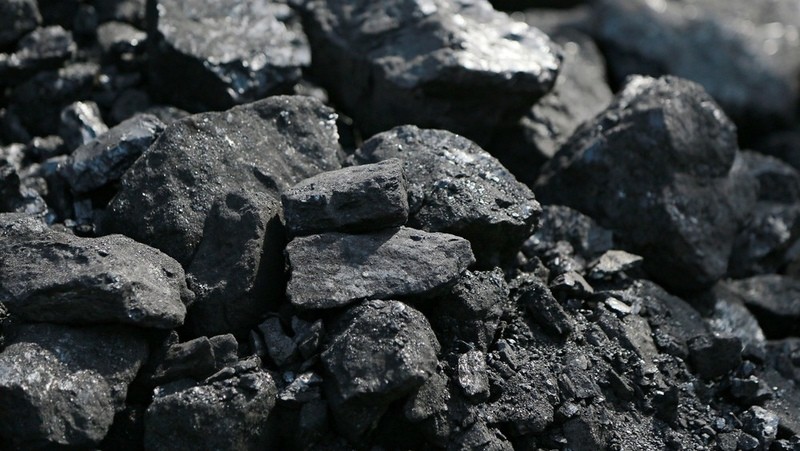
Kazakhstan will increase its production of coal in the period 2023-2029, the Kazakh Ministry of Industry and Construction has said, adding that the country exports around 28% of the total volume of coal it mines. 

In order to meet the demands of energy-producing and industrial enterprises, the ministry says it is working to increase coal production, as well as the country’s coal export potential.

According to the National Bureau of Statistics of Kazakhstan, exports of hard coal and lignite have increased 6.5-fold, mainly due to the growing demand for Kazakh coal from the countries of the European Union.

The embargo on Russian coal exports to European countries, introduced in the EU from August 2022, has created a good opportunity for Kazakhstan to significantly increase its coal exports to Europe. 

Kazakhstan at a Crossroads: Navigating Geopolitical Dynamics in Eurasia

Sharing borders with China, Kyrgyzstan, Russia, Turkmenistan and Uzbekistan, Kazakhstan is the largest landlocked country in the world and the ninth largest overall by land area. Its geography makes this country a pivotal transit hub and it is now in the process of reshaping its strategic role in Eurasia.

A recent significant development is the announcement of a new railway to China, which will further enhance Kazakhstan’s position in global trade, including in China’s famous Belt and Road Initiative (BRI). Deepening its relationship with China is one way that Kazakhstan seeks to diversify its economic and political ties away from Russia.

At the same time, Kazakhstan is also looking to reduce its relative dependency on China and trying to balance its relationships with other major powers. Although some Western states have lately recognised this, and various international financial institutions are also assisting in enhancing Kazakhstan’s connectivity, these actors still need to pay more focused attention to Kazakhstan and work with the country in a more constructive manner.

Expanding infrastructure and regional connectivity

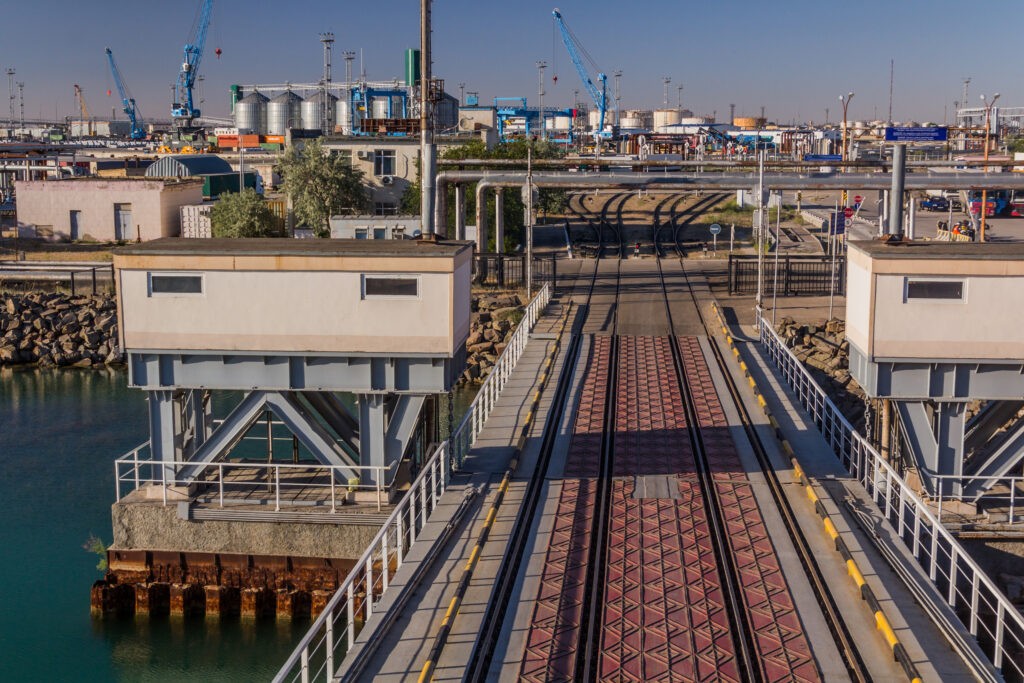
In the past, Kazakhstan has strengthened its position as a transit corridor through investments of more than $3.5 billion in the Khorgos gateway on the Chinese border (for facilitating Chinese goods being shipped to Central Asia and Europe), and other significant investments in various railways (most recently, the Shalkar–Beyneu and Zhezkazgan–Saksaul lines), as well as in the Kuryk seaport on the Caspian Sea and in the Trans-Caspian International Transport Route (TITR).

The TITR is a 6,500-km corridor that links Asia with Europe and passes through various countries including Kazakhstan, Azerbaijan, Georgia, and Turkey. The Kuryk seaport has direct access to railway tracks and is fast becoming an important multi-modal route for cargo transshipment.

In May 2023, Kazakhstan and China signed 47 co-operation agreements worth $22 billion. At the time, Kazakhstan’s President Kassym-Jomart Tokayev underlined that “the full exploitation of our transport and logistics capacity is of strategic importance”. He named China, Europe, Russia, and Central Asia as targets for logistical expansion. Reviewing bilateral relations with China in October last year, Tokayev proclaimed that his initiatives “confirm Kazakhstan’s readiness to strengthen our ‘all-weather’ relations and multifaceted co-operation”.

Kazakhstan’s new railways amid incipient geopolitical shifts

Given the above context, the recent announcement of the third railway connection between Kazakhstan and China is an important development that will enhance freight capacity and reduce border congestion. The new 272-kilometre (km) line will run in a south-east direction from Ayagoz in eastern Kazakhstan to Bakhty on the Chinese border before continuing to Chuguchak in Tacheng prefecture.

The double-track railway is expected to boost freight capacity between Kazakhstan and China by more than two thirds, raising annual carriage from 28 million to about 48 million tonnes per year after its completion in 2027. The connection is a part of the major investment in a total of 1,300 km of new railway lines that are expected to facilitate exports and contribute to the TITR’s development.

In the meantime, Kazakhstan has recently flashed on the geopolitical radar of Western powerhouses such as the European Union (EU) and the United States. The West indeed needs to increase its attention to Kazakhstan even further, and for several reasons, including the fact that Kazakhstan plays a crucial role in maintaining regional security and with Western involvement can help support initiatives to combat terrorism, drug-trafficking and other forms of transnational crime. Moreover, a higher-profile Western presence in Central Asia to counterbalance Russian and Chinese influence in the region is in the interest of both the West and Kazakhstan.

International partnerships for Kazakhstan’s resource development

Another reason to pay increased attention to Kazakhstan is the country’s rich natural resources, which will allow the EU and the U.S. to reduce their dependence on Middle Eastern oil and Russian gas. Additionally – and very crucially as the world tries to move towards cleaner energy – Kazakhstan has significant deposits of uranium, a necessary element in the development of nuclear energy.

Now is a good time to strengthen relations with Kazakhstan as its current government’s “multi-vector” foreign-policy strategy seeks to reduce the country’s dependence on both Russia and China. Its trading partners indeed extend far beyond these two neighbours and include Turkey, South Korea, and the U.S., among others. It continues to court Western investment to mitigate its dependence on Russia and China, and to enhance regional stability in its larger Central Asian neighbourhood. The West should also keep in mind that in response to international sanctions, Kazakhstan has ceased to export at least 106 different products to Russia.

Conclusion

Kazakhstan’s importance arises from its strategic location, vast natural resources (including key minerals), economic potential, and its role in regional security and global geopolitical dynamics. Strong relationships with the country will allow the EU and U.S. to reinforce their influence in the global arena, particularly in competition with China’s BRI the Russian-led Eurasian Economic Union.

There is already a growing consensus in both the U.S. and the EU to increase their involvement in Central Asia in general and in Kazakhstan in particular. The U.S. was one of the first countries to recognise the five newly independent states in Central Asia after the Soviet Union’s collapse; however, in Central Asia, the U.S. tends to be regarded as a transient and opportunistic foreign power. Recent developments have nevertheless given the Americans a window of opportunity to bolster their image through greater long-term investment, both economic and political.

The EU, for its part, has recently backed its position on sustainable transport connections in Central Asia and called for stepping up engagement with the region’s countries. In Kazakhstan, there is support for enhanced American and European roles.

Western investment in the multi-modal TITR is playing a key role in this process, connecting East Asia and Europe via Central Asia and the South Caucasus and bypassing the Russian-dominated Northern Corridor. Its development still faces important challenges, but it remains a key part of Kazakhstan’s strategy to diversify its economy. The TITR corridor has the potential to transform international commercial flows across Eurasia and shift the centres of power within it, in the common interests of Kazakhstan, the U.S., the EU, and other developed economies.

European Parliament calls for close cooperation with strategically important Central Asia

At the regular plenary session held on January 17 this year, the European Parliament supported the adoption of the resolution “EU Strategy for Central Asia: New Opportunities for Strengthening Partnership”.

One of the MEPs Carsten Lücke wrote in his Instagram that the resolution was adopted by an overwhelming majority. More specifically, the voting results were divided as follows: “for” voted 54 deputies, “against” – 42, “abstained” – 44.

Aydos Sarymna, a deputy of Kazakhstan’s Mazhilis, noted in a message on his Telegram channel that this resolution is a planned document of the European Parliament, according to which the deputies gave their own assessment of the implementation of the “New EU Strategy for Central Asia”. The opinion of both government officials and ordinary citizens of the Central Asian countries was taken into account when drawing up the “papers”.

In addition, the official emphasized the distinctive tone felt in the updated resolution. Central Asia, he said, is seen in it as no other than a region that has successfully shaped its regional identity. Among other things, it has managed to unite its capabilities in trade, investment, business and other spheres.

Among other things, Sarym writes that the European Parliament recognizes the unity of global and regional challenges for both the European Union and the Central Asian region. And this, in turn, creates new opportunities for long-term and mutually beneficial cooperation.

In this regard, the EU Parliament strongly encourages its countries to strengthen cooperation and promote strategic, political and economic partnership with Central Asia, especially given its geopolitical importance.

Kaspi.kz attracts nearly $1bn of investment in US market

Kaspi.kz has successfully conducted an initial public offering (IPO) in the U.S. and raised almost $1bn.

January 16, Kaspi.kz launched IPO on the U.S. exchange NASDAQ. Initially representatives of Kazakhstan fintech planned to sell 9 million shares. But according to the results of placement the company managed to sell 11300000 ADSs, the cost of each amounted to $92. Thus the market value of Kaspi.kz amounted to $18,800,000.

The placement of shares in the U.S. is led by Morgan Stanley, JPMorgan Chase & Co. and Citigroup Inc. Now shares of the company are preparing to start trading on Nasdaq Global Select Market under ticker KSPI. Certainly, this shows the company’s strong start in the U.S. market.

In 2020, Kaspi.kz has already enjoyed similar success and raised the same amount of money in an IPO in London, becoming the most expensive company in the history of Kazakhstan. In 2020, one depositary receipt sold at $33.75, the fintech sold 29.6 million securities.
As of today, Kaspi.kz shares are owned by Baring Vostok, Mikhail Lomtadze and Vyacheslav Kim. They hold stakes of 27.53%, 24.67% and 23.47% respectively. Vladislav Kim and Mikhail Lomtadze are among the 50 richest businessmen in Kazakhstan.

Seasonal workers in Kyrgyzstan look to Europe

The Russian Federation is now the leader in the number of migrants coming from Central Asian countries. However, according to the Kyrgyz Ministry of Labor, Social Security and Migration, the number of Kyrgyz working in Russia has decreased by 30% over the past year.

According to the Ministry of Labor, for nine months of 2023, the number of Kyrgyz migrants in the Russian Federation decreased by 180,000 people. The tightening of Russia’s migration policy, the weakening of the ruble, and the war in Ukraine are to blame. In addition, according to the National Bank of the Kyrgyz Republic, remittances from Russia to Kyrgyzstan decreased by almost one billion dollars (35%) during the reporting period. Remittances from the Russian Federation account for almost one third of Kyrgyzstan’s GDP.

Today, many migrants who previously worked in Moscow and other major Russian cities for decades have begun to consider new countries for work. In Bishkek, one can see many advertisements for construction workers in Bulgaria or plantations in the United Kingdom.
The increase in the flow of migrants from Central Asia in London is explained by an increase in quotas for seasonal workers, as well as a decrease in the number of workers from Ukraine. Where men between 18 and 60 are banned from leaving the country due to mobilization. Before the war, most seasonal workers in the UK came from that country.

In 2023, the number of work quotas for Kyrgyz people increased from 1,500 to 2,000 people, the Kyrgyz Ministry of Labor said. It also said Kyrgyz authorities support migration both westward and eastward.

“Previously, our citizens worked legally in only two or three countries around the world. But at the moment the geography for official employment is expanding every year. Fifteen destinations are already available – people have a choice. This includes employment in the Persian Gulf countries, the UK, Germany, Japan and Hungary,” Almaz Alybayev, director of the Center for Employment of Citizens Abroad under the Ministry of Labour, Social Development and Migration, told Kyrgyz media.

The Kyrgyz government believes that Kyrgyz people will return from the UK and other countries with the capital and experience to start their own businesses, which will contribute to the growth of the state’s economy and the welfare of its citizens.

The example of Kyrgyz migrants working in South Korea is noteworthy. There, Kyrgyz migrants worked at factories producing doors and plastic windows. As a result, Korean technologies in this area are now actively used in Kyrgyzstan. The same can be said about innovations in agriculture, which are used by farmers in Great Britain. Kyrgyzstan is in many ways an agrarian country, which means that the experience of such migrants will be useful to the country.

The World Bank will help Kyrgyzstan to build Kambarata HPP-1

Kyrgyz Finance Minister Almaz Baketaev met with World Bank Regional Director for Central Asia Tatyana Proskuryakova. The parties discussed Kyrgyzstan’s projects on improving irrigation, as well as renewable energy in Kyrgyzstan and construction of Kambar-Ata-1 HPP in Jalal-Abad region, the Ministry of Finance of the Kyrgyz Republic reported.

At the meeting in the Kyrgyz Ministry of Finance, the WB staff said that they are ready to provide Kyrgyzstan with $5 million for a feasibility study of the new HPP project, consulting services, as well as updating the preparatory work. In turn, the Minister of Finance of the Kyrgyz Republic emphasized that the financing agreement was approved by the Kyrgyz Parliament.

According to the Ministry of Finance, the World Bank will provide the republic with 3 million dollars as an interest-free loan for 50 years with a grace period of 10 years, and 2 million dollars in the form of a grant.

It should be noted that at present at Kambarata HPP-1 preparatory work is underway to provide electricity to the facility under construction, access roads, transportation tunnels and bridges are being built on the right bank of the Naryn River, which will provide access to the site of construction of the main structures of the HPP and shift camp for hydro construction workers.

According to official data, more than 20 million dollars was allocated from the Kyrgyz republican budget for the preparatory work. The cost of the entire project, according to a feasibility study developed 10 years ago, is about $3 billion. But, as the Kyrgyz Ministry of Energy said earlier, the exact cost of all the works will be known after updating the existing feasibility study, for which the World Bank has allocated money. The estimated construction time for the new hydropower plant is nine years. Commissioning of the first hydroelectric unit according to the calculations will be made in seven years, provided that the construction is continuously financed.

The World Bank said that Kambarata HPP-1 will be one of the most cost-effective projects to expand clean energy resources in Kyrgyzstan and throughout Central Asia. In addition, the project has the potential to address the country’s energy security and generate significant revenues from electricity exports.

“Kambarata HPP-1 is a critical project with the potential to bring enormous benefits in clean energy production, regional cooperation, water security, and environmental protection throughout Central Asia. The World Bank’s technical assistance will help the Kyrgyz Cabinet of Ministers utilize the country’s rich hydropower potential for the benefit of the people and the region, while strengthening the governance and financial sustainability of the energy sector,” said WB Regional Director for Central Asia Tatiana Proskuryakova.

According to her, the money from the WB will be used to update previous studies on the construction of a new hydropower plant to confirm the technical feasibility and economic viability of the project. Also, a mechanism will be developed to distribute benefits from the sale of electricity, so that part of the income could be directed to various socio-economic programs and initiatives for the general public.

Recall, earlier the President of Kyrgyzstan Sadyr Japarov in an interview with the state news agency “Kabar” said that the authorities of the republic intend to take a loan for the construction of HPP “Kambarata-1”, this loan, according to the President, will pay off in 12-13 years. After that, the new HPP will benefit the country for many years, like the Toktogul HPP.

“The construction of the Kambar-Ata-1 HPP is aimed at ensuring efficient power generation. This project will allow the country to diversify its energy sources, reducing dependence on traditional sources such as coal and gas. This will increase energy independence and ensure stability of energy supply in winter and summer periods, stabilizing the use of water resources during the growing and heating seasons. Which is a big plus not only for Kyrgyzstan, but for the entire region as a whole,” the President emphasized.

Recall that in the middle of last year, the Ministry of Energy of Kyrgyzstan said that the Kyrgyz authorities continue negotiations with Kazakhstan and Uzbekistan on the terms of joint implementation of the project. In this case, the countries are going to share the shares of the joint venture in half. Financing of the project, as noted, will take place by attracting loans and grants from international financial institutions, or at the expense of private investors.

Earlier, the Russian Ministry of Energy expressed interest in the construction of Kambarata HPP-1. In addition, the Kyrgyz authorities approached China and the Persian Gulf countries with relevant initiatives.

According to preliminary information, the new HPP will bring an annual net profit of 230 million dollars.

Recall that the project of HPP construction began to be developed in Soviet times, but was postponed. The launch of construction of HPP “Kambar-Ata-1” took place on June 8, 2022 with the participation of President Sadyr Zhaparov.