• KGS/USD = 0.01144 0%
  • KZT/USD = 0.00211 0%
  • TJS/USD = 0.10460 0.19%
  • UZS/USD = 0.00008 0%
  • TMT/USD = 0.28490 0%
  • KGS/USD = 0.01144 0%
  • KZT/USD = 0.00211 0%
  • TJS/USD = 0.10460 0.19%
  • UZS/USD = 0.00008 0%
  • TMT/USD = 0.28490 0%
  • KGS/USD = 0.01144 0%
  • KZT/USD = 0.00211 0%
  • TJS/USD = 0.10460 0.19%
  • UZS/USD = 0.00008 0%
  • TMT/USD = 0.28490 0%
  • KGS/USD = 0.01144 0%
  • KZT/USD = 0.00211 0%
  • TJS/USD = 0.10460 0.19%
  • UZS/USD = 0.00008 0%
  • TMT/USD = 0.28490 0%
  • KGS/USD = 0.01144 0%
  • KZT/USD = 0.00211 0%
  • TJS/USD = 0.10460 0.19%
  • UZS/USD = 0.00008 0%
  • TMT/USD = 0.28490 0%
  • KGS/USD = 0.01144 0%
  • KZT/USD = 0.00211 0%
  • TJS/USD = 0.10460 0.19%
  • UZS/USD = 0.00008 0%
  • TMT/USD = 0.28490 0%
  • KGS/USD = 0.01144 0%
  • KZT/USD = 0.00211 0%
  • TJS/USD = 0.10460 0.19%
  • UZS/USD = 0.00008 0%
  • TMT/USD = 0.28490 0%
  • KGS/USD = 0.01144 0%
  • KZT/USD = 0.00211 0%
  • TJS/USD = 0.10460 0.19%
  • UZS/USD = 0.00008 0%
  • TMT/USD = 0.28490 0%

Two Years On from Invasion of Ukraine, Attitudes Towards Russia in Central Asia Have Changed

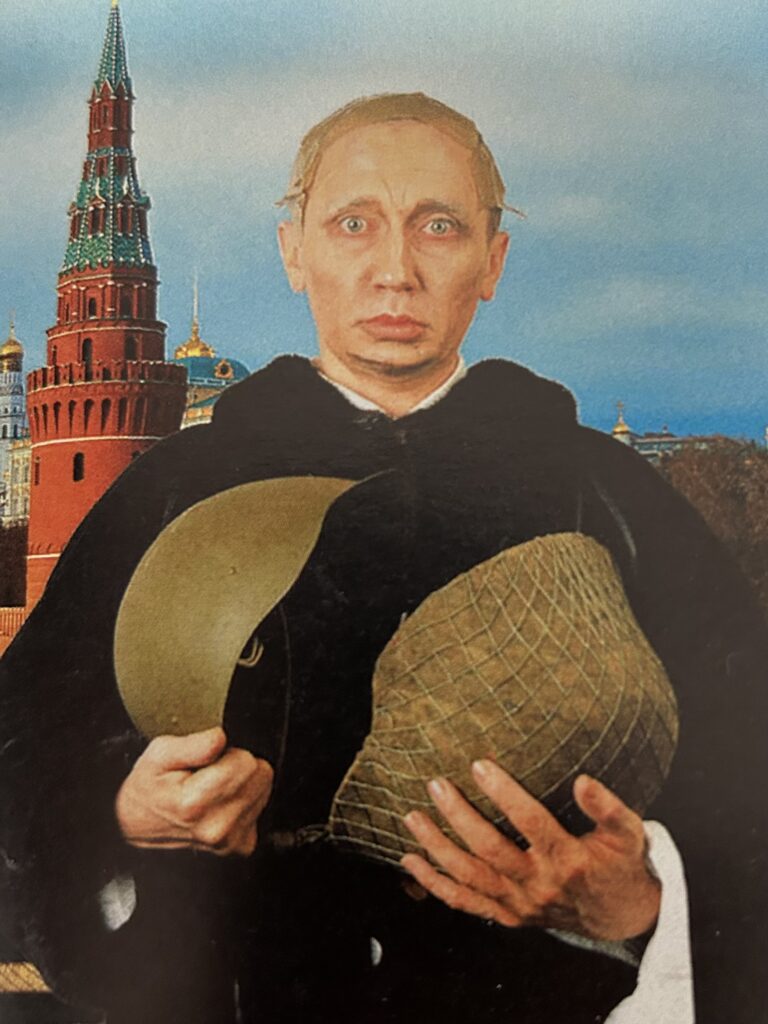
Tomorrow will mark the two year anniversary of the start of Russia’s so-called special military operation in Ukraine. In that time, many people in Central Asia have begun to openly call this action an invasion and a war. This is a war between two countries that are close in many respects, two former republics from a large union that the nations of Central Asia were also part of. How and why has the attitude of Central Asians towards Russia and Ukraine changed in the last two years?

The attacks on Ukraine were felt immediately in Central Asia, from the first day when migrants suddenly started arriving from the north. These were mostly young people, sometimes in groups, and sometimes with their families. It quickly became clear that this exodus was comprised of people who did not want to fight, and there were many of them. Also from day one, even though there are many ethnic Russians living in Kazakhstan, the new migrants were noticeably different from the local Russian faces. Their behavior and mode of dress were not the same as those already residing in Tashkent, Bishkek or Almaty. From the very beginning, there were conflicts although mostly they amounted to little more than drunken brawls that were soon forgotten. In February 2022, the cost of residential rentals skyrocketed following the attack on Ukraine, but prices seem to have since stabilized.

Overall, though, most locals treated their new neighbors with understanding. Nobody wants war. Especially since, in the countries of this region, people still remember or at least heard stories about the evacuation of a large number of people from Russia and Ukraine during the Second World War. In those times, many children whose parents died during the occupation of western portions of the USSR by Germany found second families and second homes. Uzbeks, Tajiks, Kazakhs, Kyrgyz, Uyghurs, Tatars – many Central Asians who had the opportunity adopted children from war-torn republics of the Soviet Union.

Perhaps the most fundamental change is felt in the attitude of Central Asian people towards Russia as something immutable and monumental. Something previously unthinkable transpired: despite all its economic and political power, this huge northern neighbor could also be viewed as vulnerable. The fact that Ukraine is obviously not alone in its war against Russia  does not change this perception.

In Central Asia, it is often said that in any negative situation, one must look for positive opportunities, and in a tangential way, the years of restrictions caused by the Covid-19 pandemic served as preparation for the trials brought by the war. A realization had come to pass that it was necessary to prepare oneself to rely solely on domestic resources.

The war further complicated a precarious situation as sanctions imposed on Russia also hit Central Asia. First, the financial system went into meltdown, then trade, and then the production sector, much of which was tied to the Russian economy. However, this situation forced Uzbekistan, Kazakhstan, Kyrgyzstan, Tajikistan and Turkmenistan to look for new approaches to economic development and find alternative ways to import and export. Geographically, these countries are remote from all sea trade routes, and from the southern side, they are protected – or rather isolated – by high mountain ranges.

Thus, Russia’s war, for all the disadvantages it brought and the havoc it wreaked, forced the nations of Central Asia to focus on diversifying their economies. It encouraged them to find new partners and move away from economic dependence on Russia. As for politics, the events of the last decade have confirmed the strategic fidelity of the so-called multi-vector foreign policy pursued by the countries of region, following the example of Kazakhstan. Adherence to the principle of a multi-polar world, or even a multi-polar region following Russia’s attack on Ukraine, is a reality that must be reckoned with. For all of its powerful posturing, Russia’s influence over the nations of Central Asia and other areas that the Kremlin often refers to as “near abroad” has waned dramatically. Vladimir Putin, meanwhile, is a deeply unpopular figure throughout the former Soviet Union.

Two years on from Russia’s invasion, broadly speaking, the nations of Central Asia still hold their resolute stance that the war needs to be halted. Today, the focus has shifted from assigning blame to preventing further loss of life. It has become less about who is in the right and more about ending the daily casualties. The most pressing need of the hour is to stop the conflict and pave the way for dialogue and resolution.
About 100 Kazakhs Are Enslaved Laborers in Southeast Asia

Kazakhstan’s Ministry of Foreign Affairs has reported the release of two Kazakh nationals from labor slavery in Thailand. In January the country’s consulate in Thailand received a message saying that a Kazakh woman had been enslaved in the Golden Triangle — a geographical area in Southeast Asia that includes Thailand, Myanmar and Laos, known for its large volumes of drug production and trade. The trapped girl had asked for help.

After working with local authorities, they learned that not one but two girls were enslaved. Ministry representatives spent about a month negotiating the release of the girls, before they were released and returned home.

It transpired that the girls had been duped by an advertisement offering a high-paying job that turned out to be a scam. In order to buy their freedom, their captor demanded $10,000 from each of the girls.

About 200 citizens of Kazakhstan have fallen into labor slavery in these territories over the past two years. About 30 of them were able to be freed with the help of the local Kazakh embassy. The ministry claims that about 100 Kazakhs are still enslaved laborers in the countries of Southeast Asia.

Tajikistan Extends Asset Legalization for Another Year

Since 2003 Tajikistan has been pursuing a policy of legalization, or declaration to tax and other authorities, of citizens’ income and property. After Tajikistan’s most recent attempts at legalization have been reassuring, parliament has extended the term of the monetary amnesty for one more year — until January 5, 2025.

Over the course of the policy that was set in motion by the law “on amnesty in connection with legalization of assets and money of citizens of the Republic of Tajikistan,” the total amount of legalized, declared money amounted to $540m and 4,000 certificates of property. That data was cited by Firdavs Tolibzoda, chairman of the National Bank of Tajikistan. The authorities have extended the program several times, although it was originally designed to run for a year, and its efficacy means it’s getting yet another extension.

The law provides for voluntary declaration of money and property. Thus, holders are exempt from liability and can avoid paying taxes, fines and interest on those fees and penalties. These conditions, as well as maintaining secrecy of ownership information, are guaranteed by the state.

This is not the first time that Tajikistan has conducted monetary amnesty drives: legalization in the country has already been attempted three times, but this is the first time that both property and finances can be legalized at the same time. According to the Global Organized Crime Index, Tajikistan remains the country with the highest risk of money laundering and terrorist financing in the world. Despite the fact that the country is battling these types of crimes, the shadow economy still operates at a high level in Central Asia’s poorest country.
Bringing assets and income into the legal or “white” economy out of the shadow economy is seen as an effective way to attract additional funds to the country’s economy and to increase the growth financing of its industries. It’s expected that the new funds will help to create additional jobs by creating new enterprises and increasing the capitalization of existing ones.

Only money and property which were not previously listed in official declarations can be legalized. At the same time, the state allows legalization of illegal assets that fall under more than 60 articles of the criminal and administrative code of the republic.

Uzbekistan to Help Afghanistan Repair Hairaton – Mazar-e-Sharif Railroad

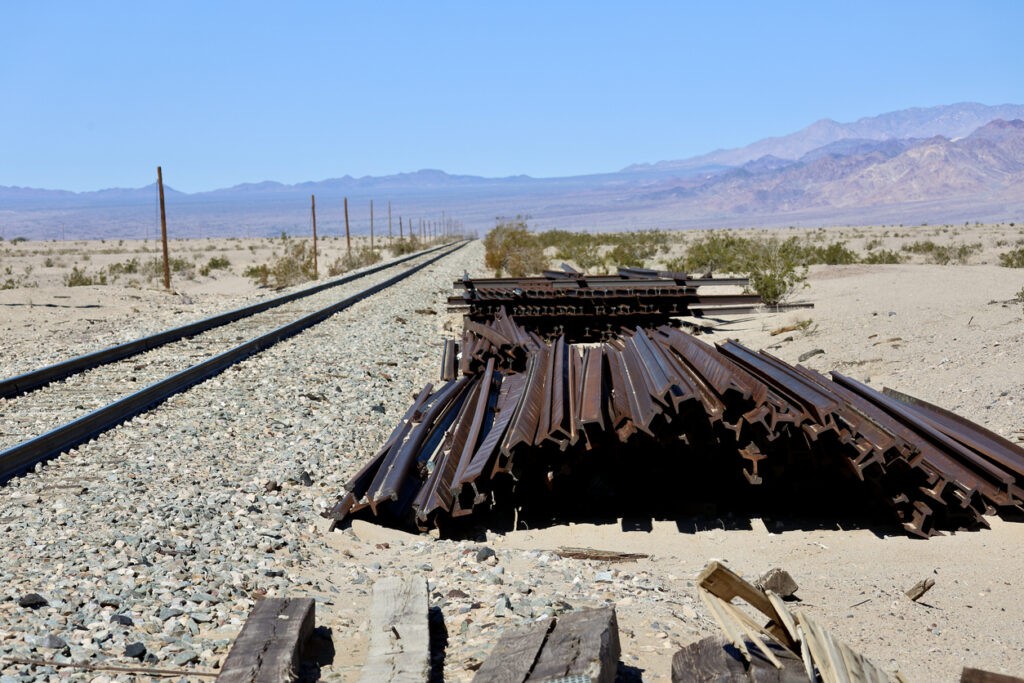
Uzbekistan Temir Yollari (Railways) will help Afghanistan repair a section of the Hairaton – Mazar-e-Sharif railroad connecting the two countries. One-hundred-and-twenty workers workers from Uzbekistan went to Naibabad station to carry out the first stage. Freight cars will also be delivered there, and rehabilitation work will be carried out at Hairaton Station and on the 57th kilometer of the line. Officials from Uzbekistan and Afghanistan agreed to repair the road on favorable terms last November.

The Hairaton – Mazar-e-Sharif railroad was built for $129 million in 2010, and is currently maintained by Uzbekistan Temir Yollari’s subsidiary, Sogdiana Trans. In April 2022, the Afghan authorities wanted to transfer the management and operation of the line to local companies based on the low cost of their services. However, these plans remained unrealized.

Currently, Uzbekistan and Afghanistan are negotiating a trilateral project to build the Trans-Afghan railroad and provide preferential tariff rates for railway transportation. Its launch will speed up cargo delivery between Uzbekistan and Pakistan to 3-5 days, and make it three times cheaper.

According to initial calculations made by Uzbekistan Temir Yollari in 2022, the cost of the railway was estimated at $4.6 billion for five years. The Committee on Railway Infrastructure of the Senate of Pakistan then made its own calculations and announced a figure of $8.2 billion. At the end of last year, the Ministry of Transport of Uzbekistan reduced those calculations to $7 billion, and proposed an option to implement a public-private partnership under a format called Build-Operate-Transfer.

By the end of last year, trade between Uzbekistan and Afghanistan grew more than sixfold, totaling $266 million annually, with more than 98% of that coming from Uzbek exports.

Tatneft to Explore for Hydrocarbons in Kazakhstan

Kazakhstan’s national oil and gas company, KazMunayGas, and the Russian Tatneft will create a joint venture for geological exploration for hydrocarbons at the Karaton Podsolevoy subsoil area in the Atyrau region in western Kazakhstan, KazMunayGas has announced. 

The two companies signed agreements for the project on February 21st in the Russian city of Kazan. Tatneft is headquartered in the nearby town of Almetyevsk. 

According to the agreements, KazMunayGas is selling Tatneft a 50% stake in Karaton Operating Ltd., the operator of the Karaton Podsolevoy project.

In June 2023 KazMunayGas received a contract to explore and produce hydrocarbons at the Karaton Podsolevoy area and in September 2023 registered a private company, Karaton Operating Ltd., to implement the project. In November 2023, KMG transferred the subsoil use right to Karaton Operating Ltd.

“[Kazakhstan’s president Kassym-Jomart Tokayev] set the task of attracting foreign investment in the raw materials sector and geological exploration,” commented Magzum Mirzagaliyev, chairman of the board of KazMunayGas. “In this regard, we held negotiations with a number of investors and are pleased that our partner in the Karaton Podsolevoy project has become the Tatneft company, which has extensive experience in the field of geological exploration and development of oil and gas fields.” 

Mr Mirzagaliyev added that drilling of the first exploration well with a depth of 5,500 meters is planned for 2024.

70% of Kazakhstan’s Electricity Generated Using Coal

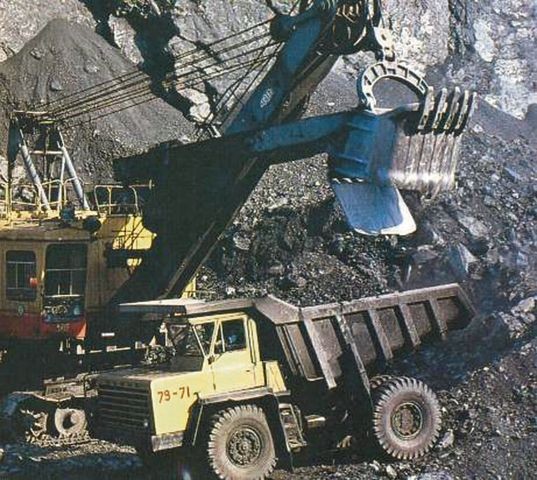
Last year Kazakhstan produced 112.7m tons of coal, 1.1% less than in 2022. The country’s energy-generating facilities used 65.9m tons and 31.9m tons were sent for export, according to data released by the National Bureau of Statistics.

Kazakhstan ranks among the world’s ten leading countries in terms of coal reserves, with 49 deposits containing 33.6bn tons of coal. 

Today the coal industry provides fuel for about 70% of Kazakhstan’s electricity generation. About 30 companies are currently engaged in coal mining in the country, providing jobs for almost 32,000 people.

Large coal deposits are located mainly in Central Kazakhstan (Karaganda coal basin, Shubarkol deposit, Turgai brown coal basin) and the northeastern region (Ekibastuz and Maikuben coal basins and Karazhyra deposit).

The Ministry of Industry and Construction earlier announced Kazakhstan’s plan to increase the production of coal in the period 2023-2029. The National Bureau of Statistics reported that exports of hard coal and lignite have increased 6.5-fold, mainly due to the growing demand for Kazakh coal from the countries of the European Union, which has placed an embargo on Russian coal exports to European countries since August 2022.