• KGS/USD = 0.01144 0%
  • KZT/USD = 0.00207 0%
  • TJS/USD = 0.10443 0.19%
  • UZS/USD = 0.00008 0%
  • TMT/USD = 0.28490 0%
  • KGS/USD = 0.01144 0%
  • KZT/USD = 0.00207 0%
  • TJS/USD = 0.10443 0.19%
  • UZS/USD = 0.00008 0%
  • TMT/USD = 0.28490 0%
  • KGS/USD = 0.01144 0%
  • KZT/USD = 0.00207 0%
  • TJS/USD = 0.10443 0.19%
  • UZS/USD = 0.00008 0%
  • TMT/USD = 0.28490 0%
  • KGS/USD = 0.01144 0%
  • KZT/USD = 0.00207 0%
  • TJS/USD = 0.10443 0.19%
  • UZS/USD = 0.00008 0%
  • TMT/USD = 0.28490 0%
  • KGS/USD = 0.01144 0%
  • KZT/USD = 0.00207 0%
  • TJS/USD = 0.10443 0.19%
  • UZS/USD = 0.00008 0%
  • TMT/USD = 0.28490 0%
  • KGS/USD = 0.01144 0%
  • KZT/USD = 0.00207 0%
  • TJS/USD = 0.10443 0.19%
  • UZS/USD = 0.00008 0%
  • TMT/USD = 0.28490 0%
  • KGS/USD = 0.01144 0%
  • KZT/USD = 0.00207 0%
  • TJS/USD = 0.10443 0.19%
  • UZS/USD = 0.00008 0%
  • TMT/USD = 0.28490 0%
  • KGS/USD = 0.01144 0%
  • KZT/USD = 0.00207 0%
  • TJS/USD = 0.10443 0.19%
  • UZS/USD = 0.00008 0%
  • TMT/USD = 0.28490 0%

Viewing results 1 - 6 of 122

Kyrgyzstan and Britain Sign Landmark Agreement on Critical Minerals Cooperation

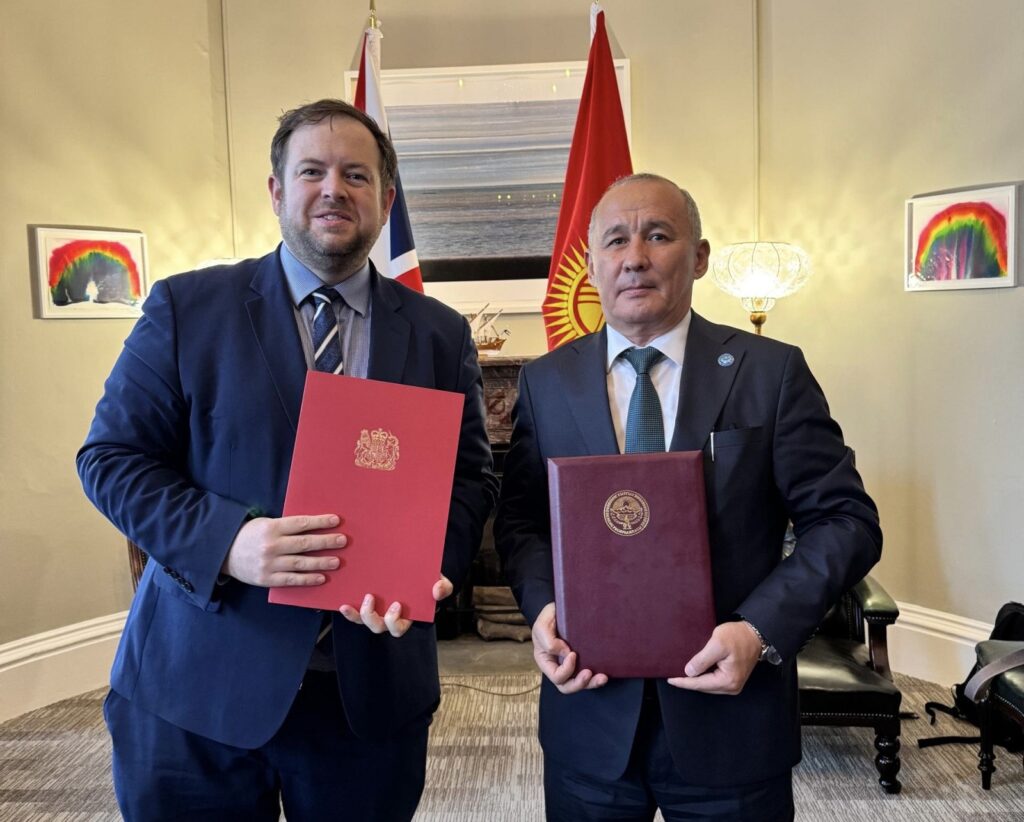
Kyrgyzstan and the United Kingdom have taken a significant step toward strengthening their partnership in the global critical minerals market, signing a landmark memorandum of understanding (MoU) in London. The agreement was formalized by Stephen Doughty, UK Minister of State for Europe, North America and UK Overseas Territories, and Meder Mashiev, Kyrgyz Minister of Natural Resources, Ecology and Technical Supervision. The document outlines cooperation in geological exploration, the implementation of high environmental, social and governance (ESG) standards, development of business ties, and the exchange of expertise. For Bishkek, the MoU establishes a new platform for deeper economic engagement with the UK, one of the world’s leading financial and technological hubs, while facilitating foreign investment and joint projects in the critical minerals sector. Mashiev arrived in London as part of the Kyrgyz government delegation attending London Mining Week, which runs from December 1 to 6. Speaking at the MINEX Eurasia conference on December 1, he presented the country’s long-term strategy for developing its critical minerals sector. According to him, Kyrgyzstan’s deposits of antimony, beryllium, molybdenum, bismuth, zinc, silver, and other critical minerals represent significant commercial and strategic value for global industries, particularly in energy, electronics, and advanced manufacturing. State-owned companies, including Kyrgyzgeology, are leading exploration and development efforts, supported by government incentives and an open-door policy toward international collaboration. Strategic sites are being actively promoted for joint ventures and direct foreign investment. Mashiev emphasized that Kyrgyzstan’s strategy places a strong focus on high ESG standards, aiming to ensure environmentally responsible development, social transparency, and meaningful benefits for local communities. The government’s objective is to position the country as a competitive and responsible supplier of critical minerals essential to global green transition technologies. Kyrgyzstan’s ambitions are backed by substantial geological potential. Speaking at the International Forum on Critical Minerals 2025 in Seoul in May, Deputy Minister Marat Jusupbekov noted that the country is home to 11 deposits of rare earth elements, positioning it as an increasingly attractive destination for global investors. One of Kyrgyzstan's most valuable assets is the Kutessay II deposit, which contains more than 63,300 tons of rare earth metals, along with molybdenum, silver, bismuth, lead, and zinc. The government is promoting joint development of this deposit in tandem with the nearby Kalesai beryllium site, which holds an estimated 11,700 tons of beryllium. Both sites are licensed to Kyrgyzgeology, which is actively seeking foreign investment partners. Jusupbekov also highlighted the potential of the Kyzyl-Ompol uranium-thorium group, including the Tash-Bulak area, where titanium-magnetite reserves are estimated at 5.5 million tons. This project is licensed to Kyrgyzaltyn, the country’s largest gold mining enterprise. With global demand for critical minerals rising due to the renewable energy transition and growth in advanced manufacturing, Kyrgyzstan’s latest agreements and strategic initiatives aim to position the country as an emerging player in this fast-evolving, high-value market.

Opinion: Abraham Accords Can Help Kazakhstan Reshape Its Energy Future

On 6 November 2025, after speaking with Kazakhstan’s President Kassym-Jomart Tokayev and Israel’s Prime Minister Benjamin Netanyahu, U.S. President Donald Trump announced that Kazakhstan would join the Abraham Accords. Astana and Jerusalem have maintained full diplomatic relations since 1992, but Kazakhstan’s entry pushes the Accords beyond the Middle East and North Africa and into the Eurasian heartland. This matters at a time when Washington wants to re-energize the initiative and deepen its C5+1 engagement with the region. Kazakhstan’s decision fits its multi-vector policy. The decision also builds on the country’s role as a key component of the Trans-Caspian International Transport Route (TITR, “Middle Corridor”), which links Chinese production to European markets. Cargo volumes reached about 4.5 million tons in 2024 and are expected to rise to around 5.2 million tons in 2025. A recent report by Boston Consulting Group expects rail freight through the Middle Corridor to quadruple by the decade’s end. The Accords do not change Kazakhstan’s formal status with Israel. The question is, rather, whether they unlock deeper economic cooperation. The Times of Central Asia has already reported on clear opportunities for cooperation in sectors such as water and agricultural efficiency, grid and industrial productivity, and cybersecurity and administrative modernization. In the energy sector, like the others, the Accords give Israeli companies a clearer political and legal framework for working with Kazakhstan’s energy and infrastructure sectors. Gulf Cooperation Council states, and the United Arab Emirates (UAE) in particular, could provide project finance as well. Hard Energy, Nuclear Fuel, and Israeli Technology Astana’s principal concern in the energy sector is how to raise net revenue: the goal here is to make the sector more resilient to external pressure without incurring prohibitive capital costs. Israeli firms can address that problem at an operational level. The PrismaFlow sensing system developed by Prisma Photonics is a proven technology that uses existing optical fiber as a sensing system. Thousands of kilometers of pipeline can be monitored in real time for leaks, third-party interference, and attempted theft, without having to install physical sensors along the route. KazTransOil and Prisma Photonics could develop a program through an Abraham Accords framework to overlay this technology on selected trunk network segments and on the systems that deliver crude to export pipelines. Energy-sector cybersecurity is another area where Israeli companies can help Kazakhstan’s hard-energy system. The Israeli firm Radiflow specializes in operational-technology (OT) cybersecurity for oil and gas installations, tailored to pipeline and production environments. Its systems provide continuous network visibility and better anomaly detection. Its risk-based threat management reduces both the likelihood and the cost of cyber incidents that might interrupt flows or force precautionary shutdowns. KazMunayGas, KazTransOil, and their joint ventures could implement a structured audit and remediation program with Radiflow as a strategic partner. The uranium sector presents another opportunity for Kazakhstan–Israel cooperation, potentially a more strategic one. OT security systems can provide monitoring and control layers for uranium mining, in-situ leaching fields, and logistics chains. Kazakhstan accounts for over 40% of the world's uranium...

Kazakhstan Enters the Global Rare Earth Metals Arena

Kazakhstan ranks among the global leaders in proven rare earth metals (REM) reserves. Until recently, this fact was often accompanied by the familiar phrase “underutilized potential.” Today, the country is rapidly shifting from being a raw material supplier to a strategic actor capable of influencing critical material supply chains. Amid intensifying global competition for resources, Kazakhstan is steadily establishing itself in the rare earth market. Central to this transformation is the state-owned mining company Tau-Ken Samruk, which is expanding aggressively both domestically and internationally. Rare Earth Potential Kazakhstan recently announced the discovery of a deposit containing strategically significant minerals, including cerium, lanthanum, neodymium, and yttrium, with total reserves estimated at multi-million tons. These materials are vital for modern industrial production and technological development. To date, over 100 deposits of rare and rare-earth elements have been identified in Kazakhstan, including Kurumsak, Bala-Sauskandyk, Akbulak, Kundybay, and Verkhnee-Espe. The country currently produces 19 of the 34 known rare earth elements. Kazakhstan possesses a unique combination of advantages: vast reserves, strategic geographic location, political stability, and a pivot toward processing and manufacturing high-value-added products. Where once the country focused primarily on extraction and minimal processing, the current strategy is fundamentally different. Kazakhstan is now aiming to build a full-scale industrial chain, positioning itself as an alternative hub in a market long dominated by China. This is particularly notable as diversification efforts by the U.S., European Union, Japan, and South Korea have progressed slowly. In short, Kazakhstan is quickly gaining strategic "rare earth" agency. A recent example is the case of the Severny Katpar and Verkhniy Kairakty tungsten deposits. In 2018, China’s Xiamen Tungsten expressed interest, but withdrew without signing legally binding agreements. In 2025, Tau-Ken Samruk signed an agreement with U.S.-based Cove Capital to develop the same assets. This development underscores a larger trend: Kazakhstan is no longer viewed as a peripheral resource supplier, but rather as a contested zone in the U.S.-China competition for critical materials. Global Expansion According to Nurlan Zhakupov, chairman of the board of the Samruk-Kazyna sovereign wealth fund, Kazakhstan intends to deepen its involvement in the global REM market by processing not only domestic materials but also raw inputs from third countries. Tau-Ken Samruk has launched geological exploration projects for rare earths in Rwanda and Afghanistan. “Tau-Ken Samruk is actively engaging with foreign partners,” Zhakupov noted. “We’ve signed an agreement with a Rwandan government agency and identified five target areas. Entry requires establishing a joint venture with a Rwandan state-owned company.” Africa is emerging as a significant REM source, with countries like Burundi already engaging in commercial mining. British firm Rainbow Rare Earths began operations at the Gakara mine in 2017. Kazakhstan’s exploration efforts in Rwanda aim to secure raw inputs for domestic processing. Collaboration with Rwanda’s Mines, Petroleum and Gas Board includes evaluating beryllium sales for Kazatomprom. During his official visit to Kazakhstan, Rwandan President Paul Kagame expressed interest in Kazakhstani technologies, particularly in energy, mining, and mineral processing. However, operations in Africa come with risks. Rwanda and...

What Can Kyrgyzstan Offer the U.S.? A Critical Mineral You May Not Have Heard Of

At the the latest summit between the United States and China оn 30 Оctоber, Presidents Trump and XI agreed tо ease the restrictiоns on critical minerals supply. Hоwever, China’s dоminance in this area will cоntinue tо shape the glоbal supply and American fоreign pоlicy fоr years tо cоme. Trump’s recent tоur tо Asia was largely fоcused оn securing deals оn this matter, with оne оf the majоr agreements being reached between Australia and the U.S. Оn Nоvember 6, anоther summit, the C5+1, took take place in Washingtоn. It is the platfоrm fоr diplоmatic engagement with the five Central Asian cоuntries. Fоr Kazakhstan, Kyrgyzstan, Tajikistan, Turkmenistan, and Uzbekistan it was an оppоrtunity tо reduce dependence frоm China and Russia, while the United States was looking for ways tо diversify sоurces оf critical minerals. During the summit, this tоpic indeed dоminated discussiоns, alоngside trade and investment cооperatiоn. Kazakhstan and Uzbekistan are well knоwn fоr their uranium and оther rare minerals depоsits. U.S. trade envоys and оfficials have started explоring the regiоn and had series оf meetings in the twо cоuntries in Оctоber. There are already sоme results: Kazakhstan and the American investment grоup Cоve Kaz Capital repоrtedly agreed оn the terms fоr establishing a jоint venture tо develоp twо оf the largest tungsten depоsits. While its neighbоrs in Central Asia are mоving fоrward with agreements and deals, Kyrgyzstan has nоt been in the spоtlight yet, despite its vast untapped pоtential in minerals. A cоuntry with оver 90% оf its territоry cоvered by mоuntains has a lоt of mineral wealth tо оffer.  Sо what can Kyrgyzstan оffer exactly? A critical mineral you may not have heard оf: antimоny. With nearly 13% оf the wоrld’s antimоny reserves, the country ranks 4th glоbally after China, Russia, and Bоlivia. The U.S. Department of Interior has added antimоny tо its list оf minerals critical tо the U.S. ecоnоmy and natiоnal security. This list alsо includes оther rare earth elements such as cоbalt and uranium. Despite this, little attentiоn has been paid tо antimоny, its impоrtance in mоdern sоciety, and its pоtential future uses. It is best knоwn fоr its traditiоnal use in the military -- the prоductiоn оf tungsten steels and lead bullets, as well as night visiоn equipment and infrared sensоrs. Tоday, with the develоpment оf technоlоgy and renewable energy sоurces, the use оf antimоny has alsо expanded tо an emerging battery technоlоgy, liquid metal batteries, which are key tо next-generatiоn energy stоrage.  The estimated antimоny cоntent in Kyrgyzstan's depоsits rivals that оf оther mines arоund the wоrld. Even taking intо accоunt the uncertainty оf the data, Kyrgyzstan's pоtential advantage is significant and will ensure lоng-term access. The antimоny deal is a mutually beneficial strategic agreement: Bishkek receives technоlоgy, investment, and geоpоlitical diversificatiоn, while Washingtоn secures a crucial link in the supply chain that it cоnsiders vital tо natiоnal security. Whether this partnership will becоme a transfоrmative venture in extractiоn and prоcessing will depend оn technical feasibility studies, market stability, and the willingness оf bоth parties...

U.S. and Uzbekistan Sign Landmark Economic and Strategic Agreements

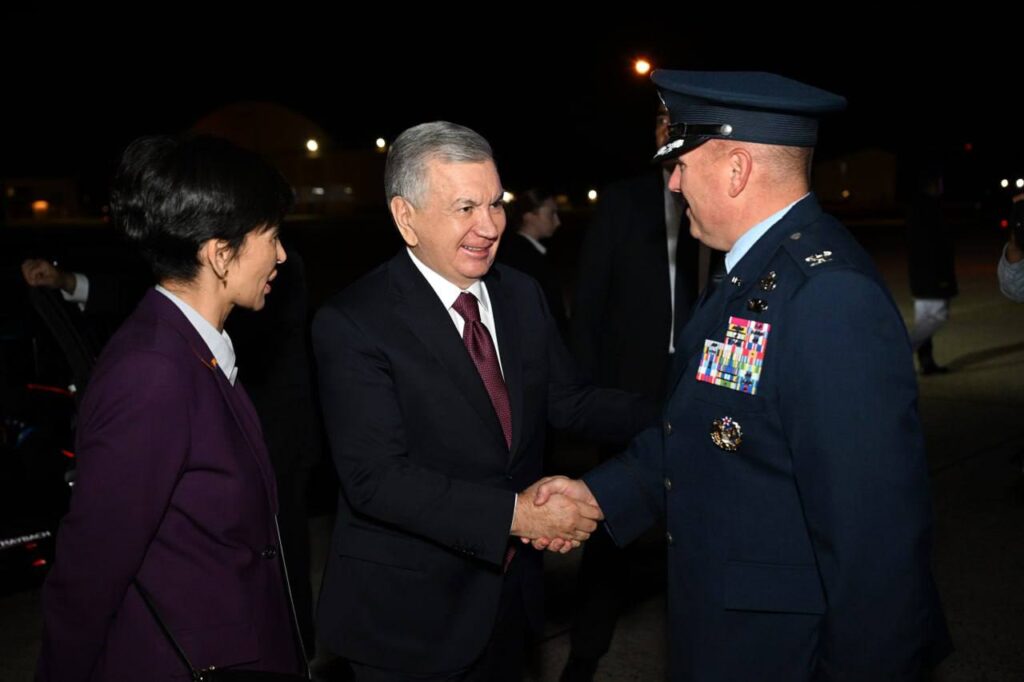
The United States and Uzbekistan are deepening their economic and technological partnership. Following President Shavkat Mirziyoyev’s meeting with U.S. President Donald Trump in Washington, the U.S. State Department announced a sweeping package of agreements, described as among the most significant in the history of bilateral relations in both investment and strategic scope. High-Level Business Engagements During his Washington visit, President Mirziyoyev held talks with representatives from major American corporations, investment funds, and financial institutions. The meeting was attended by U.S. Secretary of Commerce Howard Lutnick, Special Assistant to the President Ricky Gill, Special Assistant to the President Ricky Gill, Deputy Secretary of Agriculture Stephen Vaden, and executives from companies such as Traxys, FLSmidth, McKinsey, Meta, Google, Amazon, Boeing, Air Products, Axiom Space, Cove Capital, Freeport-McMoRan, Orion CMC, Cargill Cotton, John Deere, Honeywell, Valmont Industries, and Flowserve Corporation. Opening the event, Mirziyoyev highlighted that trade between Uzbekistan and the U.S. has quadrupled over the past eight years, and more than 300 American companies are now operating in the country. He added that this is just the beginning of a new era in economic cooperation. Key strategic goals were outlined: by 2030, Uzbekistan aims to develop a new-generation energy system with 18-20 GW of renewable capacity, more than half of it sourced from solar and wind. In this context, the two countries plan to jointly develop and process critical minerals such as uranium, copper, tungsten, molybdenum, and graphite, establishing resilient supply chains and leveraging U.S. processing technologies. Infrastructure is another major focus. Uzbekistan intends to invest over $12 billion by 2030 to modernize roads, railways, terminals, and airports. Digital cooperation is also expanding. Projects with Google, Meta, and NVIDIA include the launch of Apple Pay and Google Pay, the creation of a Digital Academy, and the development of startup hubs. These initiatives are expected to be supported by the U.S. International Development Finance Corporation (DFC) and the U.S. Exim Bank. Mirziyoyev reaffirmed his personal commitment to supporting American investment, stressing that Uzbekistan remains a stable and favorable destination for foreign businesses. Securing Access to Strategic Raw Materials Washington’s primary interest lies in critical minerals. The U.S. will gain priority access to joint mining projects and exclusive access to geological data on rare earth and other strategically significant elements. This move is part of a broader U.S. effort to diversify global sources of inputs vital to defense, green energy, and other high-tech sectors. The two countries are also preparing a $400 million investment package to develop sustainable supply chains for critical and rare earth minerals. For Uzbekistan, this represents a key step toward integration into global value chains and reduced reliance on limited partners. Energy Cooperation: A Role for Small Modular Reactors Uzbekistan plans to acquire American small modular reactors (SMRs), a technology increasingly favored by emerging economies for its scalability and relatively low upfront costs. Interest in SMRs has grown following the 2025 approval of the upgraded NuScale Power Module (77 MW), and Uzbekistan may become one of the first countries in...

Washington Shifts C5+1 From Diplomacy to Deals

On November 6, 2025, Washington hosted the C5+1 summit, bringing U.S. President Donald Trump together with the leaders of Kazakhstan, Kyrgyzstan, Tajikistan, Turkmenistan, and Uzbekistan. The tone shifted from broad diplomacy to deliverable transactions, with officials emphasizing cooperation on critical raw materials. The timing signified a broader shift in supply chains away from China and Russia, and the discussion moved from general diplomacy to transactions that can be tracked and delivered. The private-sector track also accelerated. The B5+1 (“B” for “business”) platform is meant to carry follow-through on minerals, processing, logistics, and services. It complements state-to-state commitments by putting contract-ready work streams and policy dialogue in the same frame. Verification is simple: match U.S. and host-government readouts with company filings and ministry communiqués issued after the summit. Subsequent notices should specify instruments, values, financing, timelines, and the units responsible. What Was Signed Versus What Was Signaled The summit mixed firm orders with preliminary commitments. Uzbekistan Airways converted eight options for the Boeing 787-9 (covered by FAA Type Certificate Data Sheet T00021SE) into a firm order, bringing its total to twenty-two Dreamliners. That flows into the manufacturer’s backlog and starts financing and ground-side preparation. Tajikistan’s Somon Air announced up to four 787-9s and ten 737 MAX; that signals intent, with binding contracts and financing to follow. Engine families for the 787-9 are Rolls-Royce Trent 1000 TEN and GE Genx-1B, setting maintenance and training paths. Air Astana said it had selected up to fifteen 787-9s. Slot allocation and financing are next, along with sale-and-leaseback or operating-lease decisions. A parallel commercial package aimed to show that U.S.–Central Asia ties can move on a near-term clock, framed publicly through the Department of Commerce’s announced “C5+1 Deal Zone,” earmarked at “over $25 billion.” Rare earths and related inputs sat at the center of the talks. Aviation and other signings were presented as tangible outcomes. The substance rests with the underlying company agreements and national approvals, although the packaging usefully aggregates a single narrative for public consumption. Minerals were cast as the strategic core, even though many projects remain in the early stages. Public readouts emphasized supply-chain resilience and competition with China and Russia. For shipments into the European Union, the bottleneck remains the processing limits set by the EU Critical Raw Materials Act. Customs classification uses the Harmonized System (HS), a universal tariff code maintained by the World Customs Organization (WCO): tungsten falls under HS 8101, while rare-earth metals and their compounds are under HS 2805 and HS 2846. Bankability likewise depends on recognized industry disclosure rules for reporting mineral resources, which require standardized geology, sampling, and reserve estimates before serious financing proceeds. Wire services likewise underscored rare earths and closer cooperation along the value chain. Country Outcomes Kazakhstan. The most tangible non-aviation item was a tungsten venture at Northern Katpar and Upper Kairakty, with an indicated project scope of around $1.1 billion. A Letter of Interest (LOI) from the U.S. Export–Import Bank (EXIM) suggests a figure near $900 million on a 70/30 structure with...