• KGS/USD = 0.01144 0%
  • KZT/USD = 0.00202 0%
  • TJS/USD = 0.10399 -0.29%
  • UZS/USD = 0.00008 0%
  • TMT/USD = 0.28490 0%
  • KGS/USD = 0.01144 0%
  • KZT/USD = 0.00202 0%
  • TJS/USD = 0.10399 -0.29%
  • UZS/USD = 0.00008 0%
  • TMT/USD = 0.28490 0%
  • KGS/USD = 0.01144 0%
  • KZT/USD = 0.00202 0%
  • TJS/USD = 0.10399 -0.29%
  • UZS/USD = 0.00008 0%
  • TMT/USD = 0.28490 0%
  • KGS/USD = 0.01144 0%
  • KZT/USD = 0.00202 0%
  • TJS/USD = 0.10399 -0.29%
  • UZS/USD = 0.00008 0%
  • TMT/USD = 0.28490 0%
  • KGS/USD = 0.01144 0%
  • KZT/USD = 0.00202 0%
  • TJS/USD = 0.10399 -0.29%
  • UZS/USD = 0.00008 0%
  • TMT/USD = 0.28490 0%
  • KGS/USD = 0.01144 0%
  • KZT/USD = 0.00202 0%
  • TJS/USD = 0.10399 -0.29%
  • UZS/USD = 0.00008 0%
  • TMT/USD = 0.28490 0%
  • KGS/USD = 0.01144 0%
  • KZT/USD = 0.00202 0%
  • TJS/USD = 0.10399 -0.29%
  • UZS/USD = 0.00008 0%
  • TMT/USD = 0.28490 0%
  • KGS/USD = 0.01144 0%
  • KZT/USD = 0.00202 0%
  • TJS/USD = 0.10399 -0.29%
  • UZS/USD = 0.00008 0%
  • TMT/USD = 0.28490 0%

Viewing results 1 - 6 of 23

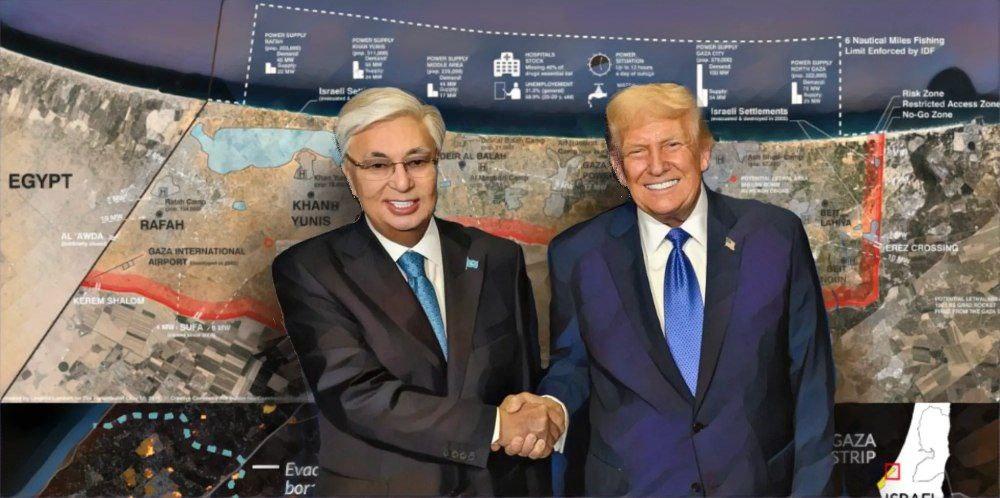
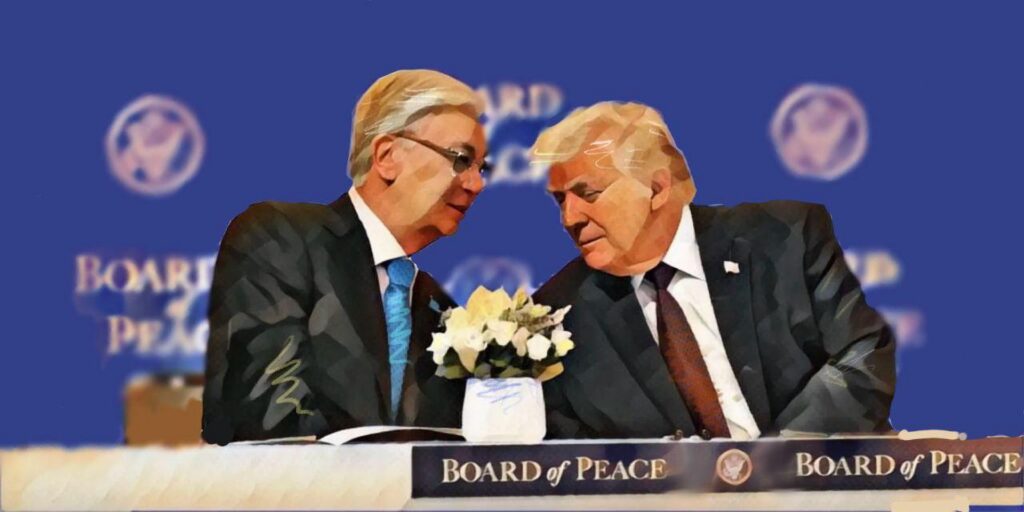
Tokayev Praises Trump’s ‘Common-Sense’ Governance, Backs U.S.-Led Peace Initiatives

Kazakhstan’s President Kassym-Jomart Tokayev has offered rare and explicit praise for the domestic and foreign policies of U.S. President Donald Trump, describing him as a strong leader whose governance model prioritizes national interests, law and order, and pragmatic diplomacy. In an exclusive interview with The News International during his visit to Islamabad, President Tokayev described President Trump’s leadership as “forward-looking,” pointing to what he characterized as strong economic performance and ongoing transformative reforms in the social sphere in the United States. “President Trump is a strong and forward-looking leader who puts the national interests of his country first,” Tokayev said, pointing to what he described as strong economic performance and transformative reforms in the social sphere. He added that Trump’s emphasis on law and order resonated with Kazakhstan’s own governance philosophy, which prioritizes compliance with the law and respect for state institutions. Tokayev said that in an increasingly complex global environment, governments must ensure internal stability by enforcing the rule of law. “All citizens must comply with the law and respect law-enforcement agencies while avoiding any obstruction,” he noted, drawing a direct parallel between Washington’s and Astana’s domestic policy approaches. Support for the Abraham Accords The Kazakh president also defended his country’s decision to join the Abraham Accords, an initiative launched during Trump’s presidency to normalize relations between Israel and several Muslim-majority countries. Describing the accords as “a truly forward-looking initiative,” Tokayev said Kazakhstan’s participation reflects its long-standing commitment to peace, stability, and international dialogue. He stressed that diplomacy remains the most effective instrument for resolving conflicts and fostering long-term regional and global stability. While reaffirming Kazakhstan’s strong relations with Israel, Tokayev underscored that Astana continues to support the Palestinian people and advocates a two-state solution. From a national interest perspective, he said, joining the Abraham Accords creates opportunities to attract foreign investment, advanced technologies, and concrete economic benefits. He also expressed hope that Kazakhstan’s accession would help broaden Arab–Jewish rapprochement into a wider Muslim–Judaic dialogue. Board of Peace and the UN Framework Addressing criticism surrounding the newly established Board of Peace, which he co-founded with Pakistan’s prime minister, amongst others, Tokayev rejected claims that the initiative seeks to undermine the United Nations. He said President Trump had personally emphasized that the Board of Peace is designed to complement, not replace, the United Nations, which he acknowledged is currently facing institutional strain. Tokayev highlighted that the initiative implements United Nations Security Council Resolution 2803, reinforcing the principle that peace efforts must combine international legitimacy with effective leadership. According to Tokayev, the Board of Peace aims to deliver swift and practical outcomes through flexible mechanisms for conflict resolution, positioning it as a pragmatic addition to existing global peace architectures. Gaza and the Limits of Diplomacy On the prospects for peace in Gaza, Tokayev offered cautious realism. He said proposals put forward by U.S. Special Envoy Steve Witkoff and senior adviser Jared Kushner appeared ambitious, structured, and grounded in development-oriented thinking. However, he warned that no plan can succeed without genuine political...
Kazakh Diplomacy: Why Tokayev Aligned Kazakhstan With the Abraham Accords

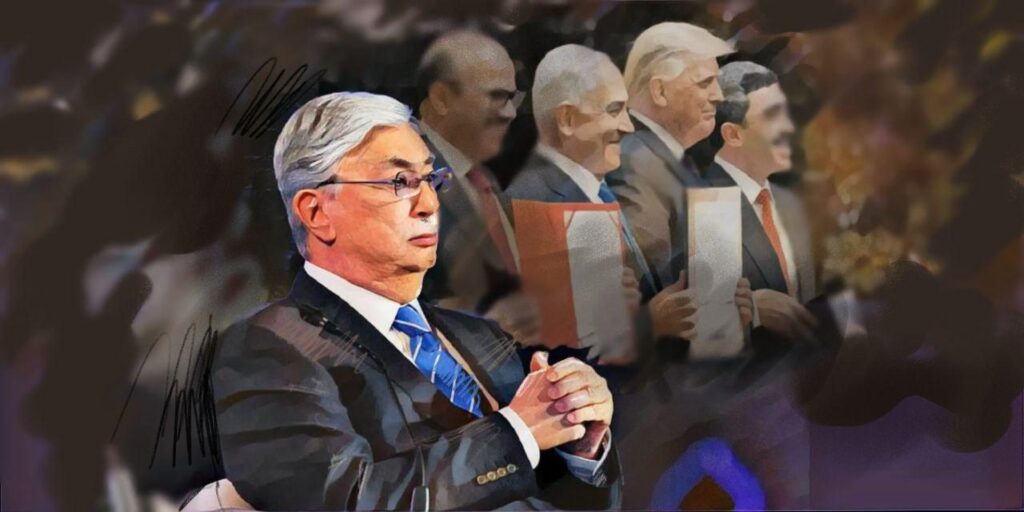
On November 6, 2025, President Kassym-Jomart Tokayev confirmed that Kazakhstan had formally acceded to the Abraham Accords, aligning the Central Asian state with the U.S.-brokered diplomatic framework. Launched during Trump’s first presidential term, the Abraham Accords seek to expand diplomatic normalization between Israel and Muslim-majority states. Initially signed in September 2020 by Israel and the United Arab Emirates, and separately by Israel and Bahrain, the Abraham Accords were later expanded to include Morocco and Sudan. Within the broader Abraham Accords framework, Washington continues to seek Saudi Arabia’s participation, a step viewed as diplomatically significant given the kingdom’s custodianship of two of Islam’s holiest sites. However, the process was derailed following the outbreak of the Gaza war in late 2023, triggered by a Hamas attack on Israel. Riyadh has since insisted that normalization can only proceed once there is meaningful progress toward establishing a Palestinian state. Kazakhstan, a secular state with a Muslim-majority population, has maintained diplomatic ties with Israel since April 1992. Embassies were opened in 1996, and bilateral relations have expanded steadily, including in trade, defense, and humanitarian fields. In 2016, Israeli Prime Minister Benjamin Netanyahu visited Kazakhstan, highlighting the strength of this relationship. These longstanding ties help explain why Kazakhstan’s accession did not mark a shift in its bilateral relationship with Israel. Because Kazakhstan established full diplomatic relations with Israel decades ago, several analysts have described the country’s accession to the Abraham Accords as largely symbolic. Uzbek political scientist Kamoliddin Rabbimov argues that the decision was a calculated gesture rather than a shift in Kazakhstan’s geopolitical orientation. “The question arises: is Kazakhstan really ready to weaken its relations with China, Turkey, and Russia in order to join the American-Israeli alliance? I don’t think so,” Rabbimov said. “President Tokayev most likely just formally supported Trump’s initiative by saying ‘yes’ without putting any real geopolitical meaning into it. Nevertheless, even such a ‘yes’ is capable of slightly upsetting the balance in Kazakhstan’s foreign policy.” Giorgio Cafiero, the CEO of Washington-based Gulf State Analytics, views the move as strategic positioning. “Given the Trump administration’s determination to expand the scope of the Abraham Accords, this move by Kazakhstan was a relatively easy way to win the White House’s favor.” German analysts at Kettner Edelmetalle emphasize Kazakhstan’s natural resource wealth as a key factor. “The country has significant deposits of minerals and rare earth elements, resources that are indispensable for modern technologies. By strengthening ties with Washington, Astana apparently hopes to attract more American investment in this strategically important sector.” Eldar Mamedov, non-resident fellow at the Queens Institute and a former senior advisor to the European Parliament, views the development through the lens of geopolitical balancing. “The Abraham Accords are merely a tool in Astana’s deliberate efforts to diversify its geopolitical dependence on Moscow and strengthen its strategic relations with the United States,” he writes. “Perceiving them as the beginning of a new, ideologically defined bloc misinterprets the fundamentally pragmatic and self-interested nature of Kazakhstan’s calculations.” Kazakhstan’s accession to the Abraham Accords reflects...

Opinion: After the UN Gaza Resolution – Kazakhstan’s Potential Role

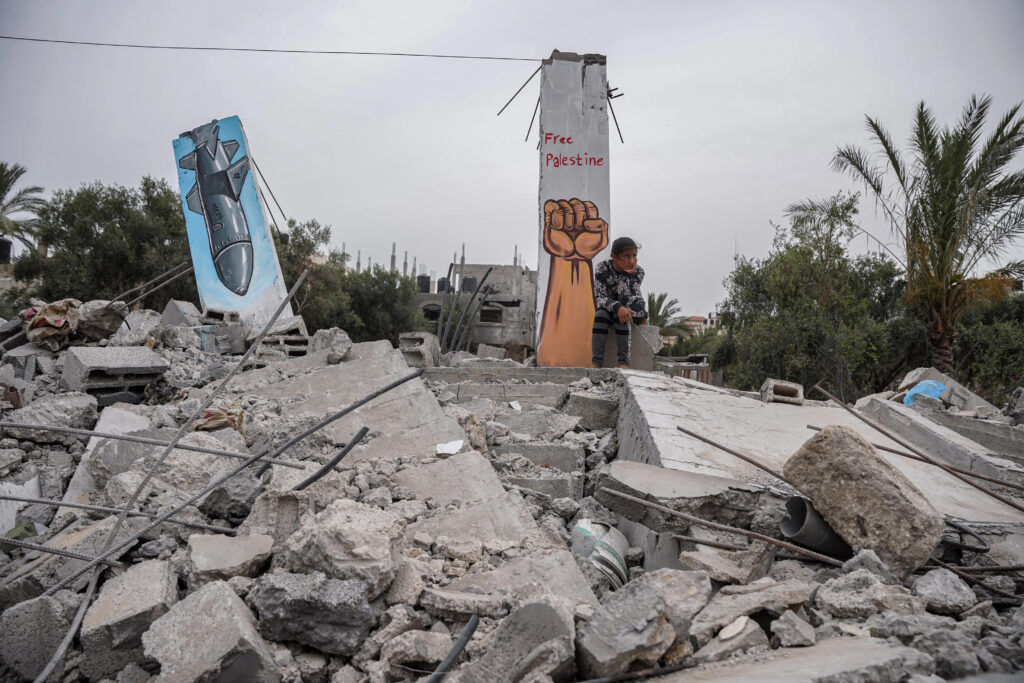
The implementation of any new approaches aimed at a rapid, peaceful resolution of the Middle East conflict, including the latest UN Security Council resolution, which authorizes the deployment of International Stabilization Forces (ISF), shows that the international community is once again reaching the limits of tools that rely solely on security measures, temporary control, and external administration. Even the most carefully calibrated political or administrative frameworks cannot produce sustainable results unless the ideological nature of the conflict, including its spiritual, historical, and value-based foundations, is changed. It is increasingly clear today that peace in the Holy Land requires not only diplomatic and humanitarian efforts, but also a deep dialogue between the religious and civilizational traditions of the region. In this context, the experience of Kazakhstan, which initiated the creation of a unique collective mechanism for religious reconciliation, deserves particular attention. After lengthy discussions, the UN Security Council approved the U.S.-proposed resolution to form an international stabilization force in Gaza. That means authorizing external actors - for the first time through a UN-mandated transitional authority - to participate in Gaza’s administrative and security arrangements. Thirteen countries supported the resolution, with only Russia and China abstaining. This step creates a new legal reality: the international community now holds a formal mandate to support Gaza’s security, humanitarian access, and reconstruction. Yet the resolution raises another question: will this become the foundation for lasting peace, or merely another temporary structure that keeps the situation under control without changing its essence? The U.S.-Israeli planning model - widely discussed in reporting - proposing dividing Gaza into "green" and "red" zones, reflects an approach in which security replaces reconciliation. Historical cases, such as Bosnia and Lebanon, suggest to many analysts that such strategies rarely lead to sustainable stability. Territorial divisions, from Bosnia to Lebanon, tend to freeze conflicts rather than resolve them. The Palestinian enclave risks becoming an example of a “permanent transitional zone,” where military stability exists without political resolution or trust. In the future, a divided Gaza could face humanitarian collapse, intensified radicalization, and deep fractures in how the Islamic world perceives the West, especially if European troops are deployed. All this underscores a key point: without addressing the ideological and religious dimensions of the conflict - as many experts argue - territorial schemes remain temporary. The conflict in the Holy Land cannot be resolved solely with demarcation maps and international mandates. Breaking the deadlock requires more than another control mechanism; it requires a new architecture of reconciliation. And it must engage the roots of the conflict, including religious thinking, historical grievances, and cultural trauma, rather than its surface-level manifestations. Kazakhstan can play a unique role here. It is not just a new participant in the Abraham Accords, but a country with remarkable political, diplomatic, and spiritual legitimacy. It enjoys the trust of the Islamic world, maintains stable relations with Israel, is perceived by the West as a neutral partner, and has a successful record of coordinating great-power and regional actor efforts, such as the Astana process on...

Kazakhstan Maintains Diplomatic Balance Following Gaza Ceasefire

On Monday, the Palestinian group Hamas handed over the final 20 surviving hostages to Israel in a two-stage exchange, reportedly mediated with the involvement of Qatari representatives. By midweek, the outcome of the latest ceasefire attempt between Israel and Hamas may become clearer. On October 13, U.S. President Donald Trump addressed the Knesset in Israel, before traveling to Egypt for a summit. The hostages had been held for more than two years, mirroring the duration of Israel’s military campaign that has reverberated across the region. The two-stage exchange formed part of a broader ceasefire framework backed by the United States, Egypt, and Qatar. Washington has framed the deal as a cornerstone of its renewed Middle East peace initiative, which aims to establish a long-term truce and pave the way for gradual reconstruction in Gaza. Trump described the agreement as the "beginning of a new security architecture for the region,” though analysts caution that deep mistrust between the parties could still derail implementation. The ongoing war in the Middle East is impacting Kazakhstan, as it is across Central Asia. Anti-Israeli sentiment has grown in this majority-Muslim country, though the government continues to advocate for a balanced and diplomatic approach. For Astana, maintaining neutrality amid the polarized reactions to the war is not just a matter of diplomacy, but also a matter of regional stability. Kazakhstan’s leadership views itself as a potential bridge between Muslim-majority nations and Western partners, drawing on its history of multivector foreign policy. Officials stress that Astana’s engagement is guided by the principles of dialogue and international law rather than religious or ideological alignment. A Delicate Diplomatic Position Kazakhstan has consistently supported international peacekeeping efforts. On September 30, President Kassym-Jomart Tokayev backed Trump's Gaza peace plan, and on October 9, Tokayev welcomed the ceasefire agreement in the Gaza Strip and the release of hostages, as announced by his press secretary, Ruslan Zheldibay. Tokayev commended the mediation efforts of Egypt, Qatar, and Turkey, and acknowledged the contributions of the United States and President Trump in advancing peace negotiations in the region. Kazakhstan recognized the State of Palestine in 1992 and established diplomatic ties. While economic relations remain minimal, the recognition holds symbolic political significance. At the same time, Kazakhstan maintains relatively strong relations with Israel, with a notable volume of bilateral trade. The country's longstanding diplomatic stance emphasizes the principle of “two states for two peoples.” Bilateral trade between Kazakhstan and Israel exceeded $450 million in 2023, driven primarily by exports of Kazakh metals and imports of Israeli technology and agricultural products. Cooperation in water management, healthcare, and defense technologies has continued despite regional instability. Kazakh officials have also emphasized the importance of Israeli investment in innovation and renewable energy sectors. Kazakhstan's diplomatic position has been reiterated consistently. In November 2023, the Ministry of Foreign Affairs reaffirmed that the only sustainable solution to the conflict lies in the creation of two sovereign states. Amid intensified hostilities in October 2023, Israel imposed a blockade on Gaza. At that time, 76...

Kazakhstan Backs Trump’s Gaza Peace Initiative

Kazakhstan has expressed support for President Donald Trump’s Comprehensive Peace Plan aimed at ending the conflict in Gaza. In a statement on X, Presidential Press Secretary Ruslan Zheldibay wrote that President Kassym-Jomart Tokayev considers the initiative a “unique opportunity” and “an important step toward resolving the situation in the Middle East, strengthening interstate trust, and establishing lasting and just peace in this region.” By describing the initiative as an “important step” rather than a definitive solution, Kazakhstan leaves room for diplomatic flexibility and avoids alienating partners that hold divergent views on Gaza. At the same time, the public endorsement is a clear gesture of support for the Trump administration’s leadership in addressing the central conflict of the Middle East, marking a notable moment where Astana aligns itself with Washington’s effort to shape the regional peace agenda. [caption id="attachment_36799" align="aligncenter" width="581"] Ruslan Zheldibay, President Tokayev’s press secretary, announced the position in a post on X[/caption] Trump’s Comprehensive Peace  Plan, released by the White House on September 29, 2025, ties Gaza’s governance to the broader framework of the Abraham Accords, proposing regional security guarantees, economic reconstruction measures, and expanded Arab participation as part of an effort to extend the accords’ realignment across the Middle East. Trump has repeatedly urged world leaders to expand the Abraham Accords, including appeals to Saudi Arabia, discussions with Israel’s Netanyahu, and even suggesting that Iran could join. At the 80th United Nations General Assembly (UNGA) last week, President Kassym-Jomart Tokayev pointed to the Abraham Accords as proof that reconciliation is possible in the Middle East. This endorsement is consistent with Tokayev’s broader diplomatic messaging and positions Kazakhstan as the only Central Asian state publicly backing the accords as a pathway to normalization at the UN meeting. Separately, UNGA week also saw Wabtec announce a $4.2 billion order from Kazakhstan’s national railway, a deal in line with Trump’s ‘America First’ policy that underscored the commercial dimension of U.S. engagement. The Gaza statement follows Tokayev’s remarks last week about the United Nations after technical failures during Trump’s UNGA appearance. Tokayev described the incident as “an extremely dangerous incident” and “a most serious shortcoming — one might even say a failure — of the UN Secretariat and the relevant services and departments.” He noted that, “The decision to conduct an investigation has already been made and is correct.” He linked the investigation into the failure to broader questions about the UN’s credibility, echoing Trump’s frustrations with the institution. Alongside these public remarks, Tokayev has made changes to Kazakhstan’s diplomatic team, recalling the ambassador to Washington and appointing a new foreign minister. While the reshuffle followed Tokayev’s return from New York, it also appears to reflect a deliberate recalibration of Kazakhstan’s diplomatic apparatus, with the new team brought in to carry forward these emerging foreign policy priorities. Taken together, these moves highlight Kazakhstan’s shift toward a more visible diplomacy, with Astana’s decisions increasingly aligned with Washington. By endorsing Trump’s Comprehensive Peace Plan, Tokayev has signaled a convergence with the former U.S....

Global Conflicts Fuel a Wave of Cancellations in Central Asia’s Cultural Scene

On September 20, performers from Kazakhstan, Uzbekistan, Tajikistan, and Kyrgyzstan took part in the international “Intervision-2025” contest in Moscow, a music competition often described as the Eurasian counterpart to Eurovision. Originally launched in the 1970s by countries of the Eastern Bloc, Intervision has been periodically revived as a stage for showcasing regional talent and cultural diversity, with recent editions aiming to strengthen cultural exchange across Eurasia. At the event, last held in Sochi, Russia, in 2008, the Kyrgyz performers, Nomad, earned second place. But even as regional talent competes on the global stage, a parallel trend is intensifying at home: artists, especially Russians, are increasingly being “canceled” across Central Asia. The root cause, observers say, is Russia's war in Ukraine. Mounting Controversies Concert cancellations, particularly in Kazakhstan, have become so frequent that international artists are growing wary. On September 17, organizers for Canadian pop star The Weeknd announced the cancellation of his planned show in Almaty. They cited a broader pattern of artist cancellations in the country. “In light of recent events and online discussions, we have decided to consider hosting the concert elsewhere,” the statement read. Sources suggest the cancellation was indirectly linked to the backlash over an upcoming concert by Russian rapper Timati, who has publicly supported the war in Ukraine. The online campaign has reportedly cast a shadow over unrelated performances, including The Weeknd’s. At the same time, anti-war artists are also being blocked. Belarusian rapper Max Korzh saw his Almaty show canceled, despite his public criticism of the war. The decision may have been influenced by riots at his August concert in Warsaw, where Ukrainian Insurgent Army (UPA) symbols were seen. In Russia, the UPA is classified as an extremist group; in Poland, it is accused of wartime atrocities against Poles. Following the event, the Polish authorities deported 57 Ukrainians and 6 Belarusians. Kazakh officials, observers say, are keen to avoid similar controversies. The War’s Cultural Fallout Ideological divides are reshaping Central Asia’s cultural landscape. Once welcome, Russian performers now frequently face petitions and protests. In August, an online campaign demanded the cancellation of pop singer Polina Gagarina’s November concert in Kazakhstan. Petitioners argued her public support for Moscow’s policies contradicted international law and risked provoking social unrest. Russian rock singer Zemfira reportedly canceled her June concert at the request of venue owners. Other Russian artists, including Grigory Leps, Vladimir Presnyakov, and the Turetsky Choir, have been barred due to perceived support for the war. The “Zhara” music festival was also scrapped following online criticism, with the Kazakh Minister of Culture citing "political propaganda and attempts to divide society" as the reasons behind the decision. Meanwhile, anti-war comedians and musicians are facing hurdles. Maksim Galkin, designated a “foreign agent” by Russia and now living in Israel, has complained of bans in Kazakhstan. Outspoken rapper Alisher Morgenstern canceled concerts in Almaty and Astana last year, while both his and Leps’ shows were prohibited in Kyrgyzstan. Officials in Bishkek cited moral concerns, accusing Morgenstern of undermining “Kyrgyz traditions...