• KGS/USD = 0.01144 0%
  • KZT/USD = 0.00214 0%
  • TJS/USD = 0.10569 0.09%
  • UZS/USD = 0.00008 0%
  • TMT/USD = 0.28530 0%
  • KGS/USD = 0.01144 0%
  • KZT/USD = 0.00214 0%
  • TJS/USD = 0.10569 0.09%
  • UZS/USD = 0.00008 0%
  • TMT/USD = 0.28530 0%
  • KGS/USD = 0.01144 0%
  • KZT/USD = 0.00214 0%
  • TJS/USD = 0.10569 0.09%
  • UZS/USD = 0.00008 0%
  • TMT/USD = 0.28530 0%
  • KGS/USD = 0.01144 0%
  • KZT/USD = 0.00214 0%
  • TJS/USD = 0.10569 0.09%
  • UZS/USD = 0.00008 0%
  • TMT/USD = 0.28530 0%
  • KGS/USD = 0.01144 0%
  • KZT/USD = 0.00214 0%
  • TJS/USD = 0.10569 0.09%
  • UZS/USD = 0.00008 0%
  • TMT/USD = 0.28530 0%
  • KGS/USD = 0.01144 0%
  • KZT/USD = 0.00214 0%
  • TJS/USD = 0.10569 0.09%
  • UZS/USD = 0.00008 0%
  • TMT/USD = 0.28530 0%
  • KGS/USD = 0.01144 0%
  • KZT/USD = 0.00214 0%
  • TJS/USD = 0.10569 0.09%
  • UZS/USD = 0.00008 0%
  • TMT/USD = 0.28530 0%
  • KGS/USD = 0.01144 0%
  • KZT/USD = 0.00214 0%
  • TJS/USD = 0.10569 0.09%
  • UZS/USD = 0.00008 0%
  • TMT/USD = 0.28530 0%

Viewing results 1 - 6 of 106

Uzbekistan to Protect Children from Religious Extremism

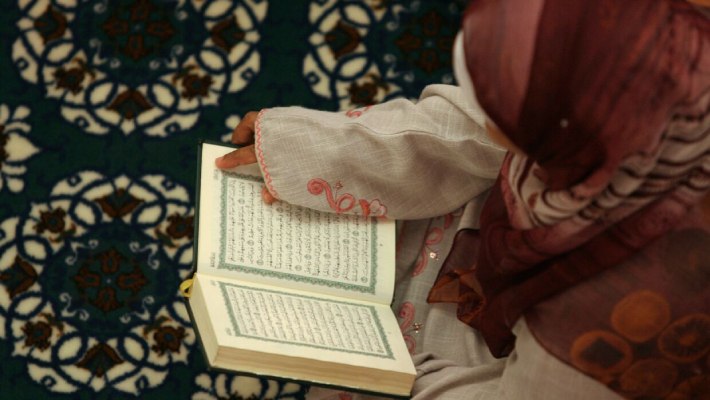
The Legislative Chamber of the Oliy Majlis (Supreme Assembly of Uzbekistan) has adopted a draft law to further strengthen children's rights and prevent their becoming "victims of ideas of religious extremism, separatism and fanaticism." The bill states that "the transfer of a child for religious education to unregistered or unlicensed organizations or persons who have no special religious education and who provide religious education without permission from the central governing body of religious organizations in Uzbekistan is prohibited." Parents or guardians registering children in illegal religious education will be fined the equivalent of up to $270 and repeated offenses could result in administrative arrest for up to 15 days.  

Kazakhstan Facing Challenge of Developing Roads in Ninth Largest Country in World

Kazakhstan is one of the most active post-Soviet states in building roads. Over the past decade, KZT4 trillion ($8.55 billion) has been spent on highway construction in the country, yet in a world ranking of road quality, Kazakhstan stands 93rd out of 141 countries. Record year for road construction The focus of the current road construction season is completing the reconstruction of sections of the main road transport corridors: Karaganda–Balkhash–Almaty, Taldykorgan–Ust-Kamenogorsk, Aktobe–Kandyagash, and Atyrau–Astrakhan. Overall, the current season is due to be set new records. There are plans to repair, reconstruct and build twelve thousand kilometers of road. Another feature of the work this year is the implementation of a major new program for the “medium repair” of local roads to strengthen them structurally, which is designed to improve transport links between populated areas. This program is set to repair about 2,500 kilometers of road throughout the country. Betting on tolls In February, the government announced plans to increase tariffs on federal toll roads. However, the initiative is still under consideration. The current tariffs – KZT 1 per kilometer for passenger vehicles (0.002 US cents) and KZT 5-25 per kilometer for freight vehicles depending on the load capacity and transport class – were approved back in March 2013 for the first toll highway built in the country (Astana-Shchuchinsk). Since then, the tariffs have not changed. In 2024, there are plans to roll out a toll system on another 2,400 kilometers of federal roads, namely on the sections Kostanay–Troitsk, Aktobe–Russian border (toward the city of Orenburg), Aktau–Beineu, Kyzylorda–Aktobe Region border, Usharal–Dostyk, Kostanay–Denisovka, Makat–Kandyagash, Taraz bypass, Karaganda bypass, Balkhash–Burylbaital, and Shu– Burylbaital. According to the national company in charge of federal and international roads in Kazakhstan, KazAvtoZhol, the toll system will be introduced only after repair work is completed and the roads fully comply with regulatory requirements. In addition, attention is being paid to transit routes when introducing tolls. This is especially relevant in the context of the government’s plans to develop freight transit through Kazakhstan and make the country a regional transport and logistics hub. Thanks to international transport, including transit, tolls are expected to become a significant contributor to the country’s budget. Today in Kazakhstan, there are 17 toll road sections with a total length of more than 3,200 kilometers, which, along with the state budget, help finance the maintenance of federal roads. According to the Ministry of Transport, KZT60 billion ($130 million) is required annually to maintain the country’s roads. Internationally, road maintenance is financed by taxes allocated for transport, but this is not enough in Kazakhstan – it is one of the largest countries in the world, but has a low population density, meaning its road infrastructure remains underutilized. Because of this, historically, road maintenance in the country was financed from the state budget. Overall, the toll system will be gradually introduced on 11,000 kilometers of road by 2029 as reconstruction work is completed. The further rollout of the system, which aims to support year-round maintenance, should reduce the...

Virtual Academy on Countering Corruption to Start Work in Uzbekistan

On January 1, 2025, Uzbekistan will launch the Virtual Academy on Combating Corruption. This electronic platform aims to continuously improve the knowledge of both civil servants and the public about fighting corruption. According to the press service of the Anti-Corruption Agency, President Shavkat Mirziyoyev has signed a decree to this effect. The decree outlines priority areas for continuously enhancing knowledge about combating corruption. These priorities include raising legal awareness and culture, fostering societal resistance to corruption, and instilling values of integrity in the younger generation. In addition, it aims to improve the knowledge, skills, and qualifications of employees responsible for combating corruption, and those in civil service positions that are most exposed to risks associated with corruption. The system also includes assessing and certifying civil servants' anti-corruption knowledge and maintaining a register of those who have received certification. The Anti-Corruption Agency and the Law Enforcement Academy will organize and conduct training activities in the virtual academy. In addition to civil servants, the virtual academy is open to business entities, representatives of non-governmental, non-profit organizations, and other civil society institutions, students of educational organizations, and employees of enterprises with state participation. Training is organized into introductory and special courses. Basic courses will be free for all users, and advanced training in special classes will be on a paid contract basis. Training will be mandatory for civil servants, who will have to take the course within three months of being hired. The periodicity of civil servants' professional development will be at least once every three years. For other categories, training will be voluntary.

Results of Visit of the U.S. Trade Representative to Kazakhstan

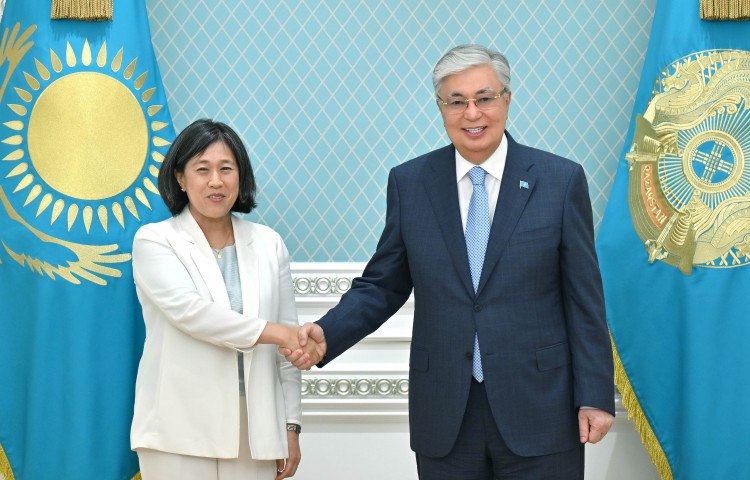
By Vagit Ismailov President of Kazakhstan Kassym-Jomart Tokayev, Deputy Prime Minister Serik Zhumangarin, Minister of Trade and Integration Arman Shakkaliev, Minister of Labor and Social Protection Svetlana Zhakupova, and other officials met with U.S. Trade Representative Catherine Tye. The United States and Kazakhstan reaffirmed their commitment to expanding and diversifying bilateral trade relations. Both sides pledged to deepen cooperation in agriculture and make progress in the near term. This includes increasing U.S. meat and poultry production capacity, optimizing the issuance of digital export certificates, and facilitating increased shipments of U.S. agricultural equipment to Kazakhstan. Tye noted Kazakhstan's interest in repealing the Jackson-Vanik amendment and expressed support for the U.S. Congress' efforts to update the Generalized System of Preferences program. She also recognized the program's importance in diversifying Kazakhstan's trade. The U.S. and Kazakhstan pledged to strengthen joint work on regional connectivity and increase the capacity of the Trans-Caspian Trade Route. The parties discussed increasing bilateral engagement to create diverse, secure, and sustainable supply chains. They stressed the importance of continuous cooperation in trade facilitation, including the harmonization and digitization of customs processes. Tye noted the contribution of U.S. companies' supply of high-quality products and the development of alternative trade routes. She also thanked Kazakhstan for the success of the 15th meeting of the Board of the U.S.-Central Asia Trade and Investment Framework Agreement (TIFA). The working groups noted progress on several issues, including sanitary and phyto-sanitary measures, customs procedures, intellectual property protection, women's economic empowerment, and digital trade. Tye further emphasized the importance of a transparent and consultative regulatory process in regional harmonization. Kazakhstan and the U.S. reaffirmed their commitment to utilize the TIFA mechanism further to deepen trade and investment ties between the U.S. and Central Asia. The U.S. also expressed interest in working closely with Kazakhstan to support internationally recognized labor rights, including promoting workers' rights to freedom of association and collective bargaining. The United States and Kazakhstan pledged to continue working to achieve concrete trade results, maintaining the positive momentum of the bilateral trade and investment relationship.

Kyrgyzstan to Take Chinese Loan to Build Railroad

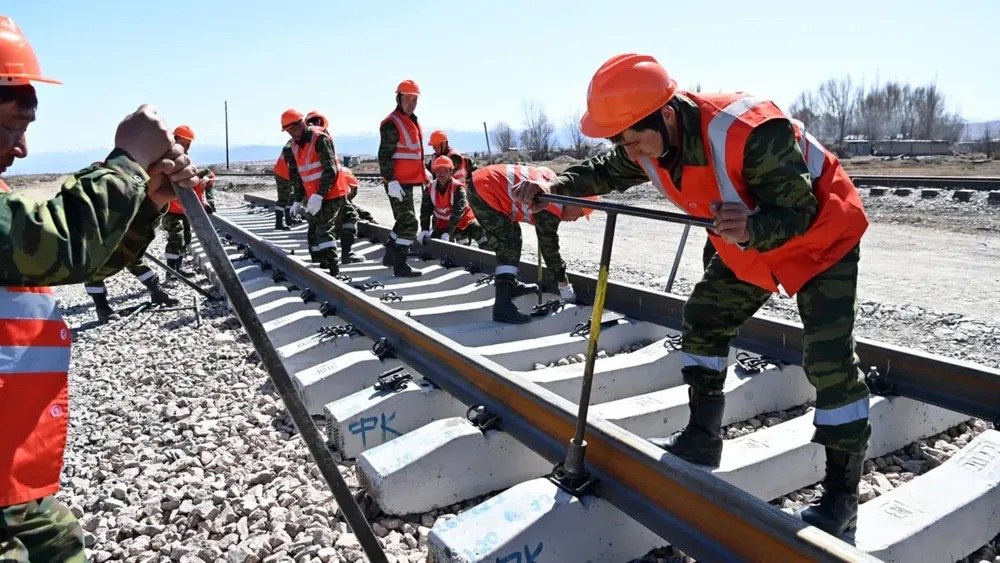
Kyrgyzstan intends to take a loan from China to construct the China-Kyrgyzstan-Uzbekistan railroad. Azamat Sakiyev, the General Director of Kyrgyz Temir Jolu NC, stated at the Parliamentary Committee on Transport, Communications, Architecture, and Construction meeting, 24.kg has reported. The Speaker noted that the feasibility study for the project has already been developed, and the agreement amounts to $4 billion 700 million. "According to the agreement, 51% of the costs will be covered by the People's Republic of China, and the Kyrgyz and Uzbek sides will assume 24.5% each," Sakiyev said. "Where will we find $1 billion?" MP Baktybek Sydykov asked, to which Sakiev replied that the Kyrgyz Republic intends to borrow money from Chinese banks. Sakiyev specified that the Chinese side would lend the joint venture half of the total project cost—$2 billion 350 million—and the parties would cover the other $2 billion 350 million at their own expense. As a result, Kyrgyzstan's share will amount to $783 million. The China-Kyrgyzstan-Uzbekistan railroad is a projected 454-kilometer railroad designed to connect the railroads of China and Uzbekistan through the territory of Kyrgyzstan and further through Turkmenistan, Iran, and Turkey, to connect with the European railroad network within the framework of the New Silk Road transport system. Previously, Kyrgyz President Sadyr Japarov had said the construction would cost between $3 and $5 billion.

Dreaming of Paris, Fighting for Power: Electricity in Central Asia

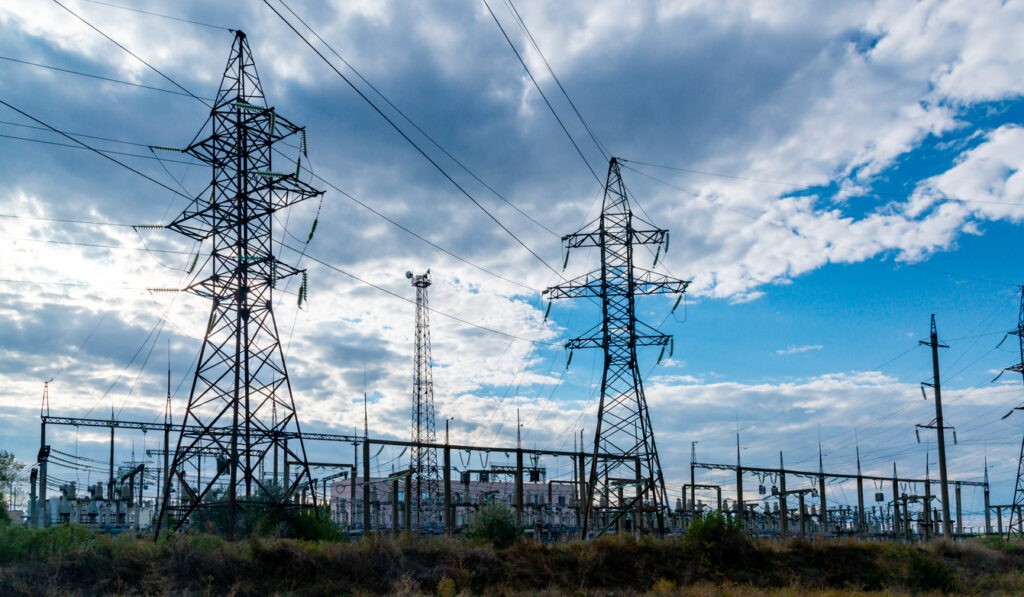
The COP28 UN Climate Change Conference in December 2023 highlighted the important role of developing countries – which include the Central Asian republics – in reducing dependence on fossil fuels thanks to the use of cleaner, renewable energy sources. Indeed, Central Asia is believed to have something to offer the world in the fight against climate change, being home to numerous sources of clean energy, including solar, wind, and hydropower.   The "electricity ring" Last year, fossil fuels accounted for 95% of the total energy supply in the five Central Asian countries, according to the UN. To meet their commitments under the Paris Agreement and the transition to a low-carbon and sustainable energy system, the region will need to make a giant leap from fossil fuels to renewable energy sources. The main issue is that this transition must be made by different electrical grids across Central Asia, most of which are linked to the Central Asian Power System (CAPS). CAPS, also known as the "electricity ring," is a joint power transmission network connecting Uzbekistan, Tajikistan, Turkmenistan, Kyrgyzstan, and some southern parts of Kazakhstan. It was created in 1960, with the aim of ensuring the reliable transmission of electricity and steady cooperation between the republics. The energy systems of these regions are united into a single structure, which allows for parallel operation even when individual sections of the grid go down, meaning that if one part of the ring goes down, the other parts continue to function, improving reliability and efficiency. This system plays an important role in ensuring energy security and promoting cooperation and interaction. The creation and maintenance of any power system requires coordinated work by all participants. In the past, some countries temporarily withdrew from CAPS for various reasons, but in most cases, they sought to resume cooperation and their link to the “electricity ring.”   Blackout On January 25, 2022, consumers in the ring experienced a blackout. The lights went out almost instantly in the south of Kazakhstan (the city of Almaty, as well as Turkestan, Kyzylorda, Almaty and Zhambyl regions), in Kyrgyzstan (the cities of Bishkek and Osh and the Issyk-Kul region) and Uzbekistan (the city of Tashkent, the Fergana Valley and Syr Darya, Jizzakh, Samarkand, Navoi and Kashkadarya regions). The widespread power outage paralyzed transportation, shut down important social infrastructure, and spurred popular discontent in the three countries affected. The Kazakhstani pundit Petr Svoik, a former professional power engineer who ran a thermal power plant (TPP), described the blackout as an unprecedented event, noting, however, that the technology worked perfectly and that the sudden loss of 1,500 MW of electricity did not lead to any major consequences. The Kazakhstani energy system consists of two insufficiently connected parts – north and south. The north is actually a continuation of the Russian power system, part of the Russian “energy bridge” - though, of course, it also has importance for the whole of Kazakhstan - whilst the south is part of the Central Asian ring. Looking at the...