• KGS/USD = 0.01144 0%
  • KZT/USD = 0.00213 0%
  • TJS/USD = 0.10569 0.09%
  • UZS/USD = 0.00008 0%
  • TMT/USD = 0.28530 0%
  • KGS/USD = 0.01144 0%
  • KZT/USD = 0.00213 0%
  • TJS/USD = 0.10569 0.09%
  • UZS/USD = 0.00008 0%
  • TMT/USD = 0.28530 0%
  • KGS/USD = 0.01144 0%
  • KZT/USD = 0.00213 0%
  • TJS/USD = 0.10569 0.09%
  • UZS/USD = 0.00008 0%
  • TMT/USD = 0.28530 0%
  • KGS/USD = 0.01144 0%
  • KZT/USD = 0.00213 0%
  • TJS/USD = 0.10569 0.09%
  • UZS/USD = 0.00008 0%
  • TMT/USD = 0.28530 0%
  • KGS/USD = 0.01144 0%
  • KZT/USD = 0.00213 0%
  • TJS/USD = 0.10569 0.09%
  • UZS/USD = 0.00008 0%
  • TMT/USD = 0.28530 0%
  • KGS/USD = 0.01144 0%
  • KZT/USD = 0.00213 0%
  • TJS/USD = 0.10569 0.09%
  • UZS/USD = 0.00008 0%
  • TMT/USD = 0.28530 0%
  • KGS/USD = 0.01144 0%
  • KZT/USD = 0.00213 0%
  • TJS/USD = 0.10569 0.09%
  • UZS/USD = 0.00008 0%
  • TMT/USD = 0.28530 0%
  • KGS/USD = 0.01144 0%
  • KZT/USD = 0.00213 0%
  • TJS/USD = 0.10569 0.09%
  • UZS/USD = 0.00008 0%
  • TMT/USD = 0.28530 0%

Viewing results 1 - 6 of 106

Islamic Development Bank Supports Rogun HPP Project in Tajikistan

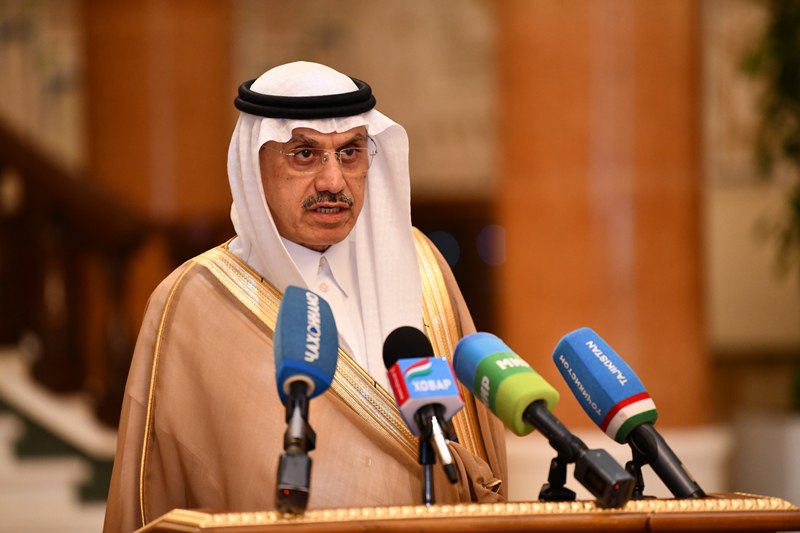
News agency Khovar has reported on the Islamic Development Bank (IDB) support in the construction of the Rogun Hydropower Plant (HPP) in Tajikistan. Dr. Muhammad Suleiman Al-Jasser, President of the IDB Group, announced this after a meeting with Tajik President, Emomali Rahmon. The meeting detailed Tajikistan's history towards economic development and outlined the country's priorities for the future. "The Islamic Development Bank has cooperated closely and successfully with Tajikistan for many years. Financing under this agreement has amounted to more than $900 million. We are satisfied with the current level of cooperation. One of the projects under consideration today is support for the Rogun Hydroelectric Power Plant project. The Islamic Development Bank has decided to sign an agreement with the Government of the Republic of Tajikistan,” Muhammad Suleiman Al-Jasser stated. Al-Jasser noted that IDB funds allocated to Tajikistan are directed to energy, education, industry, agriculture, transportation, and other key economic sectors. “We are confident that the current cooperation will be expanded and will serve as an invitation to other participants and investors,” Al-Jasser concluded.

How the Trans-Caspian Corridor will Revitalize Trade between Asia and Europe.

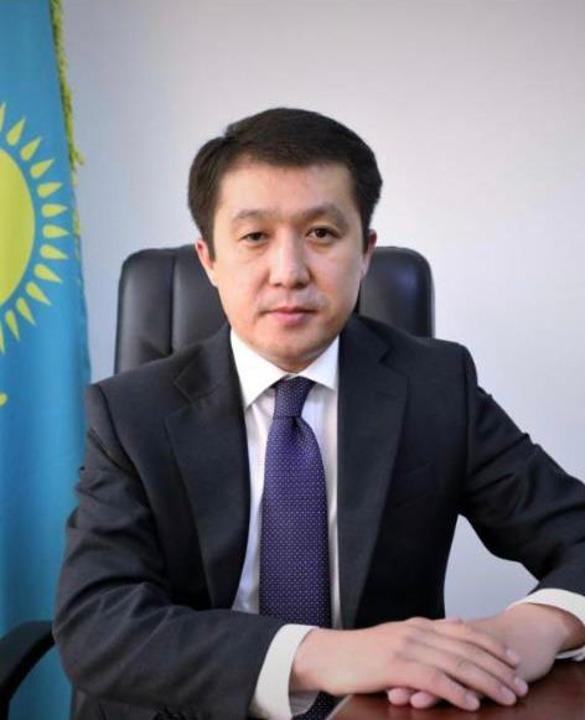
Kazakhstan's Transport Minister, Marat Karabayev has stated that geopolitical tensions are disrupting traditional logistics chains and jeopardizing global trade. As reported in an article published in the Chinese business publication, "South China Morning Post, " he claimed that developing the Trans-Caspian transport corridor is essential for increasing transit potential. Karabayev believes the Trans-Caspian international transportation route is an effective alternative to traditional maritime routes. The overland corridor connects Southeast Asia and China with Europe, crossing Kazakhstan, Azerbaijan, Georgia, and Turkey. Last year, cargo traffic along this route exceeded 2.7 million tons, up 86%. "Kazakhstan can play a key role here. As the largest country between Asia and Europe, it is an important transit hub for trade between the two continents. Kazakhstan accounts for about 80% of all land transit traffic from China to Europe,” said Karabayev. He noted that the Trans-Caspian corridor has undergone a steady development over the past decade. In recent years, geopolitical changes have given it additional impetus, especially since the number of container ships crossing through the Suez Canal in 2023, decreased by 67%  and the cost of sea transportation from Shanghai to European countries has almost tripled in recent months. Given that overland transit would reduce costs and become a more viable logistical option, Kazakhstan is committed to improving infrastructure and terminal facilities, increasing rolling stock, removing administrative barriers, and creating favorable carrier conditions. "However, for the Middle Corridor to achieve its goals, we need the support and participation of other countries," advised Karabayev. "Austria, Germany, Latvia, Latvia, Lithuania, Estonia, and Hungary have expressed interest in joining the Trans-Caspian International Transport Route Association. The EU recently announced an investment of 10 billion euros ($10.85 billion). In addition, a roadmap for development until 2027 has been agreed with Azerbaijan, Georgia, and Turkey.”

Kazakhstan Poised for Large-Scale Locust Invasion

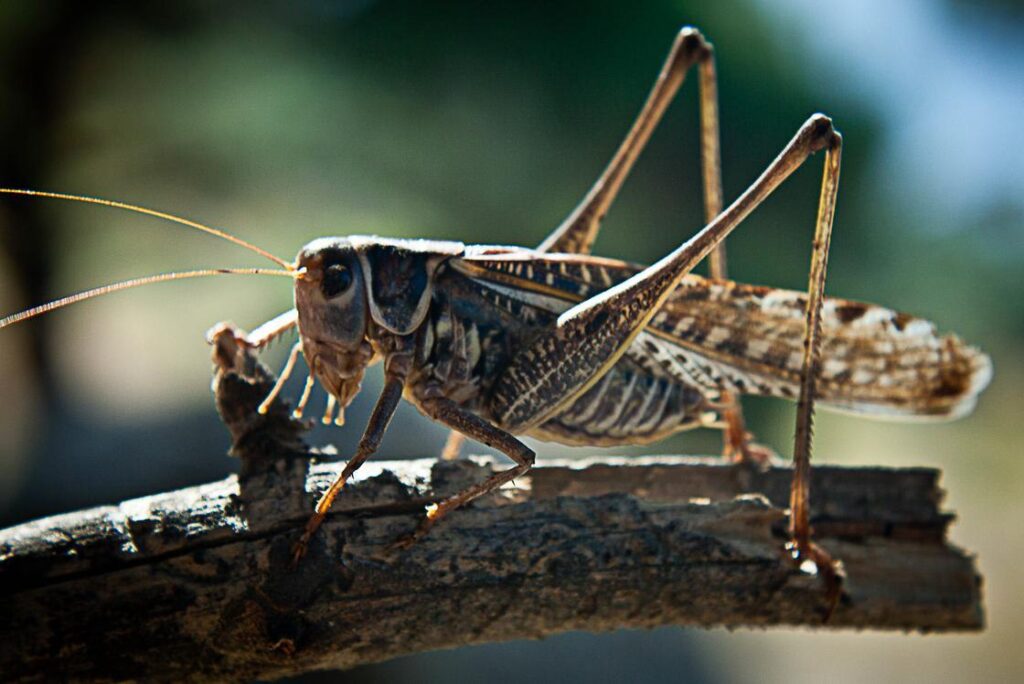
At a central operational headquarters meeting to counteract the spread of locusts, Vice Prime Minister of Kazakhstan Serik Zhumangarin received new reports on projected risks to the region. Alarmed by the forecast, Zhumangarin announced, "We have never before faced such a wide spanning  infestation of locusts and must not underestimate the possible consequences.  I instruct the Committee of State Inspection of the Ministry of Agriculture to immediately finalize all procedural issues and send necessary equipment to the regions where it is needed. In the hot season, as a precaution, we will switch to meetings at the headquarters twice a week" The government reported that 260,000 hectares had already been treated in the Turkestan Oblast, but thereafter, the areas affected by locusts had spread to an additional 50,000 hectares. Treatment is therefore being extended to the districts of  Arys City, Saryagash, Keles, Ordabasinsk, and Shardara. According to forecasts, the largest invasion of locusts  is expected in the regions of Kostanay and Aktobe. "Locusts have always been with us, from the time of  dinosaurs and mammoths. We have always and will continue, to battle them," stated Zhumangarin. He then  said that whilst locusts are regarded as halal and some countries have learned to harvest them as a source of great protein food,  that's not us, I guess!"

Renewable Energy “Key” for Uzbekistan: Interview with IFC Regional Manager

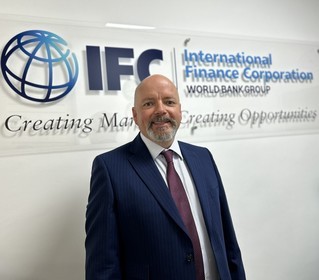
Neil McKain, the IFC regional manager for Uzbekistan and Turkmenistan, says renewable energy sources are helping Uzbekistan reduce natural gas consumption. The country can become a regional leader in renewable energy sources, he told The Times of Central Asia in an interview.   ТСА: To begin, could you give us an overview of the current state of renewable energy in Uzbekistan? Neil McKain: Uzbekistan has significant renewable energy potential — primarily solar and wind — and is well equipped to fulfill its growing energy needs and transition to a clean energy economy. Renewable energy can help diversify the energy mix and reduce the country’s heavy reliance on natural gas. The government is focused on increasing the share of renewables in power production by up to 25 GW, or 40% of the country’s overall electricity consumption, by 2030. These efforts support the country's clean energy transition and address the increasing demand for energy in Uzbekistan’s economy and among its citizens. In this context, the World Bank Group is helping Uzbekistan develop 1,000 MW of solar and 500 MW of wind energy by attracting private sector investments.   ТСА: With these developments, what challenges does Uzbekistan face in transitioning to renewable energy? McKain: Like many countries, Uzbekistan faces many challenges as it transitions. The government has substantial natural gas reserves, and the economy relies heavily on fossil fuels. Transitioning away from these energy sources can be economically and politically challenging. It requires building public support and raising awareness of the many benefits of renewable energy. In addition, building the necessary infrastructure, such as solar farms, wind turbines, and an updated electrical grid, requires significant investment, time, and technical expertise. As renewable energy sources are intermittent, developing efficient energy storage solutions will be vital to ensuring a stable energy supply. Also, securing the required capital can take time, as it often involves enormous upfront costs and long-term investment before seeing returns. Addressing these multifaceted challenges will require coordinated efforts from the government, private sector, and international partners.   ТСА: What is the IFC's involvement in renewable energy projects in Uzbekistan? McKain: The IFC is deeply committed to supporting renewable energy in emerging markets, and Uzbekistan is a key country. We've been involved in several initiatives, including advising on and financing solar power projects. One of our first projects is a solar plant in the Navoi region, which provides electricity to 31,000 homes. This project was established through a public-private partnership (PPP) between the Uzbek government and Masdar, the United Arab Emirates’ flagship renewable energy company. IFC assisted the government as a transaction adviser in designing and tendering the PPP under its Scaling Solar Program. It is now a significant milestone in the country's renewable energy journey. In collaborationwith other lenders, IFC also provided a financing package to support the construction of a 500-megawatt wind farm in the Navoi region, which Masdar is also building. Capable of powering 500,000 homes, it will be the largest facility in Central Asia—and, incidentally, the largest wind farm IFC has ever sponsored. Together with our state and...

Ten Years of the EAEU: Trade Wars Rumble On Against Backdrop of GDP Growth

The Eurasian Economic Union (EAEU) recently celebrated its first significant anniversary. According to the numbers, the years of integration have positively impacted the member states' economies; however, there are serious trade wars in the bloc, and some entrepreneurs fear the collapse of entire industries. The agreement on creating the EAEU was concluded on May 29, 2014, in Astana by the presidents of Kazakhstan, Russia, and Belarus. Later, Armenia and Kyrgyzstan joined the union, whilst Moldova, Uzbekistan, and Cuba hold observer state status. The member states initially emphasized the strictly economic nature of the union, and continuously refused to politicize it. For Kazakhstan, membership in the EAEU is advantageous, because it simplifies exporting raw materials to foreign markets. In addition, the union has unified customs regulations and duty-free trade. According to official sources, the GDP growth rate of all EAEU countries in 2023 amounted to 3.8%, which is higher than global GDP growth. In Armenia, growth is 8.7%, in Kyrgyzstan 6.2%, in Kazakhstan 5.1%, in Belarus 3.9%, and in Russia 3.6%. Mutual trade between member states has almost doubled since the union's inception, with foreign trade increasing by 60%. Kazakhstan has increased trade turnover with EAEU countries 1.7 times, and foreign exports have doubled. According to the Bureau of National Statistics of Kazakhstan, foreign trade turnover for January-March 2024 increased to $31.2 billion, of which the share of trade with EAEU countries amounted to 19.6%, reaching $6.1 billion. Russia's share in the volume of Kazakhstan's external trade turnover (within the EAEU) exceeds 90%. Nevertheless, creating a common harmonized market intended to copy that of the European Union has not yet been possible. A regulation financial system, logistics system, efficient electricity market, and other projects have yet to be implemented. In addition, the EAEU is often shaken by trade wars, and producers suffer from price dumping. Kazakhstani businessmen and farmers have repeatedly complained that the expansion of cheap Russian goods threatens their livelihoods. This problem is particularly acute in the production of eggs, chicken, and dairy products, whilst Kazakhstan is critically dependent on Russian imports in some sectors, especially food. For example, when Russia imposed quotas on sugar exports or otherwise restricted sales, the cost of these products in Kazakhstan tripled in 2022. As soon as Russia removed these restrictions, the price quickly adjusted. Comparable fluctuations are also observed in other sectors. Due to international sanctions, dairy producers from Russia and Belarus redirected their supplies to Kazakhstan and started dumping prices to take over the Kazakh market. In this regard, some experts proposed that the border be closed to these products to preserve the local dairy industry. At the same time, analysts referred to Russia's frequent bans on the export of certain goods, mainly wheat and sugar. Such measures are not conducive to integration, but rural producers believe that Kazakhstani officials cannot effectively defend their interests in the EAEU market, even though they hold significant positions in the integration body. This year, Kazakhstani entrepreneurs again complained that Russia and Belarus were flooding...

Uzbekistan to Build a Nuclear Power Plant

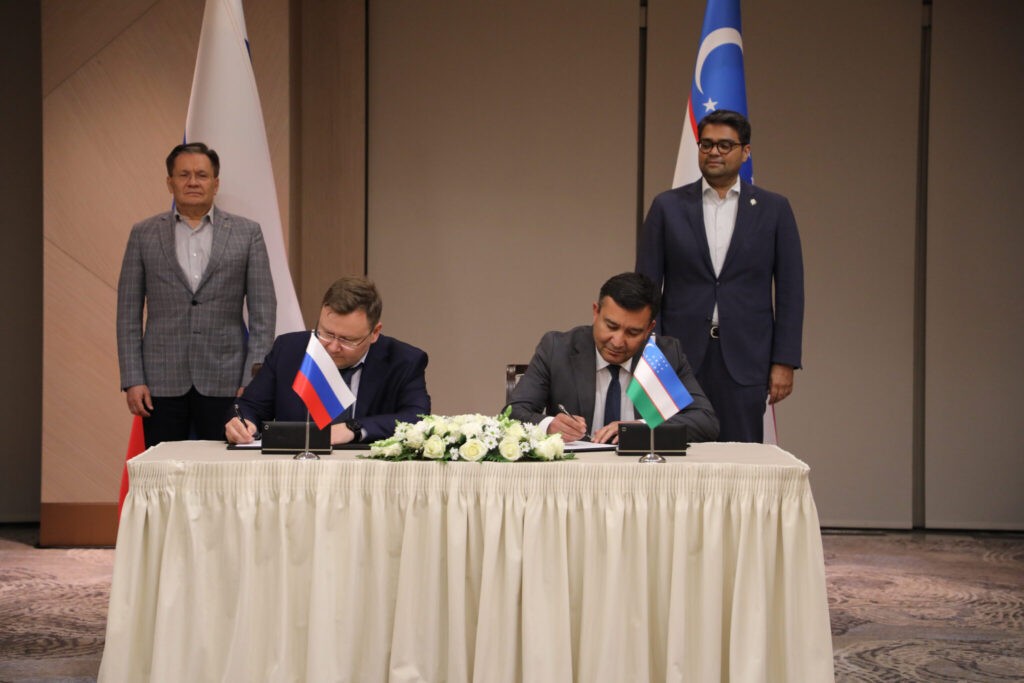
During the Russian president's state visit to Uzbekistan, a protocol on amending the intergovernmental agreement on cooperation between the two countries in the construction of a nuclear power plant in Uzbekistan was signed, Atom Media reports. On the margins of the event, Russia's Atomstroyexport joint stock company and the Directorate for NPP Construction under the Atomic Energy Agency of the the Cabinet of Ministers of the Republic of Uzbekistan signed a contract for the construction of a small-capacity nuclear power plant (SCNPP). The project envisages a Russian-designed ASMP in the Jizzakh region with a capacity of 330 MW (six reactors with a capacity of 55 MW each). Rosatom will be the general contractor for the construction of the plant, with local companies also be involved in the construction. Thus, Rosatom has signed the first-ever export contract to construct a small-capacity nuclear power plant. "According to forecasts, the demand for energy resources in Uzbekistan will almost double by 2050, and it is obvious that for the stable operation of the energy system and the development of the economy, our country must provide itself with a basic source of energy. All over the world, we are now seeing a growing interest in the creation of new nuclear facilities, both in terms of building large-capacity NPPs and small modular reactor projects. We believe that expansion of cooperation with Rosatom will allow us to strengthen our energy complex with advanced technologies in nuclear energy," Azim Akhmedkhadzhaev, director of the Atomic Energy Agency under the Cabinet of Ministers of the Republic of Uzbekistan commented on the signing. Construction work on the site will begin this summer. The project of construction of ASMM is based on the latest Russian development - the RITM-200n reactor. This development has been tested in Arctic conditions on the newest Russian icebreakers. Since 2012, 10 RITM-200 reactors have been manufactured for the universal nuclear icebreakers Arktika, Sibir, Ural, Yakutia and Chukotka. The first three have already been commissioned and are successfully fulfilling their obligations to guide caravans of ships in the western region of the Arctic. The safety of the planned low-capacity nuclear power plant will be achieved through multilevel systems and containment barriers. The combination of active (requiring power supply sources) and passive (operating without a power source) safety systems makes it possible to achieve the highest possible level of plant safety. These systems are implemented to prevent the possibility of an accident, and several levels of barriers incorporated in the plant design avoid the release of radioactive substances into the environment. According to the IAEA, approximately 50 ASMM designs and concepts are at various stages of development worldwide. Rosatom and Uzatom have yet to announce the cost and planned timing for the completion of the project.