• KGS/USD = 0.01144 0%
  • KZT/USD = 0.00211 0%
  • TJS/USD = 0.10515 0.48%
  • UZS/USD = 0.00008 0%
  • TMT/USD = 0.28530 0%
  • KGS/USD = 0.01144 0%
  • KZT/USD = 0.00211 0%
  • TJS/USD = 0.10515 0.48%
  • UZS/USD = 0.00008 0%
  • TMT/USD = 0.28530 0%
  • KGS/USD = 0.01144 0%
  • KZT/USD = 0.00211 0%
  • TJS/USD = 0.10515 0.48%
  • UZS/USD = 0.00008 0%
  • TMT/USD = 0.28530 0%
  • KGS/USD = 0.01144 0%
  • KZT/USD = 0.00211 0%
  • TJS/USD = 0.10515 0.48%
  • UZS/USD = 0.00008 0%
  • TMT/USD = 0.28530 0%
  • KGS/USD = 0.01144 0%
  • KZT/USD = 0.00211 0%
  • TJS/USD = 0.10515 0.48%
  • UZS/USD = 0.00008 0%
  • TMT/USD = 0.28530 0%
  • KGS/USD = 0.01144 0%
  • KZT/USD = 0.00211 0%
  • TJS/USD = 0.10515 0.48%
  • UZS/USD = 0.00008 0%
  • TMT/USD = 0.28530 0%
  • KGS/USD = 0.01144 0%
  • KZT/USD = 0.00211 0%
  • TJS/USD = 0.10515 0.48%
  • UZS/USD = 0.00008 0%
  • TMT/USD = 0.28530 0%
  • KGS/USD = 0.01144 0%
  • KZT/USD = 0.00211 0%
  • TJS/USD = 0.10515 0.48%
  • UZS/USD = 0.00008 0%
  • TMT/USD = 0.28530 0%

Viewing results 1 - 6 of 165

China, Kyrgyzstan, Uzbekistan Railway Project to Begin

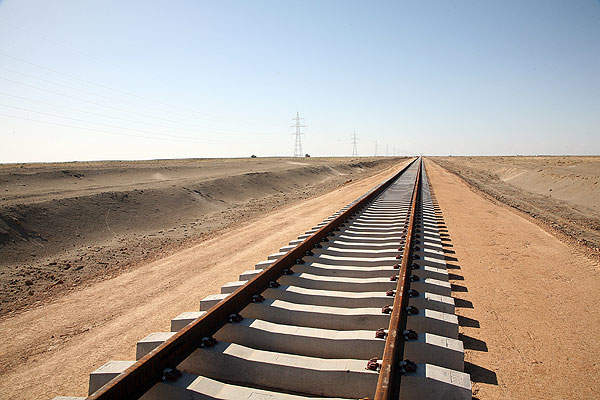
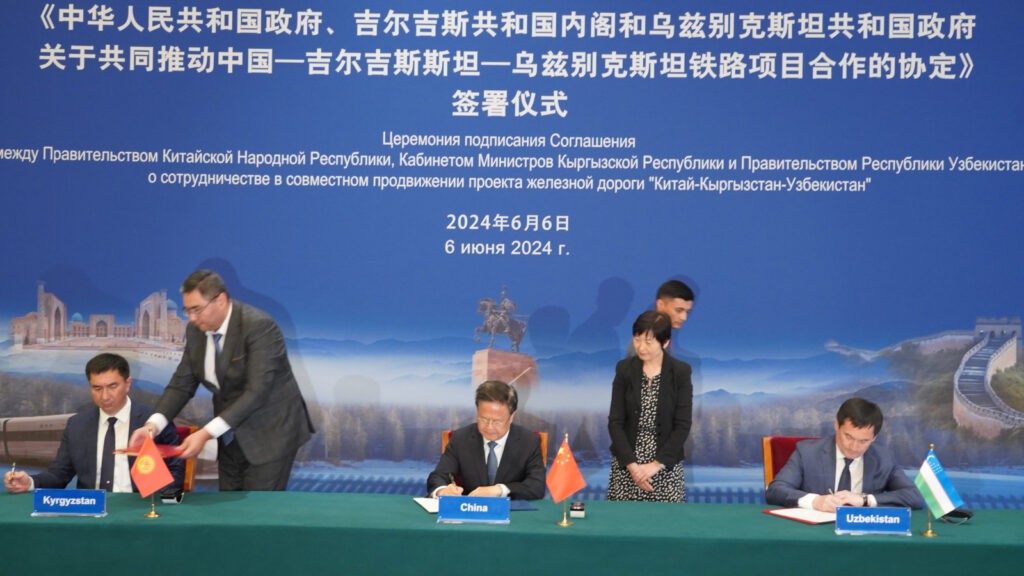
On 6 June, an intergovernmental agreement on the China-Kyrgyzstan-Uzbekistan railway project was signed in Beijing. The China-Kyrgyzstan-Uzbekistan railway is a strategic infrastructure project designed to create a new land transport corridor between Central and East Asia. The agreement, which marks an important step in progressing the project, lists principles and mechanisms for cooperation between the three countries concerning financing, construction, operation, and maintenance of the railway. In accordance with the agreement, the railway will run through Kashgar (China) – Torugart – Makmal – Jalalabad (Kyrgyzstan) – Andijan (Uzbekistan), with a modern transit and logistics infrastructure, warehouses and terminals created along the route. Once completed, the railway will transport an annual cargo of 15 million tons, and reduce time taken for delivery to consumers by 7 days. Chinese President Xi Jinping, Kyrgyzstan President Sadyr Japarov, and Uzbekistan President Shavkat Mirziyoyev attended the event via a video link. Kyrgyz President Japarov described the agreement as “a historical event marking the long-awaited start of the China-Kyrgyzstan-Uzbekistan railway construction project - which will - open new transportation routes to European countries and the Persian Gulf." Uzbek President Mirziyoyev likewise remarked on the historical significance of the signing, and stated, “This railway will become the shortest land link connecting China with our region. In the future, it will allow access through the promising Trans-Afghan corridor to the capacious markets of the countries of South Asia and the Middle East.” Chinese President Xi emphasized that the railway is a strategic project of connectivity between China and Central Asia and a landmark in the three countries' cooperation under the Belt and Road Initiative. According to the Chinese leader, China is ready to work with Kyrgyzstan and Uzbekistan on the launch of the project as early as possible, to boost the regions’ economic and social development .  

Kazakhstan and Uzbekistan Boost Transport Cooperation

On May 11, Ministers of Transport of Kazakhstan and Uzbekistan, Marat Karabaev and Ilkhom Makhkamov signed a Road Map for strategic cooperation in transport and logistics for 2024-2025. During the meeting in Astana, the ministers discussed the development of international transport corridors, rail and road transportation, and joint projects relating to the construction of a transport infrastructure. High on the agenda, were the joint implementation of the construction of the Uzbekistan – Afghanistan – Pakistan railway and the collaborative development of the multimodal transport corridor Belarus – Russia – Kazakhstan – Uzbekistan – Afghanistan – Pakistan. With reference to accelerating transportation through the digitalization of cargo documentation, the parties lauded the introduction of the ‘E-permit’ system of electronic exchange of permit forms between the two countries. The Kazakh side welcomed  Uzbekistan’s plans to build the Termez – Mazar-i-Sharif – Kabul - Peshawar railway and confirming his country’s readiness to participate in the project, Marat Karabaev stated, “The implementation of the project will contribute to the development of regional connectivity and trade for the countries of Central Asia, giving them access to the major sea ports of the South Asian region.” The parties also reported that work is now underway on a new railway line between Darbaza and Maktaaral, which will increase the throughput capacity between Kazakhstan and Uzbekistan by a further 10 million tons. The Kazakh minister noted that the volume of export-import transportation between the two countries by road increased by 6% over the past year and amounted to 1.8 million tons.  

Is the China–Kyrgyzstan–Uzbekistan Railway Project Losing Steam Again?

By Robert M. Cutler The China–Kyrgyzstan–Uzbekistan (CKU) railway was first proposed in 1997. There seemed finally to be a prospect for a start to the project after agreements at the Xi'an summit amongst China and the five Central Asian countries in May 2023. Construction on the 523-kilometre route was scheduled to begin several months after, but this has still not happened. Disagreements over the route and—still worse—over the funding risk relegating the project back to the drawing-boards where it has languished for over a quarter-century. After the initial agreement in 1997, it was these essentially unchanging disagreements over financing and the route within Kyrgyzstan that stalled negotiations, and over a final agreement of conditions for its construction in the early 2000s. These disagreements concern the geo-economic strategies of the respective parties, and they have not changed in over two decades.  China favors a shorter route, while Kyrgyzstan pushes for a longer one to benefit its domestic infrastructure. Specifically, Kyrgyzstan wants to use the railway's construction to establish better connections between the northern and southern parts of the country, which are separated by a mountain range.   Further difficulties in CKU implementation For Uzbekistan, a turning-point was its decision in 2017 to send railway experts to discuss the project with Kyrgyzstan. Then in 2019, Uzbekistan invited Turkey to co-finance the Kyrgyz section. The current cost of the whole project is estimated at $6 billion. A preliminary agreement has been reached on the division of this total, according to which each of the three parties will contribute 30 per cent (but at different stages of the project), with the source of the final 10 per cent including the cost of the feasibility study still to be determined. Despite this progress, public concerns in Kyrgyzstan over several critical practical issues remain unaddressed and continue to complicate a final agreement. These include the anticipated influx of Chinese workers, the professional development of local railway engineers, the allocation of investments for industrial projects along the railway corridor and the facilitation of increased exports of Kyrgyzstan's products to the Chinese market. These elements are essential for the long-term viability and success of the CKU railway initiative. Interestingly, these are very similar to the concerns of Kazakhstan that delayed the construction of the first (i.e., the Atasu–Alashankou) segment of the Kazakhstan–China oil export pipeline in the early 2000s. Moreover, China originally insisted on compensation from Bishkek for its contribution in the form of ownership of Kyrgyz mines, including the world’s second-largest iron-ore reserve at Zhetim Too, which Kyrgyz President Sadyr Japarov claims is worth at least $50 billion. It does not help matters that this site adjoins a large glacier, the water from which is crucial for irrigation of major Kyrgyz agricultural holdings.   Other Uzbek initiatives for infrastructure connectivity On 1 November 2023, at a forum of the Shanghai Co-operation Organization (SCO) meeting in Tashkent, transportation officials from Uzbekistan, Kyrgyzstan and Russia signed a memorandum to establish a new Kyrgyzstan–Russia trade corridor through Turkmenistan (who, incidentally,...

EBRD Funds Upgrade of Major Highway in Uzbekistan

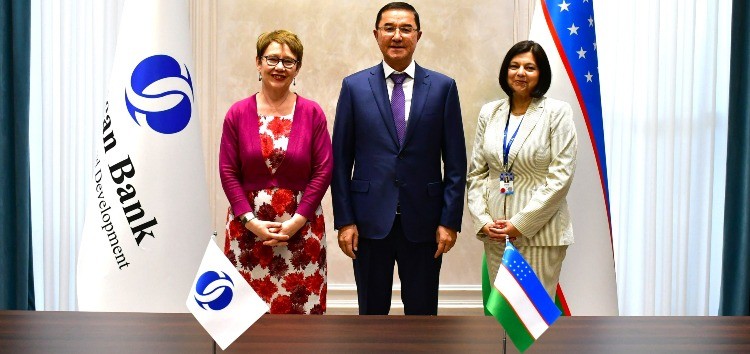
On 2 May, the European Bank for Reconstruction and Development (EBRD) announced the allocation of a loan of up to $238 million (€224 million) towards the renovation of around 81 km of the 4R156 road, as well as the construction of a bridge across the Amu Darya River in the Khorezm region of western Uzbekistan. The road is a strategically important section of the Central Asia Regional Economic Cooperation Corridor 2a, linking the region’s administrative centre, Urgench, with the A380 road to Kazakhstan. The loan will transform the current single-carriageway category-II road into a dual-carriageway category-I road, and in addition, help upgrade supporting infrastructure along the 4R156 road. Once completed, the new road with its much-improved throughput capacity, will stimulate both trade and tourism in  Khorezm. EBRD President Odile Renaud-Basso commented: “We are supporting this project because it meets our strategic objectives for Uzbekistan and Central Asia. It is also part of the global transport and logistics infrastructure solutions covered by the European Union’s (EU) Global Gateway initiative.” In January 2024, at the Investors Forum for EU-Central Asia Transport Connectivity in Brussels, the EBRD expressed its readiness to invest around €1.5 billion in Trans-Caspian Corridor-related infrastructure and associated transport solutions over the next 2-3 years.  

Kazakhstan, Russia and China Create New Transport Hub

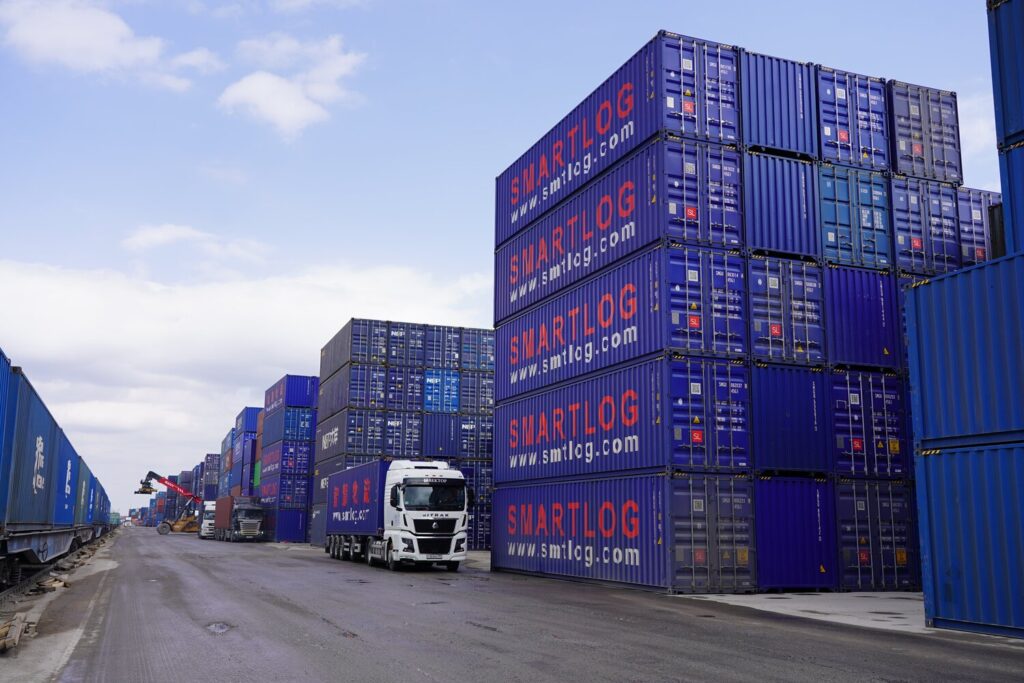
Kazakhstan’s national railways company Kazakhstan Temir Zholy (KTZ), Russia’s Slavtrans-Service JSC, and China’s Xian Free Trade Port Construction and Operation Co., Ltd have begun construction on a new transport and logistics center, CRK Terminal, at Selyatino station in the Moscow region. The new logistics hub is designed to develop direct transport links between the Kazakh-Chinese terminal in Xi'an (China), Russia and other countries. In 2023 the volume of cargo transported by rail between China and Russia through Kazakhstan amounted to 3.8 million tons, an increase of 35% compared to 2022. In the first quarter of 2024, transit traffic along the China-Russia-China route remained at a stable 0.9 million tons.    

What Will Uzbekistan’s Role in Central Asia’s Connectivity Be?

By Robert M. Cutler A new World Bank report on Central Asian connectivity published in April 2024 highlights the importance of the Middle Corridor, a trade route spanning Central Asia, the Caspian Sea, and the Caucasus, connecting China and East Asia with Georgia, Turkey, and Europe. This corridor is seen as a critical alternative to Russian-controlled routes, especially in light of recent geopolitical tensions. The World Bank identifies ten steps to address bottlenecks in the Middle Corridor, aiming to increase trade volumes by tripling them by 2030. This would significantly reduce travel times and increase trade volumes to 11 million tons, with proper investment and efficiency measures in place.   Uzbekistan and the Middle Corridor The report emphasizes the need for a "holistic" approach to improving transport connectivity in Central Asia. By this, it means a comprehensive and integrated strategy that combines improvements in infrastructure and logistics improvements with a reduction in border delays and tariffs, along with the harmonization of standards across countries. This includes improving both physical and digital infrastructure, enhancing governance and efficiency and addressing productivity issues amongst the state-owned enterprises that dominate the transport sectors in the region. The World Bank notes that Uzbekistan would profit from better rail connections with Kazakhstan; yet it does not identify any potentials for such projects. That is likely because a report by the Bank identified the Trans-Caspian International Trade Route (TITR) through southern Kazakhstan as the preferred program for international support.  Uzbekistan's participation in the Middle Corridor is still in a developmental stage. Tashkent has an active interest and a strategic geographic location, but concrete actions and project details are still emerging. There have been no public announcements about specific infrastructure projects or investments that Uzbekistan is undertaking within the Middle Corridor framework. It can be foreseen, however, that railway modernization should be high on the list of programs. There is, however, a new railway project - the Darbaza–Maktaaral line - currently underway in Kazakhstan that could be extended to improve connectivity with Uzbekistan. It is projected for completion in 2025. A second phase including an extension to Kazakhstan's Syrdarya station could then facilitate a further branch line from Syrdarya to Zhetysai, on the border with Uzbekistan. This project would reduce congestion at the existing Saryagash border crossing between the two countries and thus increase the capacity for transporting goods between the two countries by as much as 10 million tons per year.   The Middle Corridor and improvements to digital connectivity At present, the region has only limited connectivity.  The Central Asian countries have heavily invested in infrastructure since the turn of the century, but the region still lags behind middle-income countries in both investment and maintenance. Most areas continue to suffer from insufficient infrastructure and expensive services. These in turn hinder the potential for internal and external trade. The World Bank's report also provides a comprehensive analysis of the challenges and opportunities for enhancing connectivity in Central Asia. For this purpose, it focuses on both physical and...