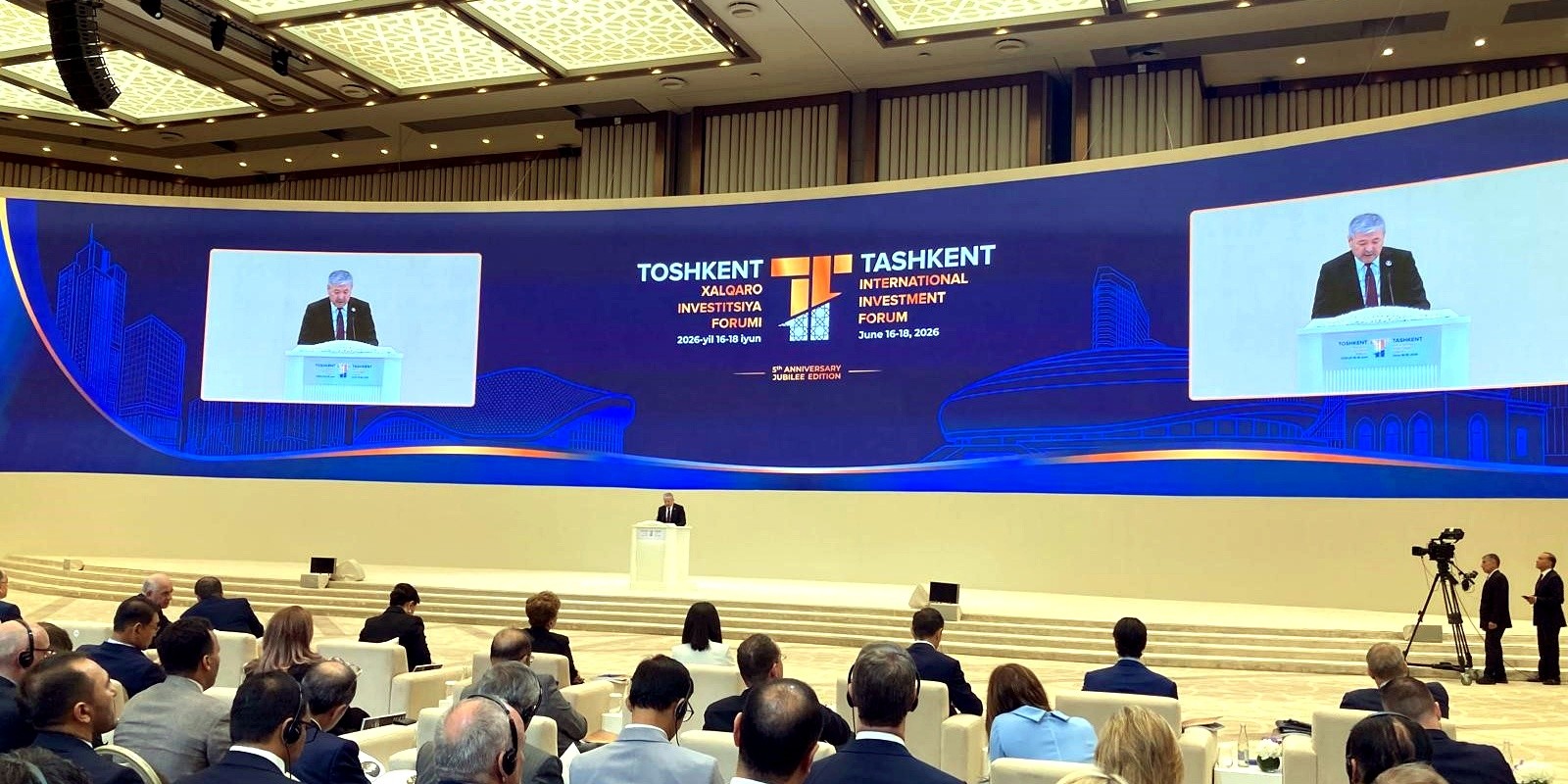
Tashkent (June 17): Speaking to a packed audience at the opening of the fifth Tashkent International Investment Forum, Kyrgyz Prime Minister Adylbek Kasymaliev, chairman of the Cabinet of Ministers and head of the Presidential Administration, opened his remarks with a sober assessment of the global landscape: “The global economy is undergoing a period of profound transformation: a technological revolution, an energy transition, the reshaping of global supply chains, growing demand for critical minerals, and the need to ensure food security are together creating new conditions of international competition while also opening new opportunities for cooperation.”
Despite global uncertainty, Kasymaliev argued that success would favor countries willing to cooperate and move quickly: “the countries that benefit most are those that make decisions faster, establish clear rules, and remain open to long-term partnership.”
In this context, Kasymaliev cast Tashkent as much more than a venue for dialogue. “Today, Tashkent is once again becoming a platform for discussing the common future of the region,” he said, noting that mutual benefit offered a better path than zero-sum competition. His remarks rested on the premise that Central Asian states gain more from unity than from going it alone, and that the region’s economic trajectory now hinges on its members’ willingness to act as partners rather than rivals.
Kasymaliev placed Kyrgyzstan’s outlook within the National Development Program through 2030, which he said is built around accelerated industrialization, export expansion, digital transformation, and deeper regional integration, with the explicit goal of moving the country into the ranks of upper-middle-income states by decade’s end. He cited 2025 GDP growth of 11% as evidence the strategy is already bearing fruit.
Kasymaliev then outlined six government priorities for cooperation and investment. The first is critical minerals, with an emphasis on moving beyond raw extraction toward processing and component manufacturing for green energy. The second is energy, where new renewable producers receive a five-year profit tax exemption, and officials are pursuing hydropower, solar, wind, and eventually hydrogen.
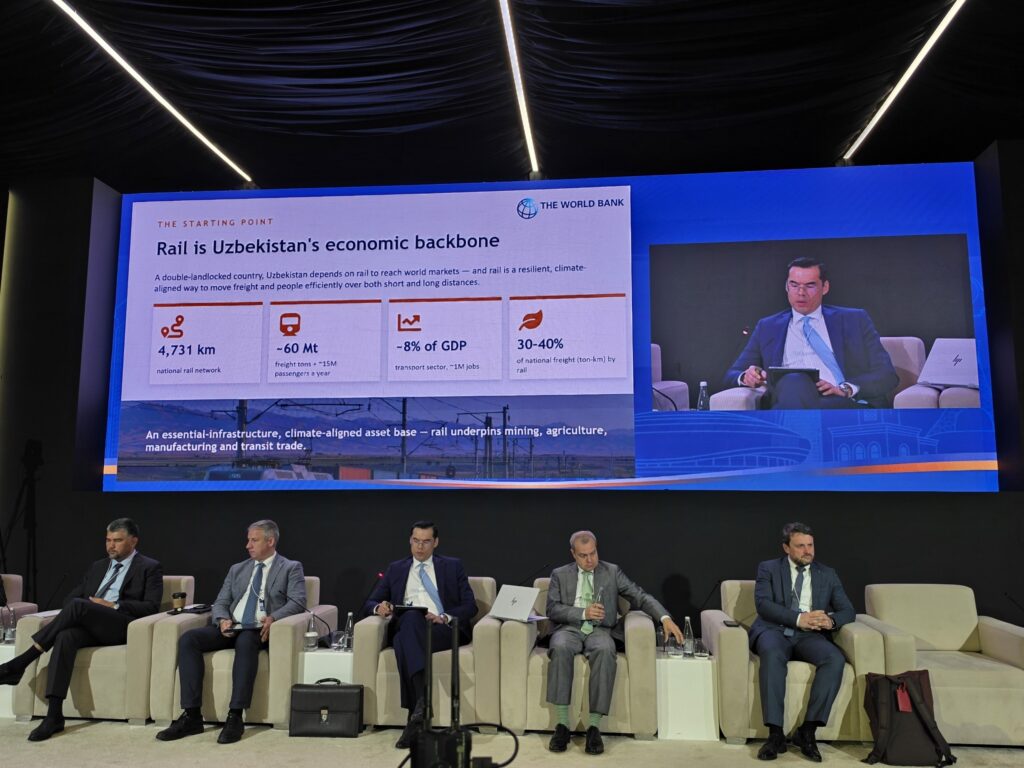
The third is agribusiness and food security, centered on agro-processing, greenhouse complexes, and cold storage aimed at export markets in Central Asia, the Middle East, South Asia, and China. The fourth is transport and logistics, anchored by the China-Kyrgyzstan-Uzbekistan railway. “As our President has emphasized, it is a strategic bridge between countries and markets,” Kasymaliev said, a corridor expected to cut delivery times to as little as ten days.
The fifth priority is the digital economy, built around a newly enacted Digital Code and an effort to draw venture capital into the country’s startup ecosystem. The sixth is capital markets, including plans to list state-owned enterprises through IPOs and the creation of the Tamchy Special Financial Investment Territory on Lake Issyk-Kul, designed as a regional hub for international capital under its own distinct legal regime.
Running through all six priorities was a broader argument about timing: in a period of technological upheaval, energy transition, and shifting supply chains, the states that move fastest and cooperate most openly stand to capture the largest share of new opportunity.
Kasymaliev closed by returning to the regional theme that opened his remarks, framing the moment as one that belongs to Central Asia as a whole rather than to any single country. “Central Asia today is becoming one of the most promising regions,” he said, attributing the shift to a sustained rise in political dialogue and economic engagement among neighboring states, which he said is building trust and “significantly raises the region’s investment appeal.”
That progress, he stressed, is a collective achievement: “This achievement belongs to the leaders of our states and reflects a new quality of regional cooperation.” He extended that logic into a direct appeal to the forum’s investors: “We are interested in further expanding this inter-regional cooperation and advancing practical engagement across a range of fields, including logistics, industry, and others.”
Kasymaliev ended with an appeal to investors, saying the Kyrgyz Republic was open to projects “not tied to political conditions.” The message was clear: Kyrgyzstan wants investment, but it also wants to present that pitch as part of a broader regional story.