• KGS/USD = 0.01144 0%
  • KZT/USD = 0.00211 0%
  • TJS/USD = 0.10523 0%
  • UZS/USD = 0.00008 0%
  • TMT/USD = 0.28530 0%
  • KGS/USD = 0.01144 0%
  • KZT/USD = 0.00211 0%
  • TJS/USD = 0.10523 0%
  • UZS/USD = 0.00008 0%
  • TMT/USD = 0.28530 0%
  • KGS/USD = 0.01144 0%
  • KZT/USD = 0.00211 0%
  • TJS/USD = 0.10523 0%
  • UZS/USD = 0.00008 0%
  • TMT/USD = 0.28530 0%
  • KGS/USD = 0.01144 0%
  • KZT/USD = 0.00211 0%
  • TJS/USD = 0.10523 0%
  • UZS/USD = 0.00008 0%
  • TMT/USD = 0.28530 0%
  • KGS/USD = 0.01144 0%
  • KZT/USD = 0.00211 0%
  • TJS/USD = 0.10523 0%
  • UZS/USD = 0.00008 0%
  • TMT/USD = 0.28530 0%
  • KGS/USD = 0.01144 0%
  • KZT/USD = 0.00211 0%
  • TJS/USD = 0.10523 0%
  • UZS/USD = 0.00008 0%
  • TMT/USD = 0.28530 0%
  • KGS/USD = 0.01144 0%
  • KZT/USD = 0.00211 0%
  • TJS/USD = 0.10523 0%
  • UZS/USD = 0.00008 0%
  • TMT/USD = 0.28530 0%
  • KGS/USD = 0.01144 0%
  • KZT/USD = 0.00211 0%
  • TJS/USD = 0.10523 0%
  • UZS/USD = 0.00008 0%
  • TMT/USD = 0.28530 0%

EDB Plans $3.5bn investment in Kazakhstan Projects in 2024

The Eurasian Development Bank’s annual investment in Kazakhstan’s economy has exceeded $1bn for the second consecutive year, the chairman of its management board Nikolai Podguzov said during a February 12th meeting with Kazakhstan’s president Kassym-Jomart Tokayev. 

The Eurasian Development Bank (EDB) is an international financial institution with member states including Armenia, Belarus, Kazakhstan, Kyrgyzstan, Russia, and Tajikistan. The bank’s investment in 2022 and 2023 amounted to $4.2bn, with the share of Kazakhstan-based projects in the bank’s portfolio steadily increasing and reaching 59% by the end of 2023.

The value of potential EDB projects under consideration for Kazakhstan for 2024 exceeds $3.5bn. These investments are planned for the country’s strategically important sectors such as transport infrastructure, thermal and renewable energy, industrial production, agriculture, and water management.

Podguzov emphasized that this year the EDB intends to foster the growth of Kazakhstan’s financial market, including the implementation of new instruments to fund infrastructure projects.

He also informed Tokayev about the EDB’s research on the Central Asian water and energy complex. Podguzov said that his bank plans to promote the advancement of Kazakhstan as a driver of efficient water use, and stands ready to offer grants totaling up to $10m to develop regional centers of expertise in water conservation and energy-efficient technologies – and to allocate up to $400m for projects involving digital water-metering technologies, laser land levelling for irrigated areas and the establishment of a regional production and service cluster for state-of-the-art irrigation equipment.

Kyrgyz Court Rules in Favor of Shutting Down another Mass Media Outlet

Bishkek’s Oktyabrsky District Court has ruled in favor of liquidating a public foundation named Kloop Media. The official reason, as stated in a social network post by Kloop Media, is discrediting state and municipal bodies. According to the publication’s staff, Bishkek prosecutor Emilbek Abdymannapov filed a lawsuit in court last August seeking to liquidate Kloop Media. The prosecutor had argued that most of the publication’s stories were negative and aimed at discrediting certain representatives of state and municipal bodies.

On August 22nd 2023, Kloop Media published a journalistic investigation focusing on corruption schemes undertaken by top officials in Kyrgyzstan – and later published more material criticizing the president of the republic and his relatives. Consequently, in September 2023, access to the Kloop Media website was blocked, and now the foundation itself has been closed by the authorities following the court’s decision, which states that Kloop Media is not listed in the state register of Kyrgyz media and that the organization’s charter doesn’t specify its main activity, which is the dissemination of information. The Civil Code of the Kyrgyz Republic allows for the liquidation of legal entities if they systematically carry out activities which don’t correspond to the objectives set out in their charters.

Lawyers for the public fund in turn stated that the court session contained multiple violations, and they will appeal the decision to a higher authority.

The public foundation, Kloop Media was established in 2007 and positioned itself as a human rights media outlet. Kloop primarily hired young writers and trained them in investigative journalism.

On the day the court’s decision was announced, the international organization, Reporters without Borders called on the Media Freedom Coalition to take action against what they called an “arbitrary and unjustified decision.”

In April 2023, the Lenin Court of Bishkek ruled in favor of a lawsuit brought by the Ministry of Culture, Information, Sports and Youth Policy of Kyrgyzstan that called for the shutdown of Azattyk Media, which was the Kyrgyz service of Radio Free Europe/Radio Liberty, financed by the U.S. State Department. The Ministry objected to material published about fighting on the border between Kyrgyzstan and Tajikistan. The authorities claimed that the content contained “elements of hostility and unconfirmed information about an alleged attack by the Kyrgyz side on Tajikistan, inflaming the situation in society and causing hatred, discrimination and division among citizens when covering the events in Batken Oblast.”

Two New tourist Stops Open on Kyrgyzstan’s Silk Road

Two new tourist stops have been opened in the south of Kyrgyzstan. One is beside the famous Uzgen Minaret, built almost a thousand years ago; the other is in the village of Barpy, on the highway between Bishkek and Osh. 

Stops like these exist to allow travelers to rest, charge electric cars and gadgets, have something to eat and drink, and take a shower. Kyrgyzstan’s first dedicated tourist stop was opened last spring in the town of Kemin in the north of the country, on the way to Issyk-Kul Lake.

There are now four places for tourists to stop in the south of Kyrgyzstan — Barpy, Uzgen, Kara-Kul, and Jalal-Abad. Two others are currently being built in the Issyk-Kul Region.

Uzbekistan Warns of Labor Migration Fraud involving United States

The press service of the State Security Service (SGB) of Uzbekistan has reported cases of fraud centered around false promises of helping Uzbek workers obtain documents to work in the United States. The first case took place in the capital, Tashkent, where three fraudsters were caught red-handed defrauding six people out of a total of $32,000 by promising to help them obtain visa documents and send them to work in the U.S. via Europe.

The next instance took place in Bukhara, where a thrice-convicted local resident offered to help a friend obtain a visa and employment in the U.S., requesting a payment of $40,000. He was detained in the act of receiving the first payment of $30,000.

The next three incidents took place in Samarkand. In the first case, two men offered a resident the same services, but via a roundabout route: Uzbekistan – Turkey – Portugal – Guatemala – Mexico – USA. They also asked for a smaller payment of $23,000. When they received the $10,000 advance payment, they were detained.

In the second case, the two promised to provide the same services and send the man on the same route. They also demanded $23,000 and were apprehended when receiving an advance payment. A third case followed a similar pattern.

in all cases, criminal proceedings were initiated under articles pertaining to fraud in the criminal code.

Cases of Hepatitis, Measles and influenza Spiking across Central Asia

Central Asian countries are experiencing outbreaks of various diseases, including seasonal ones such as influenza, and non-seasonal illnesses including measles and hepatitis. First on the list is Kazakhstan, where an outbreak of measles has been circulating since November 2023. In that month alone, it affected 17,000 people, 82% of whom were children. In December, that figure grew to 19,000 cases.

For the most part, the government bemoaned the fact that the population was reluctant to get vaccinated, imploring people to do so as a matter of urgency. However, opponents of vaccination actively expressed dissatisfaction with the quality of the Indian vaccine purchased by the authorities.

In early 2024, the Republican Center for Immunoprophylaxis of Kyrgyzstan reported an outbreak of the same disease. As of February 6th, 2,436 cases had been identified. Health organizations in the country have expressed their intention to strengthen routine immunization, vaccinate those who come into contact with sick people, and increase preventive vaccination coverage with a focus on parents who refuse to vaccinate their children.

Kyrgyzstan also experienced a measles crisis in 2023. During that year, 7,000 cases of the disease were detected in the country – of which nine cases in children proved fatal.

At the same time, Uzbekistan was hit by another disease – Hepatitis A. In just a month and a half in 2024, 9,507 children contracted the disease. According to data released by the Sanitary and Epidemiological Committee, 365,167 children have received the hepatitis vaccine in the past 12 months, which prevents transmission of the virus in 94-98% of cases.

Uzbekistan has also supported Turkmenistan, with medicines, where there is a different outbreak; the flu has already taken the lives of 33 children, as the Times of Central Asia has previously reported. Currently, it’s children aged five to seven who are most at risk. However, after a sharp outbreak in which doctors lacked medicines and hospital beds for new and returning patients, the incidence rates are now on a downward trajectory.

In addition to Turkmenistan, the flu has also hit Tajikistan. According to the Ministry of Health there, pneumonia – which has symptoms very similar to Covid-19 – has increased dramatically, prompting confused reports that the “Coronavirus is coming back.” However, medical officials refuted this, saying the country is simply experiencing a seasonal increase in the incidence of influenza type a/(H1N1)pdm09, which often leads to pneumonia.

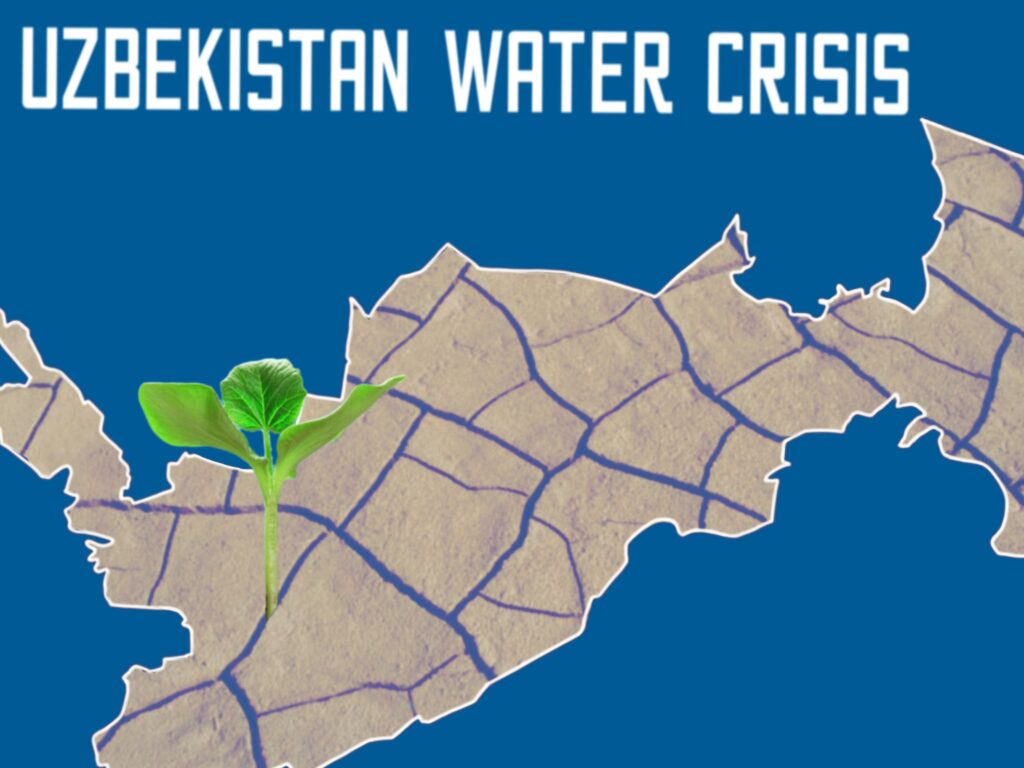
Water Crisis in Uzbekistan: an interview with Eco-journalist Nargis Kosimova

For a long time now, there have been murmurs about the growing problem of water shortages in Uzbekistan. Every citizen is likely to remember, at the very least, public service announcements on television with calls to conserve water. Still, the issue began to really attract people’s attention after the last, rather unexpected hike in cold tariffs. Was this an indication of the situation deteriorating? What is going on with water resources, and what should we expect moving forward? To find out, we talked to Nargis Kosimova, an eco-journalist, teacher, media trainer, and doctor of philology, who has come to fame as the author of Ekolog.uz.

What is the current situation with drinking water in Uzbekistan?

The problem with water resources is particularly serious in Uzbekistan, now. Experts say that by 2030, the water deficit could reach 7 billion cubic meters, and this could double by 2050. Unfortunately, the climate is changing at a rapid pace. Our key rivers, the Amu Darya and the Syr Darya have seen their discharge decline 20% in just 50 years. Currently, we are also seeing dust storms and droughts, which are exacerbating the problem of water scarcity. The result may be a rise in the cost of fresh water and, consequently, food prices, with the entire economy of the country affected in turn.

For example, over the past 15 years, the amount of water used per person in Uzbekistan has roughly halved from 3,000 cubic meters in 2008 to 1,500 cubic meters by the end of 2022. Nevertheless, water consumption per capita is still very high. for example, in Germany each person uses just 312 cubic meters of water each year, meaning that even though they have plentiful resources, Germans conserve a lot of water.

Last year, we conducted a training session which was attended by 60 farmers. Unfortunately, not one of them, as they told us, had switched to water-saving technologies. when asked why not, they gave a wide range of answers, from a lack of money to the phrase, “Why [should we] if there is still water?”

What measures can be taken to help avoid a water crisis?

Many experts highlight drip irrigation as an effective way to rationally utilize resources. Even the Ministry of Water Resources noted that switching to this system would significantly reduce the stress on the country’s reserves. and at the same time, yields would increase significantly.

Increasing prices on drinking water can also help avoid a crisis situation, while control over water usage should also be strengthened. A 100% transition to water-saving technologies in agriculture is needed, as well as protecting rivers from erosion. In Uzbekistan, starting on May 1st, an indefinite moratorium on the extraction of ore from the beds of large rivers will come into effect. Increasing construction and urbanization have led to almost uncontrolled extraction of sand and gravel, as a result of which riverbeds have been nearly degraded and the water has practically disappeared from these rivers. Moreover, it is not just water that has begun to disappear, but also biodiversity.

Of course, for household needs, we still need to switch to processed water. The dumping of sewage and wastewater into rivers – which is common in our country today, especially by developers and private enterprises – must be regulated.

In addition, the population still doesn’t know anything, for example, about virtual water – the water that is used for processing products and in the manufacture of various goods. Roughly speaking, it takes 20,000 liters of virtual water to produce a kilogram of pilaf, approximately 15,400 liters goes into producing a kilogram of beef, and 1,700 liters to grow a kilogram of rice.

In your view, is the recently announced hike in cold water tariffs related to the water situation in our country?

In 2023, the president held a conference call where measures to prevent a water crisis in the country were discussed. One of the tasks he set was precisely this, hiking tariffs for drinking water. Water itself has no cost in the country; only its delivery to populated areas is priced.

What is being implemented to ensure the population does not sooner or later lose access to water?

Back in 2013, the regulation “On the Procedure for Water Use and Water Consumption in the Republic of Uzbekistan” was adopted. It was therein that such concepts as water consumers, water use, water bodies, water resources, etc. were laid out for the first time.

Last year, people began to receive fines ranging between UZS300,000 ($24) and UZS900,000 ($72) “for the unreasonable use of water.” If this is committed by officials, then it can increase from five to ten base calculation units (BCUs), which would be about UZS3.5 million ($280).

Our @eklguz_bot Telegram channel receives a lot of messages about the irrational use of water, and about pollution of open reservoirs by businesspeople, developers, and ordinary people alike. It seems advisable to me to begin the construction of water purification plants in all populated areas in Uzbekistan. At this time, only large cities have them, while in the provinces the water is currently treated only to get rid of garbage, and sewer water is discharged into rivers, canals, and open reservoirs. I would like the government to pay attention to this, and for every businessman and developer to install water treatment equipment when a new residential complex is built or an enterprise is set up. Purified water could be reused in everyday life.

I would like to add that the government has set out a concept for the country’s comprehensive development until 2030, in line with which market mechanisms are already being introduced for water consumption, while the development of irrigation systems is underway through the construction and reconstruction of irrigation canals and their hydraulic structures.

The government also plans to provide the population with high-quality drinking water by 2030, although I don’t know how realistic that is as the plan targets 100% of the population, even though 60% still use artesian wells and the issue of water becomes increasingly serious every year.

What are the consequences of water depletion?

As it stands today, the economy of Uzbekistan is losing around $5 billion a year due to water scarcity. But if we consider the future, the consequences could be, for example, the commercialization of water resources and their treatment as nothing more than a commodity. And all this will, of course, be in the hands of the countries upstream, mainly Tajikistan and Kyrgyzstan. Plus, we know Afghanistan is already building its own canal. All this poses certain risks, in particular the potential outbreak of armed conflicts against the backdrop of water shortages, as well as a limited supply of drinking water, shortages of water for fields and electricity, a reduction in crop yields and, finally, more and more climate migrants.

It would be good to develop a common code for Central Asia on water use that takes into account the interests of each country in the region. A Central Asian institute for joint research of regional water issues should also be established, since small, seemingly insignificant conflicts, which are already visible today, could over time develop into big ones.

The government and citizens of Uzbekistan should understand the importance of water conservation. Water is not only vital to our existence but is also a key resource that enables our societies to function and supports economic development.

For each of us, this means taking simple but important steps to conserve water in our daily lives. We can reduce water consumption by monitoring the condition of water supply systems and eliminating leaks and replacing old faucets and showers with low-flow models. This also includes optimizing the use of washing machines and dishwashers, reusing water, limiting shower times, and family education. Remember, there is no alternative to water.

Nargis Kosimova is an eco-journalist, teacher, media trainer, doctor of philology, and the author of Ekolog.uz.