• KGS/USD = 0.01144 0%
  • KZT/USD = 0.00212 0%
  • TJS/USD = 0.10456 0.19%
  • UZS/USD = 0.00008 0%
  • TMT/USD = 0.28490 0%
  • KGS/USD = 0.01144 0%
  • KZT/USD = 0.00212 0%
  • TJS/USD = 0.10456 0.19%
  • UZS/USD = 0.00008 0%
  • TMT/USD = 0.28490 0%
  • KGS/USD = 0.01144 0%
  • KZT/USD = 0.00212 0%
  • TJS/USD = 0.10456 0.19%
  • UZS/USD = 0.00008 0%
  • TMT/USD = 0.28490 0%
  • KGS/USD = 0.01144 0%
  • KZT/USD = 0.00212 0%
  • TJS/USD = 0.10456 0.19%
  • UZS/USD = 0.00008 0%
  • TMT/USD = 0.28490 0%
  • KGS/USD = 0.01144 0%
  • KZT/USD = 0.00212 0%
  • TJS/USD = 0.10456 0.19%
  • UZS/USD = 0.00008 0%
  • TMT/USD = 0.28490 0%
  • KGS/USD = 0.01144 0%
  • KZT/USD = 0.00212 0%
  • TJS/USD = 0.10456 0.19%
  • UZS/USD = 0.00008 0%
  • TMT/USD = 0.28490 0%
  • KGS/USD = 0.01144 0%
  • KZT/USD = 0.00212 0%
  • TJS/USD = 0.10456 0.19%
  • UZS/USD = 0.00008 0%
  • TMT/USD = 0.28490 0%
  • KGS/USD = 0.01144 0%
  • KZT/USD = 0.00212 0%
  • TJS/USD = 0.10456 0.19%
  • UZS/USD = 0.00008 0%
  • TMT/USD = 0.28490 0%

Kazakhstan to Integrate AI into Lawmaking Process

Kazakhstan’s government is preparing to introduce an artificial intelligence–powered assistant to support the development of regulatory legal acts. The intelligent system will analyze international legal practices, monitor developments, and verify that draft laws comply with the Constitution, Vice Minister of Justice Bekbolat Moldabekov announced at a recent briefing.

The initiative builds on a broader digitalization agenda already underway at the Ministry of Justice. For instance, an automated legal advisor operates around the clock on the adilet.zan.kz portal, helping to reduce the workload of legal personnel and providing the public with free access to legal information.

Since August 2023, the ministry has also operated the Digital Bailiff program, which automatically initiates and processes enforcement proceedings without human intervention. The system has already saved citizens more than $4 million by eliminating fees of up to 25% that were previously charged by private bailiffs.

“The next step will be the introduction of a smart assistant that will provide expert support during the drafting of laws,” Moldabekov said. “It will become a full-fledged participant in the rulemaking process, improving the quality, coherence, and legal stability of legislation.”

The Digital Bailiff system is expected to be upgraded with AI algorithms to track case progress, notify citizens, and assist with complaints related to enforcement actions. For bailiffs, an intelligent assistant has been launched to monitor deadlines, ensure procedural compliance, and identify errors or inaction.

Digital transformation efforts also extend to notarial services. As part of the Digital Notary program, more than 520,000 online services have already been delivered.

As previously reported by The Times of Central Asia, Kazakhstan became the first country in Central Asia to appoint a neural network to the board of directors of the state sovereign wealth fund Samruk-Kazyna. 

In The Kitchen: A Reflection of Taste and Art, Savoring the Color of Flavor

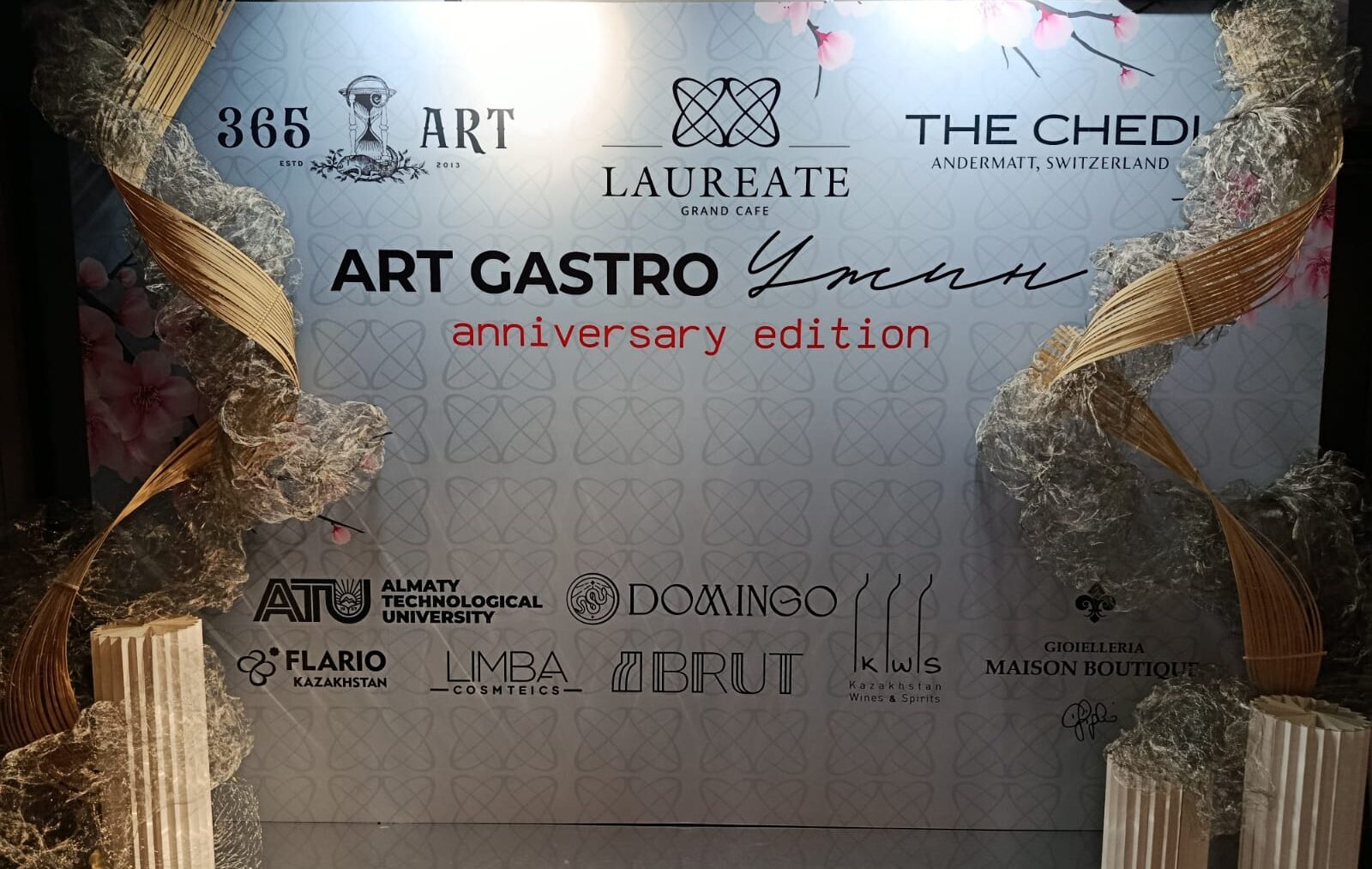
In the culinary world, all eyes have turned towards Almaty, as the city becomes the stage for In the Kitchen: Anniversary Edition, an international project uniting haute cuisine and contemporary art. This year’s edition centers on Austrian conceptual artist Norbert Brunner-Lienz, whose work explores how language and reflection shape perception, turning words and images into immersive experiences.

At Laureate Grand Café, his installation has become the heart of a three-night gastro-performance. Mirrored surfaces invite guests to see themselves within the art, blurring the line between viewer and participant. Each reflection reveals the unseen link between seeing and being seen, transforming perception into part of the artwork. Light and meaning shift with every glance.

Image: Ilyas Otan

Brunner, who lives and works between Vienna and New York, is personally presenting the project in Almaty, with guests having the opportunity to meet him, learn about his creative philosophy, and experience how his art connects the visual, linguistic, and culinary worlds.

The gastronomic performance is led by Michelin-starred twin chefs Dominik Sato and Fabio Toffolon from The Chedi Andermatt in Switzerland. Inspired by the Japanese concept of ichi-go ichi-e, the art of treasuring each unrepeatable moment, their menu transforms dining into a multisensory journey. Completing the team is Yoshiko Sato, pastry chef at The Japanese (two MICHELIN stars), celebrated for desserts that balance technical mastery with grace and feeling.

Image: Ilyas Otan

Education plays a key role in this edition. Students from Almaty Technological University (ATU) will attend free masterclasses with the Michelin-starred chefs. Workshops are being held at both the Laureate Grand Café and ATU, giving young chefs direct access to the world of haute cuisine.

Among the special guests are Giliola Masseroni, owner of Gioielleria Maison “Giglio” in Cremona, Italy; Olga Daniele, founder of 365 ART in Switzerland; and Ainur Akhmetova, founder of Laureate Grand Café and co-founder of In the Kitchen.

Olga Daniele imagined In the Kitchen as a dialogue between art and gastronomy, where creative thought is served alongside taste and texture. In collaboration with Ainur Akhmetova, she brings this vision to Kazakhstan, weaving together good food with art to create an experience that speaks to all the senses.

Image: Ilyas Otan

Their partnership rethinks how we encounter art and eating: not as separate disciplines, but as intertwined forms of expression that reveal how creation lives in every brush stroke, flavour, and idea. A forthcoming book of culinary art will capture this collaboration, inviting readers to engage with these themes further.

In the Kitchen: Anniversary Edition unfolds as a shared act of creation, where food becomes a language and creativity takes shape in the exchange between those who make and those who taste. The event will be held at the Laureate Grand Café, 85 Bogenbai Batyr St., Almaty, from October 23–25, 2025.

National Bank of Kyrgyzstan Reports Profit Surge in 2025

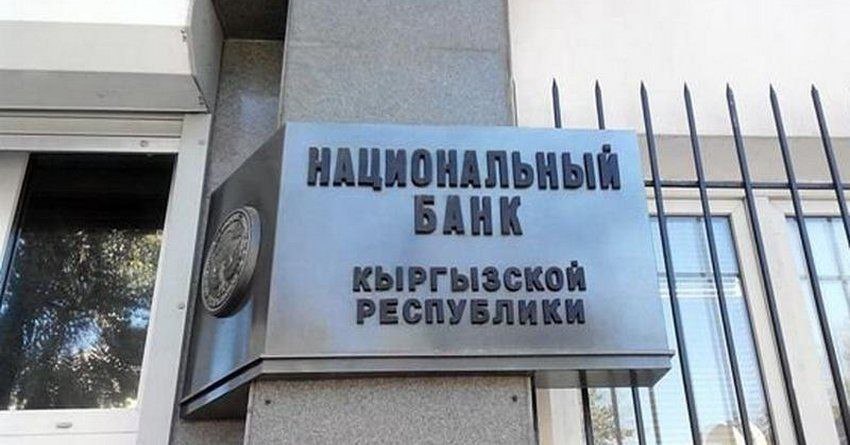
The National Bank of the Kyrgyz Republic (NBKR), the country’s central bank, reported a net profit of 33.2 billion soms (about $380.7 million) for the first nine months of 2025, nearly 13 times higher than in the same period last year. The sharp increase was driven by gains from monetary gold transactions, the revaluation of foreign currency reserves, and overall asset appreciation.

According to the central bank, gold now accounts for around $5 billion of its total assets, a 2.5-fold rise from 2024. Gold holdings currently represent about half of the NBKR’s total assets. Officials attributed the growth to the bank’s risk-diversification strategy and higher global gold prices.

The NBKR also reported a rise in household investment in government securities, reflecting stronger public confidence in domestic financial instruments.

While the overall asset structure remains stable, several notable shifts have occurred. The volume of nonmonetary gold and bullion has declined to $1.1 billion, reflecting strong demand from the jewelry industry and increased gold exports. Gold continues to be a key contributor to Kyrgyzstan’s export portfolio.

The commercial banking sector is also expanding. The total loan portfolio reached $2 billion, up from $1.5 billion a year earlier.

As previously reported by The Times of Central Asia, Kyrgyzstan’s GDP grew by 11.5% in January–July 2025, supported by strong investment in finance, manufacturing, and construction. Construction firms have been borrowing more from local banks, which are expanding lending to meet rising demand from businesses.

Kyrgyzstan to Launch Program for Recycled Resources Market

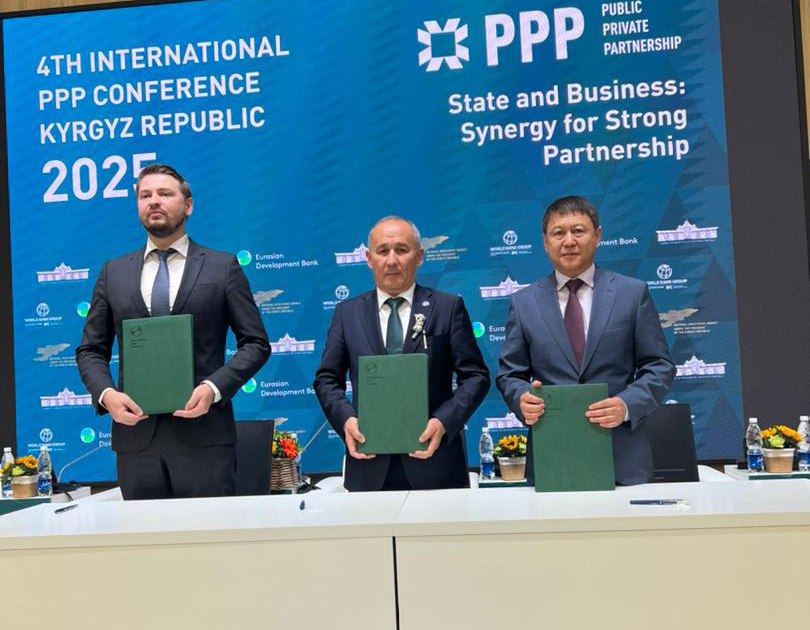
Kyrgyzstan’s Ministry of Natural Resources, Ecology, and Technical Supervision, supported by the Russian-Kyrgyz Development Fund (RKDF) and the Eurasian Development Bank (EDB), has signed a trilateral agreement to develop a national program for establishing a recycled resources market. The agreement was formalized in Bishkek.

According to the ministry, the initiative aims to support the creation of a modern waste management system based on green economy principles and more efficient use of raw materials. The RKDF and EDB will provide financing and expert support for drafting the program.

The forthcoming plan will include pilot projects integrating recycled materials into economic activity, improvements to recycling infrastructure and supply chains, and incentives to encourage businesses to increase the use of secondary raw materials.

Minister of Natural Resources Meder Mashiev emphasized that building a recycled resources market is key to transitioning toward a circular economy. He added that international support would help integrate secondary materials into production and unlock new business opportunities.

RKDF Chairman Artem Novikov noted that the final program would serve as a tool to stimulate recycling, attract investment, and bolster the country’s climate resilience efforts.

The agreement underscores Kyrgyzstan’s growing cooperation with international financial institutions in the field of environmental development.

Kyrgyzstan Adopts Snow Leopard as National Symbol, Unveils Official Logo

On October 23, International Snow Leopard Day, Kyrgyzstan’s Cabinet of Ministers officially designated the snow leopard as the country’s national symbol and approved an official logo along with usage guidelines.

The move follows a presidential decree issued in December 2023 recognizing the snow leopard as a national emblem. The Cabinet has tasked the Ministry of Natural Resources, Ecology, and Technical Supervision with developing an action plan to protect the species and its habitat.

Snow leopards are considered a key indicator of ecological health in mountainous regions across 12 Asian countries, including Kyrgyzstan. The nation has played a prominent role in global conservation efforts, most notably by spearheading a UN General Assembly initiative that led to the establishment of October 23 as International Snow Leopard Day.

Kyrgyzstan has also created the Ak Ilbirs Ecological Corridor in the Issyk-Kul region. Spanning more than 792,000 hectares, the corridor links major protected areas including Khan-Tengri State Nature Park, Sarychat-Eertash Nature Reserve, and Naryn Nature Reserve. The initiative aims to preserve habitats for snow leopards and other endangered species while promoting sustainable resource use.

To mark the occasion, Bishkek also hosted the “Business, Ecology, and Sports – Ak-Ilbirs 2025” forum, which convened government officials, business leaders, sports organizations, and civil society representatives. The forum promoted the conservation of high-mountain ecosystems and introduced branding strategies positioning Kyrgyzstan as the “Country of the Snow Leopard.”

According to a global assessment conducted from 2020 to 2024 under the Global Snow Leopard and Ecosystem Protection Program (GSLEP), Kyrgyzstan’s snow leopard population is estimated at 285 individuals.

Medical Staff in Turkmenistan Resign En Masse Over Extortion to Avoid Picking Cotton

Hospitals and clinics in the Turkmen city of Turkmenabat are facing a growing staffing crisis as doctors and nurses resign en masse in protest over extortionate cash demands, particularly those tied to the annual cotton harvest. Efforts by local authorities to ease the burden have so far proven ineffective.

According to sources cited by Chronicles of Turkmenistan, three family nurses recently resigned from Turkmenabat City Clinic No. 2, leaving just 11 nursing staff at the facility. Their responsibilities have since been redistributed among remaining colleagues, nearly doubling individual workloads, while salaries have only risen by 30%. The added pressure has led many remaining staff to consider resigning as well.

Similar developments are unfolding at other clinics across the city. One doctor and two nurses have left Polyclinic No. 5, while multiple specialists have exited Polyclinics No. 3 and No. 4.

The primary cause, according to local healthcare workers, is systematic extortion, most notably mandatory contributions for cotton harvesting. In September, Turkmenistan’s Ministry of Health reportedly issued a directive requiring medical personnel to participate in the cotton campaign. Employees in the Lebap region were assigned daily quotas to pick 45 kilograms of cotton.

At both the new multidisciplinary hospital and the infectious diseases hospital in Turkmenabat, medical staff have been dispatched to the fields immediately after completing night shifts. Those unwilling or unable to comply must pay for a substitute picker, at a rate of 50 manats (approximately $14.30) per day.

In practice, the burden of physical labor during this period often falls on staff nearing retirement age. One doctor at the infectious diseases hospital revealed that up to two-thirds of some employees’ monthly salaries are spent hiring replacement pickers during the cotton season.

“Not everyone can work in the fields after a full shift, but everyone is expected to pay. That’s why many simply quit,” he said.

In an attempt to stem the exodus, clinic administrators reduced the daily contribution for hiring workers from 50 to 30 manats (around $8.50) in mid-October. However, sources told Chronicles of Turkmenistan that the adjustment has done little to stop the resignations.

Chief physicians have been trying to rehire former employees and bring retirees back into service, but interest remains low. As workloads increase and staff numbers dwindle, the quality of medical care continues to deteriorate.