• KGS/USD = 0.01144 0%
  • KZT/USD = 0.00192 -0%
  • TJS/USD = 0.10849 0%
  • UZS/USD = 0.00008 0%
  • TMT/USD = 0.28571 0%
  • KGS/USD = 0.01144 0%
  • KZT/USD = 0.00192 -0%
  • TJS/USD = 0.10849 0%
  • UZS/USD = 0.00008 0%
  • TMT/USD = 0.28571 0%
  • KGS/USD = 0.01144 0%
  • KZT/USD = 0.00192 -0%
  • TJS/USD = 0.10849 0%
  • UZS/USD = 0.00008 0%
  • TMT/USD = 0.28571 0%
  • KGS/USD = 0.01144 0%
  • KZT/USD = 0.00192 -0%
  • TJS/USD = 0.10849 0%
  • UZS/USD = 0.00008 0%
  • TMT/USD = 0.28571 0%
  • KGS/USD = 0.01144 0%
  • KZT/USD = 0.00192 -0%
  • TJS/USD = 0.10849 0%
  • UZS/USD = 0.00008 0%
  • TMT/USD = 0.28571 0%
  • KGS/USD = 0.01144 0%
  • KZT/USD = 0.00192 -0%
  • TJS/USD = 0.10849 0%
  • UZS/USD = 0.00008 0%
  • TMT/USD = 0.28571 0%
  • KGS/USD = 0.01144 0%
  • KZT/USD = 0.00192 -0%
  • TJS/USD = 0.10849 0%
  • UZS/USD = 0.00008 0%
  • TMT/USD = 0.28571 0%
  • KGS/USD = 0.01144 0%
  • KZT/USD = 0.00192 -0%
  • TJS/USD = 0.10849 0%
  • UZS/USD = 0.00008 0%
  • TMT/USD = 0.28571 0%
12 December 2025

Kyrgyzstan Promotes Investment in Mineral Resources

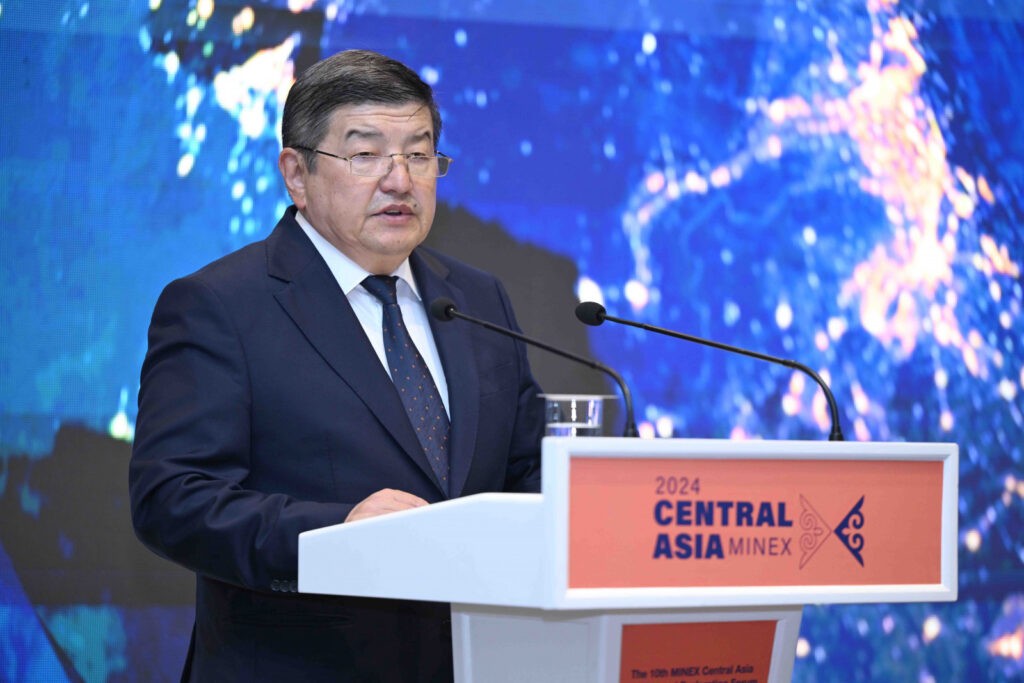
On June 19, Bishkek hosted the 10th mining and geological forum “MINEX Central Asia” with the participation of over 100 companies from 22 countries of Central Asia, Europe, China, North America, and the Middle East.

Addressing the forum, Chairman of the Cabinet of Ministers of the Kyrgyz Republic Akylbek Japarov reported that 95% of the territory of Kyrgyzstan consists of mountains, the depths of which are rich in minerals, not only gold and coal, but also iron (one section of one deposit alone, contains over 5 billion tons of ore), titanium, and high in demand rare earth metals such as europium, zirconium, cesium, and group of lanthanides.

Citing examples, the prime minister said that the predicted reserves of titanomagnetite in just one area of ​​the Kyzyl-Ompol deposit, amount to some 20 million tons, and the reserves of rare earth metals, including more than 21 elements, at Kutessay-2 deposit, to around 60 thousand tons.

“These reserves were recorded more than 50 years ago, and there is an opinion among authoritative geologists and scientists that these figures could increase significantly following more detailed geological exploration using new technological solutions. We invite partners to engage in joint geological exploration and are seeking investors in this promising sector of the economy – mining,” explained Japarov.

Regarding Kyrgyzstan’s current climate, which ultimately determines its attraction to investors, he stated:

“Political stability has been achieved through the improvement of our country’s economic situation. We have achieved a sharp reduction in the shadow economy, an increase in tax revenues and customs duties and, accordingly, an increase in wages for teachers, medical doctors, cultural workers, an increase in the [economic] activity of impoverished citizens, and a tough fight against corruption and crime. As a result, 82% of the population supports the course set by the country’s leadership, headed by the President; a fact substantiated by the International Republican Institute (IRI).”

In conclusion, he remarked,  “Our people are experiencing improvements across the board – and after- three revolutions, we are focused on creating a better economy for our country.”
 

One Dead in Mudflows in Southern Kyrgyzstan

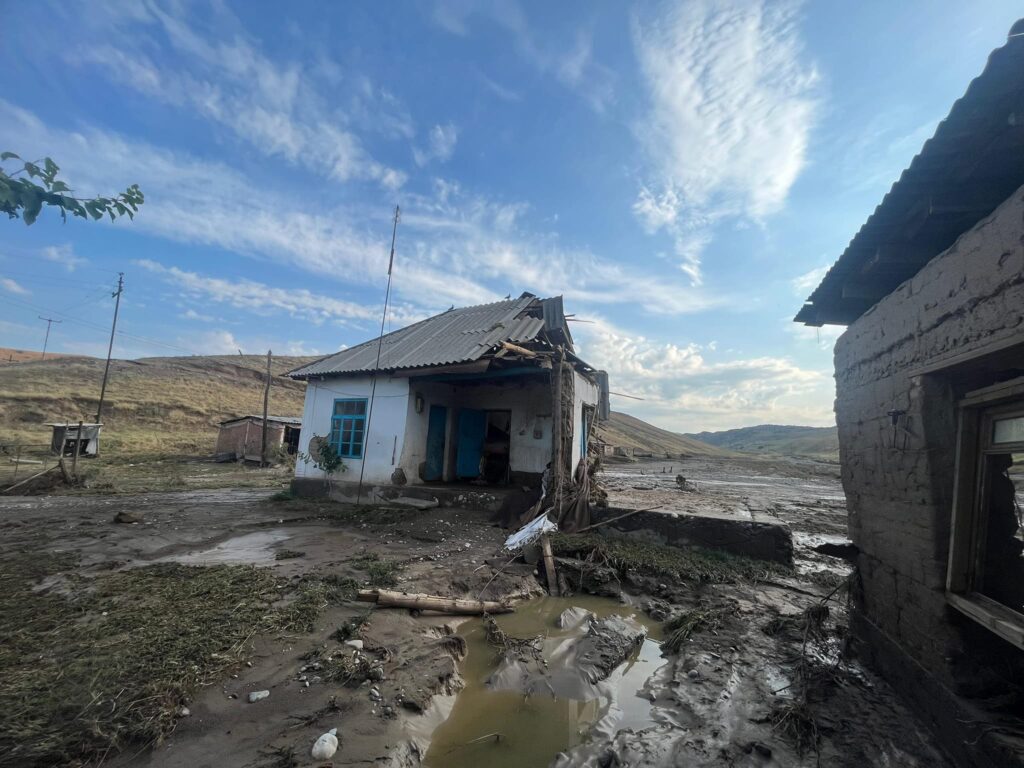
Mudflows in Kyrgyzstan’s southern Jalal-Abad region have forced 300 families to evacuate their homes, and a 10-year-old child has died, the country’s Ministry of Emergency Situations reports.

On June 18th, after heavy rain, a mudflow descended in several villages, flooding over 50 buildings. According to the Ministry, police, doctors, and civil protection officers are working to repair the damage from the disaster.

Deputy Minister for Emergency Situations Edelbek Kulmatov said that the Kochkor-Ata water basin is 15-20 kilometers from the affected villages. “Water accumulates, and the stream rushes down the mountain hollow, traveling over 20 kilometers. Unfortunately, some cowsheds and families live 16 kilometers away from the settlement. The mudflow carried away a 10-year-old child, who died,” Kulmatov said.

During the day, rescuers used heavy special equipment to clear 16 households from mudflows. Flooded internal roads were also cleared and put back into operation. Doctors are on duty at the site to monitor residents’ health. Currently, the Ministry of Emergency Situations employees are conducting disinfection procedures within the two villages in the Jalal-Abad region.

A section of the Bishkek-Osh highway is temporarily blocked due to the mudflows. However, residents of some evacuated houses are returning to their homes despite many buildings still being damaged by flooding.

Kazakhstan Reports Rise in Rail Cargo

Kazakhstan’s national railway company Kazakhstan Temir Zholy (KTZ) reports that from January-May 2024 it transported 102.4 million tons of cargo. Over 34.2 million tons of this cargo were exported by rail.

During the first five months of the year, rail transportation of coal amounted to 40.6 million tons, including 30.3 million tons within the country.

Over the same period, over 3.7 million tons of grain were transported by rail. Exports of oil by rail increased by 9.5% (2.3 million tons), ferrous metals by 5% (1.4 million tons), chemical fertilizers by 12% (over 550,000 tons), iron ore and manganese by 8.4% (4.7 million tons), and construction materials by 9% (142,000 tons).

KTZ also reported that the Caspian port of Aktau handled over 5,100 shipping containers in May 2024, setting its own record for the monthly container handling volume. Over the five months of this year, 15,800 containers were handled, double the volume in the same period in 2023.

“Since the beginning of the year, there has been a high growth in container traffic through the port of Aktau,” said the seaport’s chief dispatcher Vadim Novikov. “Container transit from China along the Trans-Caspian International Transport Route (TITR) accounted for the lion’s share of the traffic, which has grown 10-fold due to the launch of the Kazakh-Chinese terminal in Xi’an.”


Azerbaijan and Kazakhstan to Invest in Fiber Optic Cables in Caspian Sea

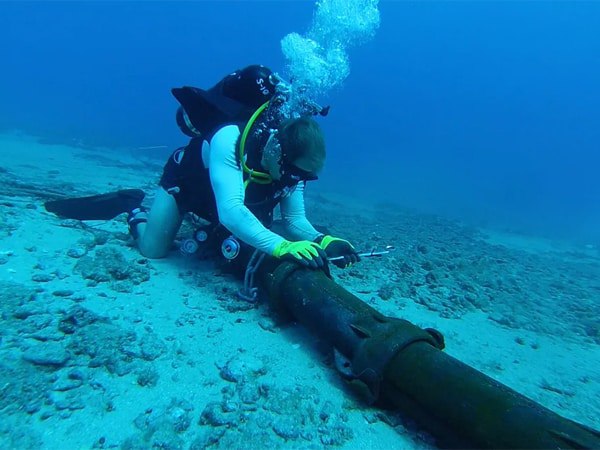
More than $50 million will be invested by Kazakhstani and Azerbaijani operators in laying fiber optic fiber along the bottom of the Caspian Sea.

Kazakhstan’s minister of digital development Zhaslan Madiev has announced: “Today, a joint venture between Kazakhtelecom JSC (Kazakhstan’s national telecommunications company) and Azertelecom LLC has been established, and a tender to select a contractor for designing and laying an underwater FOCL is being finalized.” The laying of optics on the bottom of the Caspian Sea will total 370 kilometers. “Investments of Kazakhstan and Azerbaijan telecom operators will total more than 23 billion tenges ($50.6 million).”

Madiev also said that introducing 5G mobile communication in Kazakhstan should be completed by the end of 2025. According to him, by the end of 2027 cellular operators will invest almost $1 billion in the country’s telecommunications industry.

The Trans-Caspian fiber-optic communication line (FOCL) project along the Caspian Sea bed is part of the Digital Silk Road project, which envisages the creation of a digital telecommunications corridor between Europe and Asia. Earlier, it was reported that the deadline for the project’s realization was 2025.

Kazakhstan’s Irrigation Water to be Swelled by 560 Million Cubic Meters from Kyrgyzstan

On June 18, Kazakhstan’s Ministry of Water Resources and Irrigation announced that during this year’s irrigation season, the country will receive 180 million cubic meters of water from the Shu River and 380 million cubic meters of water from the Talas River from upstream Kyrgyzstan.

As reported by Kazakh Minister of Water Resources and Irrigation Nurzhan Nurzhigitov, the agreement between the two countries was reached during the 33rd meeting of the Shu-Talas Water Commission.

Agreements were also settled on the extent of work required on the repair and reconstruction of water management facilities located on the transboundary Shu and Talas rivers.

Welcoming the decisions, Minister Nurzhigitov commented: “International cooperation is one of our ministry’s key goals. In preparation for the irrigation season, a lot of work has been undertaken to provide farmers in the south of Kazakhstan with necessary volumes of water, and important negotiations have taken place with neighbouring countries. Today’s agreement with the Ministry of Water Resources of Kyrgyzstan to increase water supply along the Shu and Talas rivers, will be implemented from June 21.”

The agreement follows that between Kazakhstan and Uzbekistan for the supply of 922 million cubic meters of water to the former through the Dostyk interstate canal.


Kazakhstan to Establish 5G Mobile Coverage by 2026

On June 18, Kazakhstan’s Minister of Digital Development, Innovation and Aerospace Industry Zhaslan Madiev updated the government on progress on improvements to the country’s Internet and mobile communication.

International data indicates that the share of the population using the Internet in Kazakhstan is now on par with that of developed countries. Traffic growth has increased by 61.5% since 2020, and the number of users, by 12.9%.

According to Speedtest Ookla, in April 2024, Kazakhstan ranked 66th with an average Internet speed of 43.6 Mbps, higher than Russia, Kyrgyzstan, and Uzbekistan.

Wired Internet is currently available in 2,606 of Kazakhstan’s 6,290 villages, with plans in place to connect optical communication lines through the PPP mechanism to 3,010 villages.

Mobile Internet is now accessible in 4,866 villages. As part of tax incentives in 2023, 1,161 villages were connected to 4G technology. Work to connect the remaining 1,424 villages is ongoing.

Regarding the further development of 5G technology, operators Kcell and Tele2 will continue work to expand 5G coverage in the cities of Astana, Almaty, Shymkent, as well as regional centres. To date, 1,144 base stations have been installed in 20 cities.

“In accordance with instructions issued by the Head of State, the introduction of 5G mobile communications should be completed before the end of 2025,” reported the minister.

Madiev then outlined the three steps required to develop the Digital Silk Road and turn Kazakhstan into a regional digital hub.

The first is to lay a 370-kilometer fiber-optic line along the bed of the Caspian Sea with investment by telecom operators in Kazakhstan and Azerbaijan amounting to more than 23 billion tenge. A joint venture has been created between Kazakhtelecom JSC and Azertelecom LLC, and a tender to select a contractor for the design and installation of an underwater fibre-optic line is underway.

The second is the construction of the national West-East Internet hyper highway, which will increase Internet transit traffic across  Kazakhstan.

The final step is the construction of a data processing centre, no lower than Tier-III level, for storing transit and international traffic.