• KGS/USD = 0.01144 0%
  • KZT/USD = 0.00192 -0%
  • TJS/USD = 0.10849 0.37%
  • UZS/USD = 0.00008 0%
  • TMT/USD = 0.28571 0.28%
  • KGS/USD = 0.01144 0%
  • KZT/USD = 0.00192 -0%
  • TJS/USD = 0.10849 0.37%
  • UZS/USD = 0.00008 0%
  • TMT/USD = 0.28571 0.28%
  • KGS/USD = 0.01144 0%
  • KZT/USD = 0.00192 -0%
  • TJS/USD = 0.10849 0.37%
  • UZS/USD = 0.00008 0%
  • TMT/USD = 0.28571 0.28%
  • KGS/USD = 0.01144 0%
  • KZT/USD = 0.00192 -0%
  • TJS/USD = 0.10849 0.37%
  • UZS/USD = 0.00008 0%
  • TMT/USD = 0.28571 0.28%
  • KGS/USD = 0.01144 0%
  • KZT/USD = 0.00192 -0%
  • TJS/USD = 0.10849 0.37%
  • UZS/USD = 0.00008 0%
  • TMT/USD = 0.28571 0.28%
  • KGS/USD = 0.01144 0%
  • KZT/USD = 0.00192 -0%
  • TJS/USD = 0.10849 0.37%
  • UZS/USD = 0.00008 0%
  • TMT/USD = 0.28571 0.28%
  • KGS/USD = 0.01144 0%
  • KZT/USD = 0.00192 -0%
  • TJS/USD = 0.10849 0.37%
  • UZS/USD = 0.00008 0%
  • TMT/USD = 0.28571 0.28%
  • KGS/USD = 0.01144 0%
  • KZT/USD = 0.00192 -0%
  • TJS/USD = 0.10849 0.37%
  • UZS/USD = 0.00008 0%
  • TMT/USD = 0.28571 0.28%
11 December 2025

New Freight Port in Iraq Offers Kazakh Companies Long-Term Prospects

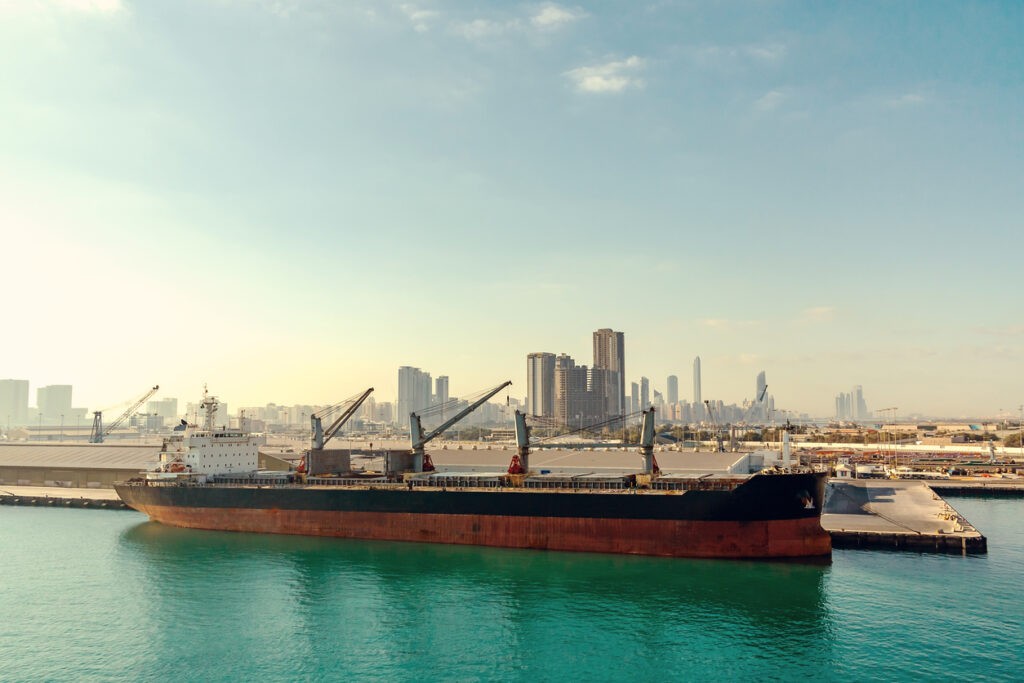
The Association of Kazakhstan Freight Railway Carriers is reporting that an Emirati company, AD Ports, is planning to build a new port and economic zone. The area that the company has identified for the zone is located to the south of the Iraqi city of Basra; if the project goes ahead, it will be an alternative to Egypt’s Suez Canal in transcontinental freight shipping.

“AD Ports (an Abu Dhabi-based port and logistics operator) has signed a preliminary agreement with the state-owned company managing Iraqi ports to establish a joint venture,” commented the Kazakh freight association.

According to them, AD’s plan, centering on the new port called Grand Faw, is to create a corridor for Asian-European trade, bypassing the Egyptian city of Suez. The Grand Faw Port is set to become one of the largest in the Middle East, with terminals for handling containerized, bulk and liquid cargo. The corridor is expected to be ready by 2038.

In Kazakhstani it is believed that the project is promising, but extremely costly. “We should not forget that all land logistics corridors are more costly than sea corridors. That’s why Kazakhstan has such problems with logistics — it has no access to the sea. Even if the Suez Canal is closed and the Panama Canal shoals [becomes shallow], sea transport will be more profitable. Yes, alternatives are needed. However, I would not count heavily on the new project,” economist Andrei Chebotarev told The Times of Central Asia.

Chebotarev referenced Kazakhstan’s plan to build the North-South transport corridor. A new logistics route alternative to Suez would be a good addition; however, so far the UAE hasn’t included Kazakhstan in its plans.

Due to the recent attacks by Yemen’s Houthi rebels on vessels in the Red Sea, the volume of maritime traffic through the Suez Canal has decreased, which in turn has increased demand for freight transport via multimodal routes.

Kyrgyzstan Ranked 6th Largest Importer of Chinese Cars

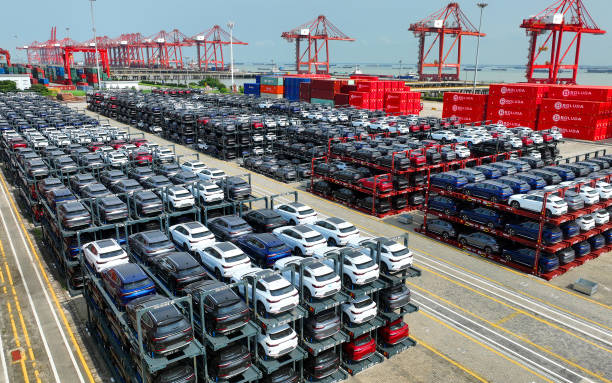
According to China’s customs statistics, in January-February 2024, Kyrgyzstan imported cars from China worth $510.3 million. Rising from 43rd place in 2023, Kyrgyzstan was ranked the world’s 6th largest buyer of Chinese cars at the beginning of this year.

Only 5 countries exceeded Kyrgyzstan’s expenditure on Chinese cars in the same period: Russia, $1.5 billion; Belgium, $1.1 billion; UK, $1 billion; Mexico, $660 million; and Brazil, $590 million.

As reported by Kyrgyzstan’s National Statistics Committee, in 2023 Kyrgyzstan imported 79,131 cars worth around $1.2 billion from China, an almost 45-fold increase compared to the 1,773 cars imported in 2022.

One of the key reasons for the recent steep rise in Kyrgyzstan’s importation of Chinese cars is the war in Ukraine. As a result of Western sanctions, China has fast become Russia’s main supplier of new cars, a large percentage of which are re-exported to the country by Central Asia, especially Kyrgyzstan.

Kazakhstan Faces Unprecedented Threats from Floods, Droughts, Locust Infestations

Experts are predicting a severe drought in Kazakhstan. Additionally, locusts are expected to invade the country, and the flood situation will be even worse next year. That’s according to Kazakhstani ecologist, Dmitry Kalmykov, who further explained to the Times of Central Asia in an interview that climate change in the region is already irreversible.

“There is an increase in the frequency and intensity of all extreme weather events, including drought, floods, catastrophic precipitation, storms, downpours. Simply put, there are, unfortunately, going to be more of these phenomena. In addition, the weather patterns relative to the seasons are changing. Precipitation falls at a different time of the season than we have come to expect. For example, last year in August rains destroyed up to 30% of the harvest in some regions of Kazakhstan. Already now, there are disappointing forecasts going forward. But it’s good to have time to prepare,” Kalmykov told TCA.

Today’s floods are an indicator of a lack of clear forecasting, Kalmykov said, stating that the government had information about the amount of snowfall, ground freezing, and moisture reserves. Yet no conclusions were drawn on the severity of the risks of high groundwater levels.

“All over the world, even in Kazakhstan’s environmental laws, this is called the need to adapt the economy to climate change that has already occurred. This is declared by Kazakhstan at the international level, but it is not fulfilled. Literally everything needs to be changed, including agricultural practices, water management, construction and emergency preparedness. This is an evolutionary law – if a species does not adapt to changed conditions, it does not survive. It is time for us to act,” he warned.

Dmitry  Kalmykov


Kazakhstan and China are expected to create a research center to combat drought. The two countries’ academies of sciences will jointly study problems of ecology and land resources. However, Kalmykov is skeptical about this initiative, as he doesn’t believe in the authorities’ ability to apply practical science in real life.

Earlier, climate change expert Kirill Pavlov released a drought forecast for Kazakhstan, which he attributes to the El Niño effect.

Yesterday, TCA published an interview with Dr. Petr Svoik, a Kazakhstani economist and former head of the Anti-monopoly Policy Committee, in which he emphasized the need for a supranational structure to combat climate change, so that each state cannot arbitrarily come to “its own truth… There is only one interstate structure – the Supreme Eurasian Economic Council – where ministers of the Eurasian Economic Union (EAEU) countries can, among other things, make decisions regarding water resources, but these decisions are made by consensus. There is no center that adopts arbitration and final order. That is, this body cannot resolve a water dispute between, say, Kazakhstan and Kyrgyzstan, and there is no economic effect,” he stated.

In an earlier interview with TCA, despite admitting that this could be “potentially the most severe disaster in over 80 years,” Deputy Foreign Minister of Kazakhstan, Roman Vassilenko, stated that Kazakhstan is “effectively handling the crisis independently, and has not actively sought international assistance. The country’s emergency services, government bodies, and local communities are collaboratively addressing the challenges posed by the flooding,” he said. “The government is also working on creating an advanced information system. It is intended to model various emergency situations, including floods and fires, enabling accurate forecasting, and providing recommendations and actionable steps for response,” he added.

World Bank Boosts Kyrgyzstan’s Agricultural Productivity and Climate Resilience

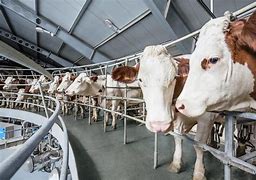
The World Bank has announced funding of $30 million to help boost the productivity and climate resilience of Kyrgyzstan’s dairy and horticulture agri-food clusters.

The project will be complemented by a $5 million grant from the Global Agriculture and Food Security Program.

“Recognizing agriculture as a cornerstone of the Kyrgyz Republic’s economy, the World Bank prioritizes the sector alongside energy and water in its new 2024-2028 Country Partnership Framework. The new project marks the beginning of a series of initiatives designed to support the Cabinet of Ministers’ vision for a modernized, competitive, and climate-resilient agricultural sector,” reported Tatiana Proskuryakova, World Bank Regional Director for Central Asia.

Running until 2029, the initiative will help producers, processors, and other value chain participants to improve the quality and volume of their produce, access to markets through investment loans, training and capacity building, seed system enhancement, breeding, and information management.

It will also focus on enhancing climate adaptation and mitigation through the promotion of climate-smart technologies as well as the employment of digital technology for accessing market information.

The project will directly support 8,000 beneficiaries including individual farmers and producers, producer groups, small and medium processors, and other value chain participants in the agri-food clusters of dairy and horticulture.

Indirect beneficiaries, numbering 20,000, will comprise farming communities and households of loan and training recipients, in addition to members of broader rural communities who will be afforded better jobs and opportunities to generate income.

Kazakhstan to Up Price of Gas and Diesel for Foreign Vehicles

Due to government controls, Kazakhstan currently charges the lowest prices for motor fuel compared to other members of the Eurasian Economic Union, including Armenia, Belarus, Kyrgyzstan, and Russia.

To maintain the balance of fuel for the domestic market, as well as minimize the risks of ‘gray’ fuel exports, the Ministry of Energy of Kazakhstan has prepared a draft to increase prices for AI-92 and AI-93 gasoline and diesel fuel to be levied in accordance with the origin of vehicles.

The proposed new price for AI-92 and AI-93 gasoline in Kazakhstan is 245 tenge per litre. However, for drivers holding licenses and vehicle registration certificates issued in Kazakhstan, the price will remain unchanged, at 205 tenge per litre, if no more than 300 litres are bought per day.

Likewise, the price of diesel will remain at 295 tenge per litre for locals but raised to 315 tenge per litre for non-residents of Kazakhstan.

In a statement issued on 11 April, the Ministry of Energy gave assurance that the country currently has sufficient motor fuel to satisfy the domestic market.

Now published, the draft is open for public discussion.

Kazakhstan and Belgium Poised to Expand Bilateral Trade

On 8 April, Kazakhstan’s Deputy Minister of Trade and Integration, Kairat Torebayev attended a meeting in Brussels with Rose Donck, Director, Head of Department State Visits – Belgian Economic Missions of the Belgian Foreign Trade Agency.

The parties discussed the potential expansion of bilateral trade and an agreement was made to organize a business forum with the participation of Kazakh and Belgian companies later this year in Belgium.

The last economic mission of Belgium to Kazakhstan took place back in 2010, and according to Ms. Donck, the Belgian Foreign Trade Agency is currently planning a seminar on investment, trade, and economic opportunities in Kazakhstan for 200 Belgian companies in the very near future.