• KGS/USD = 0.01144 0%
  • KZT/USD = 0.00193 -0%
  • TJS/USD = 0.10811 -0.28%
  • UZS/USD = 0.00008 0%
  • TMT/USD = 0.28490 0%
  • KGS/USD = 0.01144 0%
  • KZT/USD = 0.00193 -0%
  • TJS/USD = 0.10811 -0.28%
  • UZS/USD = 0.00008 0%
  • TMT/USD = 0.28490 0%
  • KGS/USD = 0.01144 0%
  • KZT/USD = 0.00193 -0%
  • TJS/USD = 0.10811 -0.28%
  • UZS/USD = 0.00008 0%
  • TMT/USD = 0.28490 0%
  • KGS/USD = 0.01144 0%
  • KZT/USD = 0.00193 -0%
  • TJS/USD = 0.10811 -0.28%
  • UZS/USD = 0.00008 0%
  • TMT/USD = 0.28490 0%
  • KGS/USD = 0.01144 0%
  • KZT/USD = 0.00193 -0%
  • TJS/USD = 0.10811 -0.28%
  • UZS/USD = 0.00008 0%
  • TMT/USD = 0.28490 0%
  • KGS/USD = 0.01144 0%
  • KZT/USD = 0.00193 -0%
  • TJS/USD = 0.10811 -0.28%
  • UZS/USD = 0.00008 0%
  • TMT/USD = 0.28490 0%
  • KGS/USD = 0.01144 0%
  • KZT/USD = 0.00193 -0%
  • TJS/USD = 0.10811 -0.28%
  • UZS/USD = 0.00008 0%
  • TMT/USD = 0.28490 0%
  • KGS/USD = 0.01144 0%
  • KZT/USD = 0.00193 -0%
  • TJS/USD = 0.10811 -0.28%
  • UZS/USD = 0.00008 0%
  • TMT/USD = 0.28490 0%
10 December 2025

Uzbekistan’s Average Life Expectancy Increased to 74.7 Years in 2023

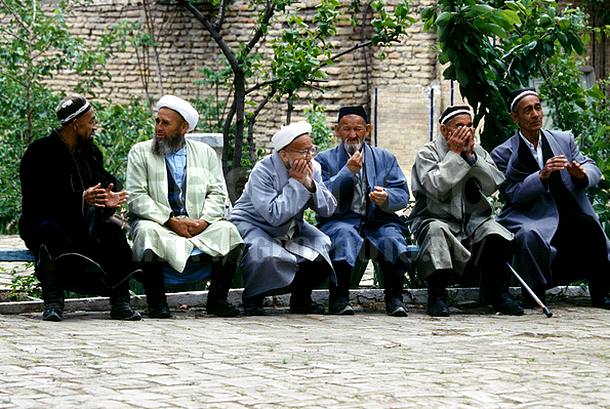
The average life expectancy for the population in Uzbekistan is increasing, according to the Statistics Agency of Uzbekistan. The average life expectancy of permanent residents of the Republic of Uzbekistan in 2023 was 74.7 years, up almost a half a year from the previous annual reading.

According to the agency’s report, Uzbek women live 4 years longer than men. Average life expectancy as of January 1, 2024, for
women was 76.9 years, and for men, 72.5 years.

The average life expectancy at the beginning of 2023 was 74.3 years, and this indicator corresponded to
76.6 years for women and 72.1 years for men. As of January 1, 2022, the average life expectancy of the population was 73.8 years, and at the beginning of 2021, it was 73.4 years old.

Experts in Kyrgyzstan Sound Alarm Over Acute Shortage of Medicines

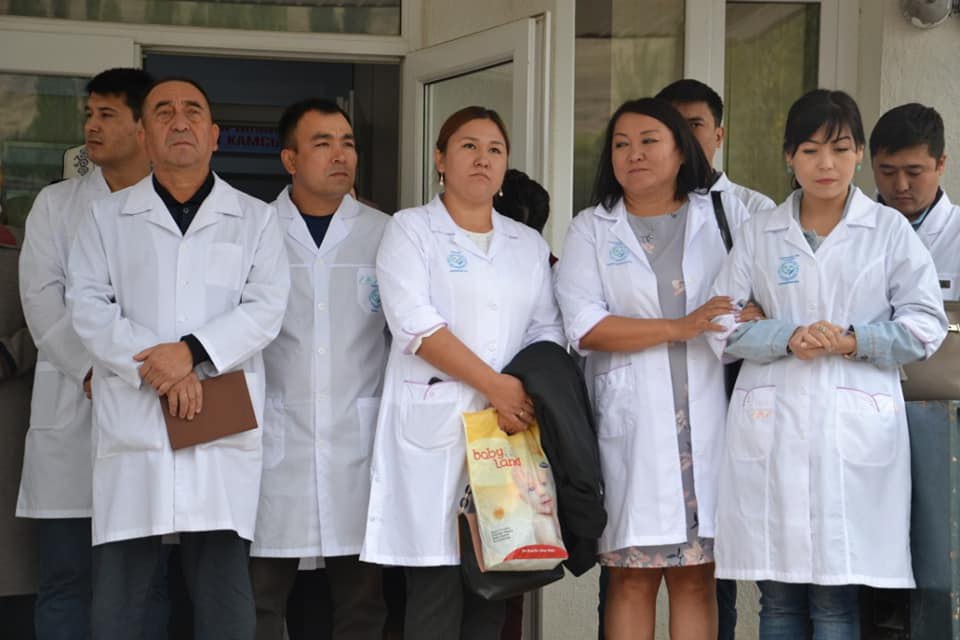
Doctors in the Central Asian republic are saying that medical institutions lack emergency, intensive care, pediatric, and cardio-pulmonary drugs, as well as contraceptives and the supplies needed for safe medical abortions. Kyrgyzstan’s hospitals lack basic medicines and basic daily medications, according to Bermet Baryktabasova, head of the Kyrgyz Medical Trade Union. The Health Ministry cannot solve the problem on its own, she said, so resolution of the issue must involve the government, members of parliament (MPs) and national security services – otherwise, there will be a social catastrophe.

“There are distress signals from all regions – there are no medicines, or they are running out. Requests to [Kyrgyzpharmacy] for the supply of medicines according to needs have been lying for the second quarter since the beginning of the year… The medicines arrive without accompanying documents (delivery notes, certificates, without specifying the purchase price and other financial and authorization papers),” Baryktabasova posted on social media.

In March last year, the Kyrgyz authorities created the state enterprise, Kyrgyzpharmacy, to implement a new approach to providing hospitals with medicines at an affordable price. Later, the Cabinet of Ministers decided that the supply of drugs to public clinics will be handled by a single operator. Kyrgyzpharmacy also controls the quality of medicines, their storage and delivery, adding a 5% mark-up on the cost of goods.

“State and municipal health care organizations pay for medicines and medical devices supplied to the state enterprise Kyrgyzpharmacy from the funds provided in the budget of the organizations for the relevant year. They may also purchase medicines not on the list from Kyrgyzpharmacy if supplies are available,” the new law states.

Problems with drug availability began mainly because of a decree prohibiting the importation of medicines that had not previously passed state registration and were not included in the relevant lists. The document was supposed to reduce the risks of importing low-quality medicines. However, most foreign pharmaceutical companies did not go through the complicated registration procedure; they often aren’t interested in Kyrgyzstan’s small market.

Dastan Bekeshev, a member of the Supreme Council (Jogorku Kenesh), conducted a survey among citizens to find out what medicines are in short supply. As a result, the MP made a list of 50 items.

“I decided to find out what is the reason for the shortage of medicines and sent a list of necessary medicines to the Ministry of Health. As it turned out, the geopolitical situation and the lack of registration of many drugs are to blame. The registration procedure should be simplified: if a medicine is registered in the U.S., U.K., Europe, Japan or Russia, we should by default register it in our country. So far, the bureaucratic procedure is more important than the lives of citizens,” Bekeshev said.

Responding to the deputy, the Ministry of Health explained that 30 “items” from the list are not registered in the Kyrgyz Republic. That means these drugs cannot be imported into the country.

“In the absence of a prescribed drug in pharmacy organizations, citizens should contact their attending physicians to prescribe alternative treatment,” said the ministry in response.

It should be noted that many medicines in Kyrgyzstan are dispensed over-the-counter in pharmacies without a prescription. As a rule, citizens buy medicines for treatment on their own. Nevertheless, the Health Ministry recognizes the problem of drug shortages. Officials promised that in the near future they will organize a round-table discussion with the participation of all stakeholders.

Uzbekistan Expands Basalt Production

On April 8, President Shavkat Mirziyoyev visited the Basalt Uzbekistan cluster in the Jizzakh region.

Seven years has passed since the region began extracting basalt and today, the cluster processes 177 thousand tons of stone per year and manufactures 42 different products. In addition to basalt wool and fibre, local enterprises employ technology from Germany, France, Italy, and the Czech Republic, to provide mesh and reinforcement and insulation materials for the construction industry.

In 2023, 80% of the 45 thousand tons of goods produced, were exported to the USA, Great Britain, Poland, Italy, the Czech Republic, Georgia, Russia, Turkey, Belarus, Kazakhstan, Kyrgyzstan, and Tajikistan.

Six major projects worth $498 million and employing 1.7 thousand currently operate across 300 hectares in the region. Due to be launched next year with imported equipment valued at $145 million, a new enterprise will produce 25 thousand tons of basalt fiber and fabric per annum, 90% of which is destined for export.

The president has now set the task for the instigation of further plants with investments of $500 million to manufacture 20 types of products and create two thousand new jobs.

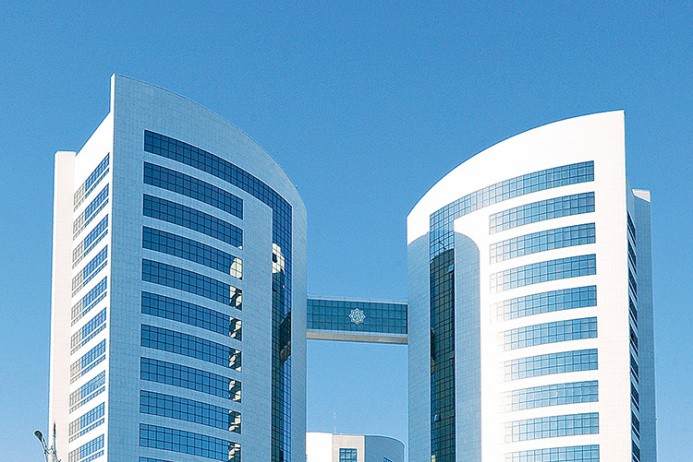
Turkmenistan’s GDP Expands by 6.3% in First Quarter of 2024

In the first quarter of 2024, Turkmenistan demonstrated stable economic growth, President Serdar Berdimuhamedov said at a meeting of the Cabinet of Ministers, where the results of the first three months of this year were summarized.

Berdimuhamedov stated that positive dynamics are evident in the key economic indicators. Specifically, industrial production increased by 4.7 %, the transport and communication sector by 6.6%, the service sector by 7.6%, the trade sector by 8.2%, and the agricultural sector by 4.1%. The country’s average salary also rose by 10% in the first quarter.

In addition to the country’s economic growth, the president observed that the country is rapidly developing its large industrial and social infrastructure, which includes new villages, residential buildings, entertainment and medical facilities, and supporting families with new schools and kindergartens. These initiatives are being carried out in accordance with Turkmenistan’s 2022–2028 socioeconomic development strategic program.

Kazakhstan and Egypt Develop Economic Cooperation

The Embassy of Kazakhstan in Egypt and Kazakh Invest last week organized a round table in Cairo for large company members of the Egyptian Business Council for International Cooperation.

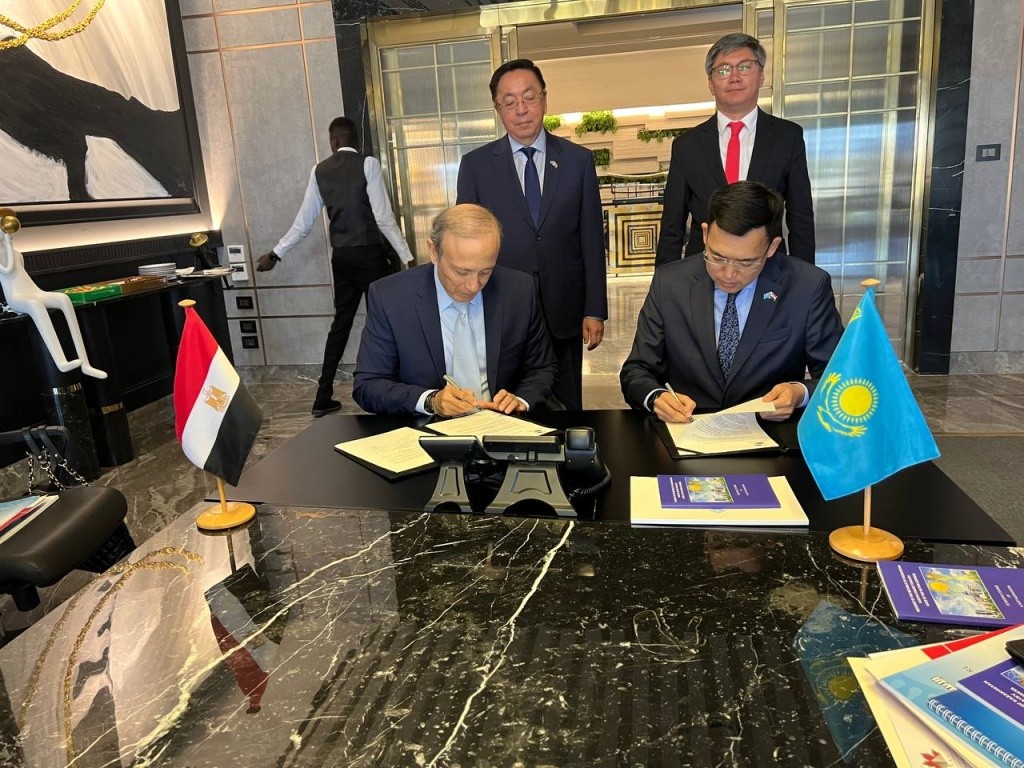
Following discussion on trade and investment opportunities, a Memorandum of Cooperation was signed by Kazakh Invest and the Egyptian Business Council for International Cooperation.

Kairat Lama Sharif, Kazakhstan’s Ambassador to Egypt, stated that Egypt as one of the three largest economies among Arab countries, has high potential for increasing trade and economic cooperation with Kazakhstan. By way of illustration, he reported that many Kazakh producers of convenience food have expressed interest in the Egyptian market, which has a population of more than 105 million.

The ambassador invited Egyptian companies to expand cooperation with Kazakhstan enterprises and agreement was made for representatives of Egyptian business to visit Kazakhstan later this year.

Uzbekistan’s Budget Deficit Expands Over First Three Months of 2024

According to information provided by the Ministry of Economy and Finance of Uzbekistan for January of this year, federal budget revenues amounted to 16.160 trillion som ($ 1.275 billion), and expenses amounted to 21.927 trillion sum ($1.728 billion), leaving the negative difference between revenues and expenditure at 5.767 trillion sum ($454.5 million).

In February, state budget revenues were 16.909 trillion sum ($1.333 billion), and expenses were 24.137 trillion sum ($1.902 billion), a negative balance of 7.228 trillion sum ($569.7 million).

In March, state budget revenues were 17.457 trillion sum  ($1.376 billion), and expenses were 24.307 trillion sum ($1.916 billion), with a monthly deficit of 6.850 trillion sum ($539.9 million).

In total, the state budget deficit for the past three months amounted to 19.885 trillion sum ($1.567 billion).