• KGS/USD = 0.01144 0%
  • KZT/USD = 0.00194 -0%
  • TJS/USD = 0.10822 -0.18%
  • UZS/USD = 0.00008 0%
  • TMT/USD = 0.28571 0%
  • KGS/USD = 0.01144 0%
  • KZT/USD = 0.00194 -0%
  • TJS/USD = 0.10822 -0.18%
  • UZS/USD = 0.00008 0%
  • TMT/USD = 0.28571 0%
  • KGS/USD = 0.01144 0%
  • KZT/USD = 0.00194 -0%
  • TJS/USD = 0.10822 -0.18%
  • UZS/USD = 0.00008 0%
  • TMT/USD = 0.28571 0%
  • KGS/USD = 0.01144 0%
  • KZT/USD = 0.00194 -0%
  • TJS/USD = 0.10822 -0.18%
  • UZS/USD = 0.00008 0%
  • TMT/USD = 0.28571 0%
  • KGS/USD = 0.01144 0%
  • KZT/USD = 0.00194 -0%
  • TJS/USD = 0.10822 -0.18%
  • UZS/USD = 0.00008 0%
  • TMT/USD = 0.28571 0%
  • KGS/USD = 0.01144 0%
  • KZT/USD = 0.00194 -0%
  • TJS/USD = 0.10822 -0.18%
  • UZS/USD = 0.00008 0%
  • TMT/USD = 0.28571 0%
  • KGS/USD = 0.01144 0%
  • KZT/USD = 0.00194 -0%
  • TJS/USD = 0.10822 -0.18%
  • UZS/USD = 0.00008 0%
  • TMT/USD = 0.28571 0%
  • KGS/USD = 0.01144 0%
  • KZT/USD = 0.00194 -0%
  • TJS/USD = 0.10822 -0.18%
  • UZS/USD = 0.00008 0%
  • TMT/USD = 0.28571 0%
18 December 2025

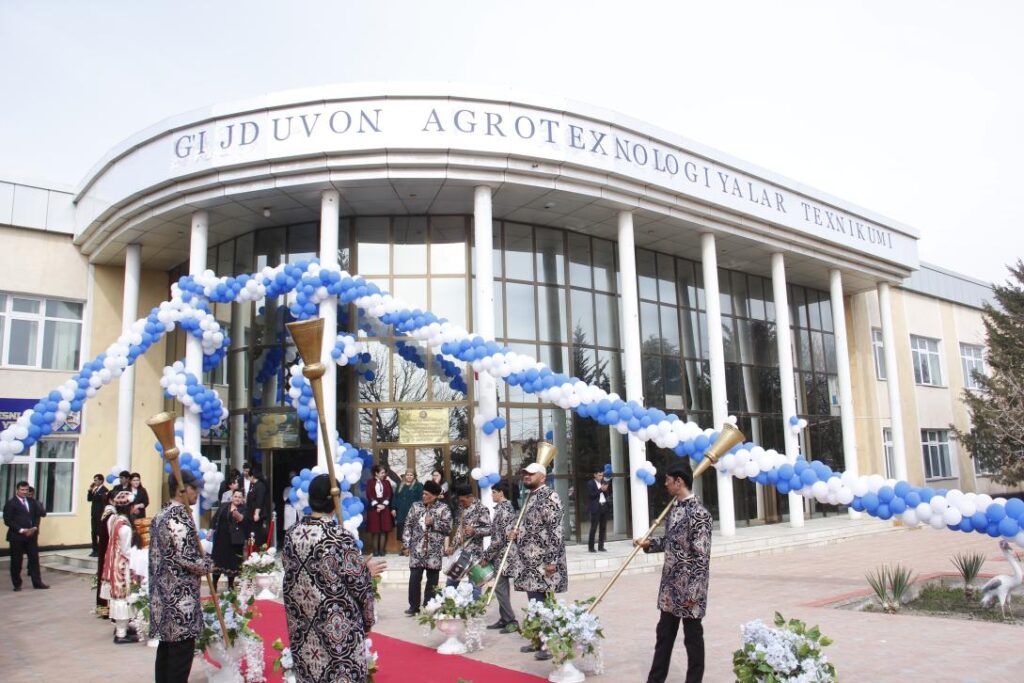
EU Supports Renovation of Agricultural College in Bukhara

The Gijduvon Technical College of Agro Technologies recently opened its newly renovated facilities in Bukhara at an event attended by representatives of UNESCO, local government officials, the college’s staff and students, and members of Gijduvon’s community. Integral to the ‘Skills Development for Employability in Rural Areas of Uzbekistan’ project, the renovations were funded by the European Union.

Since its inception, Gijduvon College has been committed to providing vocational education for rural youth. Supported by the European Union, UNESCO’s extensive renovations have modernized workshops, classrooms, and laboratories through the installation of new flooring, ceilings, and enhanced lighting. In addition to revitalizing learning spaces, the project has also provided essential tools and resources, including tractors, greenhouses, refrigeration units, and contemporary furniture.

By contributing to the College’s success in equipping students with the skills necessary for work in agriculture and irrigation, the improved facilities will help further sustainable development and enhanced living standards in rural Uzbekistan.

Tashkent to Establish Yangi Avod Industrial Zone

Uzbekistan is to open a special industrial zone called Yangi Avlod (New Generation) in Tashkent. Yangi Avlod will be located in the Yangihayot district of the capital, and has been awarded a 30-year operating term.

Companies operating within the special industrial zone will receive preferential tax rates and customs benefits. A limited liability company is to be opened to manage the zone; this LLC will lease out land for investment projects via the electronic trading platform Ye-auction.

The special industrial zone is forecast to receive up to $1.5 billion in foreign direct investments (FDI) by the end of 2025, which will generate over 2,500 new jobs at Yangi Avlod

Uzbekistan To Open Three New Power Projects in Namangan

Three large energy projects are being put into operation in Uzbekistan’s Namangan region. The projects have an overall capacity of 1,200 megawatts, and a total cost of $1.1 billion.

Uzbekhydroenergo will build six cascades of 228 megawatt hydroelectric power generation in Uychi district, on the Norin river, for $434 million. As a result, 1 billion kilowatt-hours (KWh) of electricity will be produced per year, 310 million cubic meters of gas will be saved, and electricity will be delivered to 430,000 households.

Construction will use exclusively Uzbek technology and equipment, making it the country’s first completely domestic hydroelectric power plant.

The Pop and Uychi districts of the Namangan region are scheduled in 2025 to host the installation of pumped-storage hydroelectric systems with a capacity of 200 megawatts. These projects serve to stabilize the unified energy system and provide adequate energy supply to households and businesses during periods of increased consumption.

This year alone, 2,600 megawatts of power will be connected to the grid as part of the construction of 14 solar and wind farms in Uzbekistan.

Central Asians Barred From Flying to South America From Turkey

Turkish Airlines has introduced additional checks for citizens of Central Asian countries flying from Istanbul to Latin America, in order to reduce the possible influx of migrants to the United States’ southern border with Mexico.

An announcement on the Turkish Airlines website reads: “In addition to general regulations such as passport data and visa requirements for passenger acceptance, additional checks may be applied to our flights arriving in Venezuela, Mexico, Colombia and Brazil”.

In addition to a visa, the airline now requires passengers to show return tickets, a paid hotel reservation in the host country, and proof of financial resources sufficient for the trip. The reason is that most migrants trying to get to the U.S. transit through those listed Latin American countries. Citizens of Central Asian countries do not need a visa to get to Turkey, with the exception of Turkmenistan.

Because of the new restrictions, dozens of passengers are now stuck at the airport in Istanbul and can’t leave — they were simply not allowed on previously purchased Turkish Airlines flights. These stranded passengers are also not being refunded for their tickets, because most of these people purchased the cheapest, non-refundable, flights.

According to the U.S. State Department, a record number of migrants trying to enter the country — more than 2.5 million people – – congregated at the border with Mexico in 2023, and the restrictions imposed by Turkey’s flagship airline are seen as part of a multinational effort to reduce the flow of migrants into the U.S.  According to U.S. Customs & Border Patrol statistics, 140,000 illegal migrants have entered through the San Diego (California) border sector since the beginning of the year. Among them are 2,500 people from Uzbekistan, 500 citizens of Tajikistan, and 400 citizens of Kyrgyzstan.

According to some analysts, in the event that Turkey is closed as a transit country for immigration to the U.S., Central Asians may start flying through the UAE.

Uzbekistan Launches Construction of New Power Plants

On March 25th, Uzbekistan President Shavkat Mirziyoyev pressed a symbolic button to launch the construction of new power plants in the country’s Namangan region.

Today, the Namangan region has 913 megawatts of generating capacity. Over the past three years, electricity consumption in the region has increased by 24 percent and to meet the ever-growing demand, three projects have been launched with a total capacity of 1,228 megawatts at a cost of $1.1 billion. The projects comprise a cascade of hydroelectric power plants and two solar power plants.

The Uzbekhydroenergo joint stock company will invest $434 million in a cascade of 6 hydroelectric power stations. With a total capacity of 228 megawatts, the plants will generate 1 billion kilowatt-hours of electricity per year, saving 310 million cubic meters of gas and providing electricity to 430 thousand households. The German company Hyper Partners GmbH will build a solar power plant with a capacity of 500 megawatts. The cost of the project is $350 million and the annual capacity, 1.095 billion kilowatt-hours. Another solar power plant will be built in cooperation with Tepelen Group Holding Limited from the United Arab Emirates. Its cost will also be $350 million and its capacity, 500 megawatts.

The connection of the above power plants to the power grid is scheduled for completion by the end of this year. Combined, the projects will provide the Namangan region with an annual generating capacity of 2141 megawatts and 7.8 billion kilowatt-hours of electricity. Since this is more than enough to cover the region’s need for 5.5 billion kilowatt-hours, any excess electricity will be sent to neighbouring Andijan and Fergana.

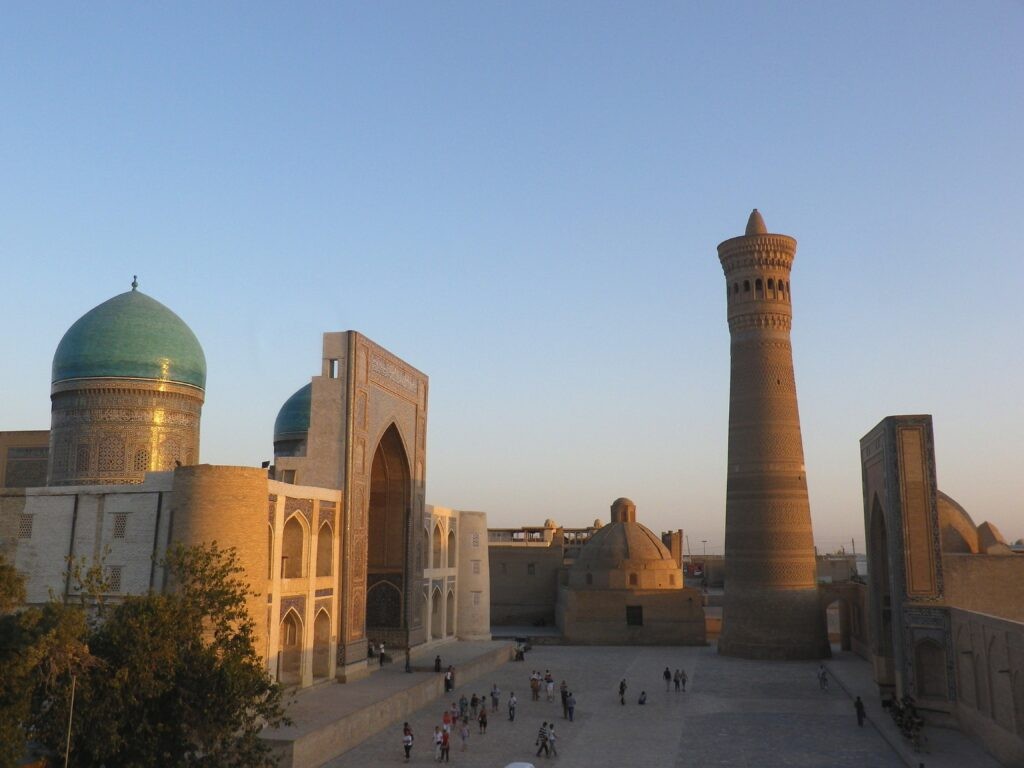
Demolitions in Bukhara Continue Despite UNESCO Demands for a Halt

Demolitions in Bukhara’s buffer zone continue despite Uzbekistan’s promises to harmonize its plans with the United Nations Educational, Scientific and Cultural Organization (UNESCO). On February 26, demolition began on the 23,000-seat Bukhara Arena stadium near Bukhara’s historic centre. Ignoring the fact that construction of the Bokii Bukhoro tourist centre is under review by ICOMOS, the advisory body of UNESCO’s World Heritage Committee, local authorities are activating their plans.

UNESCO claims that on February 8, a letter was sent to the Uzbek government requesting clarification of plans for the project, but have received no response to date.

On March 2, Sara Noshadi, head UNESCO in Uzbekistan, issued the statement: “UNESCO is closely monitoring the state of conservation of the Bukhara World Heritage Site, including concerns expressed by civil society about potential construction plans in the buffer zone of the site. The World Heritage Centre has contacted the Uzbek authorities on this matter to request additional information and clarify the situation. The World Heritage Centre hopes that the authorities will fulfil their obligations under the World Heritage Convention and will not undertake any demolition/construction projects without prior notification and assessment by the World Heritage Committee, whose next session is in July 2024. UNESCO stands ready to provide expertise and assistance to safeguard the Outstanding Universal Value of the site.”

Alerte Héritage is a non-governmental organization for the protection of Central Asian architectural and cultural heritage headed by Boris Chukhovich.

A specialist in architecture and the protection of cultural heritage, Chukhovich actively advocates the protection of Bukhara’s historic centre. He strongly criticized the plan for the tourist centre, as “disastrous” and a “sham” and stated, “We appeal to UNESCO, which is responsible for World Heritage sites, and to the Uzbek government, which is responsible for the preservation of the country’s cultural heritage, as well as to all concerned institutions and individuals: the demolition must be stopped and further plans discussed and made available to the public as soon as possible!”

Bukhara joined UNESCO’s list of World Heritage Sites in 1993 and reflects the urban planning and architecture of the period of Uzbek rule by the Shibanid dynasty. The territory of the historical centre of Bukhara is 216 hectares, and its protected area, 339 hectares. The total area of the planned tourist centre is 32.6 hectares, all within the protected area of Bukhara’s historical centre which contains two objects of cultural heritage included in the National Register: the Sallakhkhana gate, restored in 2012, and the bust of Abu Ali ibn Sina, installed in 1980.

However, according to local officials, Bukhara’s infrastructure — much of which was built during the Soviet era — needs improvement to attract tourists. According to the requirements of the Convention for the Protection of the World Cultural and Natural Heritage of UNESCO, any major facilities planned for construction in Bukhara’s historical centre and its buffer zone must be pre-approved by UNESCO and, according to local legislation, by the Cultural Heritage Agency of Uzbekistan.