• KGS/USD = 0.01144 0%
  • KZT/USD = 0.00196 -0%
  • TJS/USD = 0.10899 -0%
  • UZS/USD = 0.00008 -0%
  • TMT/USD = 0.28490 0%
  • KGS/USD = 0.01144 0%
  • KZT/USD = 0.00196 -0%
  • TJS/USD = 0.10899 -0%
  • UZS/USD = 0.00008 -0%
  • TMT/USD = 0.28490 0%
  • KGS/USD = 0.01144 0%
  • KZT/USD = 0.00196 -0%
  • TJS/USD = 0.10899 -0%
  • UZS/USD = 0.00008 -0%
  • TMT/USD = 0.28490 0%
  • KGS/USD = 0.01144 0%
  • KZT/USD = 0.00196 -0%
  • TJS/USD = 0.10899 -0%
  • UZS/USD = 0.00008 -0%
  • TMT/USD = 0.28490 0%
  • KGS/USD = 0.01144 0%
  • KZT/USD = 0.00196 -0%
  • TJS/USD = 0.10899 -0%
  • UZS/USD = 0.00008 -0%
  • TMT/USD = 0.28490 0%
  • KGS/USD = 0.01144 0%
  • KZT/USD = 0.00196 -0%
  • TJS/USD = 0.10899 -0%
  • UZS/USD = 0.00008 -0%
  • TMT/USD = 0.28490 0%
  • KGS/USD = 0.01144 0%
  • KZT/USD = 0.00196 -0%
  • TJS/USD = 0.10899 -0%
  • UZS/USD = 0.00008 -0%
  • TMT/USD = 0.28490 0%
  • KGS/USD = 0.01144 0%
  • KZT/USD = 0.00196 -0%
  • TJS/USD = 0.10899 -0%
  • UZS/USD = 0.00008 -0%
  • TMT/USD = 0.28490 0%
08 December 2025

Kazakhstan and China to Expand Trade and Economic Cooperation

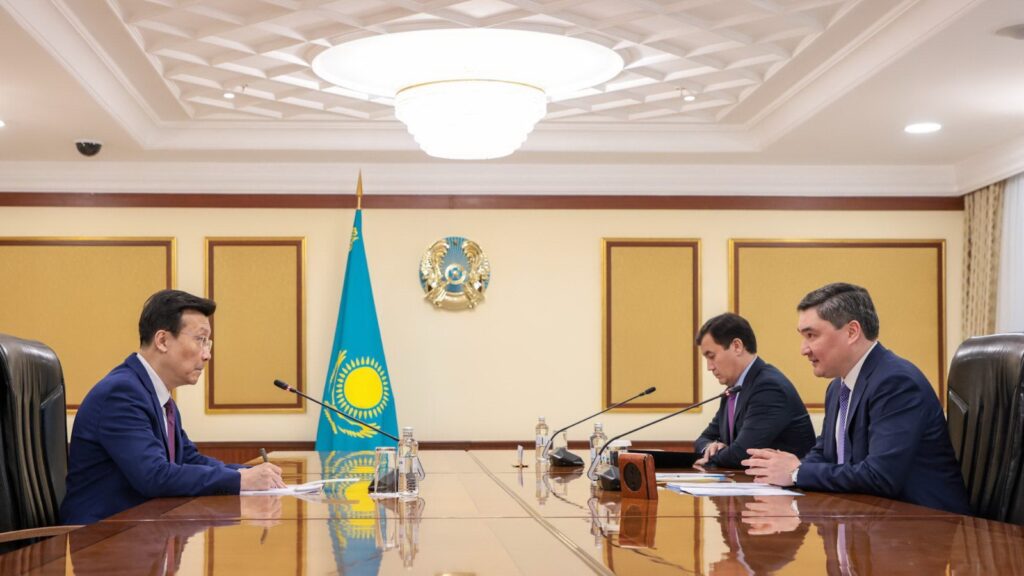
Further steps to eliminate restrictions in mutual trade, remove administrative barriers, and simplify customs procedures were discussed by the Prime Minister of Kazakhstan Olzhas Bektenov and Chinese Ambassador to Kazakhstan Zhang Xiao on March 13th.

Related issues included the expansion of Chinese cargo transit via Kazakhstan along the Trans-Caspian International Transport Route, and plans to increase the supply of Kazakh agricultural produce to the Chinese market.

Trade turnover between Kazakhstan and China grew by 30% last year to $31.5 billion. Over 9 months in 2023, Chinese investments in Kazakhstan’s economy amounted to $1.4 billion and 45 joint Kazakh-Chinese projects worth over $14.5 billion are currently under implementation. In January-February 2024, the volume of Chinese container traffic through Kazakhstan increased 2.6-fold, demonstrating the potential for further expansion, joint investment, and diversification of trade.

The Kazakh prime minister hailed the rise in trade and economic partnership between the two countries and the successful operation of some 3,000 joint companies in Kazakhstan, with the added recommendation that future joint Kazakh-Chinese projects focus on marketable high-tech products. The Chinese ambassador confirmed the potential for cooperation in the above alongside projects on agriculture and energy transfer.

Uzbekistan Foreign Minister Visits Afghanistan to Boost Economic Ties

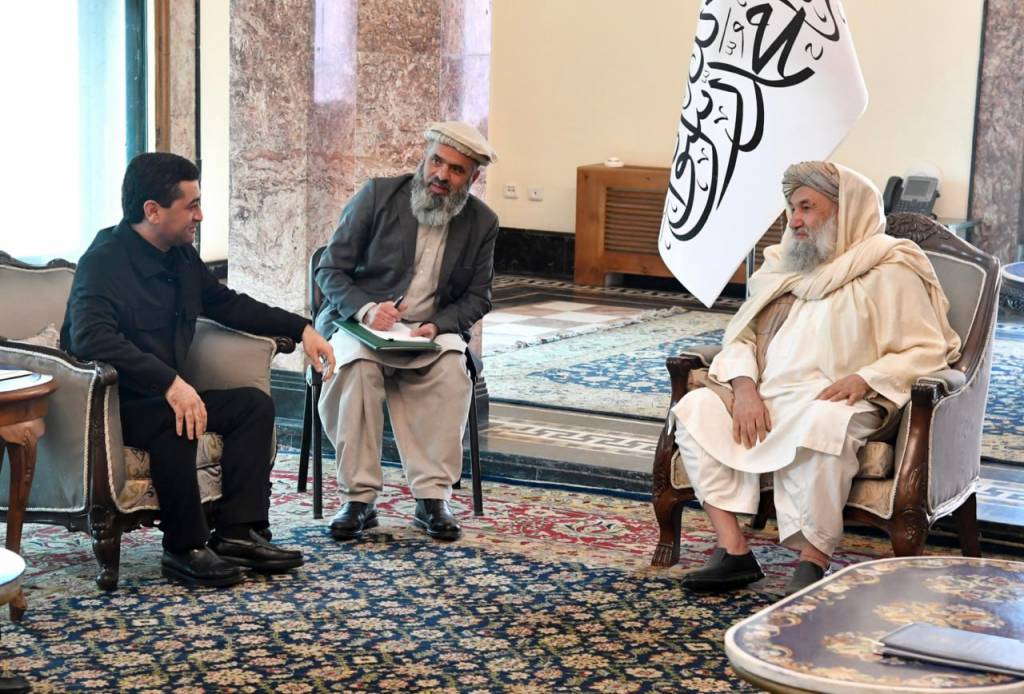
On March 12th, a delegation led by Uzbekistan’s Minister of Foreign Affairs Bakhtiyor Saidov visited Kabul to attend a meeting with officials of Afghanistan’s interim government: Acting Prime Minister Mullah Mohammad Hassan Akhund, Acting Deputy Prime Minister Mawlawi Abdul Salam Hanafi, Acting Deputy Prime Minister Mullah Abdul Ghani Baradar, Acting Foreign Minister Mawlawi Amir Khan Muttaqi, and Acting Minister of Commerce and Industry Nooruddin Azizi.

According to the Uzbek Foreign Ministry, discussions focused on boosting economic ties and creating more favourable conditions for both countries’ business sectors.

In a broadcast by Afghan TOLOnews, the Afghan government stated that in addition to economic cooperation, regional connectivity and transit through Afghanistan and Uzbekistan, the meeting covered the opening of an Afghan embassy in Uzbekistan. Attention was also paid to the Uzbek delegation’s interest in investment in a cement factory, coal mining, and a project to produce 200 megawatts of electricity from coal in Afghanistan.

Referencing the Afghan Ministry of Agriculture, Irrigation and Livestock, TOLOnews reported on a statement by Uzbekistan’s minister of water resources. Having outlined his country’s experience in manufacturing equipment for the construction of dams and canals, as well as water management at a regional level, the minister declared Uzbekistan’s readiness to cooperate with Afghanistan in these fields.

The issue of transboundary water use had come to the fore last month following Afghanistan’s announcement that construction has begun on the second phase of the Qosh Tepa Canal.

Thirteen Thousand Foreigners Working in Kazakhstan

According to statistics issued by the Ministry of Labour and Social Protection of Population , at the beginning of March 2024, 13,088 foreigners were working in Kazakhstan with the permission of local executive agencies.

Kazakhstan’s foreign labour force (FLF) provides permits under the following categories: managers and their deputies (567 people) and heads of structural subdivisions (2,658). The majority of foreign labour comprises specialists (5,774) and skilled workers (580). In addition, 798 foreigners are employed in seasonal work, and a further 2,711 within the framework of corporate transfer.

With reference to industry, most foreign citizens work in construction (4,281), manufacturing (1,380), mining and quarrying (1,304), agriculture, forestry and fisheries (834), and professional, scientific and technical activities (809). In terms of nationality, the highest representations in the foreign workforce were reported as 4,121 citizens of China (31.4%); 1,176 citizens of India (8.9%) 1,128 citizens of Turkey( 8.6%) and 908 citizens of Uzbekistan( 6.9%).

Each year, the ministry sets and distributes a quota for attracting foreign specialists to Kazakhstan. To date, 0.23 percent of the quota or 22,000 employees, are currently working in the country.

Uzbekistan Taking Steps Towards Cleaner Water

In December 2023, a United Nations Development Program (UNDP) delegation participated in the opening of a refurbished water treatment plant in the village of Shuyt in Uzbekistan’s autonomous republic of Karakalpakstan. It will provide clean drinking water to 1,500 residents of the surrounding area. This is a joint UNDP, UN International Children’s Emergency Fund (UNICEF) and Food & Agriculture Organization (FAO) program called Empowering Youth Towards a Bright Future through Green and Innovative Development in the Aral Sea Region, funded by the UN Multi-Partner Trust Fund for Human Security for the Aral Sea Region in Uzbekistan. The project has the support of the governments of Uzbekistan, Norway, the European Union (EU), Finland, South Korea, Germany, and Alwaleed Philanthropies.

UNDP, in cooperation with partner organizations, systematically assists remote regions of Uzbekistan to establish access to drinking water. Under a small-grants program implemented by the joint UNDP/GEF and the Uzbek State Committee of Ecology project for sustainable use of natural resources and forest management in key mountainous regions important for globally significant biodiversity, a 6.5-km pipeline was laid in the village of Chukur in the Kashkadarya region of Uzbekistan. It has provided about 1,500 people with clean drinking water for which the villagers used to walk long distances with buckets to the nearest spring.

According to the World Health Organization (WHO), 70% of all diseases globally are associated with poor-quality drinking water that does not meet sanitary and hygienic standards.

The region of Priaralie demonstrates the large-scale problems which can arise in the absence of potable water. In the most remote areas of this region, groundwater is the main source of fresh water – but such water cannot be used directly for drinking due to the presence of a large number of harmful and poisonous substances such as pesticides, mineral salts in large quantities, and heavy metals. That’s caused by the systematic pollution of underground aquifers and the lack of modern drinking water treatment systems. All this has led to a massive deterioration in the health of the population of the Aral Sea region.

According to the Pravda Vostoka newspaper, as of June 2023, the drinking water availability rate in Priaralie was 71%, and at the beginning of 2019, only 52.4%. By the end of 2023, 5,473 households were connected to water-supply networks, and water meters were installed for households free of charge. Construction of treatment facilities using modern standards is underway in the region.

Since December 2021, construction has been underway in several districts of the country on 10.73 kilometers of drinking-water supply and wastewater networks, and three wastewater treatment plants, with a projected cost of $3 million.

Construction of a wastewater treatment plant with a capacity of 30,000 cubic meters of water per day is ongoing in the city of Nukus, along with 16 pumping stations and wastewater disposal networks with a length of 88 kilometers. The projects are expected to increase the local population’s drinking water supply by more than 74% this year.

Food Aid for 1.5 Million People in Tajikistan

To help families in Tajikistan, increasingly in need of food supplies, the United States Agency for International Development (USAID) has allocated $7 million to the United Nations World Food Program (UNWFP)

The funding will help meet both the needs of vulnerable sectors of the population and strengthen the local government’s capacity to combat the effects of persistent price increases.

In Tajikistan, the UNWFP currently guarantees access to good nutrition for over 120,000 people in 24,000 households.

According to the Food & Agriculture Organization (FAO)/WFP Crop and Food Security Assessment Mission (CFSAM), it was estimated that 1.56 million of the country’s citizens people went hungry in 2023. Since then, circumstances have changed for the better. Acute food insecurity amongst the population fell to 16 percent from 20 percent. Nevertheless, WFP monitors continue to keep a watchful eye on household food security and market conditions, and are ready, if needed, to raise additional funds to feed families.

Kazakhstan, Azerbaijan to Lay Fiber-Optic Communication Cables Along Caspian Sea Bed

On President of Kazakhstan Kassym-Jomart Tokayev’s state visit to Azerbaijan, Tokayev noted that the interaction between Kazakhstan and Azerbaijan is based on trust and friendship and serves as an example of interstate relations. He emphasized that now, in addition to cooperation on natural resources, the struggle for access to transportation and logistics opportunities is intensifying around the world. The two Caspian countries are closely cooperating in this regard. Tokayev, alongside Azerbaijani President Heydar Aliyev, took part in the opening ceremony of a railroad route stretching from the port of Xi’an in China across Kazakhstan to Azerbaijan.

“This is indeed a very important event. We talked about making joint efforts in the field of digitization, creation of artificial intelligence, and the construction of fiber-optic communications along the Caspian Sea bed. These are unique projects,” Tokayev said.

Last June, the governments of Kazakhstan and Azerbaijan signed an agreement on laying fiber-optic communication cables along the Caspian Sea bed. The lines will be laid by Kazakhstan’s Kazakhtelecom and Azerbaijan’s AzerTelecom.

The project will be one of the main components of the transnational Digital Silk Road project, and will seek to improve the quality of internet connections in the countries of Central Asia and the South Caucasus. The total length of the cable connecting Kazakhstan and Azerbaijan will be 380 kilometers, and its capacity will reach up to 400 terabits per second. On August 22nd, 2023, the two countries signed a joint venture agreement in Amsterdam that will be responsible for the implementation of this project, including the construction of a fiber-optic communication line.