• KGS/USD = 0.01144 0%
  • KZT/USD = 0.00196 -0%
  • TJS/USD = 0.10899 -0%
  • UZS/USD = 0.00008 -0%
  • TMT/USD = 0.28490 0%
  • KGS/USD = 0.01144 0%
  • KZT/USD = 0.00196 -0%
  • TJS/USD = 0.10899 -0%
  • UZS/USD = 0.00008 -0%
  • TMT/USD = 0.28490 0%
  • KGS/USD = 0.01144 0%
  • KZT/USD = 0.00196 -0%
  • TJS/USD = 0.10899 -0%
  • UZS/USD = 0.00008 -0%
  • TMT/USD = 0.28490 0%
  • KGS/USD = 0.01144 0%
  • KZT/USD = 0.00196 -0%
  • TJS/USD = 0.10899 -0%
  • UZS/USD = 0.00008 -0%
  • TMT/USD = 0.28490 0%
  • KGS/USD = 0.01144 0%
  • KZT/USD = 0.00196 -0%
  • TJS/USD = 0.10899 -0%
  • UZS/USD = 0.00008 -0%
  • TMT/USD = 0.28490 0%
  • KGS/USD = 0.01144 0%
  • KZT/USD = 0.00196 -0%
  • TJS/USD = 0.10899 -0%
  • UZS/USD = 0.00008 -0%
  • TMT/USD = 0.28490 0%
  • KGS/USD = 0.01144 0%
  • KZT/USD = 0.00196 -0%
  • TJS/USD = 0.10899 -0%
  • UZS/USD = 0.00008 -0%
  • TMT/USD = 0.28490 0%
  • KGS/USD = 0.01144 0%
  • KZT/USD = 0.00196 -0%
  • TJS/USD = 0.10899 -0%
  • UZS/USD = 0.00008 -0%
  • TMT/USD = 0.28490 0%
08 December 2025

Kazakhstan Increases Furniture Exports

According to a report by the Kazakh Ministry of Industry and Construction, in 2023, Kazakhstan exported furniture valued at $13.7 million; an increase of 31% since the previous year.

The prime market for Kazakh furniture is found in former Soviet countries and in 2023, to meet demand, domestic enterprises produced goods worth a total of 82.6 billion tenge; 28% more than in 2022.

The most popular product was kitchen furniture, with an increase in volume of 50.4%, followed by wooden office furniture with an increase in volume of 5.4%.

In comparison to 2022, the importation of furniture last year dropped by 5.3%; an indication of Kazakhs’ increasing preference for locally made products.

In 2023, the industry generated a total of $537.4 million and invested of 17 billion tenge in production.

With statistics showing a 3.9-fold increase compared to 2022, the future of Kazakhstan’s furniture manufacturers looks comfortable.
Uzbekistan-China Trade on the Rise

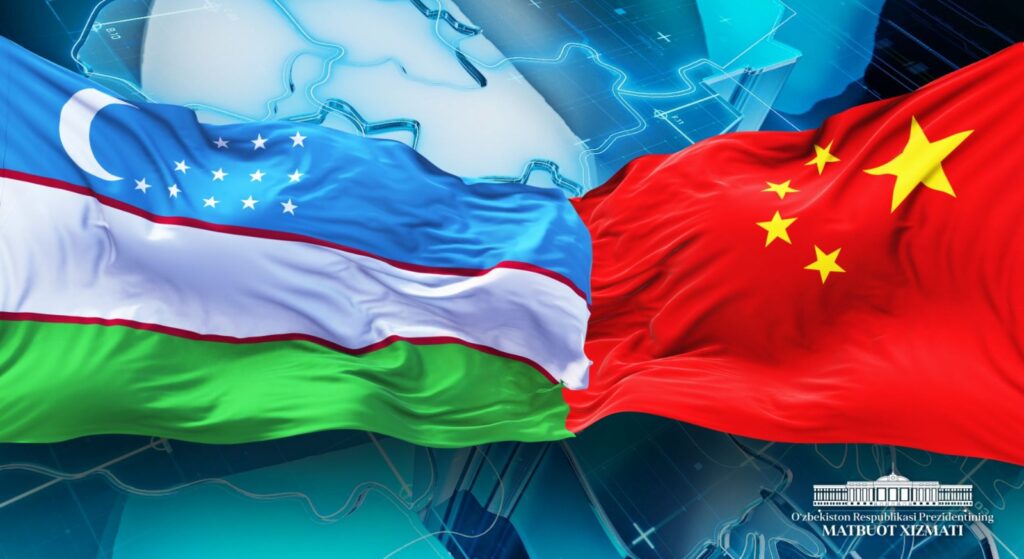
Uzbekistan and China are poised to increase bilateral trade to $20 billion a year.

The statement, quoted by the news portal Novosti Uzbekistana (nuz.uz) was given by given by Obid Khakimov, director of Uzbekistan’s Center for Economic Research and Reforms (CERR) at the conference ‘Uzbekistan and China: promoting mutually beneficial cooperation for the benefit of the two countries’ peoples.’

In 2023, China ranked top amongst Uzbekistan’s partners in trade, with a share of 22%.

Over the past 7 years, Uzbekistan’s trade turnover with China has increased almost threefold from $4.8 billion to $13.7 billion; exports have risen from $2 billion to $2.5 billion, and imports from $2.7 billion to $11.3 billion.

The analysis by the CERR illustrates Uzbekistan’s potential to increase its exports to China by substituting products currently sourced in large volumes from third world countries. In the main, these comprise fruit, vegetables and other foods, textiles, copper, and chemicals.

Uzbekistan is especially interested in collaborative projects with China for the deep processing of locally mined strategic raw materials, and the implementation of socially important programs based on partnerships between public and private sectors.

The early construction of the China-Kyrgyzstan-Uzbekistan railway, which by cutting the distance travelled by 900km, will reduce the delivery time of cargo by 7-8 days, is another area of key importance to Uzbekistan.

According to Uzbekistan’s Statistics Agency, in 2023, China’s contribution of 25.6% was the largest of the total sum of foreign investments and loans in Uzbekistan. In comparison, the contribution from Russia was 13.4%; Saudi Arabia, 7.9%; Turkey, 6.4%; the United Arab Emirates, 5.8%, and Germany, 4.3%.

Kazakh-European Proposal for CRM and Green Hydrogen Strategy

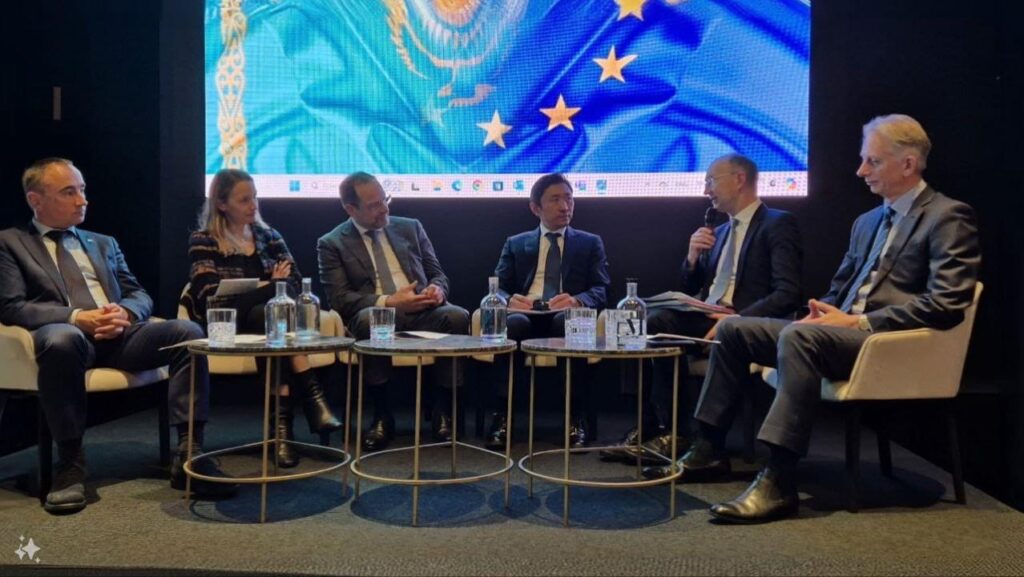
Some 60 high-ranking officials from the European Union and representatives of the EU business community attended a meeting on March 5th organized by the Kazakh Embassy in Belgium. A high-level event, its key focus was Kazakh-European cooperation on critical raw materials (CRM), green hydrogen and batteries.

In November 2022, Kazakhstan and the European Union signed a Memorandum of Understanding on sustainable raw materials, batteries, and renewable hydrogen value chains, and adopted a Roadmap for its implementation in 2023.

At the meeting on March 5th, Bolat Akchulakov, energy advisor to the president of Kazakhstan, emphasized the importance of the Kazakhstan-EU Memorandum of Understanding for strategic partnership in achieving common objectives of green transition.

Luc Devigne, deputy managing director for Eastern Europe and Central Asia of the European External Action Service (EEAS), praised the development of the Kazakhstan-EU relationship as a “success story of cooperation.” Referencing the EU’s readiness to further strengthen this partnership, he stated that it would ensure both the sustainability of supply chains and the achievement of common goals regarding climate change.

As part of the event, Kazakhstan’s national company Kazakh Invest presented a report on CRM at its Brussels office.

Kazakhstan produces 19 of the 34 critical raw materials listed by the European Union.

Kazakh manufacturers currently supply the EU with beryllium, tantalum, and titanium but have the potential to further exploit the country’s cache of other raw materials. By establishing plants to process reserves of nickel, cobalt, manganese, and lithium, Kazakh enterprises will be able to produce batteries, essential for electric vehicles.

Kazakhstan Intends to Bring Its Scientists Back From Abroad

Hundreds of Kazakh scientists will be repatriated to Kazakhstan from abroad, according to the Kazakh Minister of Science and Higher Education Sayasat Nurbek. He said that after the collapse of the USSR in the 1990’s, many promising scientists left the country. The ministry head said that now they are working to bring science specialists back to their homeland.

For example, Nurbek said that in the 1990s there were 52,000 scientific workers in Kazakhstan — and by 2000 that number had fallen to 12,000 people.

“Together with embassies we have created a database, we have 680 young or experienced scientists who work in leading scientific institutes or universities — we have identified them. Now we are working on their return,” Nurbek said.

The Minister of Science and Higher Education noted that they are working on three areas. The first is when Kazakhstani scientists don’t want to return to Kazakhstan. In that case, under the Bolashak mentoring program, young personnel are sent to them for training. “For example, Murat Saparbayev heads a large laboratory in Paris. Six of our scientists from Al-Farabi and Satpayev Universities work under his supervision. He trains them and [will help] create a similar laboratory in Kazakhstan,” said Nurbek.

There is also an option of “direct return” of Kazakh scientists. This is how Dos Sarbasov returned to Kazakhstan. According to Nurbek, he was given status as a member of the National Council on Science & Technology under the President of Kazakhstan — and a laboratory at Nazarbayev University. The third way to bring scientists back is for scientists who have left the country to give lectures to their colleagues in Kazakhstan. The project is called the Digital Nomads Lectures series. Alternatively, emigre scientists can also be invited to become independent directors on scientific councils.

Kazakhstan Now a Global Top Ten Iron Ore Producer

Latest data from the U.S. Geological Survey (USGS) puts Kazakhstan in the top 10 of countries by volume of mined iron ore.

Almost 2.8 billion tons of metal were extracted in the world in 2022. Iron ore makes up 93.3% of that total, or 2.6 billion tons, which includes 1.6 billion tons of iron. The leaders in iron ore production are Australia (880 million tons in 2022), Brazil (410 million tons), China (380 million tons) and India (290 million tons). USGS has Kazakhstan in ninth on the list, with 66 million tons.

Kazakhstan intends to increase iron ore production in the country, and plans to launch a new mining project in the Kostanay region. Its developers plan to put the Lomonosovskoye deposit into operation in 2025.

Kyrgyz Students Get Largest U.S. Visa Increase Globally to Enroll at American Universities

A report published by the U.S. Department of State has revealed that students from Kyrgyzstan saw the largest annual increase in the number of F-1 student visas issued from 2022 to 2023.

According to U.S. officials, 1,245 Kyrgyz students studied at U.S. universities in the 2022-23 academic year, That’s a material increase from the year before, when the U.S. Embassy in Kyrgyzstan issued only 708 student visas. The increase was 76%, the highest among all countries whose students study in the U.S.

In 2023 the U.S. issued about 446,000 F-1 student visas, up 8.5% from a year earlier. 2023 marked the highest number of visas issued to students from around the world since 2016. According to official information, the number of students from Kenya and Ghana also grew by 50% or more.

American company Apply Board, which helps foreign students enroll in U.S. universities, has conducted a study where it found that the largest growth in the number of foreign students was observed in academic departments for engineering technology, interdisciplinary studies, and computer and information sciences.

In 2023 the states of California, New York, Texas, Massachusetts and Illinois became the top destinations for international student enrollment.

In an interview with the Times of Central Asia, Apply Board staff revealed that Central Asia is the fastest growing market for U.S. student visas. Uzbekistan topped their list of applicant countries for 2022.

“A possible driver of Kyrgyzstan’s accelerating development is the country’s demographics. In 2023, more than half of its population was under 30 years old. In addition, its citizens are becoming more urbanized, driving demand for education. And as the country’s key industries such as agriculture, manufacturing and mining modernize, potential students are attracted to international programs that can help them stand out in these fields,” Apply Board representatives said.