• KGS/USD = 0.01144 0%
  • KZT/USD = 0.00196 -0%
  • TJS/USD = 0.10899 -0%
  • UZS/USD = 0.00008 -0%
  • TMT/USD = 0.28490 0%
  • KGS/USD = 0.01144 0%
  • KZT/USD = 0.00196 -0%
  • TJS/USD = 0.10899 -0%
  • UZS/USD = 0.00008 -0%
  • TMT/USD = 0.28490 0%
  • KGS/USD = 0.01144 0%
  • KZT/USD = 0.00196 -0%
  • TJS/USD = 0.10899 -0%
  • UZS/USD = 0.00008 -0%
  • TMT/USD = 0.28490 0%
  • KGS/USD = 0.01144 0%
  • KZT/USD = 0.00196 -0%
  • TJS/USD = 0.10899 -0%
  • UZS/USD = 0.00008 -0%
  • TMT/USD = 0.28490 0%
  • KGS/USD = 0.01144 0%
  • KZT/USD = 0.00196 -0%
  • TJS/USD = 0.10899 -0%
  • UZS/USD = 0.00008 -0%
  • TMT/USD = 0.28490 0%
  • KGS/USD = 0.01144 0%
  • KZT/USD = 0.00196 -0%
  • TJS/USD = 0.10899 -0%
  • UZS/USD = 0.00008 -0%
  • TMT/USD = 0.28490 0%
  • KGS/USD = 0.01144 0%
  • KZT/USD = 0.00196 -0%
  • TJS/USD = 0.10899 -0%
  • UZS/USD = 0.00008 -0%
  • TMT/USD = 0.28490 0%
  • KGS/USD = 0.01144 0%
  • KZT/USD = 0.00196 -0%
  • TJS/USD = 0.10899 -0%
  • UZS/USD = 0.00008 -0%
  • TMT/USD = 0.28490 0%
08 December 2025

French Company to Build a Solar Plant in Uzbekistan

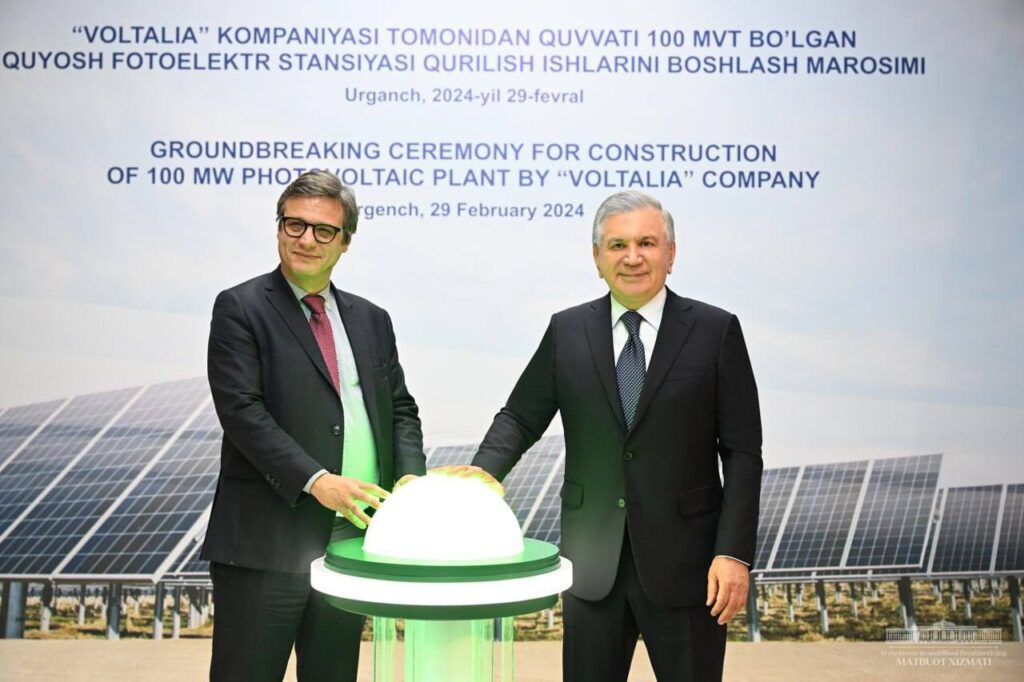
Attended by Uzbek President Shavkat Mirziyoyev, a ground-breaking ceremony for the construction of a solar power plant with a capacity of 100 megawatts took place in Uzbekistan’s Khorezm region on February 29th.

Built by the French company Voltalia, the new photovoltaic plant will generate 254 million kilowatt-hours of green energy per annum and increase the volume of electricity generated in Khorezm by 30%.
In addition to providing 11% of the region’s annual electricity consumption by the end of the year, the new plant will save 76 million cubic meters of natural gas and prevent the release of 106 thousand tons of harmful substances into the atmosphere.

The project will also harness agrovoltaics technology and by combining energy production and agriculture, allow crops to be grown under solar panels for the first time in Uzbekistan.

In discussion with Sébastien Clerc, CEO of Voltalia, President Mirziyoyev emphasized his support of both the Khorezm project and the construction of a hybrid power plant in the Bukhara region, and reiterated the extent to which such innovative projects strengthen multifaceted cooperation between Uzbekistan and France.

Kyrgyzstan Becomes an Industrial Producer of Black Caviar

Until recently Kyrgyzstan has not produced or exported black caviar — but by the end of 2024 the republic will have made several tons of it.

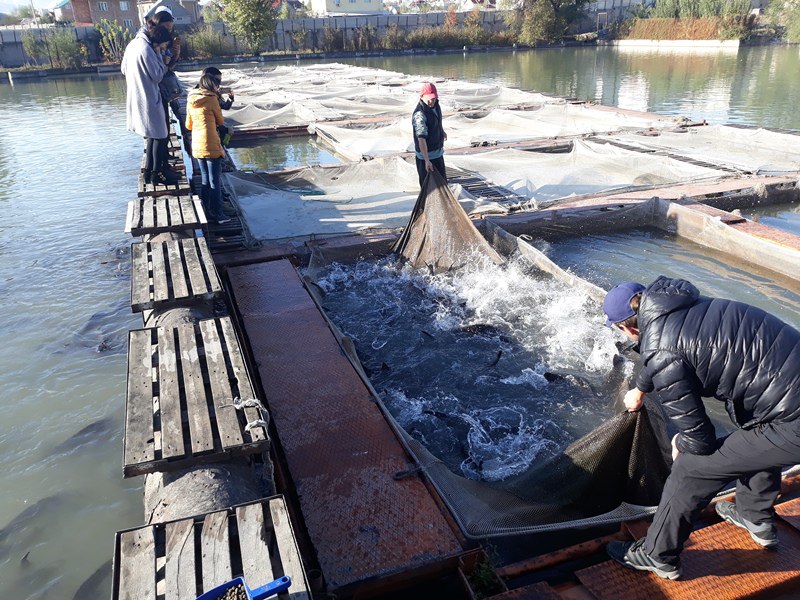
Today Kyrgyzstan is breeding different species of sturgeon fish, which produce black caviar. Female fish purchased 4-5 years ago have now reached sexual maturity, and can produce a high volume of black caviar. Fish farm owners believe it is much cheaper to produce caviar in Kyrgyzstan than in Kazakhstan or Russia because of the better climatic conditions.

“Sturgeon [reach maturity] in 4-5 years in our country, while in Russia it takes 8-10 years,” the Kyrgyz fisheries association commented. One of Kyrgyzstan’s fish companies said that as of a week ago, the country was not on the world’s black caviar production lists. But today they are already harvesting caviar using the so-called ‘lifetime method’. That means the caviar is simply squeezed out of a live fish. Therefore, from one fish it’s possible to harvest caviar several times over the fish’s lifetime. According to the producers, such caviar is usually larger in size and discernible by taste.

“At the moment we are not talking about dozens, but hundreds of kilograms of caviar. By the end of 2024, tons of products will be produced, which will soon be available for sale on the shelves of domestic stores. At the moment, work is underway to produce cans and stickers,” said Kyrgyz meat company ichthyologist Alexander Dytynyak.

Meanwhile, black caviar exports from Kyrgyzstan to Russia have already begun. According to Russian Customs Service data, black caviar from Kyrgyzstan was not supplied to the Russian market at all until 2022, when 1.7 tons of it were sent.

Experts from the food oversight agency Rosselkhoznadzor suspect that the caviar supplied to Russia is not actually produced in Kyrgyzstan, but is re-exported from Europe. To verify these speculations, the Russian inspection body inspected Kyrgyz fish farms last year. However, not all enterprises agreed to let Russian specialists in. “The refusal to participate in the inspection confirms the validity of Rosselkhoznadzor’s claims and the possibility of supplying products from third countries under the guise of Kyrgyz products,” the Russian agency reported.

Last year, representatives of the European Union (EU) also noted the growth of caviar exports from Europe to Kyrgyzstan. According to them, after the introduction of economic sanctions against Russia, exports of the delicacy from Europe to Kyrgyzstan increased many times over.

Rosatom Looks to Promote Small-Scale Nuclear Power in Central Asia

The Russian state corporation Rosatom is discussing the construction of small-capacity nuclear power plants (SCNPPs) with Kyrgyzstan, Uzbekistan, Myanmar and some island nations in East Asia, according to Rosatom’s general director Aleksey Likhachev. According to him, demand for small-scale nuclear plants is increasing globally, and, according to Rosatom analysis, in the next 10-15 years up to 30-40 GW of small-capacity reactors will be commissioned. The company is now discussing joint projects on SCNPP with Norilsk Nickel, Gazprom, Lukoil and Russian Platinum.

Last December Rosatom and the Mongolian company Mon-Atom signed a memorandum on the construction of a low-capacity nuclear power plant in Mongolia. In early 2023 the parties signed a memorandum on cooperation in the field of peaceful atomic use, and development of a project for the Center for Nuclear Science and Technology.

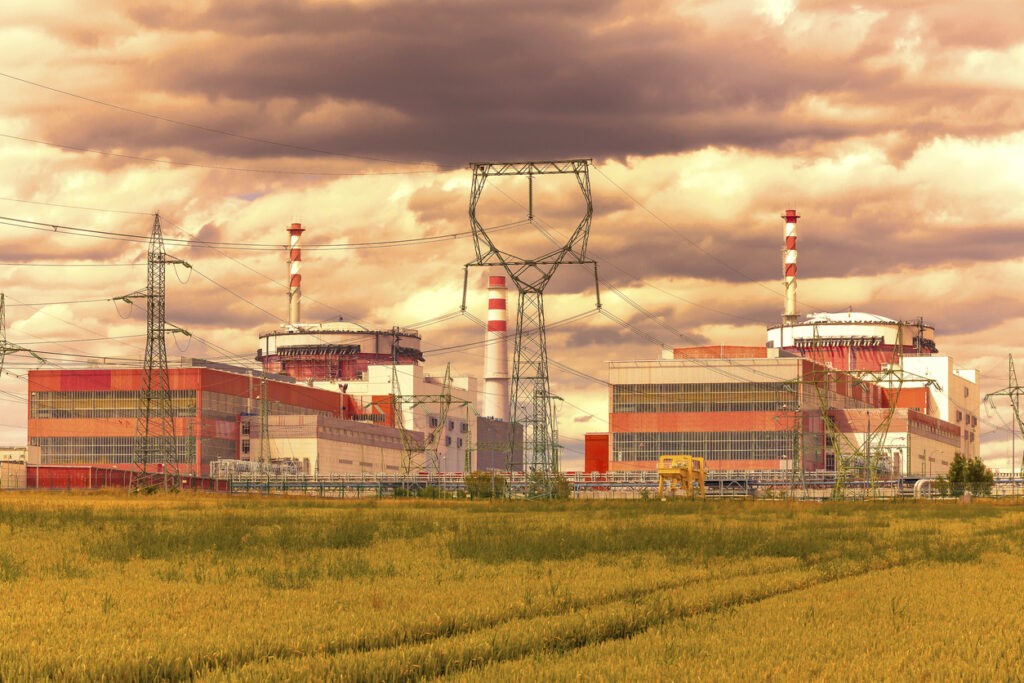
In Uzbekistan, the issue of joint construction of a nuclear plant with Russia has been under discussion since 2018. Under one agreement Rosatom will build two VVER-1200 units with a capacity of 1.2 GW each near Lake Tuzkan in the Jizzakh region. The nuclear plant’s potential to compensate for energy shortages and to decarbonize the country’s energy sector form a clear rationale for its construction. The project, which should take six years to build, is assessed as promising by both power engineers and environmentalists. Furthermore, considering that Uzbekistan is one of the world’s five biggest producers of uranium, it should always be able to fully supply its nuclear reactors with fuel.

Rosatom is proposing a “dry cooling tower” design for Uzbekistan — a technically more complicated option, but, given the growing water shortage in Central Asia, increasingly relevant.

South Korea’s Hyundai has also expressed interest in building SCNPPs in Uzbekistan. Hyundai is proposing its latest modular reactors based on integrated systems (SMART), where high-pressure water is used for cooling. Such reactors, despite their small size, are capable of generating up to 110 MW of energy, and their compactness and mobility allow them to be installed in the remote mountainous terrain of Central Asia.

In addition to Uzbekistan, Rosatom is considering building a nuclear power plant in neighboring Kyrgyzstan. Experts suggest installing two power units of 55 MW each. The corresponding memorandum was signed by Rosatom and Kyrgyzstan in January 2022 during the World Expo-2022 in the UAE. Experts believe that an SCNPP project could appear in Kyrgyzstan no earlier than 2028.

Kyrgyzstan Measles Outbreak Registers 4,000 Cases

Bishkek is currently dealing with a measles outbreak, with cases also reported in the Chui and Jalal-Abad regions. Up to 85% of all those affected are children under the age of 10.

The city of Bishkek’s main immunization center stressed in a statement: “The main reason for the increase […] remains a large number of refusals of routine immunization against measles and rubella among children and adults.” According to Kyrgyzstan’s Ministry of Health, 40% percent of people who refuse their innoculations say that they doubt the quality of the vaccine, with the rest refusing to immunize their children for religious reasons. This is in spite of the fact that under Kyrgyz law parents can face criminal penalties if they deliberately fail to seek medical help when a child’s health is in danger.

In response to the measles outbreak, the Ministry of Health mandated a strengthened immunization regime throughout the country, and pushed to vaccinate high-contact citizens. The National Immunization Calendar is also under review: currently the measles vaccine should be administered twice in a person’s lifetime — at one year, and at the age of six — but Kyrgyz doctors want to add another dose at the age of two. In turn, the World Health Organization (WHO) says that children who have been in contact with a measles patient can be vaccinated as early as six months of age. According to the Ministry of Health’s clinical guidelines for the diagnosis and treatment of measles, susceptibility to the disease is highest in children aged one to five.

An outbreak of measles was observed in the republic last year as well. In September 2023 the Kyrgyz authorities appealed to the WHO for help. As a result, 755,500 doses of measles and rubella vaccine were delivered to Kyrgyzstan, and 750 temporary vaccination points were opened throughout the country.

For the calendar year 2023, according to official data, 5,500 people fell ill, and doctors were unable to save nine children.

Celebrating Twenty-Five Years of The Times of Central Asia – Opinion by Founder Emeritus, Giorgio Fiacconi

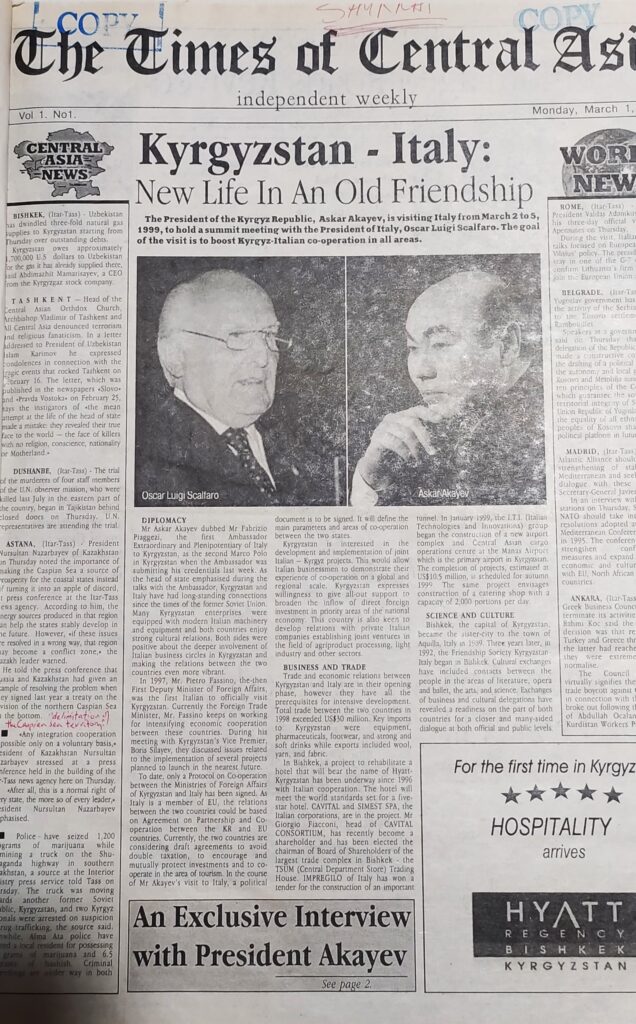
It is 25 years today since the first edition of The Times of Central Asia, the first English publication in the region, hit the newsstands on March 1st 1999. Twenty-five years represents a generation; many people more or less of my age have passed, and Kyrgyzstan has gone through various conflicts which have marked its history, not always for the better.

With a background in journalism and as an entrepreneur, I arrived in Bishkek from Kazakhstan in 1994, investing in the reconstruction of the abandoned Hotel Kyrgyzstan – now the Hyatt Regency – before working on the Bishkek Free Zone project for the European Union and later as the main investor in ZUM Aichurek. I also served as the first Honorary Consul of Italy to the Kyrgyz Republic for approximately fifteen years, between 2000 and 2015.
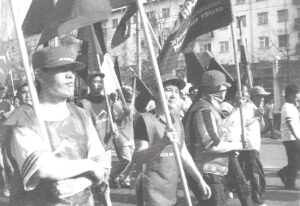
March for a more equal society, Tulip Revolution, 2005; Photo: TCA


During my time in Kyrgyzstan, I witnessed two revolutions, in 2005 and 2010, and it could be argued that another took place in 2020. There were abuses and injustices that allowed me to understand the importance and necessity for healthy development based on reliable rules and laws, which everyone should be able to respect. Unfortunately, this is not always the case, and until the judiciary is free to exercise its independence and represent a guarantee, then manipulations by elites and interested parties will continue to prevail and delay positive results.

After twenty years in the Republic, I collected my experiences of the country’s independence in a book, reporting on economic development and the need for justice for all. The preface to that book and its contents highlight problems that have yet to be resolved. For the realization of this better future, perhaps another generation will be needed, but we should be positive and trust in the abilities of the region’s many young people.

A wounded demonstrator in Bishkek, April 7th, 2010; Photo: TCA


It is not enough to say that Kyrgyzstan is a beautiful country with wonderful and hospitable people. The reality is unfortunately not so black and white, and inequalities persist. An economically poor country, Kyrgyzstan needs both financial and organizational support, and the answer in many cases is linked to foreign investment, which is difficult to channel – unless geopolitically motivated – if the rule of law is not upheld. In Kyrgyzstan, private interests manage politics in a continuous conflict between North and South, and few groups seek solutions to crime and corruption.

Nevertheless, it is reasonable to assert that given its geography, many decisions in Central Asia are the result of a geopolitical effort to change for the better in achieving tangible signs of progress. Recent development also related to the war in Ukraine show that Russia’s influence on Central Asia has also waned, with the EU becoming one of the major trading partners and foreign investors.

Photo: TCA


As a former journalist and a foreign investor, to my mind the role of the free press as a witness to what is taking place in the region cannot be overstated. Personally, I’m optimistic that although changes will take place slowly, I can only hope that The Times of Central Asia can continue its work. Today, it is fair to say that an independent media has a massive part to play in holding those in power to account, ensuring the region engages with the wider world, fostering development for all, and ushering in the next chapter in Central Asia’s rich history.

Giorgio Fiacconi founded The Times of Central Asia in Bishkek in 1999, firstly in a print edition, and later online. With a background as a journalist and an entrepreneur with global interests, he implemented numerous projects in South East Asia before moving to Moscow in 1989. Relocating to Kazakhstan and later to Kyrgyzstan in 1994, he developed trade ties between Central Asia and Italy in concert with the Italian Government and the European Union, and was the First Honorary Consul of Italy to Kyrgyzstan in Bishkek from 2000 until 2015.

Preserving Heritage: How the Manas Epic Inspires Kyrgyzstan’s Youth

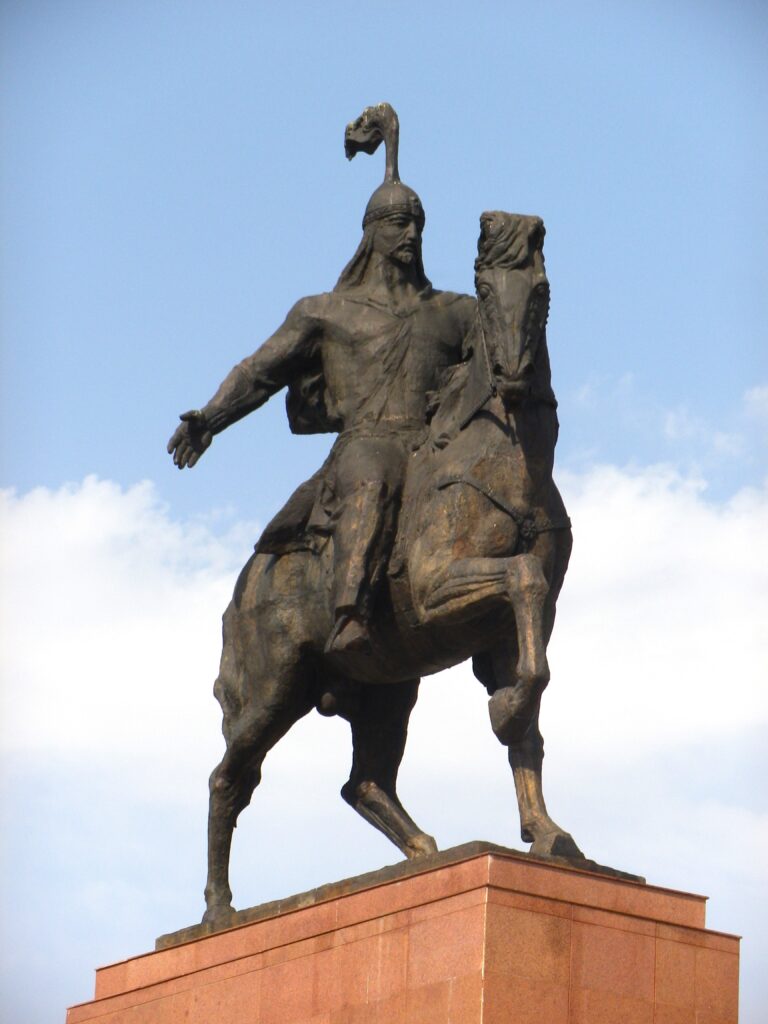
A nation steeped in cultural heritage, Kyrgyzstan continues to be proud of its unique attractions, and among them, the epic work “Manas” occupies a special place.

The Manas epic is of special importance because it contains rich information on history, ethnography, philosophy, language, diplomacy, military affairs, folk pedagogy, and other aspects of life of the Kyrgyz people. Another distinctive feature of Manas is its huge volume – more than half a million lines of verse – which makes it the longest epic in the world.

The relevance of Manas continues, today. Theatrical productions based on the work and competitions to display knowledge of it underscore the continuing interest in this great literary heritage. An observer of these contests, Zhanara believes that Manas still has a profound impact on the people of the regions, especially on schoolchildren who participate in these competitions. “Such events are conducted with a very careful selection process, which implies the serious preparation of the participants. At the end of the day, their efforts yield results and well-deserved prizes,” she told TCA.

However, journalist Aigerim from Bishkek believes the Manas epic still has a profound effect even on urban youth. “I think the epic plays a significant role for the whole country. Although not everyone knows it in full, key plot points are known to almost everyone and are often reflected in everyday life. For example, ‘Kokotay’s wake,’ which lasted for several weeks and was very lavish. Also, the main characters can be called role models to a certain extent: brave and fair Manas, wise Bakai and weak, vain Bokmurun, whose name literally translates as ‘snotty nose’,” she told TCA.

The epic also contributes to the development of young people’s creative abilities.

“In almost every classroom, scenes from the epic are staged and students study its lines. Manaschi (bards), who continue to be the performers and custodians of this epic, still enjoy respect and popularity. I recently became aware of a case where a young boy was given a stallion in recognition for his outstanding performance.

Mairam, a blogger from Osh, sees Manas as an integral part of Kyrgyz culture and traditions. She notes the epic serves as a key cultural code for the Kyrgyz people.

“‘Manas is a kind of portrait of the Kyrgyz nation as heroic and brave,” she told TCA. “It also reflects Kyrgyz culture in detail, and I, along with many of my friends, turn to it as a cultural touchstone so that we don’t forget who we are.”