• KGS/USD = 0.01144 0%
  • KZT/USD = 0.00192 -0%
  • TJS/USD = 0.10849 0.37%
  • UZS/USD = 0.00008 0%
  • TMT/USD = 0.28571 0.28%
  • KGS/USD = 0.01144 0%
  • KZT/USD = 0.00192 -0%
  • TJS/USD = 0.10849 0.37%
  • UZS/USD = 0.00008 0%
  • TMT/USD = 0.28571 0.28%
  • KGS/USD = 0.01144 0%
  • KZT/USD = 0.00192 -0%
  • TJS/USD = 0.10849 0.37%
  • UZS/USD = 0.00008 0%
  • TMT/USD = 0.28571 0.28%
  • KGS/USD = 0.01144 0%
  • KZT/USD = 0.00192 -0%
  • TJS/USD = 0.10849 0.37%
  • UZS/USD = 0.00008 0%
  • TMT/USD = 0.28571 0.28%
  • KGS/USD = 0.01144 0%
  • KZT/USD = 0.00192 -0%
  • TJS/USD = 0.10849 0.37%
  • UZS/USD = 0.00008 0%
  • TMT/USD = 0.28571 0.28%
  • KGS/USD = 0.01144 0%
  • KZT/USD = 0.00192 -0%
  • TJS/USD = 0.10849 0.37%
  • UZS/USD = 0.00008 0%
  • TMT/USD = 0.28571 0.28%
  • KGS/USD = 0.01144 0%
  • KZT/USD = 0.00192 -0%
  • TJS/USD = 0.10849 0.37%
  • UZS/USD = 0.00008 0%
  • TMT/USD = 0.28571 0.28%
  • KGS/USD = 0.01144 0%
  • KZT/USD = 0.00192 -0%
  • TJS/USD = 0.10849 0.37%
  • UZS/USD = 0.00008 0%
  • TMT/USD = 0.28571 0.28%
11 December 2025

Online Portal Opens for Kyrgyz Citizens Wishing to Work in England

Kyrgyzstan’s Ministry of Labor, Social Security and Migration has created an internet portal for every Kyrgyz citizen wishing to go to England for agricultural work to take an online questionnaire.

Yesterday the Center for Employment of Citizens Abroad conducted online registration of Kyrgyz citizens, reporting that over 26,000 people were registered on the portal migrant.kg on the first day. Almost 15,000 people passed the first stage of selection, where they answered questions concerning their physical and mental health.
All those who passed the first stage of selection will have to pass an in-person interview held with representatives of the English farms.
Last year’s quota for seasonal workers in England was 8,000. This will increase to 10,000 in 2024. According to the Ministry of Labor, applicants must be between the ages of 18 and 45 years, understand Russian — but not necessarily English — and be in good overall health. The employers in England guarantee Kyrgyz citizens a minimum of 32 hours of work per week and a wage of £10.50 ($13.30) per hour. Successful applicants will have to pay for their visa and flights to and from London themselves.
Seasonal agricultural work in England lasts from April to October-November. Workers go to pick strawberries and raspberries in fields and farms, as well as pick and plant vegetables and fruits. There is also a year-round season for tending to greenhouses, and for packaging the finished products.
Today, in addition to work in Russia — where according to some data about one million citizens of Kyrgyzstan are economic migrants — there are 15 different labor destinations available to Kyrgyz citizens. The website offers information about moving to and working in Europe, the Persian Gulf, and Southeast Asia.


Turkmenistan to Increase its Power Supply to Afghanistan

At a February 26th meeting between the foreign ministers of Afghanistan and Turkmenistan, Amirkhan Muttaki and Rashid Meredov, Turkmenistan agreed to increase the amount of electricity it supplies to Afghanistan’s Herat province. This electricity will be supplied via the Nur al-Jihad power substation, which Turkmenistan had previously upgraded.

Last month Turkmenistan and the Afghan electricity company Da Afghanistan Breshna Sherkat (DABS) concluded an agreement for Turkmenistan to supply Afghanistan with 1.8 billion kilowatt hours (kWh) of electricity. The contract was agreed by DABS CEO Muhammad Hanif Hamza during his January visit to Turkmenistan, where he held meetings with the management of the energy corporation Turkmenenergo and with the country’s minister of energy, Annageldi Saparov.

The cost of Turkmenistan’s electricity supply to Afghanistan has not been revealed, but a representative of the Afghan Chamber of Commerce and Industry told the news portal Tolo News that it is “inexpensive”.

Turkmenistan supplies a significant portion of Afghanistan’s electricity, but the two nations’ connection run deeper than just the energy sector, with 1.2 million ethnic Turkmen living in Afghanistan.


Environmental Violations at Kashagan Oil Field Cost NCOC a Billion Dollars

The North Caspian Operating Company (NCOC) has been issued a billion-dollar fine, after it was found to have violated environmental laws at its Kashagan field.

Last spring the Department of Ecology for the Atyrau region, where the field is located, conducted an investigation at Kashagan that uncovered a number of violations of environmental legislation. These include the storage of 1.75m tons of sulfur at the field, twice as much as the permitted 730,000 tons.

NCOC was also found to have failed to implement environmental protection measures, discharged waste water without the necessary permit, and other infringements.

The operator denied all charges, and filed an appeal at a court in Astana to challenge the results of the inspection. After lengthy proceedings the court found that the results of the inspection by the Department of Ecology were legitimate. The judicial panel concluded that restrictions on the volume of sulfur storage annually cannot be considered cumulatively.

NCOC can now either appeal this decision in an international arbitration court, or admit its guilt and pay the state the billion-dollar fine.

Uzbek Migrants Demand Justice

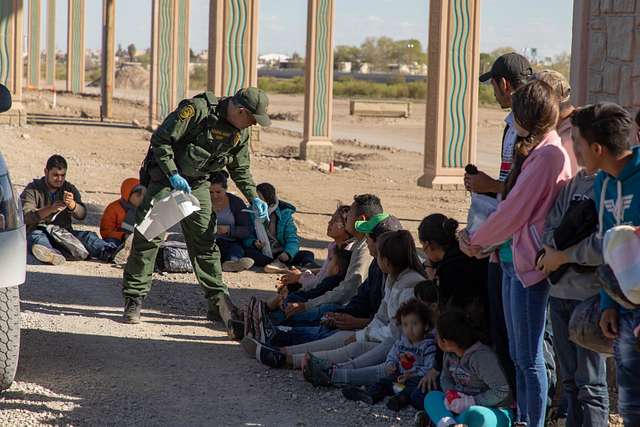
According to an Uzbekistan blogger, a lawsuit has been filed by 35 citizens of Uzbekistan against U.S. President Joe Biden and his administration, represented by the Department of Homeland Security Secretary, Alejandro Mayorkas, Acting Director of Immigration and Customs Enforcement, Patrick Lakeheitner, and other officials. The Uzbeks were detained after illegally crossing the United States-Mexico border.

Utkur Rakhmatullaev, an Uzbek blogger who has lived in America for more than 20 years, relayed the details of the case to the Times of Central Asia (TCA).

He explained that the group, whose interests are being represented by lawyer Abadir Barre, a migrants’ rights advocate, demand that their detention in immigration centers be recognized as illegal and that all legal costs be covered. They insist that the authorities were prejudiced against them because of their nationality and religion.

Rakhmatullaev, said that the detained men had been released on bail of $7,000 each.


Turkmenistan to Proceed with Energy and Transport Projects in Afghanistan

On 26th February, the Minister of Foreign Affairs of Turkmenistan, Rashid Meredov and an Afghan delegation led by acting Foreign Minister, Amir Khan Muttaqi met in Ashgabat to discuss large-scale energy and transport projects.

The negotiations focused on the Turkmenistan-Afghanistan-Pakistan-India (TAPI) gas pipeline, the Turkmenistan-Afghanistan-Pakistan (TAP) high-voltage power transmission line, and the construction of railways from Turkmenistan to Afghanistan. The Turkmen Foreign Ministry cited ‘a high degree of readiness’ on both sides to continue the construction of these facilities in Afghanistan.

TAPI is a major project to transfer Turkmenistan’s natural gas to Pakistan and India through Afghanistan. The construction of the pipeline in Afghanistan, long delayed by financial and security issues, will stretch for 1,840 km and transport more than 30 billion cubic meters of natural gas per year from Turkmenistan’s giant Galkynysh gas field. Once completed, the TAPI pipeline will provide Turkmenistan with an additional gas export route, while Afghanistan will receive both its own volume of gas and some $400 million a year in revenue from transit charges.

The two foreign ministers also agreed to explore the potential of training specialists in various sectors of the Afghan economy within Turkmen higher and secondary vocational educational institutions.

According to Afghan statistics, trade between Afghanistan and Turkmenistan reached $481 million in 2023.

Development Plan for Astana Agglomeration Approved

The plan for the agglomeration of Astana through to 2028 was approved by the government of Kazakhstan on February 27th.

The country’s capital since 1997, Astana has since grown and developed into one of the most modern cities in Central Asia. In addition to the city, the agglomeration will include more than 40 nearby towns and villages. Over the past 10 years, the population of Astana has increased by 46%. Records show that in January 2024, it exceeded 1.43 million and by 2035, is expected to grow to 2.3 million people.

The key aims of the Astana agglomeration are the improvement of urban development, the modernization of social, engineering and transport infrastructures, environmental sustainability and safety, and safeguarding against emergencies.

A unified urban planning policy will enable the synchronization of plans for the development of the capital and adjacent Akmola region, including the creation of eco-towns on an area of over 940 hectares.

The new transport and logistics infrastructure will comprise six logistics complexes, a service centre for the maintenance of electric locomotives, and subsidies for suburban routes.

Over 400 km of existing roads will be repaired, and 300 km of new roads and four bridges built in agglomerated towns and villages.

To attract investment and supply food, 25 facilities to produce food and 12 for industrial goods will be built in an industrial zone covering 300 hectares.

At the meeting, Kazakhstan’s Prime Minister Olzhas Bektenov highlighted the fact that the main problem to be addressed by the agglomeration is the sharp population increase in the suburbs and the daily migration to the capital and back, which significantly impacts the entire infrastructure of Astana, its ecology and safety.

In recognition of ongoing problems faced by many suburban villages, such as water supply, waste disposal, a stable electricity supply, and the condition of roads, the prime minister stated: “I believe that the implementation of the plan should solve these pressing issues. Moreover, we need to create permanent jobs in the suburbs. Astana as the core of the agglomeration creates prerequisites for sustainable development of the adjacent territories. This will help smooth out the existing imbalance between the living standards in the capital and neighboring settlements.”