• KGS/USD = 0.01144 0%
  • KZT/USD = 0.00193 -0%
  • TJS/USD = 0.10876 0.55%
  • UZS/USD = 0.00008 0%
  • TMT/USD = 0.28490 0%
  • KGS/USD = 0.01144 0%
  • KZT/USD = 0.00193 -0%
  • TJS/USD = 0.10876 0.55%
  • UZS/USD = 0.00008 0%
  • TMT/USD = 0.28490 0%
  • KGS/USD = 0.01144 0%
  • KZT/USD = 0.00193 -0%
  • TJS/USD = 0.10876 0.55%
  • UZS/USD = 0.00008 0%
  • TMT/USD = 0.28490 0%
  • KGS/USD = 0.01144 0%
  • KZT/USD = 0.00193 -0%
  • TJS/USD = 0.10876 0.55%
  • UZS/USD = 0.00008 0%
  • TMT/USD = 0.28490 0%
  • KGS/USD = 0.01144 0%
  • KZT/USD = 0.00193 -0%
  • TJS/USD = 0.10876 0.55%
  • UZS/USD = 0.00008 0%
  • TMT/USD = 0.28490 0%
  • KGS/USD = 0.01144 0%
  • KZT/USD = 0.00193 -0%
  • TJS/USD = 0.10876 0.55%
  • UZS/USD = 0.00008 0%
  • TMT/USD = 0.28490 0%
  • KGS/USD = 0.01144 0%
  • KZT/USD = 0.00193 -0%
  • TJS/USD = 0.10876 0.55%
  • UZS/USD = 0.00008 0%
  • TMT/USD = 0.28490 0%
  • KGS/USD = 0.01144 0%
  • KZT/USD = 0.00193 -0%
  • TJS/USD = 0.10876 0.55%
  • UZS/USD = 0.00008 0%
  • TMT/USD = 0.28490 0%
11 December 2025

Indian Pharma Makes Changes After Cough Syrup Kills Uzbek Children

The deaths of several children in Uzbekistan caused by Marion Biotech’s Dok-1 Max cough syrup have prompted the Indian government to make significant reforms in the pharmaceutical sector.

In December 2022 the deaths of 18 children after taking Dok-1 Max were reported, but the cases didn’t receive much publicity — despite Marion Biotech then losing its license to sell that drug in March 2023. Sales of the syrup continued, and in August 2023 details emerged about 65 more child deaths from the same syrup. Local media reported that during the trial prosecutors said that officials had received a $33,000 bribe to not test the drug.

As a result, 21 managers and employees of Quramax Medikal LLC, the Pharmaceutical Industry Development Agency and the Indian State Center for Expertise and Standardization of Medicines, Medical Devices and Medical Equipment were put on trial.

The Indian Ministry of Health conducted inspections of all pharmaceutical plants in the country and, as it turned out, in addition to a lack of testing of incoming raw materials detected at 162 plants, less than 25% of the existing 8,500 small pharmaceutical plants meet the requirements of WHO international standards.

India has introduced new standards in 2024 to which every company operating in the pharmaceutical industry will have to adhere. According to Tafsilar news agency, the new decrees gave large factories no more than six months to bring everything in line with international standards, while smaller factories were given a year.

Model From Kazakhstan Receives Top Award From U.S. Social Media Firm

Kristina Menisova from Almaty has been named the Model of the Year at the U.S.’s National Social Media Awards, an event that honors the best online brands, influencers, models and artists.

The National Social Media Awards are held annually in major cities around the world, including Dubai, Los Angeles and London. Menisova took first place in the Best Model category.

The 29-year-old has already achieved success in the modeling business; for the last six years she has appeared at fashion shows for famous global brands. Her face has also graced the covers of magazines such as Vogue, Marie Claire and Elle. Kristina works with Chopard, Cartier, Michael Costello, Balmain, Roberto Cavalli and Yves Saint Laurent, among others.

The National Social Media Awards is her third major win; she has previously won the Model of the Year category for Glamour Bulgaria and FashionTV Russia’s Model of the Year 2023. In 2022 Kristina took home the title of Miss Universe World International.

Central Asia’s Only Intercity Trolleybus System: Where Does It Run And How Does It Work?

The only intercity trolleybus route in all of Central Asia, the Urgench – Khiva – Urgench route (about 32km one-way), has been popular with commuters and local residents for 26 years. According to the Uzbek Statistics Agency, demand for the only trolleybus route between the two cities in Khorezm has only increased in recent years.

According to the drivers, tourists are all found the passengers, with an average of two to four on each trip. “Foreign guests like our green trolleybuses very much. They not only photograph [posing with] it in the background, but also film both inside the cabin and video along the way. Sometimes we are asked to pose in front of the camera lenses. We are also pleased that all the passengers are happy,” said Oybek Sobirov, one of the drivers.

The route is also popular with Urgench State University students. They account for a significant share of regular passengers. “The rector of Urgench State University shared with us that the university’s dormitories are not used by students from Khiva, as they travel to study from one city to another by trolleybus. They know that they have regular, safe and fast transportation almost [all the way] to their place of study,” said Ruslan Ruzmetov, head of the Road and River Transport Development Department at the Uzbek Ministry of Transport.

The infrastructure itself was built in 1997 and commissioned in 1998 to coincide with Khiva’s 2,500th anniversary. The total length of the line is almost 36km one-way. The main part of the route is practically in a straight line, and the average trip along it takes 60-70 minutes. At present, the fare is standard for Uzbekistan — 2,000 soums ($0.16) — but traveling on it outside the city is converted into a suburban fare — 4,000 soums ($0.32). On average, 1,700 to 2,000 people travel the route per day, which translates into about 700,000 passengers per year.

On average, eight trolleybuses depart daily, one remains in reserve, and five are currently non-operational. In total, there are 14 trolleybuses on the department’s balance sheet, with the oldest of them more than 25 years old. The line works from early morning until 19:00. Every day, according to the schedule, four trolleybuses depart from the two cities alternately, meaning four vehicles stay overnight in Khiva and Urgench every day.

Kazakhstan Tries To Ward Off Locust Invasion

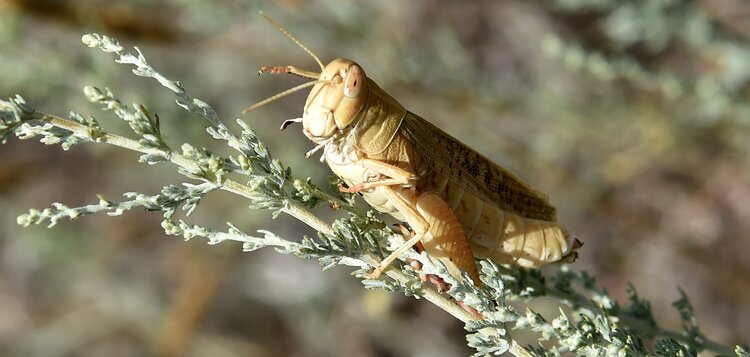
Kazakhstan has allocated an additional $8.9m to protect the country’s crops and people from locust swarms. The money will be spent on chemical treatments to stop the short-horned grasshoppers from damaging pastures and destroying crops, as well as to prevent the swarms from migrating to neighboring countries, the government said on January 31st.

Kazakhstan has seen a drastic increase in the area of agricultural land hit by locusts, from 514,000 hectares in 2020 to 1.6 million hectares in 2023. The years 2023 and 2024 will be the peak of an 11-year locust cycle in the country; the government forecasts that 2.5 million hectares will be affected this year.

According to the UN’s Food and Agriculture Organization, locust outbreaks are a severe threat to agriculture in the South Caucasus and Central Asia, with more than 25 million hectares and 20 million people in the region vulnerable to damage done by the migratory pests. Locusts multiply, form groups, and migrate over relatively large distances — they can fly up to 100km per day, settle and breed in various habitats, and are highly adaptable to the impact of climate change.

Kazakhstan Produced Four Million Tons of Steel In 2023

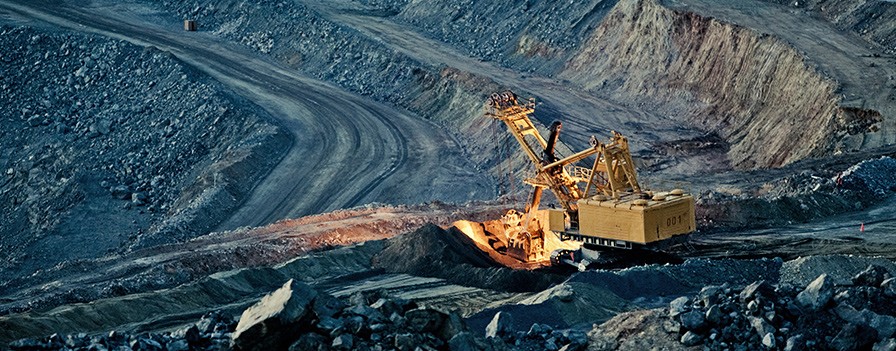
In 2023 Kazakhstan’s ferrous metallurgy industry produced 4 million tons of steel, 2 million tons of ferroalloys, 2.4 million tons of rolled flat steel, 896,000 tons of reinforcement for construction, and 305,000 tons of steel pipes.

Additionally, a metals plant producing fittings with a capacity of 300,000 tons was launched in Taraz. This year will see the launch of two new ferrosilicon production plants with a total production capacity of 330,000 tons.

Kazakhstan’s ferrous metallurgy industry produces more than $6.6bn worth of metal products annually, exports more than $5bn worth of products, and employs about 50,000 people, the Ministry of Industry and Construction said on January 31st. 

Kazakhstan produces steel, ferroalloys and steel products used in construction, mechanical engineering, energy, and transport.

One of the metallurgical industry’s priorities is manufacturing products with high added value, to stimulate the processing of metals inside the country, the ministry said.

Trans-Caspian Corridor Receives Boost

Close to four million tons of cargo are to be transported along the Trans-Caspian Transport Corridor in 2024, Kazakhstan’s national railways, Kazakhstan Temir Zholy, announced on January 27th

In 2023, 2.7 million tons of cargo was transported along the Trans-Caspian route, 86% more than the previous year. 

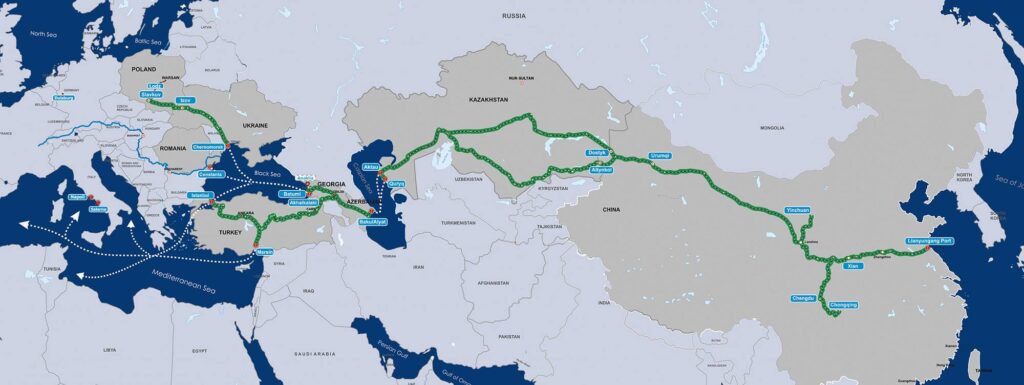
The Trans-Caspian Transport Corridor – also known as the Middle Corridor – starts in South-east Asia and China, and runs through Kazakhstan, the Caspian Sea, Azerbaijan and Georgia, before reaching the countries of Western Europe. 

The geopolitical significance of this route has dramatically increased since Russia’s invasion of Ukraine in 2022. The European Commission has said that it underlines the urgency to find alternative trade routes between Europe and Asia which do not pass through Russia. 

On January 29th and 30th, the Investors Forum for EU-Central Asia Transport Connectivity took place in Brussels, Belgium. At the forum, the nations of the European Union and Central Asia took the first steps towards creating a fast-track route along the Trans-Caspian Transport Corridor, which will take only 15 days. 

The European Commission’s Executive Vice-President, Valdis Dombrovskis announced that European and international financial institutions are to commit €10bn ($10.9bn) in support and investment towards sustainable transport connectivity in Central Asia.

Addressing the forum on January 29th, the EU’s High Representative for Foreign Affairs and Security Policy, Josep Borrell emphasized the importance of the EU’s partnership with Central Asia. “In this very much complicated geopolitical environment, Central Asia has become a crucial partner for us. Four years ago, Central Asia was a little bit in the middle of nowhere – and now, you are in the middle of everything. You are the cornerstone between Europe and Asia. Everything that matters between Europe and Asia goes through you,” Mr Borrell said, adding that the EU has to invest much more in physical connections between Europe and Central Asia in order to diversify and find new alternatives for transport, energy, and supply chains. “It will breathe new life into the ancient Silk Road, [also] linking up with our partners in Turkey and the South Caucasus,” he stated.