• KGS/USD = 0.01144 0%
  • KZT/USD = 0.00194 -0%
  • TJS/USD = 0.10877 -0%
  • UZS/USD = 0.00008 0%
  • TMT/USD = 0.28571 0%
  • KGS/USD = 0.01144 0%
  • KZT/USD = 0.00194 -0%
  • TJS/USD = 0.10877 -0%
  • UZS/USD = 0.00008 0%
  • TMT/USD = 0.28571 0%
  • KGS/USD = 0.01144 0%
  • KZT/USD = 0.00194 -0%
  • TJS/USD = 0.10877 -0%
  • UZS/USD = 0.00008 0%
  • TMT/USD = 0.28571 0%
  • KGS/USD = 0.01144 0%
  • KZT/USD = 0.00194 -0%
  • TJS/USD = 0.10877 -0%
  • UZS/USD = 0.00008 0%
  • TMT/USD = 0.28571 0%
  • KGS/USD = 0.01144 0%
  • KZT/USD = 0.00194 -0%
  • TJS/USD = 0.10877 -0%
  • UZS/USD = 0.00008 0%
  • TMT/USD = 0.28571 0%
  • KGS/USD = 0.01144 0%
  • KZT/USD = 0.00194 -0%
  • TJS/USD = 0.10877 -0%
  • UZS/USD = 0.00008 0%
  • TMT/USD = 0.28571 0%
  • KGS/USD = 0.01144 0%
  • KZT/USD = 0.00194 -0%
  • TJS/USD = 0.10877 -0%
  • UZS/USD = 0.00008 0%
  • TMT/USD = 0.28571 0%
  • KGS/USD = 0.01144 0%
  • KZT/USD = 0.00194 -0%
  • TJS/USD = 0.10877 -0%
  • UZS/USD = 0.00008 0%
  • TMT/USD = 0.28571 0%
16 December 2025

Akim of Mangystau Calls for Calm after Mass Swan Die-out

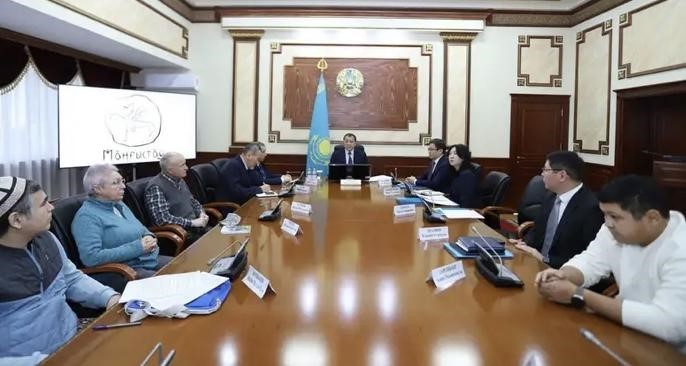
On January 18th, the Akim of Mangystau (head of the regional government), Nurlan Nogaev met with environmental activists from Mangystau and ornithologists from Almaty. The main topic of discussion was the pressing issue of the mass die-out of swans on Lake Karakol, as reported by the press service of the Akimat.

According to the latest data, as of January 18th the number of dead swans in Mangystau has reached 1,018 birds, 41 of which were found on the seashore in the Karakiyan district, and the rest on the lake itself.

According to the biological scientist and ornithologist, Victoria Kovshar, despite the fact that the peak of bird flu has already passed, this figure will only continue to grow. “Bird flu is a phenomenon widespread all over the world. Instances of this disease are regularly recorded on the Caspian Sea, as was the case two years ago when black-footed boobies and Caspian terns died en masse. At the time, it was assumed that the cause was related to oil emissions, but a government commission found that bird flu was to blame.

“The virus usually targets certain species of birds, for example, in 2015 there was a bird flu that affected the dalmatian pelican without affecting the pink pelican, which nests with it in the same colonies and is directly related. It follows that the death of swans on Lake Karakol is not a unique case. We can see that mostly young individuals which were unprepared for the winter have died here. This is a natural process that is not subject to manual intervention. Saving swans now is comparable to if you were to confront an avalanche with your bare hands. It is important to prevent the infection of poultry such as ducks and geese, and it should be noted that the virus can remain active in the carcasses of dead birds for a prolonged period of time. However, given the extremely low temperatures on the lake currently, this would not be the case.”

According to the head of the regional territorial inspection of the Committee for Veterinary Control and Supervision of the Ministry of Agriculture, Temirbek Nurtazin, veterinary services are regularly monitoring the epizootic situation among poultry, and as of now no cases have been found among poultry in private farms.

Speaking after his briefing, the head of the region, Nurlan Nogaev said he is concerned about the significant number of swan deaths, but urged against an overly emotional reaction.

“I thank the experts, Victoria Kovshar and Fedor Karpov, for their active participation in the search for the real cause of swan deaths on Lake Karakol,” Nogaev said. “The situation around this issue is of public interest, and I also express my gratitude to the eco-activists involved in solving the problem. A team of scientists is expected to arrive in the coming months to study the biodiversity of this unique body of water. It is important that experts, including ornithologists, are involved in gathering information.”

As previously reported by The Times of Central Asia, on December 27th in the process of monitoring water sources associated with Lake Karakol, inspectors found that permissible pollution levels had been exceeded. At that juncture, the reasons for the die-out were a cause for conjecture, and an unscheduled inspection of the Rixos Aktau hotel took place.
New International Terminal of Almaty Airport to Open in June

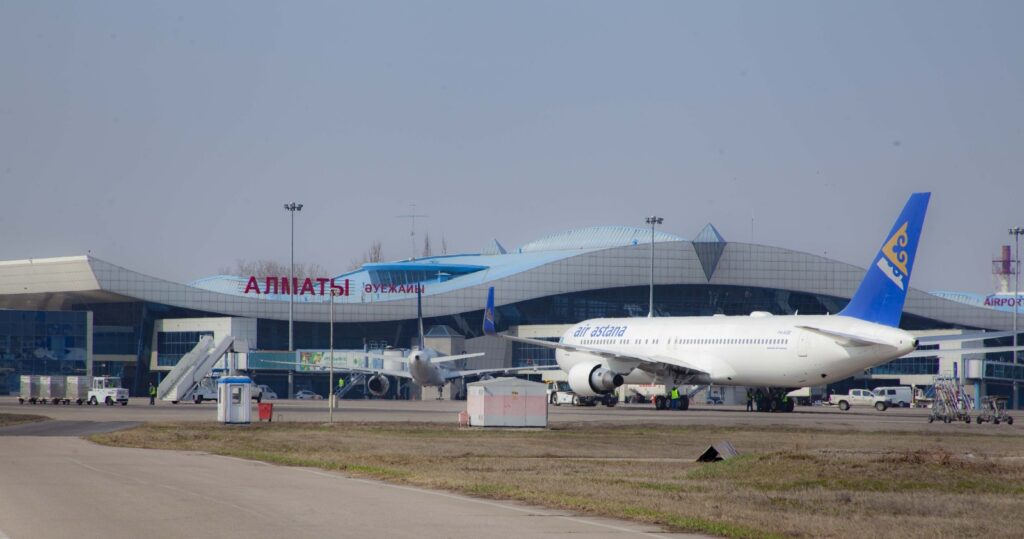
Construction of the new international terminal of Almaty Airport is now 87% complete and is scheduled to begin operations in June of this year, the President of the Istanbul-based TAV Airports Holding, Serkan Kaptan stated during a meeting with the Prime Minister of Kazakhstan, Alikhan Smailov. The area of the new terminal – initially scheduled to open in August 2024 – will be twice as large as the current building, and will cover 55,000 square meters.

Smailov emphasized that the construction of the new international terminal in Almaty is of strategic importance. “We expect that its opening will significantly increase passenger traffic, expand the geography of flights, and provide residents and guests of the metropolis with quality services and a high level of comfort,” the Prime Minister stated, as reported by his press service on January 18th.

The existing terminal will only be used for domestic flights in the future. At the same time, the potential of both terminals will reach 14 million passengers per year, whilst the volume of cargo traffic passing through Almaty Airport planned to reach 100,000 tons.

The Prime Minister added that Almaty Airport should be developed as a fully-fledged multi-modal transport and logistics hub with the inclusion of rail and road transportation, and the investor should take this into account in future plans.

TAV Airports is now the beneficial owner of 85% of Almaty Airport and its associated fuel and catering businesses, with Kazakhstan Infrastructure Fund, managed by VPE Capital and backed by Kazyna Capital Management holding the remaining 15% stake.

Kazakhstan’s main aviation gateway and the flagship carrier Air Astana’s base, Almaty Airport is an important junction on the modern Silk Road. TAV has said it is investing around US $200 million to increase the airport’s capacity to 14 million passengers.

Kazakhstan Exported Close to a Million Tons of Oil to Germany in 2023

KazTransOil JSC, the national oil pipeline operator and a subsidiary of Kazakhstan’s national oil and gas company KazMunayGas, says it supplied 993,000 tons of oil to Germany in 2023. Oil from Kazakhstan is transported to Germany through the trunk oil pipeline system of the Russian state-controlled pipeline transport company, Transneft.

In January 2024, KazTransOil plans to transport 100,000 tons of oil to Russia for further delivery to Germany. During 2024 as a whole, KazTransOil plans to ship up to 1.2 million tons of Kazakh oil to Germany via the trunk oil pipeline system of Transneft.

Russia Reopens Market for Kazakhstan’s Livestock Products

As of January 15th, the Russian Federation has lifted restrictions on the import of livestock products from Kazakhstan. The decision was made following negotiations last December between the Ministers of Agriculture of Kazakhstan and the Russian Federation, Aidarbek Saparov and Dmitry Patrushev, the Ministry of Agriculture of Kazakhstan has reported.

“This is an important step for the agricultural industries of Kazakhstan and Russia, which helps strengthen trade and economic ties between our countries,” Saparov stated.

The import of Kazakh livestock products to Russia was suspended in January 2022 due to veterinary problems in several regions of Kazakhstan. After a two-year break, the Russian market has reopened to suppliers of livestock products from those regions of Kazakhstan where the vaccination of cattle has been confirmed by the World Organization for Animal Health. In other regions, the vaccination campaign is still ongoing.

Saparov pointed to the fact that trade turnover between the two countries is uneven, with imports to Kazakhstan from Russia far exceeding exports. Therefore, Saparov focused on the potential for increasing the supply of Kazakh products to the Russian market.

In other news, as Russia is currently experiencing an acute shortage of chicken eggs, the Russian side has asked Kazakhstan to increase the supply of eggs. The issue was discussed on January 17th by the Deputy Prime Ministers of Kazakhstan and Russia, Serik Zhumangarin and Alexey Overchuk. Zhumangarin instructed the Ministry of Agriculture to urgently consider this issue and find ways of increasing the supply to border regions of the Russian Federation.

In 2022, Kazakhstan produced more than five billion chicken eggs, 102% of the population’s needs. From January-November 2023, 4.9 billion eggs were produced. During that period, Kazakhstan exported 186.6 million eggs — 114 million to Afghanistan, 70 million to Kyrgyzstan, and 2.6 million to Russia.

European Commission Vice-President’s Visit a “New Impetus” to EU-Turkmenistan Relations

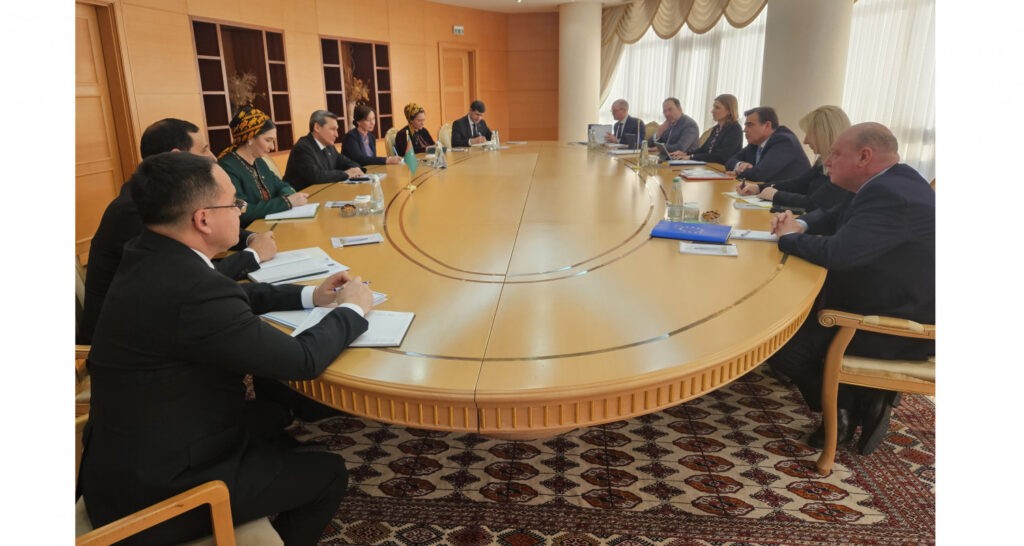
On January 17th, a delegation from the EU led by the Vice-President of the European Commission, Margaritis Schinas visited Turkmenistan as part of its wider tour of Central Asia, with Kazakhstan, Kyrgyzstan, and Uzbekistan being their previous stops. The visit comes ahead of the Europe-Central Asia Investors Forum, which aims at strengthening connectivity by developing transport routes within and between Central Asia and the European Union. It is also a testament to the growing partnership between the EU and the region, said the Delegation of the EU to Turkmenistan.

In Ashgabat, Schinas met with the President of Turkmenistan, Serdar Berdimuhamedov, and the Deputy Chairman of the Cabinet of Ministers and Minister of Foreign Affairs, Rashid Meredov. At the meeting, key issues such as cooperation in the EU-Central Asia format, the engagement of Central Asian countries in the EU Global Gateway initiative, and the participation of Turkmenistan in the upcoming Investors Forum were discussed.

Schinas welcomed Turkmenistan’s efforts in the process of its accession to the World Trade Organization and its commitment to becoming a member of a multilateral trading system, and congratulated Turkmenistan for joining the Global Methane Pledge at COP28 in Dubai. He also underscored the EU’s commitment to human rights as a fundamental principle and commended Turkmenistan’s engagement in the Annual Human Rights Dialogue.

At a press briefing following the visit, Schinas said “I am proud to be the first Commissioner to visit Turkmenistan since the beginning of this European Commission five years ago. Turkmenistan is an important partner of the EU in Central Asia. My visit was an opportunity to discuss Global Gateway, the EU’s main investment strategy with partners worldwide. The Global Gateway is about investing in our mutual interests, and is ideally suited to Central Asia given that it is already the world’s gateway between East and West. It was also an occasion to give new impetus to EU-Turkmenistan relations across the board.”

UAE Opens Borders to Tourists from Uzbekistan, Abolishes Visa-Regime

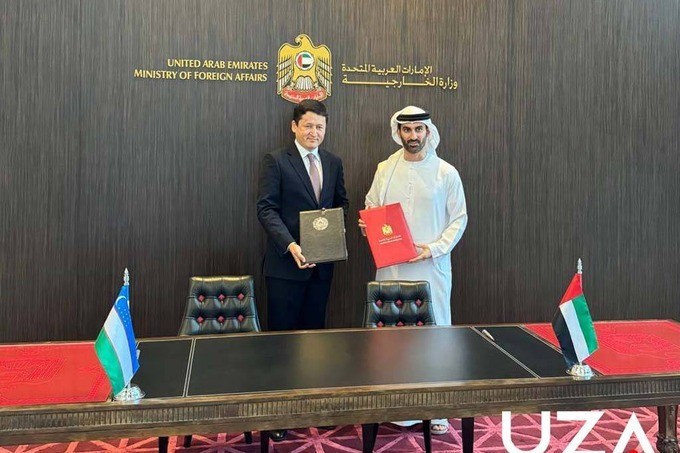
Uzbekistan’s ambassador to the Emirates, Abdulaziz Akkulov, and the UAE Deputy Foreign Minister, Khalid Abdullah Belhoul have signed a protocol exempting citizens of both countries from visas requirements. As of February 16th, citizens from Uzbekistan will be able to enter the United Arab Emirates without the need to obtain a visa for up to 30 days, according to information reported on Podrobno.uz.

The agreement follows an increase in the number of tourists from Uzbekistan visiting the UAE -119,500 in 2023. A considerable amount of money – $9.2 million was spent obtaining visas to the emirate. In this context, the agreement on increasing visa-free travel can be seen as an impetus for further development of tourism potential between the two countries.

Citizens from Uzbekistan can now visit 29 countries without the need of a visa – significant progress for the power of the Uzbek passport. Thanks to this latest addition, Uzbekistan now holds 71st position in the Global Passport Power rankings.