• KGS/USD = 0.01144 0%
  • KZT/USD = 0.00195 -0%
  • TJS/USD = 0.10861 0.18%
  • UZS/USD = 0.00008 0%
  • TMT/USD = 0.28571 0%
  • KGS/USD = 0.01144 0%
  • KZT/USD = 0.00195 -0%
  • TJS/USD = 0.10861 0.18%
  • UZS/USD = 0.00008 0%
  • TMT/USD = 0.28571 0%
  • KGS/USD = 0.01144 0%
  • KZT/USD = 0.00195 -0%
  • TJS/USD = 0.10861 0.18%
  • UZS/USD = 0.00008 0%
  • TMT/USD = 0.28571 0%
  • KGS/USD = 0.01144 0%
  • KZT/USD = 0.00195 -0%
  • TJS/USD = 0.10861 0.18%
  • UZS/USD = 0.00008 0%
  • TMT/USD = 0.28571 0%
  • KGS/USD = 0.01144 0%
  • KZT/USD = 0.00195 -0%
  • TJS/USD = 0.10861 0.18%
  • UZS/USD = 0.00008 0%
  • TMT/USD = 0.28571 0%
  • KGS/USD = 0.01144 0%
  • KZT/USD = 0.00195 -0%
  • TJS/USD = 0.10861 0.18%
  • UZS/USD = 0.00008 0%
  • TMT/USD = 0.28571 0%
  • KGS/USD = 0.01144 0%
  • KZT/USD = 0.00195 -0%
  • TJS/USD = 0.10861 0.18%
  • UZS/USD = 0.00008 0%
  • TMT/USD = 0.28571 0%
  • KGS/USD = 0.01144 0%
  • KZT/USD = 0.00195 -0%
  • TJS/USD = 0.10861 0.18%
  • UZS/USD = 0.00008 0%
  • TMT/USD = 0.28571 0%
18 December 2025

Import of Chinese Cars to Kyrgyzstan Surges, with Russia as Final Destination

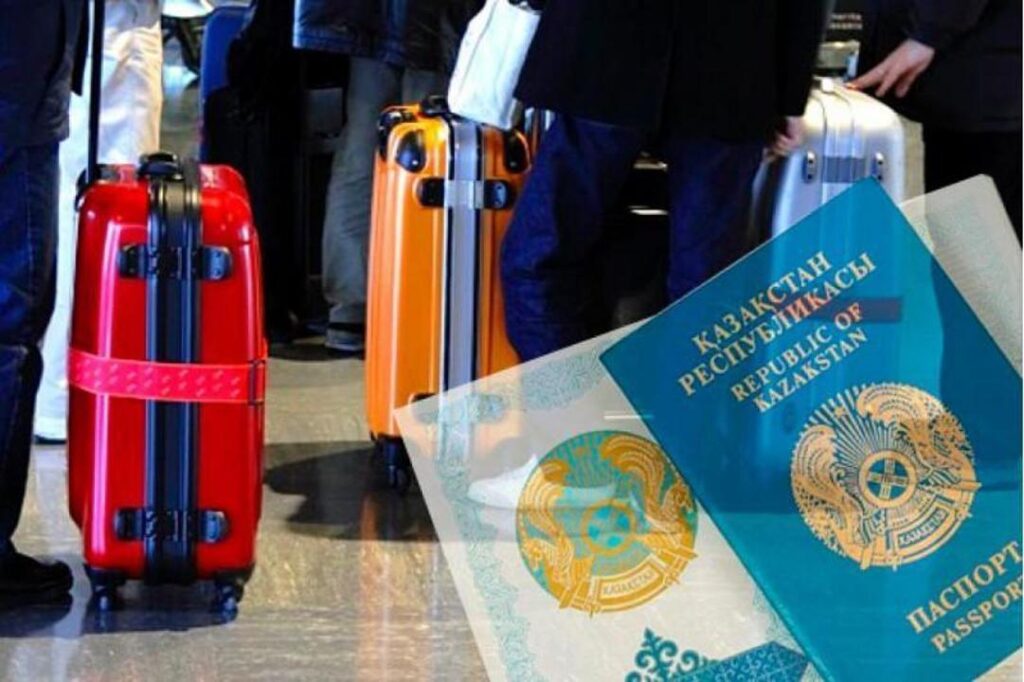
A total of 57,000 cars were imported into Kyrgyzstan from China from January-November 2023, according to China’s customs statistics, more than a 49-fold increase compared to the 1,200 vehicles imported from January-November 2022. In monetary terms, imports increased 62-fold, and the average car price increased by over 25% – up to $29,700.

In November, the official website of the State Council of the People’s Republic of China reported that exports of cars through the land port in the Kizilsu Kyrgyz Autonomous Prefecture in western Xinjiang (bordering Kyrgyzstan) has surged about fourfold this year to reach 35,000. According to the port management committee, nearly 80% of those cars were new energy vehicles.

Chinese vehicles are mainly exported to Russia via Central Asian countries, Chinese officials say. Since the introduction of Western sanctions against Russia over its invasion of Ukraine, China has become the main supplier of new cars to the Russian Federation, accounting for about 80% of all imports.

UN Declares 2026 as International Year of Volunteers for Sustainable Development on Kazakhstan’s Initiative

On December 19th, the Foreign Ministry of Kazakhstan announced that the United Nations General Assembly had adopted a resolution declaring 2026 as the International Year of Volunteers for Sustainable Development. This proposal was first introduced by President Kassym-Jomart Tokayev during the general debate of the 75th session of the UN General Assembly in 2020.

Kazakhstan proposed the resolution in collaboration with several like-minded countries from various regions, including Armenia, Bolivia, Germany, Kenya, and Kiribati. In total, 54 UN member states joined the co-sponsorship of the document.

The activities planned throughout the International Year are expected to significantly boost volunteer movements at national, regional, and global levels. They aim to further strengthen international cooperation on volunteering and shape key directions for future development.

President Tokayev places significant emphasis on the development of volunteering in Kazakhstan, considering it a crucial component in building a “Just Kazakhstan”. According to the President, volunteers play an exceptional role in strengthening a reliable partnership between the state and society.

In line with the Head of State’s initiative, 2020 was declared as the Year of the Volunteer in Kazakhstan, and a Road Map for the Development of Volunteering in Kazakhstan for 2021-2023 was adopted. As a result of these measures, the number of volunteers in the country has surged to 200,000 people. Additionally, Kazakhstani youth serve as UN volunteers in several countries.

On July 20-21, 2023, Astana hosted the International Volunteer Forum with the participation of the Head of State, senior UN representatives, and volunteers from over 30 countries. This event underscored Kazakhstan’s significant role in the global volunteer movement.

Monument Symbolizing Fight Against Corruption Unveiled in Tashkent

As reported by the President Mirziyoyev’s official website, on December 19th, the opening ceremony of a monument symbolizing the efforts of the international community to combat corruption was held at the Tashkent City International Business Center. The ceremony was attended by the President Shavkat Mirziyoyev and the Emir of Qatar, Sheikh Tamim bin Hamad Al Thani, as well as Assistant Secretary General of the UN, Alexander Zuev.

The twelve-meter transparent metal composition in the form of a hand pointing upward with open fingers represents honesty and purity of actions and thoughts, absolute rejection of corruption, and a call to countries around the world to unite in the fight against it.

On the same day, President Mirziyoyev spoke at a ceremony presenting the International Anti-Corruption Excellence Award in Tashkent. Mirziyoyev expressed his gratitude to the founder of this prestigious award, Sheikh Tamim bin Hamad Al Thani, and to the United Nations Office on Drugs and Crime for their proposal to hold this event in Uzbekistan.

In his speech, President Mirziyoyev said that “in New Uzbekistan, where democratic reforms have become irreversible, we have also set ambitious plans and tasks to combat corruption.”

Mirziyoyev stated that Uzbekistan is committed to mobilize all possible efforts with the United Nations Office on Drugs and Crime and international partners. He also said that Uzbekistan will develop and implement the National Anti-Corruption Strategy 2030.

“We appreciate the role of the mass media, who are on the front-lines in the fight against corruption,” Mirziyoyev added. “In this regard, we believe that you will support our proposal to hold a Global Media Forum that aims to effectively harness the power of journalists in the fight against corruption and to increase their influence.”

Mutual Direct Investments Among Central Asian Countries Growing

Mutual Direct Investments Among Central Asian Countries Growing

On December 19th, the Eurasian Development Bank (EDB) said it is continuing its series of EDB Monitoring of Mutual Investments (MMI) publications. The MMI encompasses a database of investment projects, containing detailed information on mutual direct investments in Eurasia, covering Armenia, Azerbaijan, Belarus, Georgia, Kazakhstan, the Kyrgyz Republic, Moldova, Russia, Tajikistan, Turkmenistan, Uzbekistan, and Ukraine.

EDB analysts observe that the Eurasian countries’ FDI stock reached U$48.8 billion in mid-2023, following a 5.4% increase in 2022, and with continued growth in 2023.

Kazakhstan reinforced its status as the regional leader in terms of inward mutual direct investment stock, with a share of 27.2% as of June 2023 against 26.6% in 2021, followed by Uzbekistan (19.8%), Belarus (12.0%), Russia (9.8%), and Azerbaijan (8.7%).

EDB researchers highlighted that FDI stock within Central Asia totaled U$1.1 billion by the end of 1H 2023, marking a 1.8-fold increase compared to 2016. The key areas of mutual capital investments are extractive industries, manufacturing, and financial services. The leading domestic investors in the region are Kazakhstan and Uzbekistan.

In the medium term, uncertainties may persist in the dynamics of Eurasia’s mutual investments. EDB analysts note the following factors that will shape medium-term trends in mutual investments:

  1. The “neighborhood effect” – the share of Eurasian Economic Union countries in Eurasia’s mutual investments will continue to grow;
  2. Dynamic growth in manufacturing. Commencement of production of higher added value products in the countries of the region will be the main driver of growth; and
  3. Greater attractiveness of the transport and logistics sector due to shifts in commodity flows and Central Asian countries’ focus on developing dry ports, logistics hubs, and distribution centers.

Uzbekistan to Drill Deeper for Natural Gas

Uzbekistan to Drill Deeper for Natural Gas

A government meeting chaired by President Shavkat Mirziyoyev on December 18th discussed the country’s geological exploration program for 2024. At the meeting, it was stated that work is being carried out in two directions: maintaining natural gas production volumes at existing fields and discovering new reserves. In recent years, the depth of geological exploration has been increased from 2-3 kilometers to 4-5 kilometers. As a result, new gas reserves were discovered and an additional 4.4 billion cubic meters were produced.

An international consulting company was also involved in this work, which helped to identify many promising areas. Next year, it is planned to carry out seismic work on an area of 3,500 square kilometers and drill new exploratory wells.

The meeting considered the ways to transition geological drilling to a depth of 6-7 kilometers using advanced technologies. The issue of attracting foreign investment in the sector was also discussed.

In recent years, Uzbekistan’s natural gas industry has experienced problems due to the depletion of reserves at existing fields. This year, Uzbekistan started importing natural gas from Russia through Kazakhstan.

Uzbekistan Provides Incentives for Households to Install Solar Panels

As part of a government program to encourage the installation of low-power solar panels (up to 50 kW) in households in regions of Uzbekistan, citizens are to be provided with a subsidy for electrical energy produced by solar panels. For electricity produced by solar panels installed on properties and facilities owned by individuals, a subsidy of 1,000 Uzbek som (0.081U$) is to be allocated for every kilowatt-hour of surplus electrical energy transferred to the national power grid, the Uzbek Energy Ministry said.

Persons who have installed renewable energy sources are also exempt from land tax and property tax. Individuals and legal entities who have installed renewable energy sources with a total capacity of up to 100 kW are exempt from paying the property tax from such devices, land tax on plots occupied by devices, and profit tax for electricity sold by legal entities to the national power grid for a period of three years from the date of their commissioning and when installing electricity storage systems with a capacity of at least 25% of the installed capacity of solar panels for ten years.

In recent years, Uzbekistan has experienced increasing electricity shortages, especially in the cold winter months, as the country’s population grows and natural gas reserves are depleting. This has prompted the Uzbek government to embark on a large-scale program to introduce renewable energy sources (wind and solar power plants).