• KGS/USD = 0.01144 0%
  • KZT/USD = 0.00212 0%
  • TJS/USD = 0.10454 -0.1%
  • UZS/USD = 0.00008 0%
  • TMT/USD = 0.28571 0.28%
  • KGS/USD = 0.01144 0%
  • KZT/USD = 0.00212 0%
  • TJS/USD = 0.10454 -0.1%
  • UZS/USD = 0.00008 0%
  • TMT/USD = 0.28571 0.28%
  • KGS/USD = 0.01144 0%
  • KZT/USD = 0.00212 0%
  • TJS/USD = 0.10454 -0.1%
  • UZS/USD = 0.00008 0%
  • TMT/USD = 0.28571 0.28%
  • KGS/USD = 0.01144 0%
  • KZT/USD = 0.00212 0%
  • TJS/USD = 0.10454 -0.1%
  • UZS/USD = 0.00008 0%
  • TMT/USD = 0.28571 0.28%
  • KGS/USD = 0.01144 0%
  • KZT/USD = 0.00212 0%
  • TJS/USD = 0.10454 -0.1%
  • UZS/USD = 0.00008 0%
  • TMT/USD = 0.28571 0.28%
  • KGS/USD = 0.01144 0%
  • KZT/USD = 0.00212 0%
  • TJS/USD = 0.10454 -0.1%
  • UZS/USD = 0.00008 0%
  • TMT/USD = 0.28571 0.28%
  • KGS/USD = 0.01144 0%
  • KZT/USD = 0.00212 0%
  • TJS/USD = 0.10454 -0.1%
  • UZS/USD = 0.00008 0%
  • TMT/USD = 0.28571 0.28%
  • KGS/USD = 0.01144 0%
  • KZT/USD = 0.00212 0%
  • TJS/USD = 0.10454 -0.1%
  • UZS/USD = 0.00008 0%
  • TMT/USD = 0.28571 0.28%

More American Cars Are Being Imported to Kyrgyzstan Via Georgia

Imports of American cars to Kyrgyzstan reached record levels in January 2024, thanks in part to parallel imports from Georgia.

Kyrgyzstan has become the leading recipient of Georgian exports for the first time, according to Georgia’s National Statistics Service. Almost 17,000 cars worth $618m were imported to Kyrgyzstan.

Georgia is a trading hub of sort for cars from the U.S. going to the countries of Central Asia and the Middle East, due to its geographical location, low tax rates and low cost of repair services. As a result, re-exports of cars take up nearly a fifth of Georgia’s total exports. The majority of Kyrgyz used-car imports made in the U.S. are either brought directly from America or through Georgia.

Since August 1, 2023, the Georgian authorities have imposed restrictions on the export and re-export of American cars to Russia. But, as noted by car exporters, now these cars will be imported to Russia through Kyrgyzstan and Kazakhstan. This ban has had little effect on used-car prices.

Kyrgyzstan Offers Eye Operations to Premature Babies

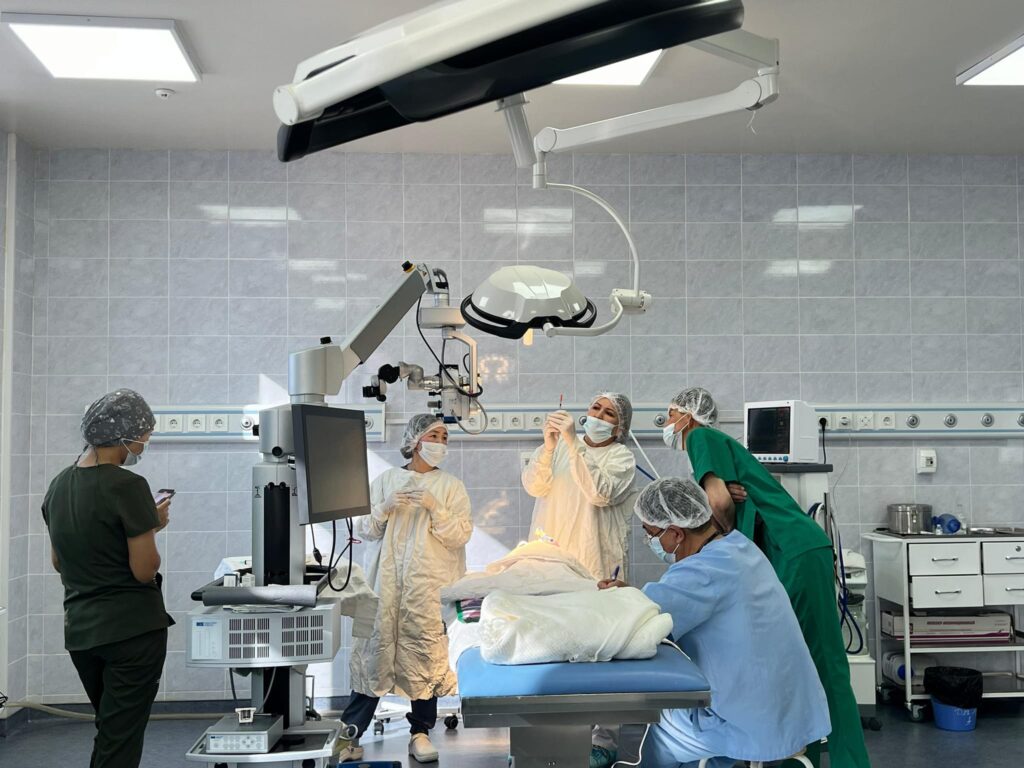
Doctors in Bishkek yesterday conducted two successful surgeries on premature babies, performing laser coagulation of the retina on infants with retinopathy. According to the National Center for Maternal and Child Health of Kyrgyzstan, Kyrgyz doctors were assisted in these operations by the chief retinologist of Almaty.

The Kyrgyz Health Ministry describes retinopathy as an eye anomaly that is detected in children born prematurely. In 2023 in Kyrgyzstan there were 1,280 cases of premature babies born with retinopathy. Most of these babies, including those who could not get treatment abroad, went blind.

According to reports, Kyrgyz doctors have mastered a new type of eye surgery thanks to colleagues from Kazakhstan, where Kyrgyz specialists were previously trained. “Earlier, with the active support of the National Red Crescent Society, the Swiss Red Cross and the L’Occitane Foundation, two doctors from the ophthalmology department of the National Center for Maternal Health successfully completed training on screening retinopathy in premature babies in Almaty,” the Center said.

The Kyrgyz Ministry of Health commented: “Rare eye surgeries have become possible thanks to the equipment that Kyrgyz doctors last year bought from the United States; a specialized laser for iridotomy. This [device] has become an invaluable tool in the fight against retinopathy in children.”

The National Center for Maternal and Child Health also said that such operations will soon begin to take place not only in Bishkek, but also in the country’s regions. Doctors from other Kyrgyz cities have already been trained by Kazakhstani specialists.

EU and UNICEF Help Kazakhstan Reintegrate Children Returned from Syria and Iraq

When the so-called Islamic State established a self-declared ‘caliphate’ in 2014, thousands of nationals of Central Asian countries, including Kazakhstan, travelled to Iraq and Syria to join IS ranks. Many moved with their families and subsequently, many children were born in IS controlled conflict zones between 2014-2019.

Kazakhstan has so far evacuated 526 of these children and with aid from the European Union (EU) funded programme “EU-UN Support to the States in Central Asia for their Citizens Returned from Conflict Zones, Primarily Syria, and Iraq,” offered comprehensive support for their adaptation to life back home.

The programme aims to assist returnee women, children, and families by encouraging their reintegration into local communities and ensuring they receive protection, access to social services, and education. During the first phase, Kazakhstan in collaboration with UNICEF, established a National Resource Center to train and equip specialists working with returned children and provide psychosocial services and professional guidance to returnees. “Our common goal is to ensure that all returnee children continue to receive the necessary support to recover from their experiences as well as the opportunity to learn, develop, and adapt to Kazakhstani culture and tradition,” said Laetitia Bazzi-Vale, acting UNICEF Representative in Kazakhstan.

Kazakhstan’s First Deputy Minister of Foreign Affairs, Kairat Umarov noted that whilst significant progress has been made in the gradual reintegration of returnees into society, “our children still need psychological and social support.”

The Delegation of the European Union to Kazakhstan reported that on February 23rd, representatives of the EU, UNICEF, and the Kazakh Ministry of Foreign Affairs met in Astana to discuss the implementation of the second phase of reintegrating further returnee children and their families. Initiatives discussed included a program of activities designed to assist local executive bodies and schools working in this sensitive field.

Kestutis Jankauskas, the EU Ambassador to Kazakhstan, stated: “We have been supporting an important programme to reintegrate returnee children in Kazakhstan for several years now. The cooperation of UNICEF, the European Union, and the Kazakhstani authorities aims to create conditions for the children’s successful social adaptation, and we are pleased to see positive results.”

Kazakhstan Set to Drill World’s Deepest Well

Kazakhstan plans to become the country to set a new record for the deepest well in the world. Details regarding the project were revealed by Kazakhstan’s Ministry of Industry and Construction of Kazakhstan, reports lsm.kz

The specialized department said that the project called Eurasia is divided into three stages. The first was completed in 2022, at an expense of $5.9 million to the federal budget. Specialists then analyzed and revised all available geological and geophysical interpretations. Based on the results of the first phase, experts identified the most promising zones for further development.

According to the Ministry, about $500-550 million more is needed to execute the next two stages of work. The second phase of drilling will last about three years and will be financed by investor capital.

The third phase of the project will also last three years, and will be realized at the expense of private investors. At the same time, the specialized department reported that today they have not yet found an investor for the project.

“Various options for attracting funds are being considered. So far, there are no specific options and amounts of funding for 2024,” reported the Ministry.

The Eurasia well will be 15 km deep, allowing for a more detailed study of geological sections, and assessment of the undiscovered resource potential of the Caspian Depression in the search for hydrocarbons. Currently, the world’s deepest circular mine is considered to be a well in Russia at a depth of about 13 km, which is equal to the height of 15 Burj Khalifas, the Dubai skyscraper which considered to be the tallest in the world.

Second place in terms of well depth is occupied by OP-11, which is also located in Russia. The depth of this is 12.3 kilometers. It was drilled in just two months and opened in January 2011, becoming the deepeat in the world at the time. In third-place is the BD-04A well in Qatar, which was drilled in May 2008 at the Al-Shaheen oil field in just 36 days.

One other well worthy of mentioning is also located in Russia – the Kola ultra-deep well at 12.2 km, which was drilled back in 1970, in the days of the USSR. Initially, it was planned that the well would reach a depth of 15 km, but due to high temperatures of up to 230°C, drilling had to be stopped. Thanks to the Kola well, many pieces of unique scientific data were obtained, and the two-layer model of the Earth’s crust structure was questioned. Now, the Kola ultra-deep was mothballed in 1995 due to a lack of funding.

Kazakhstan, Russia and Turkmenistan to Develop North-South Transport Corridor

On 26th February, Kazakhstan’s Deputy Minister of Transport, Maksat Kaliakparov reported that the railway administrations of Kazakhstan, Russia, and Turkmenistan are planning a joint venture to improve services and reduce cargo delivery time along the International North–South Transport Corridor (INSTC).

The North–South Transport Corridor is a key element of the Eurasian transport network, expanding opportunities for logistics and supply chains between Eurasian Economic Union (EAEU) countries, Europe, Asia, and the Middle East. The INSTC has three routes: the Western route (via Azerbaijan), the Eastern route (via Kazakhstan and Turkmenistan), and the Trans-Caspian route (via Caspian seaports).
The Eastern route runs through Kazakhstan’s western Mangystau region and connects the Kazakh port of Aktau and the northern ports of Iran.

According to Kaliakparov, in 2023, the volume of cargo transported by rail along the North-South corridor alone amounted to 2.1 million tons, 4% more than the previous year. By 2027, the transport potential of the entire corridor will be increased from 6 million to 10 million tons per year.

In an effort to become a regional transit hub and avoid geopolitical bottlenecks associated with transit through Russia and Iran, Kazakhstan is now actively engaged in the development of the Trans-Caspian International Transport Route – also known as the Middle Corridor – that will ensure a flow of transport between Europe, Central Asia, and China, without passing through Russia.

Smog in Bishkek Decreases by 10-15%

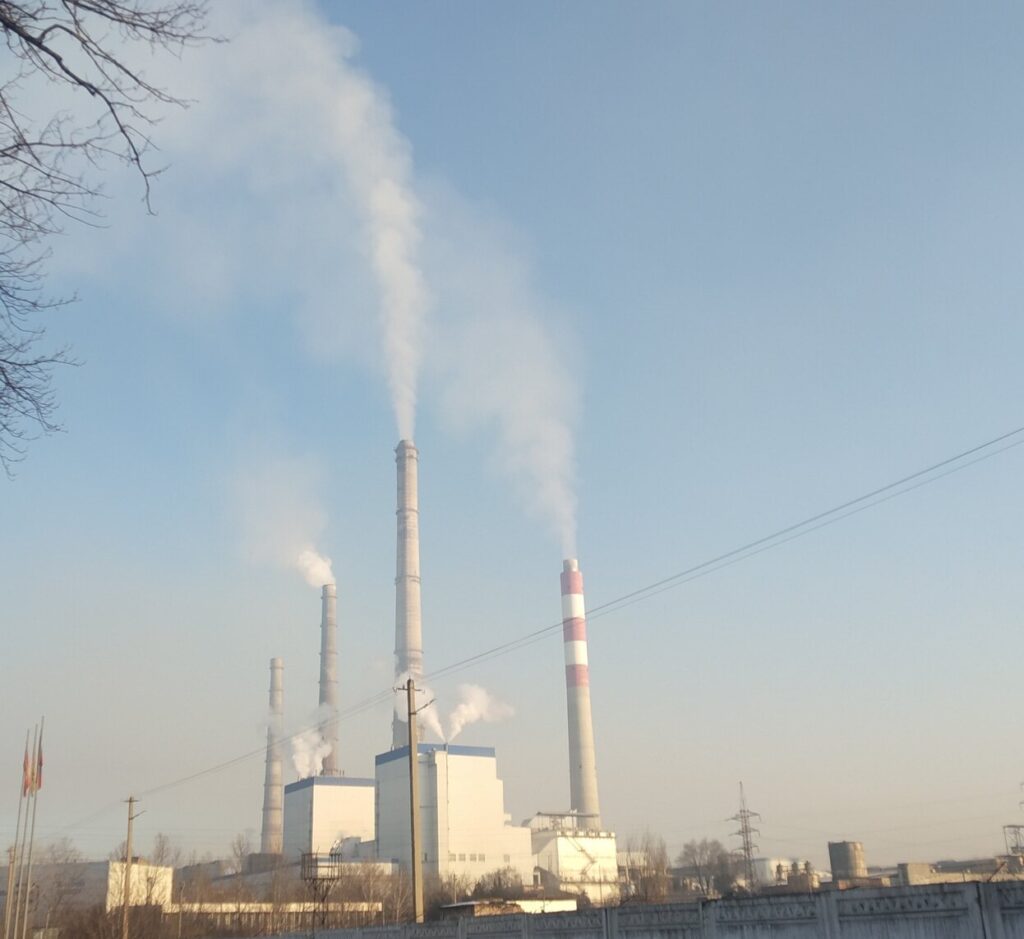
Kyrgyzstan’s Ministry of Natural Resources, Ecology and Technical Supervision has announced that smog in Bishkek has decreased by at least 10-15% resulting from the government’s efforts to improve the air quality in the capital city. Welcome news at a time when pollution had reached a critical level. In recent years, IQAIR has frequently ranked Bishkek among the worst cities in the world for the highest levels of air pollution.

The Asian Development Bank’s (ADB) brief, “Tackling Air Pollution in Bishkek: A Road Map to Cleaner Air,” released in November 2023, stated that air pollution in Bishkek exceeded the WHO air quality guidelines by up to 30 times in winter.

The brief referenced several studies on the main sources of air pollution. A UNICEF report showed PM2.5 concentrations are highest where households rely on coal for heating, in areas around the city’s coal-fired thermal power plant and where solid waste is burned. UNDP-UNEP similarly cited coal as the primary source of pollution, followed by road transport.

Transport was estimated by ADB to contribute around a third of annual emissions, particularly diesel trucks and minibuses.
In conclusion, the ADB report recommended that to arrest air pollution, top priority be given to phasing out coal and investing in clean public transport.

According to government reports, in 2023, nine residential neighborhoods comprising over 14 thousand households were supplied with natural gas. Today, 31 of the 47 residential suburbs, previously reliant on coal for heating, are connected to gas.

The ministry also stated that the Bishkek landfill, which had been burning for decades adding to the city’s air pollution woes, was completely extinguished last year. Its territory is currently being reclaimed, with 850 tree saplings planted so far on an area of 2.3 hectares. In addition, 850 new environmentally friendly buses running on liquefied gas have been purchased for Bishkek. Mild weather and heavy rainfall were contributory factors but the decrease in smog this winter bodes well for the city’s environment.