• KGS/USD = 0.01144 0%
  • KZT/USD = 0.00208 0%
  • TJS/USD = 0.10516 0.77%
  • UZS/USD = 0.00008 0%
  • TMT/USD = 0.28571 0%
  • KGS/USD = 0.01144 0%
  • KZT/USD = 0.00208 0%
  • TJS/USD = 0.10516 0.77%
  • UZS/USD = 0.00008 0%
  • TMT/USD = 0.28571 0%
  • KGS/USD = 0.01144 0%
  • KZT/USD = 0.00208 0%
  • TJS/USD = 0.10516 0.77%
  • UZS/USD = 0.00008 0%
  • TMT/USD = 0.28571 0%
  • KGS/USD = 0.01144 0%
  • KZT/USD = 0.00208 0%
  • TJS/USD = 0.10516 0.77%
  • UZS/USD = 0.00008 0%
  • TMT/USD = 0.28571 0%
  • KGS/USD = 0.01144 0%
  • KZT/USD = 0.00208 0%
  • TJS/USD = 0.10516 0.77%
  • UZS/USD = 0.00008 0%
  • TMT/USD = 0.28571 0%
  • KGS/USD = 0.01144 0%
  • KZT/USD = 0.00208 0%
  • TJS/USD = 0.10516 0.77%
  • UZS/USD = 0.00008 0%
  • TMT/USD = 0.28571 0%
  • KGS/USD = 0.01144 0%
  • KZT/USD = 0.00208 0%
  • TJS/USD = 0.10516 0.77%
  • UZS/USD = 0.00008 0%
  • TMT/USD = 0.28571 0%
  • KGS/USD = 0.01144 0%
  • KZT/USD = 0.00208 0%
  • TJS/USD = 0.10516 0.77%
  • UZS/USD = 0.00008 0%
  • TMT/USD = 0.28571 0%

Viewing results 1 - 6 of 10

Uzbekistan Joins BRICS Bank, Strengthening Global Ties

Uzbekistan’s bid to join the New Development Bank (NDB), commonly known as the BRICS Bank, has been officially approved, marking a notable step for the country as it seeks to enhance its engagement within the global financial and economic framework. Established by Brazil, Russia, India, China, and South Africa, the NDB aims to finance sustainable development projects and offer alternatives to traditional Western-led financial institutions such as the IMF and the World Bank. Membership was also approved for Colombia, with applications from Ethiopia and Indonesia currently under review. A New Opportunity for Uzbekistan Uzbekistan's membership in the BRICS Bank provides a potential avenue to strengthening economic ties with major emerging markets. The country's strategic position in Central Asia and its natural resources present opportunities for investments in infrastructure, renewable energy, and agriculture, aligning with the bank’s priorities on sustainable development. Uzbekistan’s recent economic reforms aimed at liberalization and improved governance make the BRICS Bank a practical partner for securing diversified funding sources for large-scale initiatives. Role of the BRICS Bank and Implications The NDB focuses on funding projects in emerging economies to promote growth while reducing dependence on traditional Western lenders. Since its inception in 2014, the bank has supported initiatives in renewable energy, infrastructure, and technology. The inclusion of Uzbekistan indicates the NDB’s interest in expanding its reach beyond its founding members. Uzbekistan's entry into the BRICS Bank takes place in the context of shifts in the global economic landscape, as countries seek new financial partnerships. For Uzbekistan, this step aligns with its foreign policy approach of maintaining balanced ties with global powers while engaging with the West, the Middle East, and neighboring countries. China, a driving force within the NDB and the Belt and Road Initiative (BRI), sees Uzbekistan’s strategic location as beneficial for advancing regional trade and connectivity, while Russia could view the membership as a positive development for maintaining close regional ties while navigating geopolitical challenges. Shared Priorities For the NDB, Uzbekistan offers a gateway to further investments in Central Asia, aligning with its mission to support emerging markets. For Uzbekistan, meanwhile, membership represents a significant development in its integration into international financial networks, potentially opening up opportunities for sustainable development projects that could contribute to the country’s economic growth and strengthen its global standing. The BRICS summit in 2025 will be held in Rio de Janeiro on July 6 and 7.
Kazakhstan to Become a BRICS Partner on January 1, 2025

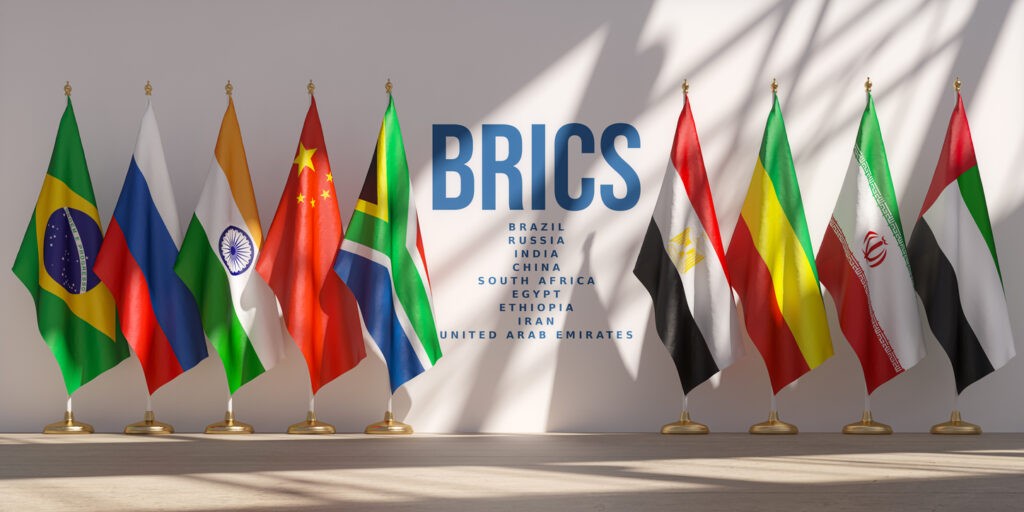
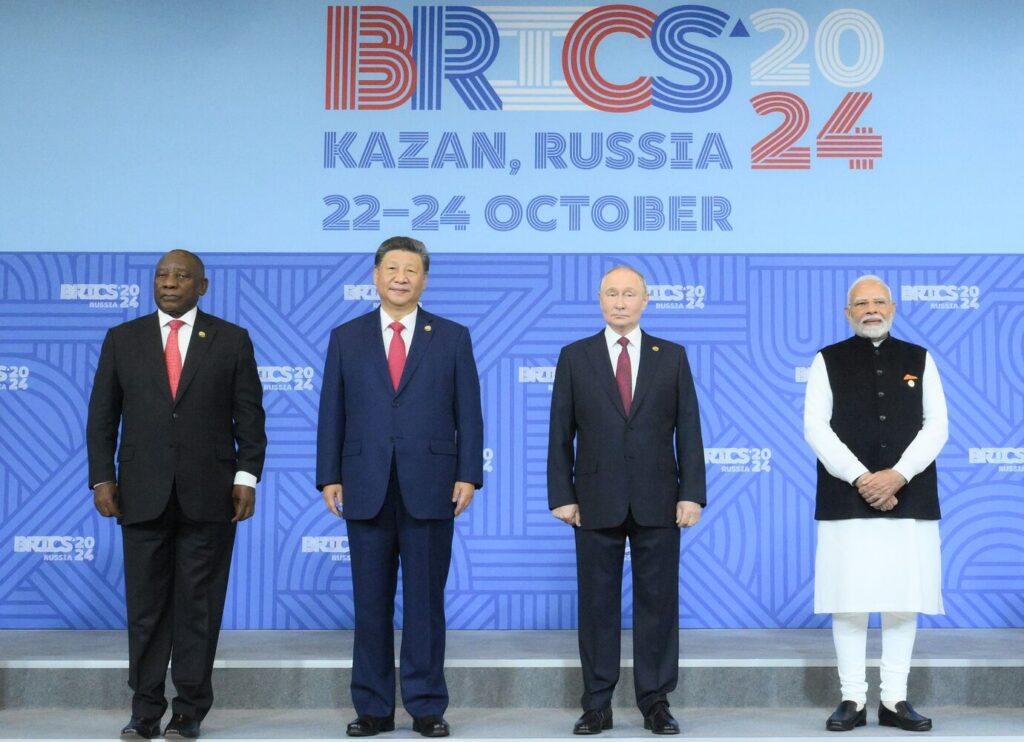
Kazakhstan will officially join BRICS as a partner state on January 1, 2025, according to Yuri Ushakov, an assistant to Russian President Vladimir Putin. Ushakov stated that Russia has received confirmation from several countries expressing readiness to become BRICS partners. “One of the important results of the BRICS summit in Kazan was the establishment of the category of BRICS partner countries and agreement on a list of 13 states. Appropriate invitations were sent to these states. Confirmations of readiness to become a BRICS partner state have been received from Belarus, Bolivia, Indonesia, Kazakhstan, Cuba, Malaysia, Thailand, Uganda, and Uzbekistan,” Ushakov announced​. Kazakhstan’s Position on BRICS Partnership Kazakhstan’s Ministry of Foreign Affairs has confirmed the country’s status as a BRICS partner state, effective from January 1, 2025​. However, the press secretary to Kazakh President Kassym-Jomart Tokayev, Berik Uali, previously stated that the country does not plan to seek full BRICS membership in the foreseeable future. Uali cited the multi-stage application process and considerations regarding the association's development prospects as reasons for this decision​. BRICS, comprising Brazil, Russia, India, China, and South Africa, aims to promote economic, political, and cultural cooperation among member states. As a partner, Kazakhstan will engage with BRICS without taking on the obligations or privileges of full membership. This development marks a significant step in Kazakhstan’s international engagement strategy while reflecting its cautious approach to deeper involvement in the bloc.

Kazakhstan’s Strategic Stand: Navigating BRICS Amidst Geopolitical Tensions

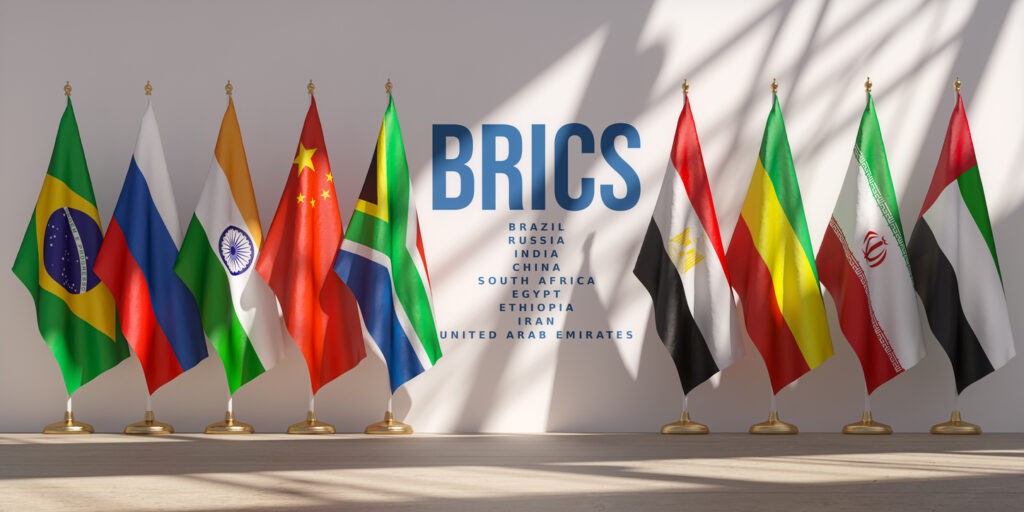
In recent days, BRICS - an intergovernmental organization comprising Brazil, Russia, India, China, South Africa, Iran, Egypt, Ethiopia, and the UAE - has become one of the most critical topics on the Eurasian region's information agenda. Russian propaganda has presented the BRICS summit, which is taking place in Kazan, as a global event. However, the press secretary of Kazakhstan's president, Kassym-Jomart Tokayev, has stated that the republic has no plans to apply for BRICS membership in the foreseeable future, which has caused an adverse reaction in the Russian media, and led to a seemingly retaliatory Russian ban on Kazakhstan's agro-products. The Kazakhstani side, represented by the expert community, has tried to explain that its reasoning is based not only on Astana's national interest, but also on its obligations to its partners in Central Asia. Perhaps the most convincing argument is that the C5+1 mechanism is effective as a format for the region's interactions with the outside world. Therefore, it is not worth breaking this mechanism. No Central Asian country besides Kazakhstan has been invited to join BRICS, but Astana cannot afford to damage the established alliance by creating the conditions for distrust from its neighbors; Central Asia has already gone through a period of distrust. At the same time, rejecting the idea of joining BRICS, where India, Russia, Brazil and China are the founding members, does not unduly affect Kazakhstan's interactions with these powers. Kazakhstan works with China and Russia within the framework of the SCO (Shanghai Cooperation Organisation) and EAEU (Eurasian Economic Union), and has signed multiple partnership and alliance agreements with Beijing and Moscow. In other words, the information hysteria that Kazakhstan will exit Russia's sphere tomorrow and join the "Global West" (a term used in the Russian media) has no basis in reality. At the same time, however, it is evident that most Central Asian countries are trying to distance themselves from Russia as much as possible, maintaining cooperation only along certain economic lines. Even banks in Kyrgyzstan, a republic maximally dependent on Moscow on several essential issues, have stopped working with Russian banks. The Kazakhstan Stock Exchange, meanwhile, recently announced the end of cooperation with the sanctioned Moscow Stock Exchange. Moreover, Rosselkhoznadzor's ban on imports of a wide range of agro-industrial products from Kazakhstan, if not a response to the refusal to join the BRICS, clearly hints that behind the scenes, economic relations between Astana and Moscow are not all that smooth. Another argument against joining BRICS was voiced not just within Kazakhstan, but also by Russian experts. Despite the organization's purportedly representative nature, which includes countries with a combined population of 3.5 billion people (45% of the Earth's population), the association has no structure. Russian analysts opposed to the Kremlin believe that BRICS is a club where one can come, sabre-rattle at the West, conclude bilateral agreements, and forget about everything until the next summit. No coordinating center monitors the implementation of any agreements reached. BRICS was conceived as an intercontinental organization, uniting similar economies in volume and GDP. Thus, it initially included Brazil, representing...

Kazakhstan Decides to Abstain from Applying for BRICS Membership

Kazakhstan's presidential spokesman, Berik Uali, announced that Kazakhstan plans to refrain from applying for membership in the international association BRICS. According to him, despite Kazakhstan's proposals, the decision to join BRICS remains under consideration. Specialists are analyzing prospects with a focus on the country's national interests. Uali also noted that President Tokayev will participate as a guest in the BRICS Summit, scheduled to take place October 23-24 in Kazan. He will speak at the organization's extended outreach meeting on October 24. At the same time, Kazakhstan will refrain from applying for BRICS membership. This is due to the multi-stage process of accepting new members and other aspects of the association's development. When asked about the priorities of Kazakhstan's diplomacy, Berik Uali noted that Tokayev emphasized the importance of the UN as a universal and irreplaceable international institution. Despite its shortcomings, he emphasized that the UN remains the sole platform for addressing crucial global issues. Tokayev also expressed the view that the UN Security Council should be reformed to consider the interests of the middle powers and to hold broad consultations among the organization's members. Established in June 2006, BRICS (Brazil, Russia, India, China, South Africa, UAE, Iran, Egypt, Ethiopia) aims to promote a multipolar world order. Azerbaijan and Belarus have already applied to join.

China Supports Kazakhstan’s Bid to Join BRICS

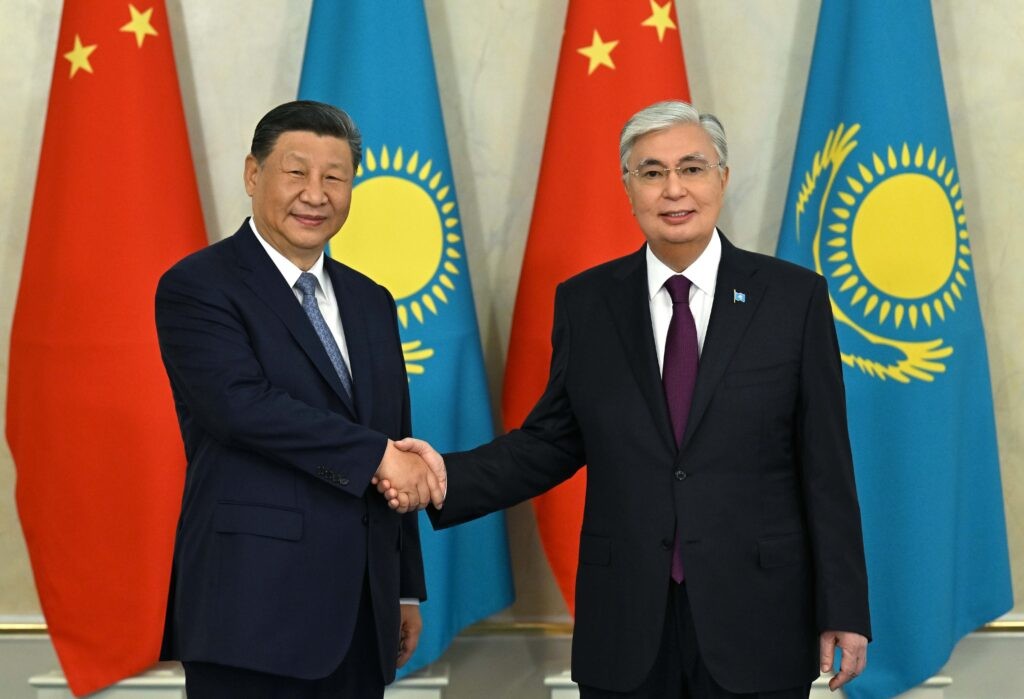
Beijing has officially supported Kazakhstan's application to join BRICS, a group of emerging economies founded by Brazil, Russia, India and China in 2009, which South Africa joined a year later. In January of this year, Saudi Arabia, Egypt, Ethiopia, Iran, and the UAE were also admitted as full members. The Anadolu Agency reports that Kazakhstan's bid to join became known after a meeting between Kassym-Jomart Tokayev and Xi Jinping last week. According to the Chinese leader, “China and Kazakhstan are walking side by side on the road to modernization.” Xi Jinping noted a great synergy between the two countries and said he supports the application. During the meeting, the president of Kazakhstan also supported China's initiative to "create a community [for the] common destiny of mankind," expressing his country's readiness to "constructively support" issues related to its realization.

Russia’s Chelyabinsk to host BRICS and SCO summits in 2020

BISHKEK (TCA) — The Russian city of Chelyabinsk has been chosen as the venue for the meeting of the Council of Heads of SCO member states and the meeting of BRICS leaders in 2020 in accordance with a Decree ‘On the Organizing Committee for Preparing and Securing the Chairmanship of the Russian Federation in the Shanghai Cooperation Organization in 2019–2020 and in the BRICS Union in 2020’ signed by President Vladimir Putin. Continue reading