• KGS/USD = 0.01143 0%
  • KZT/USD = 0.00200 0%
  • TJS/USD = 0.10593 -0.19%
  • UZS/USD = 0.00008 0%
  • TMT/USD = 0.28575 0%
  • KGS/USD = 0.01143 0%
  • KZT/USD = 0.00200 0%
  • TJS/USD = 0.10593 -0.19%
  • UZS/USD = 0.00008 0%
  • TMT/USD = 0.28575 0%
  • KGS/USD = 0.01143 0%
  • KZT/USD = 0.00200 0%
  • TJS/USD = 0.10593 -0.19%
  • UZS/USD = 0.00008 0%
  • TMT/USD = 0.28575 0%
  • KGS/USD = 0.01143 0%
  • KZT/USD = 0.00200 0%
  • TJS/USD = 0.10593 -0.19%
  • UZS/USD = 0.00008 0%
  • TMT/USD = 0.28575 0%
  • KGS/USD = 0.01143 0%
  • KZT/USD = 0.00200 0%
  • TJS/USD = 0.10593 -0.19%
  • UZS/USD = 0.00008 0%
  • TMT/USD = 0.28575 0%
  • KGS/USD = 0.01143 0%
  • KZT/USD = 0.00200 0%
  • TJS/USD = 0.10593 -0.19%
  • UZS/USD = 0.00008 0%
  • TMT/USD = 0.28575 0%
  • KGS/USD = 0.01143 0%
  • KZT/USD = 0.00200 0%
  • TJS/USD = 0.10593 -0.19%
  • UZS/USD = 0.00008 0%
  • TMT/USD = 0.28575 0%
  • KGS/USD = 0.01143 0%
  • KZT/USD = 0.00200 0%
  • TJS/USD = 0.10593 -0.19%
  • UZS/USD = 0.00008 0%
  • TMT/USD = 0.28575 0%
22 February 2026

Viewing results 1 - 6 of 1684

Turkmenistan Considers Cotton Exports to Kyrgyzstan

Turkmenistan is exploring the possibility of exporting cotton to Kyrgyzstan as part of a broader effort to jointly develop the textile industry, according to Danil Ibrayev, a member of the presidium of the Eurasian Economic Union (EAEU) Business Council and President of the Kyrgyz Union of Industrialists and Entrepreneurs. He shared the update during an interview with Birinchi Radio. Ibrayev noted that both countries are currently discussing practical mechanisms for supplying Turkmen cotton to Kyrgyz enterprises, where it would be processed into finished textile products. These products could then be sold domestically or exported, including to other EAEU member states. “Turkmenistan produces large volumes of cotton. We are now discussing how to organize its delivery to Kyrgyzstan and develop textile production here,” Ibrayev said. The initiative aligns with Kyrgyzstan’s strategy to revitalize its light industry by securing stable sources of raw materials. Turkmenistan, meanwhile, is seeking to diversify export routes for its agricultural commodities, with cotton remaining a vital component of its economy. Experts cited by local media suggest that such cooperation could deepen industrial integration within Central Asia and reduce dependence on textile imports from outside the region. With growing demand for locally produced goods and the expansion of import substitution policies, regional partnerships are gaining strategic significance. Last year, Kyrgyz officials emphasized the government's commitment to expanding domestic textile production and actively sourcing raw materials from neighboring states. Cotton processing was identified as one of the quickest pathways to job creation and increased exports through value-added manufacturing.

At EAEU Forum, Kyrgyzstan Calls for Integration in Trade, Logistics, and Migration

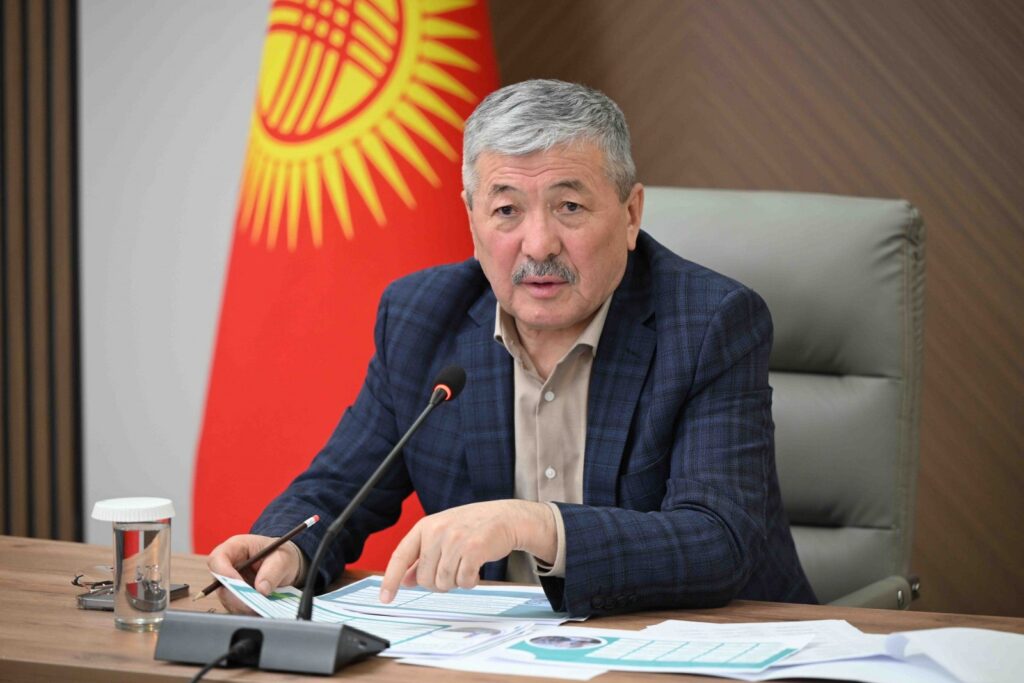
At the 4th Eurasian Economic Forum in Minsk, marking the 10th anniversary of the Eurasian Economic Union (EAEU), Kyrgyzstan highlighted ongoing internal barriers that continue to hinder its development. Chief among them are trade delays, logistical bottlenecks, and persistent challenges in labor migration. Deputy Minister of Economy Sultan Akhmatov reaffirmed Kyrgyzstan’s commitment to Eurasian integration and strengthening economic ties with other EAEU member states. According to the ministry’s press office, Akhmatov emphasized the need for deeper investment cooperation and expressed confidence that enhanced integration would bolster regional stability and mutual economic growth. He also advocated for expanded academic exchanges, the development of digital and vocational education, and the creation of joint research platforms across the EAEU. Yet, alongside these ambitions, Akhmatov pointed to systemic obstacles. He urged the removal of trade and customs barriers that burden importers and exporters at border checkpoints. He also emphasized the importance of mutual recognition of quality certifications and ensuring labor mobility within the Union. Labor Migration: An Economic Lifeline Labor migration remains a crucial pillar of Kyrgyzstan’s economy. In 2024, remittances from Kyrgyz migrants, most of whom live and work in Russia, reached $3 billion, equivalent to 24% of national GDP. This figure nearly matches the country’s total exports of $3.8 billion during the same period. However, the number of Kyrgyz labor migrants in Russia has been steadily declining. First Deputy Prime Minister Daniyar Amangeldiev attributed this trend to both domestic economic improvements and new restrictions introduced by Russian authorities, including changes to migration law. As of 2024, foreign workers in Russia are required to sign one-year contracts with employers, a condition that has created legal uncertainty and discouraged long-term employment. “I Left Moscow Because the Rules Changed” Aziret Abdiev, a Kyrgyz welder who worked in Moscow for nearly a decade, shared his reasons for leaving: “I didn’t leave because I disliked the work. I spoke fluent Russian, had a steady job, and was valued for my skills. But over the past year, the pressure increased, inspections, bureaucracy, hostility. It became clear I couldn’t continue. Now I’ve applied for a Schengen visa and will be heading to Lithuania to work in a metal factory.” Expert Opinion: Migration as a Core Integration Priority Kyrgyz experts argue that labor migration is central to the country’s national interest. Raising the issue at the Minsk forum, they contend, was both pragmatic and necessary. “For Kyrgyzstan, labor migration is more than an economic category. It is a matter of social stability, foreign currency inflows, and the future of entire generations,” political analyst Bakyt Baketaev told The Times of Central Asia. According to official statistics, up to one million Kyrgyz citizens work abroad, primarily in EAEU member states. This makes mutual recognition of qualifications, access to social protections and healthcare, and the safeguarding of migrant rights critical priorities for Kyrgyz policymakers. Baketaev believes progress is possible, if Kyrgyzstan acts consistently and professionally while building coalitions within the EAEU. He notes that other member states face similar challenges: “There is room...

Kyrgyzstan Reports Strong Economic Growth in Early 2025

Kyrgyzstan’s economy continued its upward trajectory in the first quarter of 2025, with GDP expanding by 13.1%, according to Prime Minister Akylbek Japarov. He credited the surge to positive developments across all key sectors prioritized by the government. The food industry posted remarkable growth of 71%, while the construction sector expanded by 69%. Investments in fixed capital jumped by 90% during the same period. A detailed economic overview published by the Ministry of Economy and Commerce highlighted that Kyrgyz businesses are adapting rapidly to shifting external conditions. The ministry also pointed to increased domestic demand and investment activity as key drivers of growth. "From January to March 2025, about 93% of total investments were directed toward mining, processing industries, information and communications, electricity and gas supply, and the construction of housing and educational institutions," the ministry stated. The construction sector alone contributed three percentage points to GDP growth. However, services remain the backbone of Kyrgyzstan’s economy, accounting for 4.5 percentage points of overall growth. Within the sector, trade made up 27.4%, transportation services 10.3%, and financial intermediation and insurance services another 10.3%. Annual inflation stood just below 7% in the first quarter, with average prices for consumer goods rising by 3.5% during the reporting period.

Kyrgyz Clergy to Compete in Traffic Rules Knowledge Contest

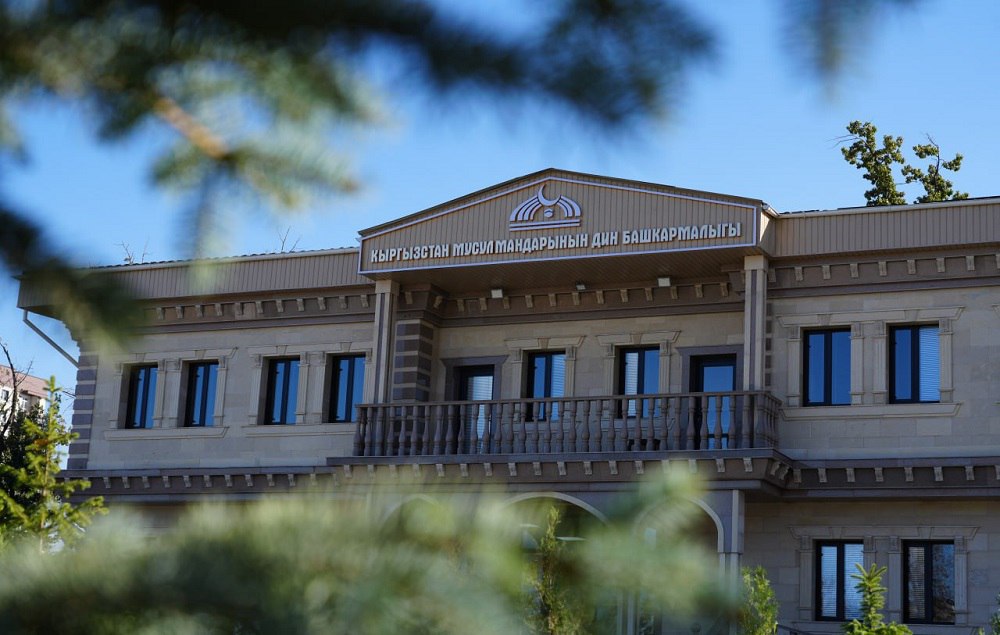
The Spiritual Administration of Muslims of Kyrgyzstan (DUMK) will hold a competition among its members to test their knowledge of traffic regulations. The participants will include mosque imams and staff from DUMK's central office, according to a statement on the Muftiate's official Facebook page. The initiative follows a recent meeting between DUMK representatives and officials from Kyrgyzstan’s Main Directorate of Road Traffic Safety (DGUOBDD). Traffic police emphasized the importance of promoting traffic rule compliance among the public, and particularly among the faithful, highlighting the clergy’s influential role in society. “To effectively promote road safety, religious leaders themselves must be well-versed in traffic laws,” said a DUMK spokesperson. “Shariah places great value on human life, which is why it mandates adherence to rules that protect it, including traffic regulations.” Addressing a Rising Crisis Traffic violations and accidents are a persistent issue in Kyrgyzstan. The DUMK noted that the National Statistical Committee records road accidents approximately every 90 minutes across the country. The situation is especially serious in rural areas. In response, the Muftiate has been conducting awareness campaigns in mosques nationwide for several years, including the ongoing “Human Life Above All” initiative aimed at reinforcing the religious imperative to safeguard life. Government Push for Compliance The clergy-led effort aligns with a broader push by the Kyrgyz government to enhance road safety. Starting in September 2025, drivers who commit traffic violations will be subject to on-the-spot knowledge tests, under a policy introduced by President Sadyr Japarov. This cooperation between religious and state institutions reflects a growing effort to integrate moral authority into public safety campaigns, particularly in a country where religious leaders remain influential community figures.

Kyrgyzstan Launches New IT Hub in Bishkek

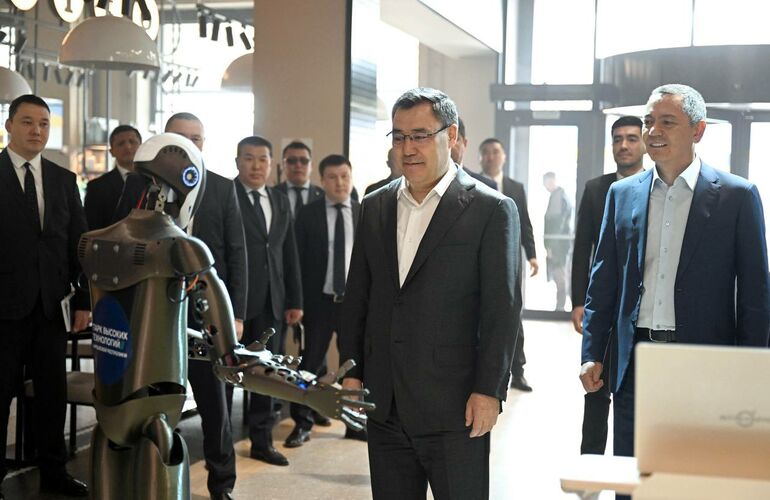
On April 10, the Technopark IT hub officially opened in Bishkek, marking a significant milestone in the development of Kyrgyzstan’s fast-growing tech sector. Spanning 14,000 square meters and designed to accommodate 1,500 jobs, the new hub was built with private investments totaling 2 billion KGS (more than $22 million). The facility serves as a center for digital innovation, entrepreneurship, and creative collaboration, featuring office spaces, co-working areas, conference rooms, and a professional podcast recording studio. Current residents of the IT hub include some of Kyrgyzstan’s largest online services for trade, employment, real estate, and cryptocurrency exchange platforms. The opening ceremony was attended by President Sadyr Japarov, who was welcomed by BilimBot, a Kyrgyz-speaking robot developed by local programmers. In his remarks, Japarov highlighted the central role of digitalization and technology in modern economic development. “Today, the world is undergoing rapid changes. The development of countries no longer depends only on natural resources. In the past, the global economy was dominated by countries rich in minerals or with access to the sea. Now, these factors are no longer decisive. We live in the digital age. The ability to use knowledge and technology as resources that can compete with natural ones has come to the fore,” he said. The president also discussed legislative reforms aimed at fostering Kyrgyzstan’s IT landscape. In 2023, Japarov signed amendments to the Law on the High Technology Park of the Kyrgyz Republic, which extended its preferential tax regime indefinitely, a move designed to attract both local and international tech companies. Established in 2011, the High Technology Park (HTP) was created to stimulate IT business development by offering substantial tax relief to companies exporting digital goods and services. Previously, tax exemptions were set for a 15-year term expiring in 2026. Under the new legislation, these tax benefits are now permanent. Resident companies of the HTP enjoy exemptions from sales tax, profit tax, and value-added tax (VAT). Employees benefit from a reduced income tax rate of 5%, and the social insurance tax is fixed at 12% of the average monthly wage. The IT sector is now one of Kyrgyzstan’s most dynamic industries. In 2021, the government created the Ministry of Digital Development to lead efforts in e-government services and to expand digital access across the country.

Kyrgyzstan Delays Opening of Alternative North-South Highway to 2026

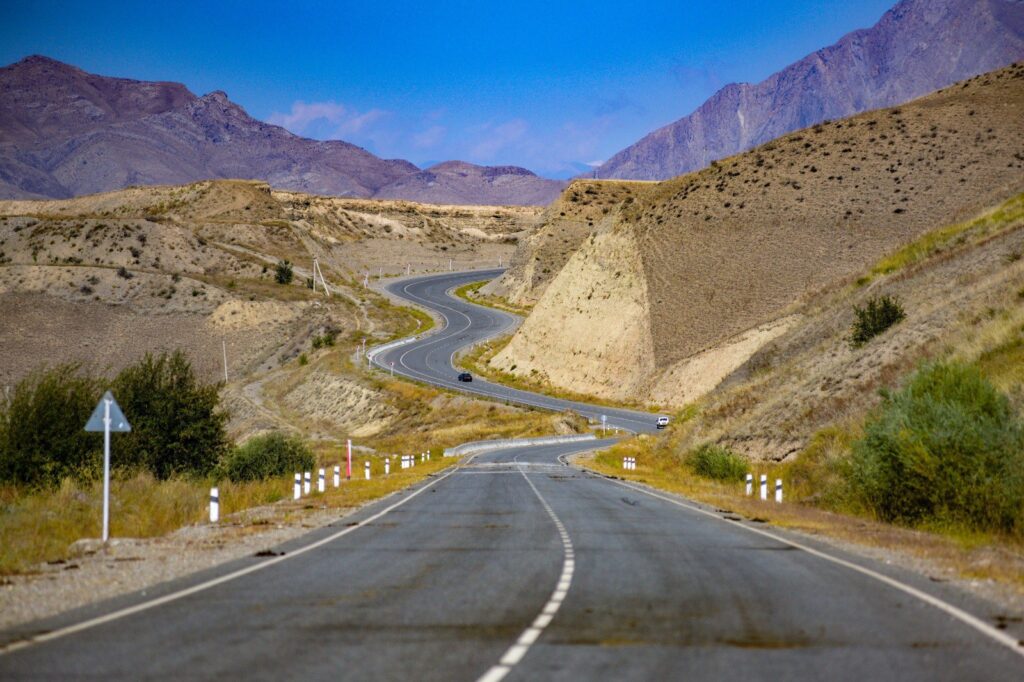
Kyrgyzstan has pushed back the opening of its long-anticipated alternative North-South highway to 2026, according to the Ministry of Transport and Communications. The route was originally slated to open in May 2025, but the timeline has been extended to accommodate additional infrastructure work. The delay stems from plans to construct two avalanche protection galleries, three overpass bridges, and a 25-kilometer bypass section between the villages of Barpy and Safarovka. The ministry confirmed that all additional construction will be completed by 2026. The 433-kilometer highway is a strategic transport corridor linking Balykchy in the Issyk-Kul region with Jalal-Abad in the south. Notably, approximately 200 kilometers of the route traverse areas where no roads previously existed. Key engineering achievements along the route include Kyrgyzstan’s longest tunnel, located at the Kok-Art mountain pass, and two major overpass bridges. Once operational, the highway is expected to cut travel time between Jalal-Abad and Balykchy from 13 hours to just six. Currently, the only existing route connecting Kyrgyzstan’s northern and southern regions is the Bishkek-Osh highway. The new North-South corridor is expected to dramatically enhance both passenger and freight transportation between the regions, especially in the absence of a direct railway connection.