• KGS/USD = 0.01143 0%
  • KZT/USD = 0.00213 0%
  • TJS/USD = 0.10593 0.47%
  • UZS/USD = 0.00008 0%
  • TMT/USD = 0.28571 0%
  • KGS/USD = 0.01143 0%
  • KZT/USD = 0.00213 0%
  • TJS/USD = 0.10593 0.47%
  • UZS/USD = 0.00008 0%
  • TMT/USD = 0.28571 0%
  • KGS/USD = 0.01143 0%
  • KZT/USD = 0.00213 0%
  • TJS/USD = 0.10593 0.47%
  • UZS/USD = 0.00008 0%
  • TMT/USD = 0.28571 0%
  • KGS/USD = 0.01143 0%
  • KZT/USD = 0.00213 0%
  • TJS/USD = 0.10593 0.47%
  • UZS/USD = 0.00008 0%
  • TMT/USD = 0.28571 0%
  • KGS/USD = 0.01143 0%
  • KZT/USD = 0.00213 0%
  • TJS/USD = 0.10593 0.47%
  • UZS/USD = 0.00008 0%
  • TMT/USD = 0.28571 0%
  • KGS/USD = 0.01143 0%
  • KZT/USD = 0.00213 0%
  • TJS/USD = 0.10593 0.47%
  • UZS/USD = 0.00008 0%
  • TMT/USD = 0.28571 0%
  • KGS/USD = 0.01143 0%
  • KZT/USD = 0.00213 0%
  • TJS/USD = 0.10593 0.47%
  • UZS/USD = 0.00008 0%
  • TMT/USD = 0.28571 0%
  • KGS/USD = 0.01143 0%
  • KZT/USD = 0.00213 0%
  • TJS/USD = 0.10593 0.47%
  • UZS/USD = 0.00008 0%
  • TMT/USD = 0.28571 0%

Viewing results 1 - 6 of 106

Poland and Russia Ensure Continued Transit of Kazakh Oil to Germany

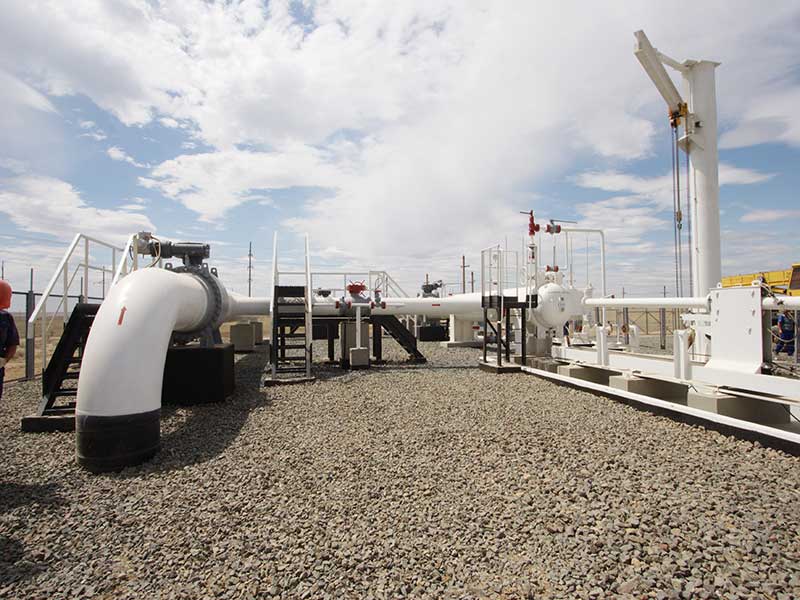
Pipeline operators PERN (Poland) and Transneft (Russia) have agreed to ensure the continued transit of Kazakh oil to Germany,  reported Reuters. The Druzhba pipeline runs through Russia to the Belarusian city of Mozyr, after which it splits northwards in the direction of Poland and Germany, and southwards, to Hungary, the Czech Republic, Slovakia and Croatia. The northern pipeline has the capacity to  carry  two million barrels of oil per day from Kazakhstan into Poland. Back in  April, Transneft warned Kazakhstan that the transit of its oil to Germany could cease as a result of the situation concerning the certification of oil flow meters in Poland. The devices must be periodically certified for compliance with Russian standards and the verification of oil flow meters on the Polish section of the Druzhba pipeline must be completed by June 5. To  address the issue , the  Polish pipeline operator PERN, Russian state-owned Transneft, and German refiner PCK Schwedt, which receives supplies from Kazakhstan, have agreed that the German company will maintain oil flow meters on the Polish section of the Druzhba pipeline. The work required to maintain metering on the Polish section and in turn, remove the risks imposed by  PERN's sanctions,  are to be undertaken by an unnamed Slovak company.

Kazakhstan Joins UN Crime Prevention Commission for First Time

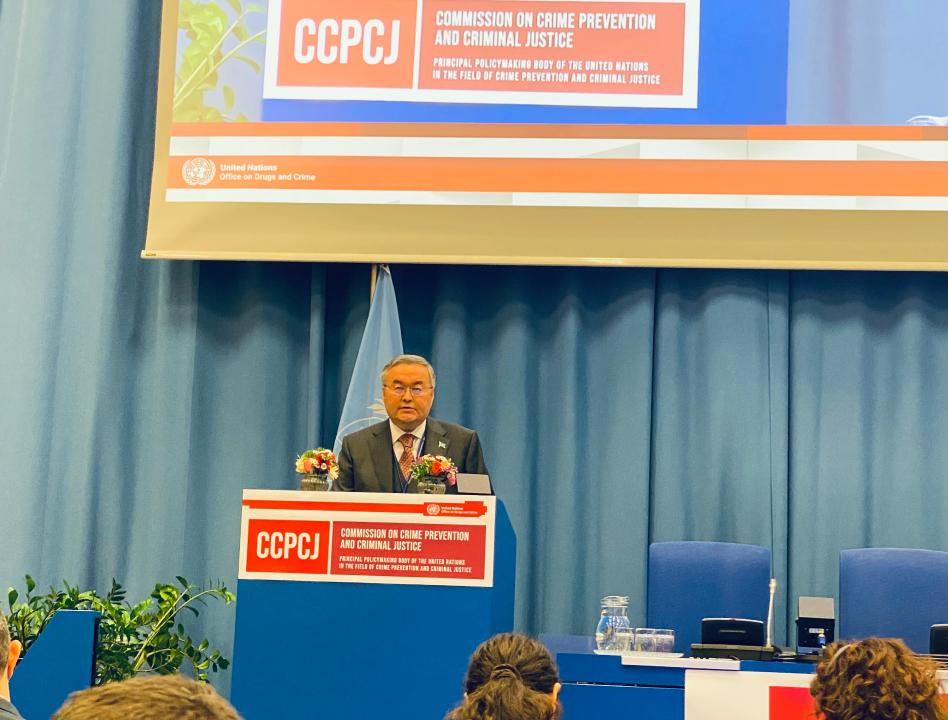
The 33rd session of the UN Commission on Crime Prevention and Criminal Justice (CCPCJ) was held in Vienna. According to the press service of the Ministry of Foreign Affairs, Kazakhstan has been elected for the first time to the CPPUC for the period from 2025 to 2027 and "is ready to make its practical contribution to the work of the commission, taking into account the accumulated national experience in crime prevention and criminal justice." The permanent representative of Kazakhstan to international organizations in Vienna, Mukhtar Tleuberdi informed the participants of the session about the latest reforms in law enforcement agencies of Kazakhstan, the development of the penitentiary system to bring it closer to international standards, including reducing the number of prisoners, rehabilitation, reintegration of citizens returning from conflict zones, as well as reducing the level of re-offenders. The Kazakh delegation also stressed the importance of developing international cooperation on preventing and combating organized crime, corruption, terrorism, and other criminal activities. "Mukhtar Tleuberdi emphasized the contribution of the UN Office on Drugs and Crime (UNODC) and donor countries in the implementation of these tasks, assuring the further support of Kazakhstan to the activities of UNODC, including through the allocation of voluntary contributions to the Global Program against Cybercrime,", stated the Ministry of Foreign Affairs.

Liberalizing Kazakhstan’s Economy Must Not Become Uncontrolled Privatization, Expert Warns

Last week, President Kassym-Jomart Tokayev signed a decree on reducing the state’s participation in the economy, aiming to help develop competition and private business. This could be a significant boost to the economy, financial analyst Rassul Rysmambetov, an Almaty-based expert in distressed assets and Director of the Financial Freedom Public Foundation, told The Times of Central Asia, though everything will depend on how the decree is implemented. Firstly, the decree envisages creating a National Office for Privatization under the Agency for the Protection and Promotion of Competition. This office is to develop criteria for state assets subject to privatization and create a list of them. In addition, measures are provided to increase the autonomy, quality, and independence of corporate governance at Samruk-Kazyna, the National Welfare Fund, and its subsidiaries. “The government must establish a specific list of large entities that will offer major stakes in the next two years in IPOs,” President Tokayev explained. According to Tokayev, the quasi-public sector – bloated and often ridden with debt – needs serious reform. “We need to put an end to the question of where state participation should continue and where competition can be developed. The largest share of the state in the economy is represented by the group of companies held by the Samruk-Kazyna fund, so that is where this work must start. New, systemic measures are required to fundamentally rehabilitate the fund,” the president stated. A separate section of the decree presents measures aimed at protecting the rights and legitimate interests of business, including decriminalizing offenses related to economic activity and coordinating with prosecutors on prohibitive and restrictive measures initiated by government agencies. This is not the first time Kazakhstan has tried to liberalize its economy – it has even privatized social institutions, such as hospitals, schools, and creative centers for children before – but previous attempts yielded no tangible successes. “We need to continue to work to improve the quality of services, consistently reduce state participation and eliminate excessive regulation and restrictions. This applies to all sectors of the economy,” Tokayev stressed. “Uncontrolled monopolies, unequal access to resources and unfair trade practices must be eliminated at the root. A pillar of economic liberalization will be effective privatization. There have been so many privatization plans, but every time we make the same mistakes.” Rysmambetov believes that professionals should take the lead. “Liberalizing the economy is a process. By no means can it be limited to a single decree – it is a strategic course. I see here dozens, if not hundreds of by-laws, industry reference documents and possibly new laws and codes. I'm afraid that parliament will prove unable to keep up with the pace at which these reforms should be carried out,” he stated. According to Rysmambetov, Samruk-Kazyna could be dissolved tomorrow, but the holding has taken on a lot of debt for its subsidiaries, meaning that in the near term its assets can only be partially privatized. In general, each Samruk-Kazyna company has a related supervising ministry, so, to...

Uzbekistan and the EU Celebrate 30 Years of Mutually Beneficial Cooperation

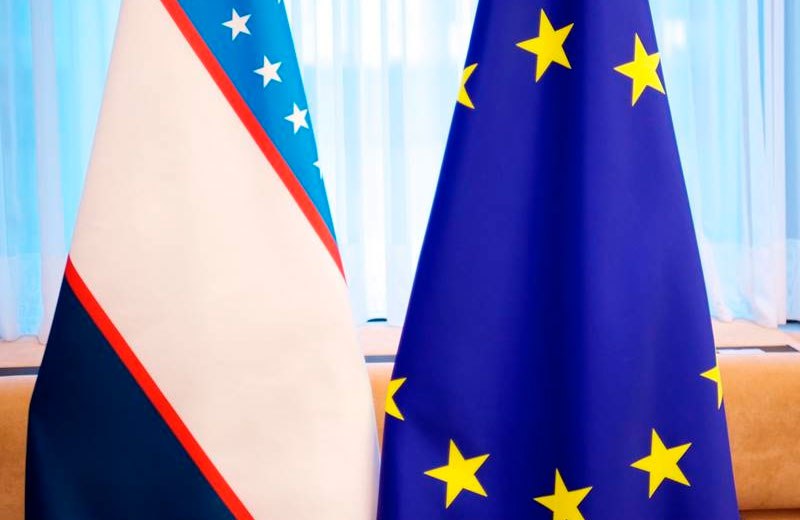
A festival to celebrate the 30th anniversary of cooperation between Uzbekistan and the European Union (EU) will be held on 18 May at Tashkent's Botanical Garden. Welcoming the event, EU Ambassador to Uzbekistan Charlotte Adrian, stated,  "The partnership between the European Union and Uzbekistan remains strong, from the signing of the Enhanced Partnership and Cooperation Agreement (EPCA) to the strengthening of GSP+ [Generalized Scheme of Preference Plus] trade relations and joint commitments to improve human rights." The festival will feature an exhibition of EU-funded projects including an interactive platform for young people, students and other visitors.   The 'Climate Change and Resilience in Central Asia' project will be highlighted through an interactive game, quizzes and question-and-answer sessions, whilst  'Made in Uzbekistan'  will showcase goods from EU-AGRIN (Uzbek Agriculture Knowledge and Innovation System) in tasting sessions of local produce. Celebrations will close  with a grand gala concert dedicated to the 30th anniversary of the partnership. Interaction with the EU , one of the main priorities of Uzbekistan's foreign policy, is evidenced by the country's accession in 2021 to the GSP+ system of preferences, which enables   6,200 categories of goods to be exported to Europe duty-free. In this regard, General Director of BMB Trade Group Mirgulom Usmanov noted that agri-food companies in Uzbekistan are now growing and processing varieties of fruit and vegetables to meet the demands of  the European market. In the first 10 months of 2023 alone, the volume of mutual trade between Uzbekistan and the EU grew by 36 percent year-on-year to $4.8 billion. An important step towards revitalizing the partnership  was taken in the adoption of a resolution that calls for a review of the EU's strategy towards Central Asian countries and as stressed by  the report,  "The EU is extremely interested in deploying efficient trade and energy corridors between Europe and Asia, bypassing Russia."

Saudi and Emirati Companies to Build Two Wind Farms in Uzbekistan

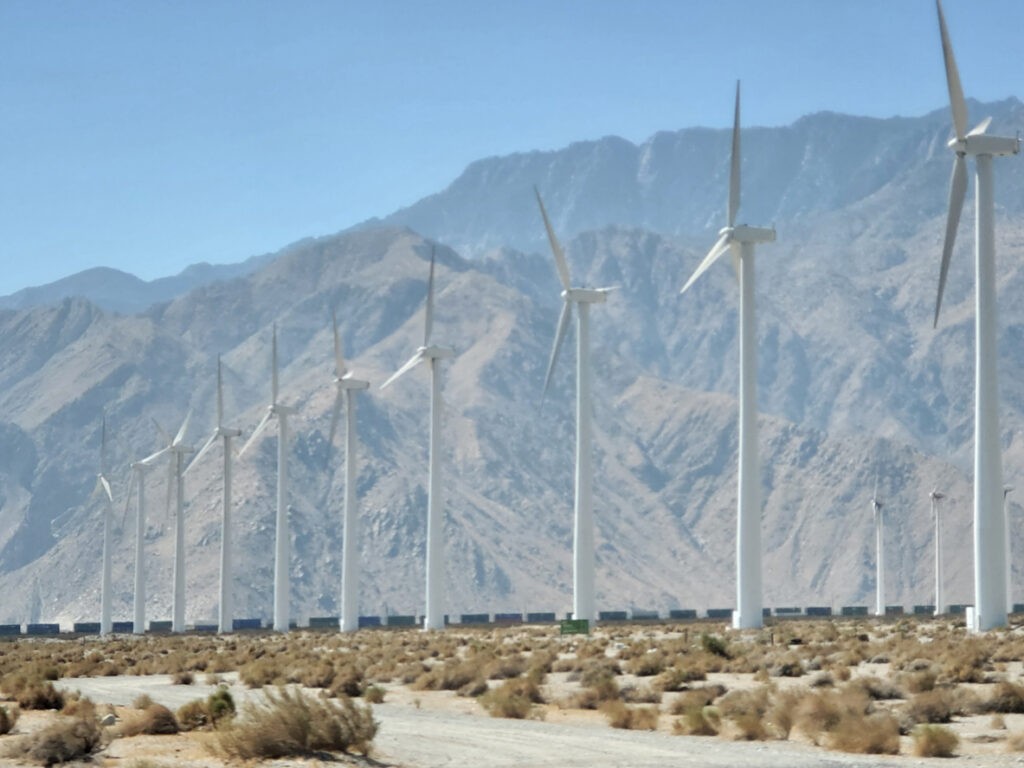
Saudi and Emirati companies are to invest $7 billion in the construction of two windfarms in the Kungrad district of Uzbekistan's autonomous Karakalpakstan republic. The announcement followed the signing of two contracts  during the third Tashkent Investment Forum. The commission of the facilities will save almost 7 billion cubic meters of natural gas and prevent the emission of more than 2 billion tons of harmful gases into the atmosphere. Welcoming the initiative, the Uzbek Energy Ministry said, "Saudi company ACWA Power is implementing a megaproject to build a wind farm with a total capacity of 5 gigawatts in the Kungrad district of Karakalpakstan. The project is estimated at $6.2 billion. The station will generate 17.5 billion kilowatt-hours of electricity per year. A wind power plant with a total capacity of 1 gigawatt and a cost of $1.1 billion will be built in the same area by Amea Power from the UAE. It will generate 3.5 billion kilowatt-hours of electricity a year," . During the third Tashkent International Investment Forum, agreements signed by several government and private-sector counterparties, totalled $26.6 billion .

Kyrgyzstan, Uzbekistan to Unite Their National Card Payment Systems

Kyrgyzstan's national payment system, Elkart, and Uzbekistan's Humo payments platform intend to launch a project on mutually acquiring, or guaranteeing payment security and authorizations according to Kyrgyzstan's Interbank Processing Center (IPC). The agreement was reached at a meeting in Tashkent. "We are going to develop payment systems and create an ecosystem in our countries. This project will open new horizons for the development of not only financial infrastructures of Kyrgyzstan and Uzbekistan, but will also give impetus to the development of many spheres of activity of the two states," said Kanykei Zhamangulova, Chair of the Board of the Kyrgyz IPC. Payment organizations of the two countries have been negotiating a mutual acquiring framework since last summer. At the last meeting in Bishkek, the parties agreed on money transfers and internet payments. "An agreement was reached to start a joint project for step-by-step realization of the set goals and mutual exchange of experience in acquiring, issuing and combating fraudulent transactions," Shukhratbek Kurbanov, director of the Humo payment system, said at the time. Citizens of Uzbekistan and Kyrgyzstan will be able to pay with their cards in the other of the two countries without additional commissions, he said. However, the exact launch date of mutual acquiring services wasn't announced. The cross-border payments plan is advancing as relations between Bishkek and Tashkent were further warmed by the demarcation of the two states' international border. This key step put an end to decades of border disputes that had persisted since the end of the Soviet period.