• KZT/USD = 0.00218
  • TJS/USD = 0.10810
  • UZS/USD = 0.00009
  • TMT/USD = 0.29760
  • KZT/USD = 0.00218
  • TJS/USD = 0.10810
  • UZS/USD = 0.00009
  • TMT/USD = 0.29760
  • KZT/USD = 0.00218
  • TJS/USD = 0.10810
  • UZS/USD = 0.00009
  • TMT/USD = 0.29760
  • KZT/USD = 0.00218
  • TJS/USD = 0.10810
  • UZS/USD = 0.00009
  • TMT/USD = 0.29760
  • KZT/USD = 0.00218
  • TJS/USD = 0.10810
  • UZS/USD = 0.00009
  • TMT/USD = 0.29760
  • KZT/USD = 0.00218
  • TJS/USD = 0.10810
  • UZS/USD = 0.00009
  • TMT/USD = 0.29760
  • KZT/USD = 0.00218
  • TJS/USD = 0.10810
  • UZS/USD = 0.00009
  • TMT/USD = 0.29760
  • KZT/USD = 0.00218
  • TJS/USD = 0.10810
  • UZS/USD = 0.00009
  • TMT/USD = 0.29760
02 September 2026

Viewing results 1 - 6 of 1391

Healing Properties of Uzbekistan’s Chashma Spring Draw Curious Tourists

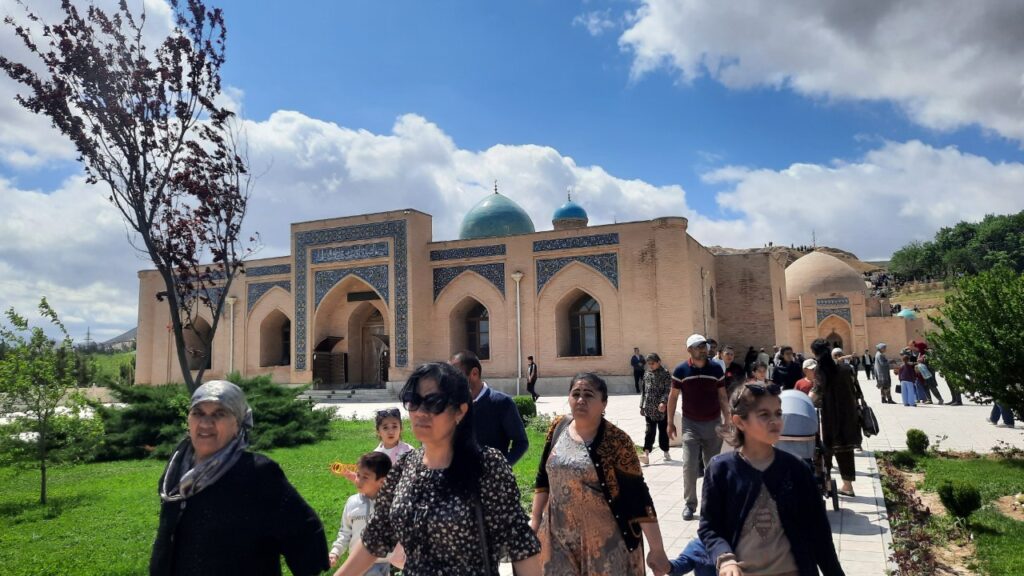
It’s Sunday morning, and a nice breeze is blowing. Due to favorable weather, many people are paying a visit to the Chashma complex in Nurota, in the Navoi region of Uzbekistan. The complex is one of the most visited holy places by Central Asian Muslims, and thousands of tourists from all over the world flock here every year. The Times of Central Asia decided to see how popular the tourist spot is. This historical complex includes the Chilustun Mosque, the Chashma Spring, the Panjab (Beshpanja) Well, the Panjvaqta Mosque, and Sheikh Abul Husan Nuri Mausoleum. The people of Nurota district mainly speak Tajik, in which the word Chashma means "holy spring."   In the 9th century, the Chilustun Mosque was built at Chashma; it was rebuilt in the 16th century during the rule of Amir Timur. The mosque, erected near the holy spring, has a dome-shaped sundial with cylindrical windows, which sits in the heart of the mosque. In addition, the art of wood carving and other examples of Central Asian national decoration were skillfully used in the construction of the mosque. Panjvaqta Mosque is located next to Chilustun. This mosque was built between 1570 and 1582 upon orders from Abdullah Khan II, the Emir of Bukhara. Today, the building consists of a large dome with two-sided porticos. All of its columns are made of mulberry and elm wood, and the base is made of marble. The main focus of visitors is the Chashma Spring. Local resident, Zilola Safarova has said that 40,000 years ago, a meteorite fell from the sky in this place and radiated light for a hundred days. As a result of the meteorite, a crater was formed and a holy spring with healing properties appeared. The people of Nurota believe this legend, and many are of the opinion that the name Nurota is related to this event. Chashma's water flows through thousands of kilometers of underground passages at a rate of 290 liters per second, and the temperature of its water remains constant in all seasons of the year at 19.5° Celsius. The spring's highest recorded flow rate was 400 liters per second. Furthermore, Chashma's water is said to have healing properties. It was found that it contains trace amounts of gold, which is said to be a cure for gastrointestinal diseases. It has long been known that iodine in water is a cure for goiters, and rare bromine is known as a cure for nervous disorders. Meanwhile, silver contained in the water ensures that its mineral composition is well preserved. Microbiologists say that this holy water contains 15 useful trace elements which have the ability to calm a person and may have a positive effect on the body. If one pays attention to the entire picture here, there are fish in the Chashma, which are called river marinka. These fish have an average lifespan of 17 years, and clean the streams from which spring water emerges out of sand. That sand ensures a moderate flow...

Favorable Water Volumes Forecast for Uzbekistan’s Amu Darya and Syr Darya Rivers

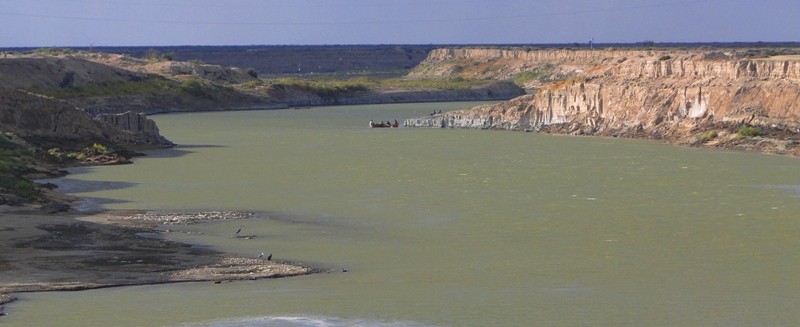
 According to the news agency UzA, Uzbekistan's Minister of Water Management Shavkat Hamroyev told a parliamentary hearing that watersheds from the Amu Darya and Syr Darya rivers are forecast as favorable this year. The announcement was made in response to Muqaddas Tirkasheva, a member of the lower house of parliament, who inquired, "water limits are agreed with Central Asian countries every year. Today, when we meet with voters, they often refer to the water shortage. There are concerns about whether the construction of the Qosh Tepa canal will affect the water of Amu Darya. How does this year's forecast volume of water in the Amu Darya, Syr Darya, Zarafshan rivers  compare to previous years? What measures are being taken to ensure guaranteed water supply to economic sectors?” Minister Hamroyev continued, "there are agreements among five countries regarding water allocations. Our recent meeting in Shymkent addressed reservoir water levels. Due to this year's precipitation, it's anticipated that water levels in the Amu Darya and Syr Darya rivers will match last year's levels. Projections suggest 85–90% water in the Syr Darya and 90–95% in the Amu Darya compared to historical averages. Our reservoirs currently hold 1.5 billion cubic meters more water than last year."

Uzbek Businesswoman Diora Usmanova Recounts Own History of Marital Violence

Diora Usmanova, the owner of two restaurants and some clothing brands in Uzbekistan, has spoken on her Instagram page about the beatings she suffered from her first husband, Babur Usmanov, who was the nephew of the billionaire Alisher Usmanov. Usmanova herself is related to Ziroatkhon Mirziyoyeva, the wife of Uzbek president Shavkat Mirziyoyev. Usmanova wrote that the story could cause her harm, but that she believes the benefits will "outweigh the risks a hundredfold" and will "change perceptions or somehow affect women who endure domestic violence and abuse," Gazeta.uz reported. "We loved each other and fought very hard for our marriage. Subsequently, when he started to raise his hand against me and when these beatings went on, and the beatings continued for four years, there were concussions, and a lot of blood, and bruises, and [my] whole body in bruises, and a lot of broken furniture, doors, everything," she said. Domestic violence is not only the man's fault, but also the woman's, Usmanova said. "We don't value ourselves enough, we're not brave enough, we're not strong enough, we're afraid to give a backhand, we're afraid to tell our parents, we're afraid to go back to our parents, we're afraid to start everything again. For the fact that we hope that it will change, that it will [bear] some good fruits in the future, that it will survive -- this is all our problem," Usmanova said. In her opinion, women should terminate harmful relationships and find the strength to leave -- and most importantly, learn to respect themselves. "You have to leave such relationships. [That's] because of the fact that you forgive once, forgive the second time, and then it becomes a habit, a person realizes that it is forgiven, it can end very badly, [a] whole life just poisoned. I did not find the strength then, and now after 10 years, I look back and realize how many mistakes were made on my part and how much is my fault. Just like [it was] his," she stated. On May 8, 2013, Babur Usmanov was involved in a fatal car accident in Tashkent. In 2016, Usmanova married businessman Batyr Rakhimov.

Uzbekistan’s Supreme Court Vacates Convictions of 198 Victims of Stalinist Repressions

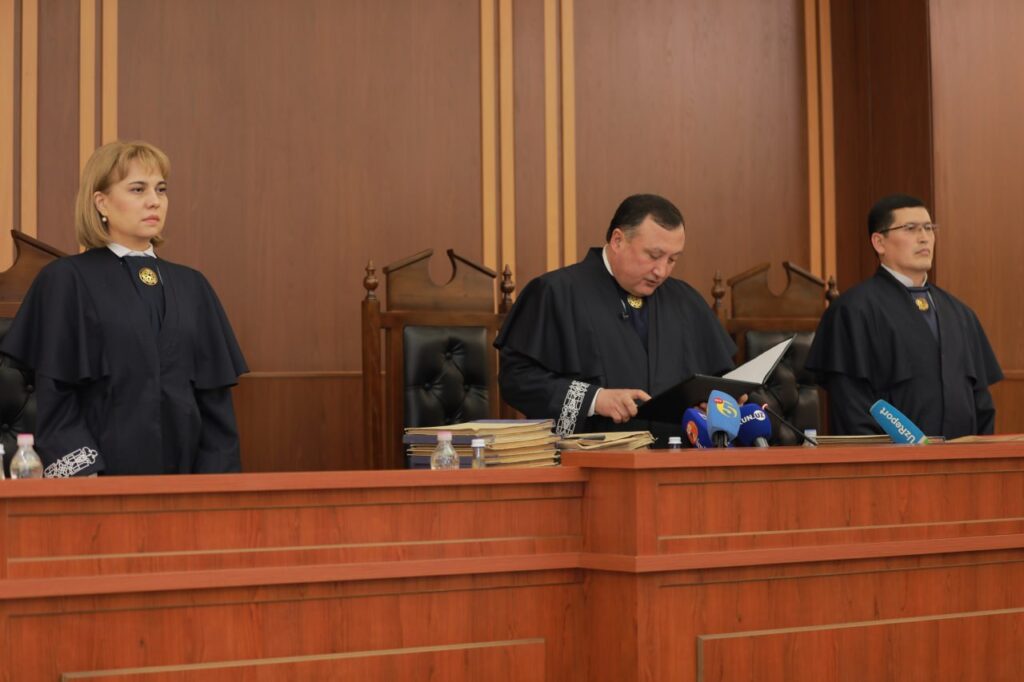
On May 6, the criminal trial panel of the Supreme Court of Uzbekistan considered 11 criminal cases involving 198 people who were unjustly punished by court verdicts over the period of 1930–1938, according to the press services of the Supreme Court of the Republic of Uzbekistan. Among those acquitted are high-ranking officials who held positions in the judicial system. Most of them were sentenced to death or long-term imprisonment with confiscation of property according to verdicts handed down by the Criminal Trial Committee of the Supreme Court of the Union of Soviet Socialist Republics on June 21, 1930. The vacating of those convictions was carried out according to a decree issued by President Shavkat Mirziyoyev dated October 8, 2020, titled “On further study of the legacy of repression victims and additional measures to perpetuate their memory." In order to ensure the implementation of the decree, a working group at the republican level was established to further study the legacy of repression victims, as well as organizing and coordinating the work of perpetuating their memory. After the approval of that “road map” for clearing the names of the victims of repression and perpetuating their memory, the scope of research on identifying victims was expanded, and officials were given the opportunity to use the departmental archives of ministries and agencies. Over the course of its efforts, the working group identified 1,031 people who were repressed during the Soviet-era, who subsequently had their convictions vacated.

Saudi and Emirati Companies to Build Two Wind Farms in Uzbekistan

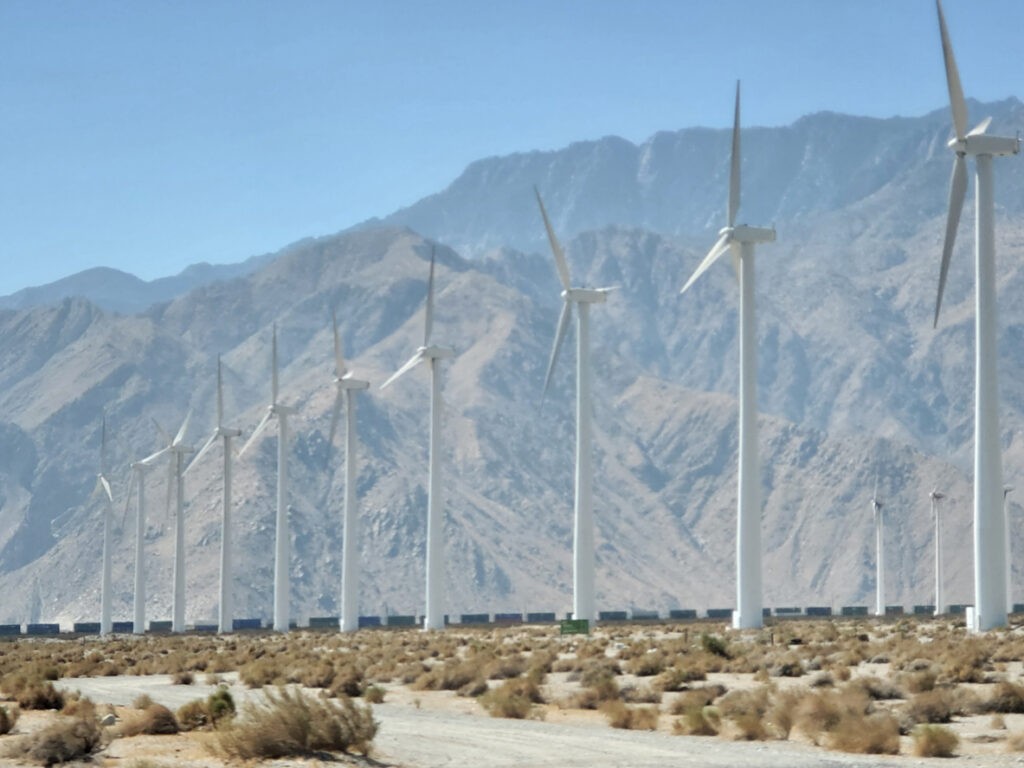
Saudi and Emirati companies are to invest $7 billion in the construction of two windfarms in the Kungrad district of Uzbekistan's autonomous Karakalpakstan republic. The announcement followed the signing of two contracts  during the third Tashkent Investment Forum. The commission of the facilities will save almost 7 billion cubic meters of natural gas and prevent the emission of more than 2 billion tons of harmful gases into the atmosphere. Welcoming the initiative, the Uzbek Energy Ministry said, "Saudi company ACWA Power is implementing a megaproject to build a wind farm with a total capacity of 5 gigawatts in the Kungrad district of Karakalpakstan. The project is estimated at $6.2 billion. The station will generate 17.5 billion kilowatt-hours of electricity per year. A wind power plant with a total capacity of 1 gigawatt and a cost of $1.1 billion will be built in the same area by Amea Power from the UAE. It will generate 3.5 billion kilowatt-hours of electricity a year," . During the third Tashkent International Investment Forum, agreements signed by several government and private-sector counterparties, totalled $26.6 billion .

Joint Portfolio of Uzbekistan and Saudi Arabia Projects Exceeds $30 Billion

On May 2, Uzbek President Shavkat Mirziyoyev welcomed representatives of several countries to the Tashkent International Investment Forum. In discussion with the Speaker of the Parliament of Singapore, Sia Kian Peng, the two sides focused on cooperation in personnel training, investment, tourism and public safety, and emphasized the importance of joint, effective parliamentary control over their bilateral high-level agreements. During negotiations between Mirziyoyev  and the Chairman of the Cabinet of Ministers of Kyrgyzstan Aqilbek Japarov, the two leaders  concentrated on deepening strategic partnership between Uzbekistan and Kyrgyzstan, expansion of cooperation in various trade sectors such as industrial, energy, transport and logistics, and  marshalling interregional relations and cultural-humanitarian exchange. Special attention was paid to practical issues relating to the Kambarata HPP-1 (hydropower plant) and China-Kyrgyzstan-Uzbekistan railway projects. A delegation led by Prince Abdulaziz bin Salman Al-Saud, Minister of Energy of Saudi Arabia, used the opportunity to discuss the further expansion of practical cooperation, and the implementation of priority investment projects in Uzbekistan. The high level of bilateral trade and investment partnerships already achieved was noted. The portfolio of joint projects currently exceeds $30 billion, with Saudi Arabia's ACWA serving as a keen investor in Uzbek wind power generation. According to data provided by the Uzbek Government, agreements to implement projects worth $18 billion in the fields of green energy, infrastructure, healthcare and pharmaceuticals are set to be signed within the framework of the Tashkent International Investment Forum.