
• KGS/USD = 0.01144 0%
  • KZT/USD = 0.00208 0%
  • TJS/USD = 0.10429 0%
  • UZS/USD = 0.00008 0%
  • TMT/USD = 0.28490 0%
  • KGS/USD = 0.01144 0%
  • KZT/USD = 0.00208 0%
  • TJS/USD = 0.10429 0%
  • UZS/USD = 0.00008 0%
  • TMT/USD = 0.28490 0%
  • KGS/USD = 0.01144 0%
  • KZT/USD = 0.00208 0%
  • TJS/USD = 0.10429 0%
  • UZS/USD = 0.00008 0%
  • TMT/USD = 0.28490 0%
  • KGS/USD = 0.01144 0%
  • KZT/USD = 0.00208 0%
  • TJS/USD = 0.10429 0%
  • UZS/USD = 0.00008 0%
  • TMT/USD = 0.28490 0%
  • KGS/USD = 0.01144 0%
  • KZT/USD = 0.00208 0%
  • TJS/USD = 0.10429 0%
  • UZS/USD = 0.00008 0%
  • TMT/USD = 0.28490 0%
  • KGS/USD = 0.01144 0%
  • KZT/USD = 0.00208 0%
  • TJS/USD = 0.10429 0%
  • UZS/USD = 0.00008 0%
  • TMT/USD = 0.28490 0%
  • KGS/USD = 0.01144 0%
  • KZT/USD = 0.00208 0%
  • TJS/USD = 0.10429 0%
  • UZS/USD = 0.00008 0%
  • TMT/USD = 0.28490 0%
  • KGS/USD = 0.01144 0%
  • KZT/USD = 0.00208 0%
  • TJS/USD = 0.10429 0%
  • UZS/USD = 0.00008 0%
  • TMT/USD = 0.28490 0%

Viewing results 55 - 60 of 690

Arrests of Opposition Politicians in Kyrgyzstan Sparks Outcry Ahead of Elections

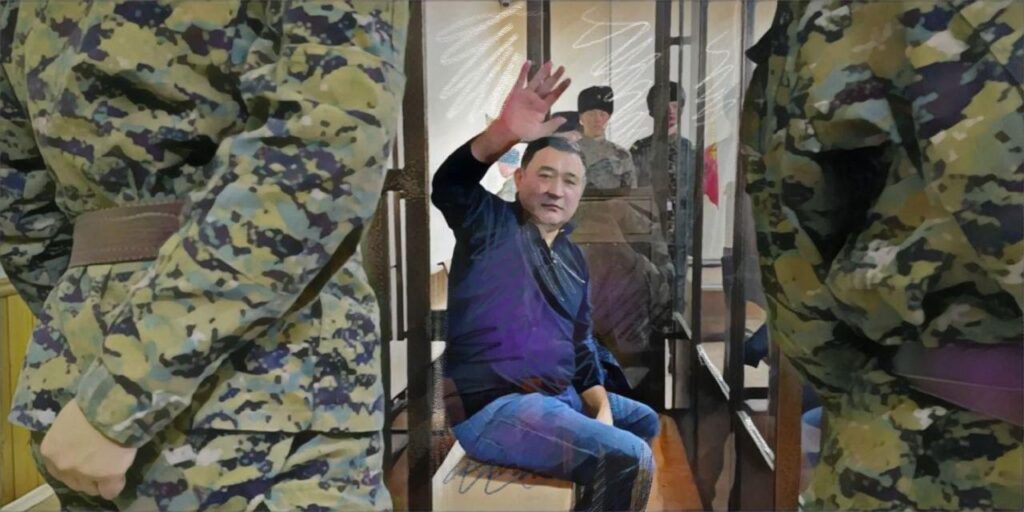
On November 22, law enforcement agencies in Kyrgyzstan launched a large-scale special operation, detaining several opposition politicians, their relatives, and media representatives. The actions were carried out under criminal proceedings initiated under Article 278 of the Criminal Code of the Kyrgyz Republic, “Organization of Mass Unrest”. In three cases, the authorities also alleged attempts to “violently seize power” in what has become an increasingly familiar mantra. The scope of the operation and the number of individuals involved have drawn significant public attention. The arrests come just days before the parliamentary elections scheduled for November 30, prompting concerns among observers about the government's approach to managing opposition voices and maintaining stability during the electoral cycle. Official Version According to the Ministry of Internal Affairs, a “destructive group” was preparing to stage mass protests following the announcement of the election results in the Jogorku Kenesh (parliament). The group allegedly included politicians, former deputies, civil servants, and law enforcement officials. Investigators claim the suspects attempted to recruit members of the criminal underworld and sports organizations to provoke violent clashes. The ministry alleges that the planned unrest would start in the south of the country and then spread to Bishkek and other regions, creating an “effect of mass discontent.” The group reportedly operated through a defined structure, with “coordination groups” tasked with articulating political demands and criminal organizations responsible for applying pressure. Some participants allegedly pre-assigned themselves roles in a proposed political configuration. Investigators also claim the group intended to issue “unconstitutional appeals” and possibly seize government buildings, television channels, law enforcement facilities, weapons, and penitentiary institutions. Separately, the Interior Ministry announced the arrest of Social Democratic Party leader Temirlan Sultanbekov and said he had been charged with organizing mass riots. Waves of Searches and Detentions Local media reported that Kadyrbek Atambayev, the son of former President Almazbek Atambayev, and former first lady Raisa Atambayeva were brought in for questioning. Raisa Atambayeva was released later the same day. Former head of the State Service for Combating Economic Crimes, Syimyk Zhapykeyev, was detained in the Issyk-Kul region and transported to Bishkek for questioning before also being released that evening. Searches were conducted at the home of former deputy Shailoobek Atazov, while other prominent figures, including former Deputy Minister of Internal Affairs and ex-MP Kubanychbek Kadyrov, and the former CEO of the April TV channel, Dmitry Lozhnikov, were also questioned. Authorities linked Lozhnikov to the detained politicians. The Interior Ministry stressed that all actions were authorized by court orders and were part of an ongoing investigation into the organization of mass riots. Court Rulings: Arrests and Preventive Detentions On November 23, the Pervomaisky District Court in Bishkek issued preventive detention orders for ten individuals, including Temirlan Sultanbekov, Shailoobek Atazov, Ermek Ermatov, Damir Musakeev, Kadyrbek Atambayev, Kubanychbek Kadyrov, and businessman Urmat Baryktabasov (also known as Askarbekov). The identities of three additional detainees have not been publicly disclosed. Kadyrbek Atambayev has been remanded in custody until January 17, 2026, according to his lawyer Sergei Slesarev, who confirmed that...
Tajik Border Guards Deploy Drones to Intercept Afghan Smugglers

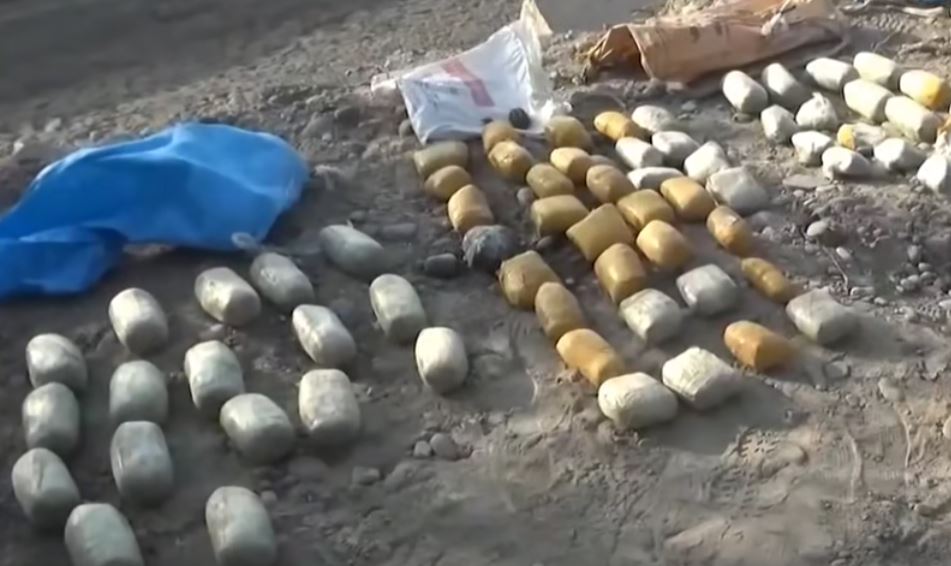
Tajikistan’s border service has reported the elimination of a group of drug smugglers attempting to cross into the country from Afghanistan, according to a broadcast by Tajik state television on November 22. The State Committee for National Security stated that the incident occurred late on November 20 in the Hamadoni district, where border guards detected an illegal crossing at 22:50. Afghan smugglers were located and targeted using a domestically produced drone, marking the first time Tajik border forces have used locally developed unmanned aerial technology in such an operation. Authorities said that on the morning of November 21, officers discovered the bodies of two Afghan nationals at the site, along with five sacks containing 116 packages of narcotics. The fate of the other members of the group remains unclear, as the report did not specify whether they were detained or escaped. State television noted an uptick in confrontations with Afghan drug traffickers over the past six months. The border service recorded ten armed incidents during this period, up from six in the first half of 2024. Four Afghan citizens were killed in these encounters. Most clashes occurred near Afghanistan’s Badakhshan province, a region where smugglers are known to carry weapons and modern equipment. Tajikistan continues to serve as a critical transit route for narcotics originating in Afghanistan. In the first half of 2025, authorities seized 1.69 tons of drugs in border regions, accounting for more than half of all narcotics confiscated nationwide. Officials attribute the increased smuggling activity to ongoing instability in Afghanistan, which has prompted Tajikistan to tighten border security and deepen international cooperation in anti-narcotics efforts.

Kazakhstan vs Eni: How a Swiss Lawsuit Could Reshape the $160 Billion Kashagan Dispute

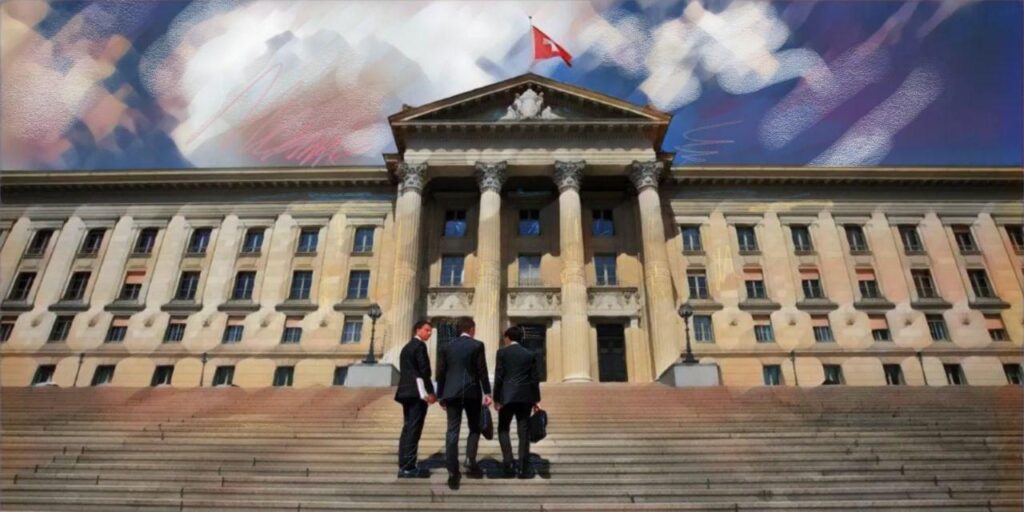
The legal landscape surrounding Kazakhstan’s energy sector has taken an unexpected turn. What began as a closed commercial arbitration dispute has now entered the public sphere in Switzerland’s courts. This marks a significant escalation in Astana’s confrontation with international oil and gas majors. According to Bloomberg, PSA LLP, a structure representing Kazakhstan’s interests in production-sharing agreements (PSAs), has significantly broadened its claims. The lawsuit now directly targets alleged schemes involving units and executives of the Italian company Eni. Kazakhstan alleges that during the early development of Kashagan infrastructure, including the Bolashak processing plant and pipeline systems, corruption and fraud may have occurred. Arbitration claims against the NCOC consortium, which includes Shell, ExxonMobil, TotalEnergies, and Eni, exceed $150 billion. Within this context, the Swiss case has become the most sensitive element. The Swiss case itself is much smaller – $15 million plus interest – and is being used to gather evidence and strengthen the larger arbitration case. While the financial stakes are high, the proceedings reflect a deeper political shift. Kazakhstan is moving away from the 1990s model of offering investors exceptional privileges. Under President Kassym-Jomart Tokayev’s “Fair Kazakhstan” policy, the state is aiming to secure more balanced and equitable cooperation with foreign partners. Distinctiveness of Swiss Proceedings The Swiss case is distinctive due to the nature of its allegations. The plaintiffs claim that during the tenure of Agip KCO (an Eni subsidiary) as project operator, contracts were awarded amid corrupt practices. Allegations include inflated prices and kickbacks to contractors. Targeting Eni is deliberate. The company led the project during its most troubled phase from 2001 to 2008. Kashagan’s budget swelled during this period, with repeated delays. Following a 2013 gas leak, production was halted for nearly three years. Kazakh officials have long linked Kashagan’s massive cost overruns and technical failures to poor procurement and mismanagement, and the current legal offensive zeroes in on alleged corrupt tenders. Cost estimates rose from a few tens of billions of dollars to around $60 billion, and by 2007, projections for total project costs had reached about $136 billion. Why Switzerland? The selection of the Swiss jurisdiction is strategic. Switzerland’s laws on corruption and financial crimes allow for the prosecution of both corporations and individual executives. Moreover, many entities connected to Kashagan’s operations are registered there. Another factor is the PSA’s stabilization clause, which forbids altering the contract’s terms. However, under international legal norms, if corruption is proven in the contract’s formation, such protections can be voided. This opens the door for Kazakhstan to challenge key financial terms of the agreement. Resource Nationalism 2.0: Legal Strategy Meets Political Logic Astana’s current posture can be described as a form of “new-generation resource nationalism.” Rather than using administrative leverage, the state is deploying legal tools to address grievances. This is driven in part by Kazakhstan’s fiscal needs, ranging from infrastructure upgrades to social spending. Amid these pressures, the vast expenditures reported by Kashagan operators have drawn public skepticism. Kazakhstan’s claims aim to re-evaluate the cost recovery model...

Chinese-Kyrgyz Tensions Flare After Brawl at Construction Site

A roadside quarrel between Kyrgyz and Chinese workers in northern Kyrgyzstan escalated into a mass brawl, exposing simmering anti-Chinese sentiment in the Central Asian country. The fight broke out on November 15 in the village of Konstantinovka, Chui province, after a dispute over which truck had the right of way on a narrow road. Dozens of construction workers from both sides were involved. Police detained 16 people and brought in another 44 – including several Chinese nationals – for questioning. One Kyrgyz worker was hospitalized with head injuries, suffering a concussion and multiple bruises. Authorities quickly launched an investigation into the incident, and officials urged the public to refrain from spreading unverified rumors about the clash. The altercation reportedly involved drivers from two road construction companies – the state-owned China Road and Bridge Corporation (CRBC) and a local subcontractor, Zhongzi, with what began as a minor traffic argument at a quarry site spiraling into physical violence. Videos of police detaining the brawlers later surfaced online, igniting a broader outcry. The timing of the fracas raised alarms in Bishkek, coming just two weeks before Kyrgyzstan’s scheduled November 30 parliamentary elections and only days ahead of an official visit by Chinese Foreign Minister Wang Yi on November 19. The authorities have moved to contain the fallout from the brawl before it can inflame any further anti-Chinese backlash. Election Provocation Claims President Sadyr Japarov was quick to downplay the confrontation and warn against politicizing it. Speaking to the state news agency Kabar, Japarov argued that such scuffles, while unfortunate, should not be blown out of proportion or framed as an international issue. “Anything can happen in life. In Bishkek, two Kyrgyz can quarrel and fight on the street - we see this on social media. But such everyday conflicts should not be elevated to the level of interstate problems,” Japarov said. “We know who they are. For now, we are just watching. If they cross the line, they will be arrested. And then they’ll start shouting that they were ‘detained for no reason.’ They have no other topics - only electricity and the Chinese.” Other officials echoed Japarov’s call for calm, with Foreign Minister Jeenbek Kulubaev dismissing claims that Chinese laborers are “flooding” Kyrgyzstan and stealing local jobs. “Chinese citizens are working on the basis of work visas. We have a visa regime. When their visa expires, they leave,” Kulubaev said, urging the public not to exaggerate the issue. Deputy Prime Minister Edil Baysalov posted on social media that "such provocations do not arise on their own. Their goal is to weaken and possibly derail the country's economic strengthening, undermine our growing international authority, and ultimately strike a blow to Kyrgyzstan's statehood itself." Daiyrbek Orunbekov, a spokesman from the president’s office, similarly wrote on Facebook that “conflicts happen wherever there are people – it doesn’t depend on ethnicity or race,” pointing out that over 1.5 million Kyrgyz citizens work abroad and sometimes get into fights as well. “Don’t be misled by provocateurs,” Orunbekov cautioned, suggesting the brawl was being exploited by...

Kazakhstan vs. Eni: Who Is the Key Figure in the Swiss Lawsuit?

Kazakhstan’s $166 billion legal campaign against the oil majors, Shell, ExxonMobil, TotalEnergies, and Eni has expanded to Switzerland. According to Bloomberg, PSA LLP, representing Kazakhstan’s Ministry of Energy, has launched proceedings aimed at strengthening the country’s position in ongoing international arbitration. Astana is seeking roughly $15 million plus interest from several companies and individuals accused of corruption in projects managed by subsidiaries of Italy’s Eni. The Swiss case centers on evidence already presented in courts in the U.S. and Italy, which Kazakhstan aims to use to prove allegations of bribery in arbitration hearings. Documents submitted by Kazakhstan to a U.S. court claim that contractors providing services to Eni implemented an “illegal scheme” to secure inflated contracts. One such contract was allegedly amended eleven times, with its value rising from $88 million to more than $490 million. While several contractors were convicted by an Italian court in 2017, no Eni employees were found guilty. Kazakh journalist Oleg Chervinsky, known for his coverage of the oil and gas sector, has highlighted that Kazakhstan is requesting the Swiss court to look into Maksat Idenov, a former first vice president of KazMunayGas, who led negotiations with Kashagan project partners between 2007 and 2008. Chervinsky recalls a dramatic episode in 2010, when Idenov resigned from KazMunayGas via a letter sent from abroad using DHL. He subsequently took a senior role at Eni. A U.S. court has approved his questioning for use in the Swiss proceedings, and his representative says he has already testified. “New revelations await us!” Chervinsky asserted. That confidence may be justified. A glance at Idenov’s career reveals his central role in Kazakhstan’s energy sector since 1992, when he began as chief legal counsel at the state holding MunaiGas. In 1993, he became assistant to the Minister of Oil and Gas Industry, and by 1995, he was serving as deputy head of the Energy Department for Europe and Central Asia at the International Bank for Reconstruction in Washington, D.C. He returned to Kazakhstan in 1999 as an advisor to then-President Nursultan Nazarbayev on Caspian energy and oil and gas export pipelines. In that role, he worked on the legal status of the Caspian Sea and other strategic projects. Idenov joined Shell in 2004 as regional vice president for strategic and commercial development in the Middle East, South Asia, and the Caspian region. In 2007, he became the first vice president of KazMunayGas. Three years later, in July 2010, he was appointed senior vice president for strategic planning at Eni. During his time at KazMunayGas, Idenov appeared in U.S. embassy cables later released by WikiLeaks. In one, he reportedly told the U.S. ambassador during a private dinner that the four most influential figures around President Nazarbayev were the Presidential Chief of Staff, Sarybay Kalmurzaev, Head of the Presidential Administration, Aslan Musin, State Secretary and Foreign Minister, Kanat Saudabayev, and the tandem of Prime Minister Karim Massimov and Nazarbayev’s son-in-law, billionaire Timur Kulibayev. Another cable described the rationale for Idenov’s appointment as lead negotiator on...

Survey Finds Decline in Kazakh Women Who Justify Domestic Violence

Recent data reveals a marked shift in attitudes toward domestic violence among women in Kazakhstan. While the number of women who justify abuse has declined, certain demographic groups continue to condone it under specific circumstances. These findings are based on a study conducted by analysts at Finprom.kz. Sharp Decline in Justifying Abuse Multi-indicator surveys conducted by the National Statistics Bureau in 2015 and 2024 show a significant decrease in the number of women who view domestic violence as acceptable. Approximately 14,400 women aged 15 to 49 participated in the survey. In 2015, 15.1% of respondents said a man has the right to hit his wife or partner. By 2024, this figure had dropped to just 4%. Respondents who deemed such violence acceptable were asked to specify the justification. The most commonly cited reason was neglect of children (2.8%), followed by refusal to do housework (1.6%), disobedience to the husband (1%), and leaving the house without permission (0.8%). Smaller shares justified violence due to refusal of intimacy (0.3%) or “burning food” (0.2%). Analysts interpret the declining acceptance of these views as a sign of changing social norms and an evolving understanding of women's roles within the family. Who Is More Likely to Justify Violence? The study revealed a notable divide between urban and rural populations. In rural areas, 6.8% of women still justify domestic violence, down from 20.6% a decade ago. In urban areas, only 2.6% expressed similar views. Regional disparities were also evident. In the Turkestan region, 10% of respondents believed a husband has the right to beat his wife. High levels of acceptance were also recorded in the Zhetysu region (9.5%) and Kostanay (8.8%). In contrast, the Mangistau region (0.2%), Aktobe (0.4%), and Atyrau (0.5%) reported the lowest figures. Age was another key factor. Older women were more likely to justify domestic violence: 4.7% of women aged 45-49 and 3.1% of those aged 40-44 approved of it under certain conditions. Younger women, particularly newlyweds, overwhelmingly rejected violence under any circumstances. Legal Reforms and Shifting Statistics Finprom.kz analysts compared these survey results with changes in criminal justice data. According to the Committee on Legal Statistics, reported criminal offenses related to domestic violence have increased 7.2 fold over the past decade. However, this spike is attributed to legal reforms. Until mid-2024, charges such as “Assault” and “Causing minor harm to health” were considered administrative violations. Following criminalization, reported cases rose sharply. From January to October 2025, 3,000 criminal offenses related to family or domestic violence were recorded, up 21.4% year-on-year. Assaults accounted for more than half of the cases (1,700, up 36.8% from June to October 2024), followed by “intentional infliction of minor bodily harm” (680 cases). Meanwhile, serious crimes showed a decline. Murders fell by 30.1%, rapes by 16.7%, and cases of “intentional infliction of serious harm to health” by 10.5%. Regional commissions on women’s affairs have also reported encouraging trends. The number of calls to crisis centers dropped from 30,500 in 2013 to 12,900 in 2024. Of these, 7,400...
