• KGS/USD = 0.01144 0%
  • KZT/USD = 0.00214 0%
  • TJS/USD = 0.10508 0%
  • UZS/USD = 0.00008 0%
  • TMT/USD = 0.28490 0%
  • KGS/USD = 0.01144 0%
  • KZT/USD = 0.00214 0%
  • TJS/USD = 0.10508 0%
  • UZS/USD = 0.00008 0%
  • TMT/USD = 0.28490 0%
  • KGS/USD = 0.01144 0%
  • KZT/USD = 0.00214 0%
  • TJS/USD = 0.10508 0%
  • UZS/USD = 0.00008 0%
  • TMT/USD = 0.28490 0%
  • KGS/USD = 0.01144 0%
  • KZT/USD = 0.00214 0%
  • TJS/USD = 0.10508 0%
  • UZS/USD = 0.00008 0%
  • TMT/USD = 0.28490 0%
  • KGS/USD = 0.01144 0%
  • KZT/USD = 0.00214 0%
  • TJS/USD = 0.10508 0%
  • UZS/USD = 0.00008 0%
  • TMT/USD = 0.28490 0%
  • KGS/USD = 0.01144 0%
  • KZT/USD = 0.00214 0%
  • TJS/USD = 0.10508 0%
  • UZS/USD = 0.00008 0%
  • TMT/USD = 0.28490 0%
  • KGS/USD = 0.01144 0%
  • KZT/USD = 0.00214 0%
  • TJS/USD = 0.10508 0%
  • UZS/USD = 0.00008 0%
  • TMT/USD = 0.28490 0%
  • KGS/USD = 0.01144 0%
  • KZT/USD = 0.00214 0%
  • TJS/USD = 0.10508 0%
  • UZS/USD = 0.00008 0%
  • TMT/USD = 0.28490 0%

Viewing results 367 - 372 of 940

Changing Volumes of Gold Mined in Kazakhstan and Uzbekistan

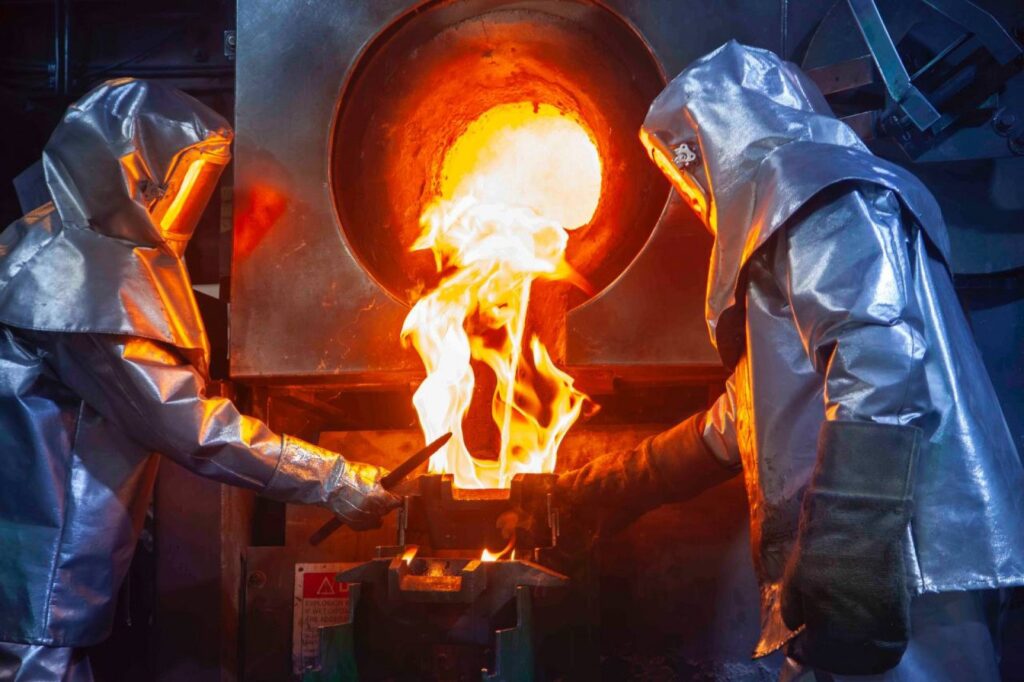
According to data  issued by the U.S. Geological Service, in 2023, 130 tons of gold were mined in Kazakhstan and 100 tons in Uzbekistan. Kazakhstan's volume increased by 15 tons compared to 2022, whilst Uzbekistan's decreased by 4 tons. Russia produced 310 tons of gold, equivalent to that mined the previous year. Worldwide, 3,600 tons of gold were produced in 2023, 60 tons less than in 2022. The U.S. Geological Survey has yet to release the latest estimate of gold production in Kyrgyzstan but according to data, the country mined  25.3 tons in 2022. As of September 1, Uzbekistan’s international reserves reached $39.15 billion; a record indicator since data disclosure began in 2018. The National Bank of Kazakhstan counts the country’s gold and foreign exchange reserves in February 2024 at $36.1 billion. In 2014, this indicator was at $26.05 billion, meaning that over the past ten years, the volume of gross international reserves has increased by $10 billion (+38.6%).

Kyrgyzstan Encourages German Investment in Raw Materials Extraction and Logistics

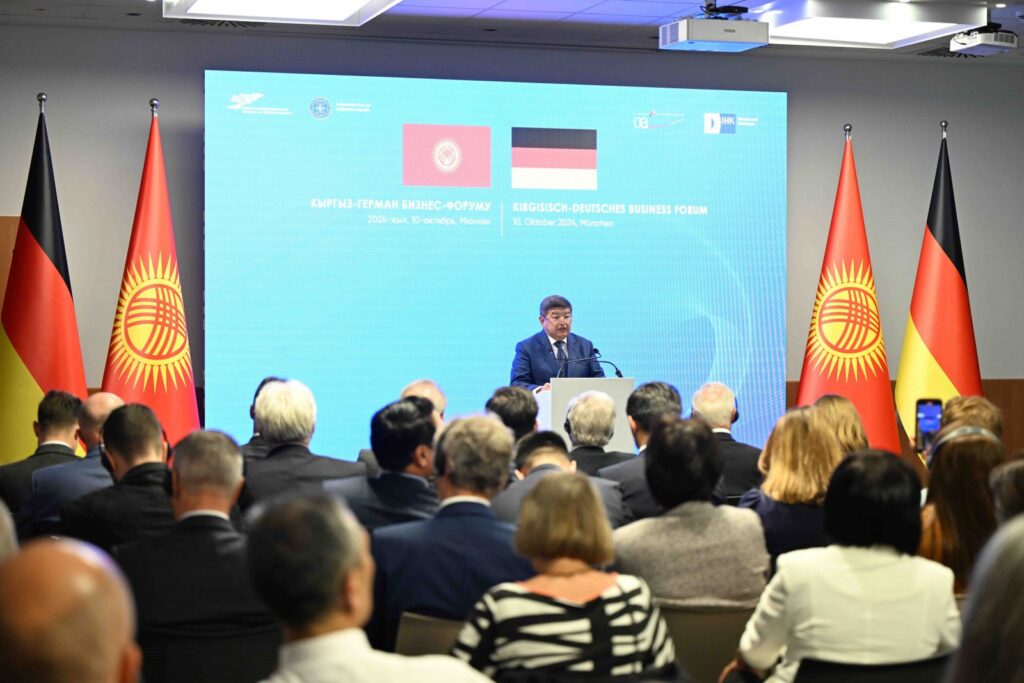
During a Kyrgyz-German Business Forum in Munich on October 10, Kyrgyzstan’s Chairman of the Cabinet of Ministers, Akylbek Japarov, stated that  following the first Kyrgyz-German Business Forum in Hamburg over a year ago, bilateral relations between the two countries had strengthened alongside a mutual interest in deepening cooperation. Japarov cited the fact that 180 joint Kyrgyz-German enterprises are currently engaged in Kyrgyzstan’s trade, industry, agriculture, tourism, energy, education, and services sectors, and to encourage further  German investment and  participation in implementing the government’s ambitious economic development plans, invited businesses to attend the ‘Day of German Economy in Kyrgyzstan.’ Scheduled for summer 2025, the event follows three 'Days of Kyrgyz Economy' in Hamburg, Frankfurt am Main, and Munich. Addressing the forum, Kyrgyz Minister of Economy and Commerce Daniyar Amangeldiev spoke of Kyrgyzstan's interest in developing cooperation with Germany on raw materials, with reference to the presence of  100 raw material deposits in Kyrgyzstan. In addition, he proposed that German investors participate in auctions to gain the right to use the subsoil in Kyrgyzstan and develop deposits using modern technologies that comply with environmental standards. The minister also touched upon the development of transport and logistics infrastructure and invited German companies to collaborate in the development of Kyrgyzstan's logistics system, stating: "Kyrgyzstan, located in the heart of Central Asia, is  ‘landlocked’. At the same time, the Great Silk Road — a trade route between West and East, North and South — has been passing through our country since ancient times. Therefore, our country should rightfully be called ‘land connecting,’”

Kumtor: Drop In Gold Production No Cause For Concern

Kyrgyzstan's largest gold mining company, Kumtor, has announced a decrease in gold production. However, authorities assure that this is temporary. In 2023, Kumtor Gold Company produced 13.5 tons of gold, less than planned; the professional community even began to talk about the mine's imminent depletion. However, the company itself hastened to reassure citizens. The company's representatives commented: “Reduced gold production targets are common due to the low grade of gold in commercial ore mined at Kumtor. The mining of low-grade ore will continue for some time. In the future, gold production is expected to increase to 17-18 tons gradually. This takes into account the implementation of projects for underground mining of gold-containing ore and processing waste ore from the tailings pond.” It is worth noting that all of Kyrgyzstan is watching the volume of gold production, as Kumtor's share of the country's GDP is almost 10%. In 2023, the company paid more than $200 million to the country's budget. After nationalization in 2021, foreign experts predicted a rapid closure of production. Allegedly, the gold extracted by open-pit mining at the mine is running out. “Right now, the ore is poor," responded Cabinet Chief Akylbek Japarov to the criticism. "We plan to mine 14 tons each. Previously, we were getting 17 tons. This happens in geology.” However, the low figures have forced the country's authorities to reconsider their approach to mining. Gold will now be mined underground. In addition, it was announced that the processing of gold in Kumtor's tailings pond will begin soon. Specialists of the Institute of Geology at the National Academy of Sciences confirmed to The Times of Central Asia information about the reduction of precious metals in the area of the open pit at Kumtor. Earlier, there were 7 grams of gold per ton of ore; today, it is 5 grams. “But the gold is not running out. There is still quite a lot of gold at Kumtor - over a thousand tons. But everything depends on the areas that are going to be developed. Part of the gold-bearing strip is under glaciers,” said geologist Rozalia Jenchuraeva. The Institute of Geology recommends that the government quietly conduct exploration and not rush to mine gold hidden under glaciers, as this could damage the ecology. “There is still enough gold at Kumtor, and you don't have to worry about it. Although gold mined underground will be more expensive, this method will have less impact on the melting of glaciers. The depth of gold content will probably change, but we will have enough for a hundred years; we need to be rational in our approach to mining,” Jenchuraeva emphasized. Previously, the Kumtor mine produced 20-22 tons of gold annually.

Kazakhstan to Crack Down on Motor Fuel Smuggling to Kyrgyzstan

On October 8, Kazakhstan’s Financial Monitoring Agency held a meeting on strengthening control over the smuggling of motor fuel from the country’s border regions. As gasoline prices in Kazakhstan are significantly lower than in neighboring Kyrgyzstan, gasoline is transported from the southern regions of Kazakhstan to northern Kyrgyzstan in passenger car gas tanks. In practical terms, drivers fill up their cars at Kazakh gas stations close to the border, then enter Kyrgyzstan and redistribute the gasoline. According to the Financial Monitoring Agency, up to 10,000 tons of fuel are exported this way monthly through the Kazakh-Kyrgyz border. Fuel is also illegally exported by railway tanks, with documents indicating other contents inside the tanks. At the meeting, the Kazakh government and law-enforcement agencies developed an algorithm of action to prevent the illegal export of motor fuel. Since the beginning of this year, Kazakh law enforcers have filed 21 criminal cases concerning the illegal export of almost 3,500 tons of fuel. Kazakh gasoline is sold in plastic bottles on northern Kyrgyzstan's roadsides and around Bishkek. The most popular gasoline, AI-92, is sold by roadside traders for 58 KGS per liter ($1 = 85 KGS), while authorized gas stations sell it for 67 KGS per liter. In 2023, Kyrgyzstan’s Tax Service confiscated 9,599 liters of illegal fuel, up from 3,422 liters in 2022.

Drop in Uzbekistan’s Exports to Central Asia

Local media has reported that from January - August, Uzbekistan's exports to its four neighboring countries decreased, compared to the same period in 2023. According to data from the  Statistical Agency data, exports to Kazakhstan dropped from 950 million USD to 872 million USD; to Kyrgyzstan, from 491 million USD to 365 million USD; to Tajikistan, from 389 million USD to 329 million USD, and to Turkmenistan, from 118 million USD to 78 million USD. The share of Central Asian countries in Uzbekistan's total foreign trade turnover (FTT) in the first nine months of 2023 was 11.5%. The total FTT was worth 40 billion 45 million USD, of which 4 billion 574.3 million USD were with Central Asian countries. This year, it has decreased to 10.3%, meaning 4 billion 400.6 million USD of FTT of 42 billion 703.3 million USD are with CA countries. The Ministry of Investments, Industry, and Trade attributed the drop to an increase Uzbekistan's exports to international markets with high purchasing power, especially Europe, Arab countries, Southeast Asia, and the Americas, and explained, " due to diversification, the volume of exports to neighboring countries, which are considered a traditional market, decreased. In particular, the volume of exports to Kazakhstan decreased by 8.3%, to Kyrgyzstan by 25.6%, to Tajikistan by 15.3%, and to Turkmenistan by 36.2%."

New Road Promised for Kyrgyzstan’s Highest Village

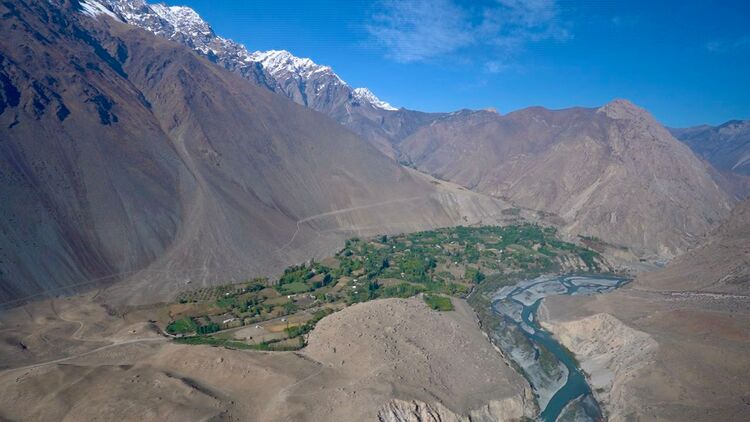
The Ministry of Transport and Communications of Kyrgyzstan has announced a tender for the construction of a road to Kyrgyzstan's highest village of Zardaly in the Batken oblast. Authorities have set aside 389 million KGS ($4.5 million) for the construction of the 4.2 kilometer road and according to published data, bids will be accepted until October 22 this year. The village of Zardaly is located in the highlands on Kyrgyzstan's border with Uzbekistan and Tajikistan. At present, only one narrow, stony road leads to the settlement, accessible only between May to October. With the onset of cold weather, snow makes it impossible to get to the village, and residents are cut off from the outside world. It should be noted that Zardaly lacks cellular communication, the recently installed internet only serves the local school, and there are significant problems with electricity. As a local proverb says, “If there is no urgent business - do not enter Zardaly." On the day prior to the announcement of the tender, Kyrgyz President Sadyr Zhaparov visited Zardaly by helicopter.  Whilst there, he promised residents that a highway would be built in the village in spring 2025, after which electricity would be supplied. He also instructed the presidential administration to solve the issue of cellular communications in the region. In earlier complaints about the situation in the village, Kyrgyzstan's ombudsman said that although Zardaly became a village in 2016, residents still require help accessing medical services and quality education.