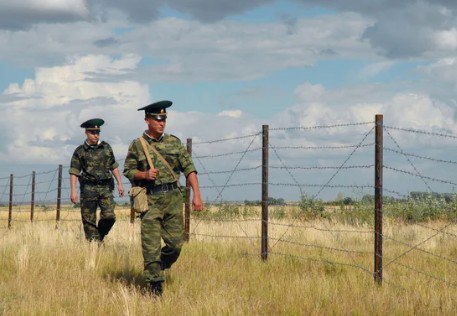
Tajik border guards and Taliban fighters have exchanged fire in an area along the Tajik-Afghan border. The incident happened on August 24 and is connected to a Chinese gold mining operation on the Afghan side of the border. The hostilities ended after a rare meeting between local Tajik and Taliban officials, though each side accused the other of harboring enemies.
Gold Mining
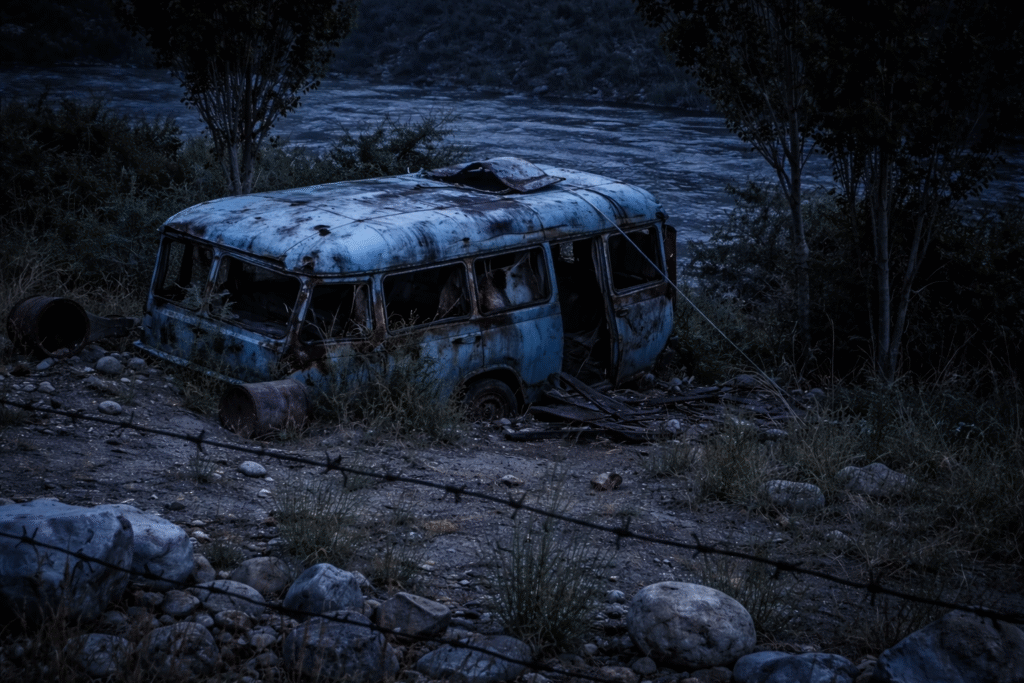
The Tajik authorities have been watching Afghanistan’s Dovang district in Afghanistan’s Badakhshan Province since the start of a gold mining operation there three years ago.
Residents of Tajikistan’s Shamsiddin Shohin district, across the Pyanj River from Dovang, reported rising water levels in their area. Sodikjon Rahmonzoda, the head of the district branch of Tajikistan’s Ministry for Emergency Situations, stated that “On the opposite bank of the river, in Afghanistan, industrial gold mining started…. They built infrastructure (including) dams that direct water to our bank.”
The Tajik authorities have been reinforcing the bank on the Tajik side of the river to prevent nearby villages from flooding. It is unclear if the two sides were previously in contact about the problems the diversion of water in the river was causing in Tajikistan.
The other four Central Asian governments have all established a dialogue with the Taliban since they returned to power in August 2021. Kazakh, Kyrgyz, Turkmen, and Uzbek officials have visited Afghanistan, and Taliban representatives have visited Kazakhstan, Turkmenistan, and Uzbekistan (but so far, not Kyrgyzstan).
The Tajik government has kept its contact with the Afghan militant group to a minimum, though several border crossing points are working again, and some bazaars on the Tajik side of the frontier have reopened to Afghan customers.
Rising Tensions
In May, Tajik authorities detained a group of Chinese and Afghans who drove across the river on excavators from the mining site in Dovang into Tajikistan. According to the Tajik authorities, the Chinese and Afghans were seeking to launder money in Tajikistan.
On August 24, a group of Taliban arrived at the border area in Dovang. It is not clear what sparked the shooting, but Tajik border guards and Taliban fighters exchanged fire using heavy weapons. One Taliban fighter was reportedly killed, and four others were wounded. There were no reports of casualties among the Tajik border guards.
Neither the Tajik government nor Taliban officials have commented on the clash.
A Rare Meeting
Following the shooting, the commander of the Tajik border guard unit in the Shamsiddin Shohin district led a group of soldiers across the border to Dovang to meet with the head of mining operations and other officials in Badakhshan Province. The two sides discussed the gold mining operation on the Afghan side of the border, but the conversation degenerated into accusations, with each side complaining that the other was sheltering and training their enemies.
Both sides are correct.
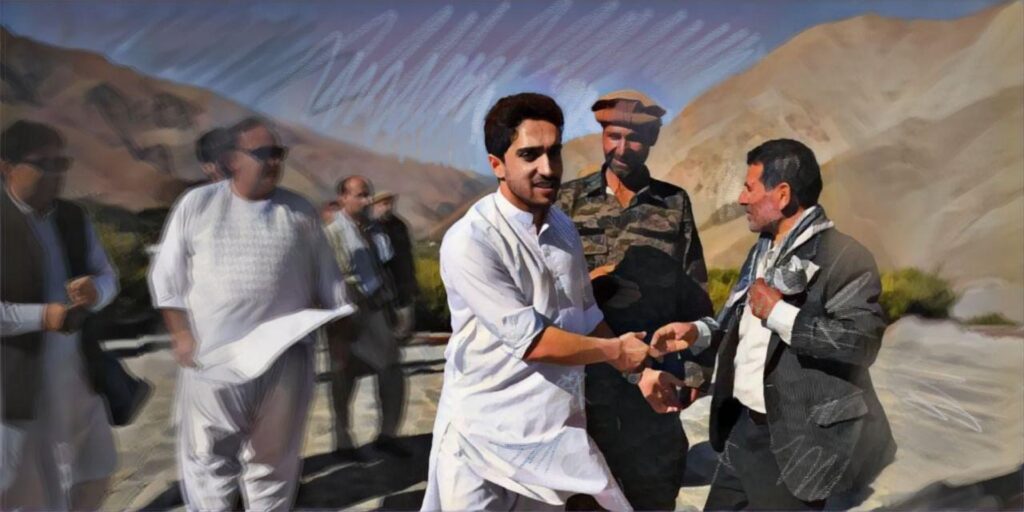
The Tajik government allows members of the National Resistance Front (NRF), including its leader Ahmad Masoud, to travel to and often stay in Tajikistan. The NRF is a group of mainly ethnic Tajiks who were part of the foreign-backed former Afghan government’s military. Representatives of ousted Afghan President Ashraf Ghani still occupy the Afghan Embassy in the Tajik capital, Dushanbe.
The Jamaat Ansarullah extremist group from Tajikistan are allies of the Taliban. At least several hundred of their fighters are based in Afghanistan, with some deployed by the Taliban to areas along the border with Tajikistan.
In September 2023, Tajik security forces said they had killed three armed members of Jamaat Ansarullah who crossed from Afghanistan into Tajikistan’s Darvoz district, which borders the Shamsiddin Shohin district to the east. Tajik authorities claimed the three entered Tajikistan to carry out terrorist attacks ahead of Independence Day celebrations on September 9.
What’s Next?
In the absence of official comments from either side, it is difficult to say if the situation is better or worse after the meeting between local officials.
Reports on the clash agree that the two sides were shooting at each other, and the Taliban suffered casualties. However, it is unclear who started shooting first or why. Were the hastily arranged talks a total failure, or was there any agreement or at least an understanding about future activities in this border area that would prevent a repeat of the August 24 shoot-out?
The gold-mining operation on the Afghan side of the Pyanj River is expanding, indicating that it is profitable. That has convinced the Tajik authorities that they should start prospecting for gold on their side of the river, which means soon there will be more people, and presumably more armed border guards and Taliban fighters in the area.
If there is no acceptable resolution to the events of August 24, both sides risk a more serious incident in the future.