Kazakhstan is ramping up its ambitious afforestation efforts on the dried bed of the Aral Sea, with the establishment of a new saxaul nursery in the Kyzylorda region. Minister of Ecology and Natural Resources Yerlan Nyssanbayev recently visited the site to inspect progress on the project.
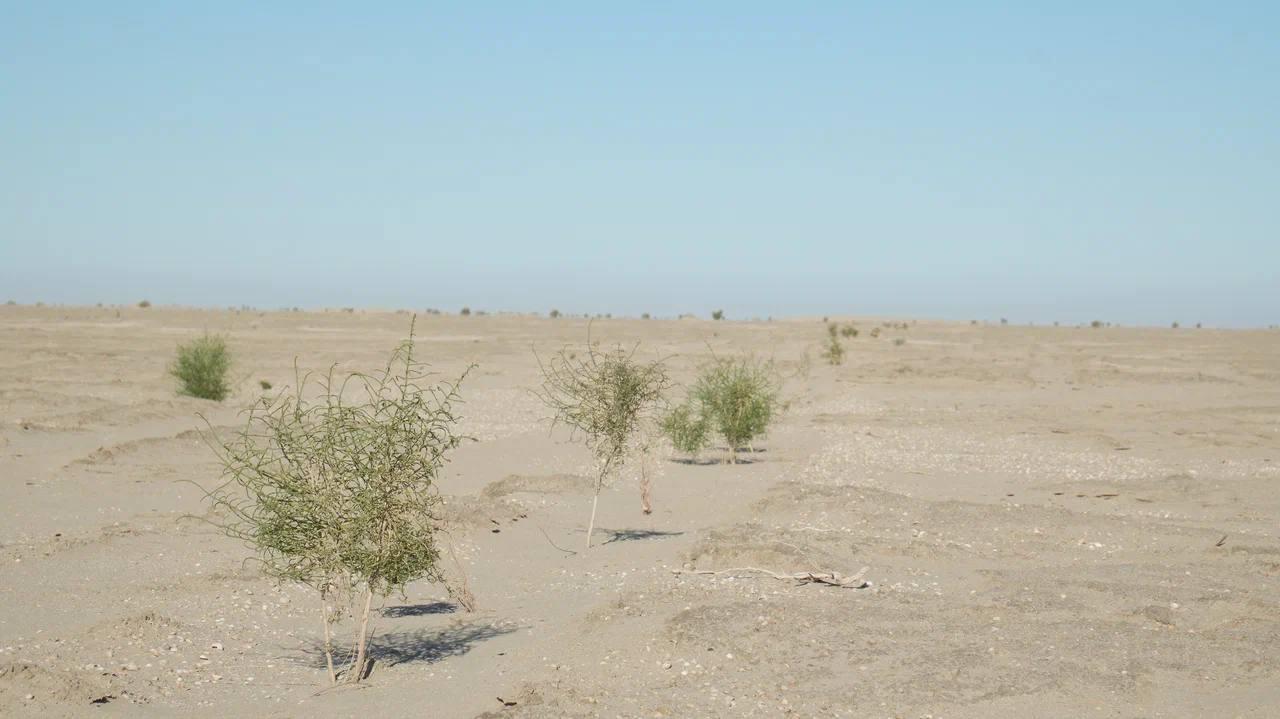
Located directly on the former seabed, the nursery is designed to cultivate saxaul shrubs-hardy, drought-resistant plants well-adapted to the region’s arid conditions. Drilling work is currently underway to construct a well that will provide essential irrigation. Once operational, the 15-hectare facility is expected to produce 1.5 million saxaul saplings annually. Growing the saplings locally will help reduce transportation costs and improve survival rates by acclimating plants to local soil and climate conditions.
Reclaiming a Devastated Landscape
Kazakhstan’s large-scale planting initiative aims to restore parts of the Aral ecosystem, which was devastated by Soviet-era irrigation policies. Once the world’s fourth-largest inland sea, the Aral spanned 68,000 square kilometers and straddled the border between Kazakhstan and Uzbekistan. Starting in the 1960s, massive water diversion from the Amu Darya and Syr Darya rivers for cotton farming caused the sea to shrink dramatically. By 2007, the Aral had dwindled to just 10% of its original size.
In addition to the new nursery, Nyssanbayev visited an existing saxaul facility in Kazalinsk, located in the Kyzylorda region. This nursery began operations in November 2024, initially sowing seeds across 10 hectares with a capacity to produce up to 3 million saplings. As of 2025, planting has expanded to 11,800 hectares of the dried seabed.
According to the Ministry of Ecology and Natural Resources, Kazakhstan aims to afforest 1.1 million hectares of the dried Aral seabed with saxaul. From 2021 to 2024, 475,000 hectares were afforested, including 127,000 hectares in 2024 alone. In 2025, the government plans to plant saxaul on an additional 428,000 hectares.
By the end of 2025, Kazakhstan expects saxaul forests to cover approximately 40% of its portion of the dried Aral seabed.