BISHKEK (TCA) — Kyrgyz farmers can now sell vegetables and meat at Moscow’s new Food City agricultural complex.
The new agricultural complex provides for trade without intermediaries. It is located on 84 hectares and has freestanding pavilions with a total area of 50 thousand square meters, designed for wholesale trade of vegetables, fruits and meat directly from trucks.
The Kyrgyzstan pavilion has been opened in the complex to sell products made in Kyrgyzstan. Now Kyrgyz farmers can rent commercial space here to sell their products directly in the terminals from trucks, without intermediaries and agents.
Moscow, the largest consumer of food in Russia, needs 33 thousand tons food products a day. To create a modern supply chain of fresh food products in Moscow and nearby regions it is planned to construct three more similar agricultural clusters.
New markets
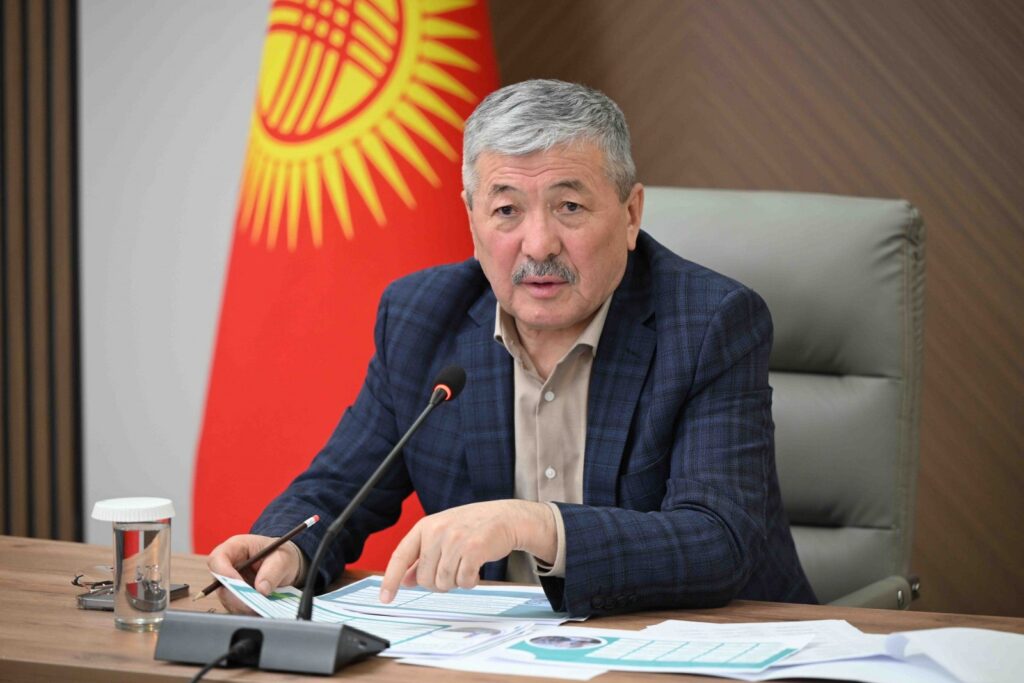
According to the Economy Ministry of Kyrgyzstan, many Russian regions are interested in Kyrgyzstan’s agricultural products and Kyrgyz producers now have a chance to enter foreign markets, particularly in the Eurasian Economic Union.
Historically, Kyrgyzstan exported its products to the central regions of Russia, but more distant areas including the Tambov province and Siberian region are also interested in Kyrgyz products. The market is expanding, along with opportunities for Kyrgyz entrepreneurs and farmers.
Kyrgyz businesses cannot yet provide foreign retail networks with calibrated goods in required amounts. In addition, it is necessary to solve the problem with food certification. The Economy Ministry is also considering creation of a green corridor for domestic goods abroad. Under this system, trucks marked with a special sign will pass the necessary procedures at the border much faster. In the near future the Kyrgyz Investment Promotion Agency will also deal with the export of domestic goods abroad.
Lack of information
Kyrgyz farmers are poorly informed about the rules for trading in foreign markets, so they cannot enter them. At a roundtable in Bishkek, Chairman of the Eurasian Business Union (EBU) Victor Kambolov told about the program to support producers of the Eurasian economic zone.
Farmers are little acquainted with both the procedures relating to trade and the situation in the markets in general. Weak awareness does not allow them to make right decisions. Thus it is necessary to create a single information center in order manufacturers, distributors, buyers, agents, and retail chains could find each other. The EBU will connect Kyrgyzstan’s producers with the largest distribution networks in Russia.
Kambolov was surprised to learn that hundreds of tons of Kyrgyzstan’s products were not in demand and remained unsold this year while there was an acute shortage of fruit and vegetables in Russia. The problem is most likely in the communication and it must be solved.
Quality control
Kyrgyzstan is drafting a master plan to control the quality and safety of milk and dairy products. The project participants, Japan International Cooperation Agency (JICA) and the Economy Ministry of Kyrgyzstan, held a seminar on April 29 to present the interim information on the implementation of the project aimed at improving the system of quality control and safety of milk and dairy products in order to trace the origin of products, supply of milk and dairy products in the Eurasian Economic Union (EEU) member countries.
Particular attention will be paid to improving the health of livestock, monitoring their keeping and feeding, and introduction of animal identification and registration system to improve the breeding value and productivity of milking cows.
Statistics and reality
Kyrgyz parliament members believe that statistics does not correspond to reality in the country. The Government has reported 6.7% growth in agriculture, while farmers have not been able to sell their products. To support farmers, the Government has to develop a strategic program on sales of agricultural products abroad, MPs concluded.
The Government has to take urgent measures to support domestic farmers and introduce additional tax benefits for the period of Kyrgyzstan’s adaptation to the EEU. It is also necessary to monitor domestic market prices. For instance, wholesalers buy milk from farmers for 10-15 soms per liter, but it costs from 40 to 88 soms in supermarkets. It means that intermediaries get more profit than the milk producers. Farmers cannot find sales markets for meat of excellent quality. MPs recommended the Government to conduct a more aggressive policy in this matter.
According to Prime Minister Sooronbai Jeenbekov, working groups will be formed to explore new sales markets and look for perspective partners.