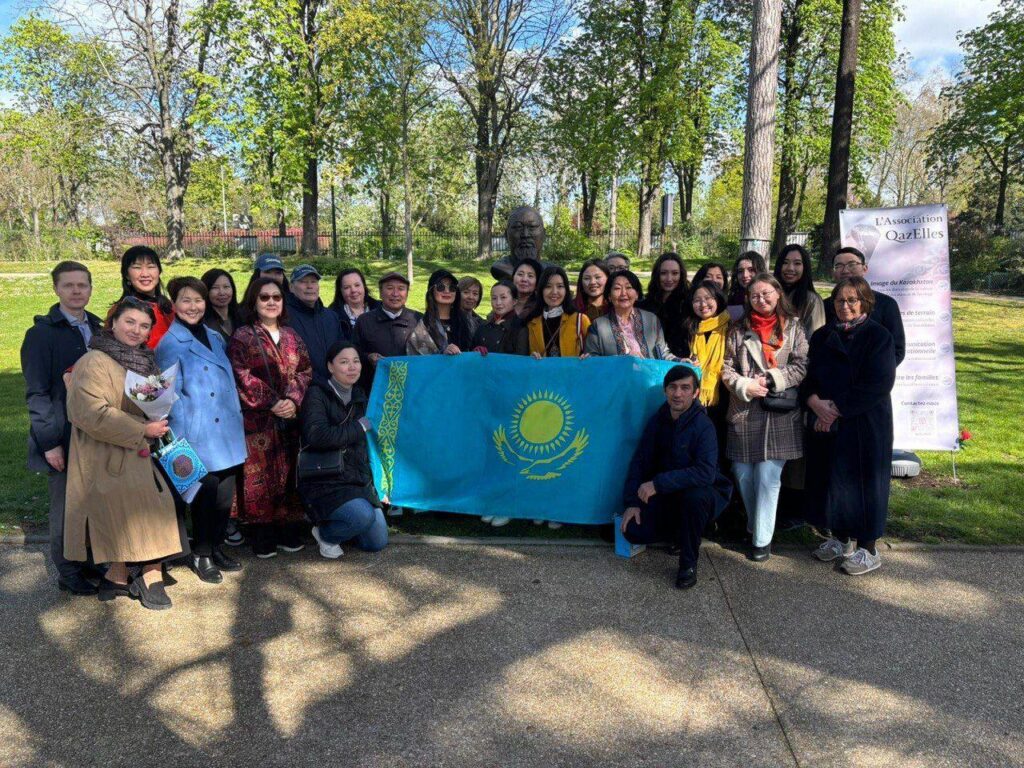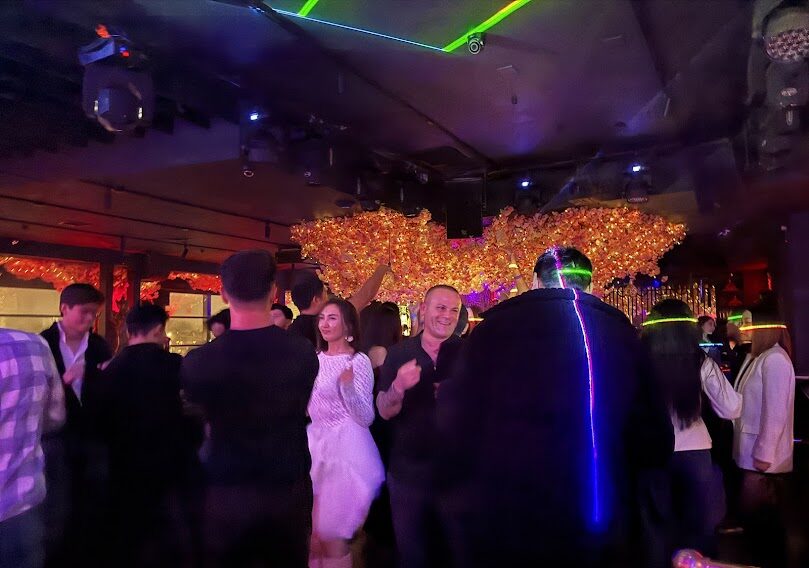
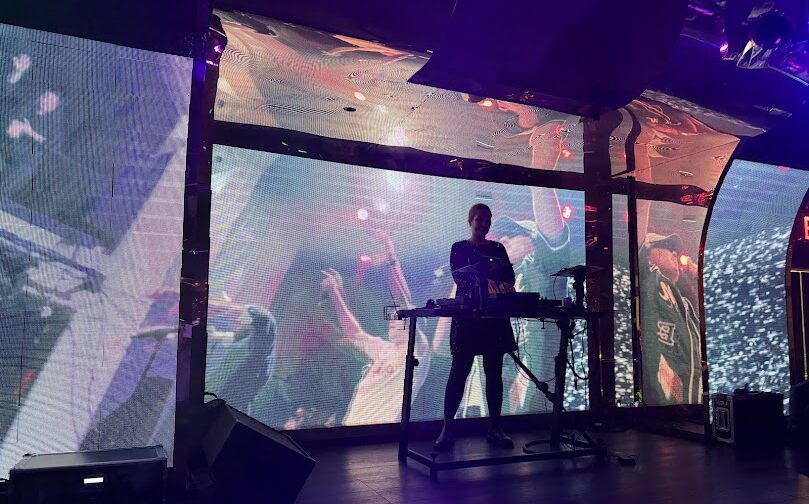
There’s no party like a New Year NoMad Kazakh Party. Staged slightly ahead of New Year’s Eve to align with the weekend, the glamorous event marked a welcome to the incoming 2026 as well as a celebration of Kazakh culture in New York City. The Sky Wise Lounge, a fashionable Asian fusion venue with regular live entertainment, is located in Brooklyn’s Sheepshead Bay. The neighborhood has a sizable Central Asian population rooted in the former Soviet diaspora and sustained by post-Soviet migration.
Events like this one are part of an expanding series of multi-city gatherings across the United States hosted by ATB Promotions, led by Kazakhstani entrepreneur, Talgat Abdrakhmanov. A rotating group of about half a dozen DJs brings high-energy sets that fuse their own mixes with crowd-favorite Kazakhstani hits.
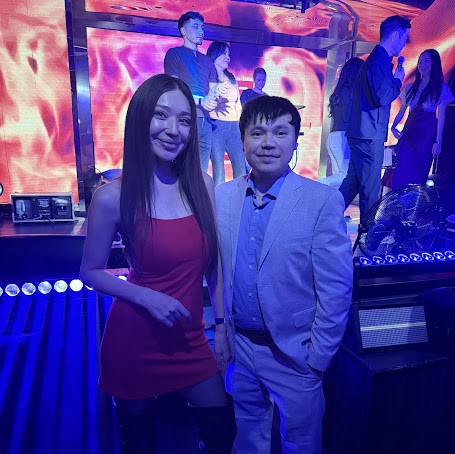
Talgat Abdrakhmanov (right) at NoMad Nights
Abdrakhmanov, originally from Karaganda, has achieved the American dream. Like other successful immigrants, he has built a business by adopting, adapting, and commercializing the enterprising customs of the U.S. After arriving in New York City in 2012, Abdrakhmanov worked his way up from a dishwasher and a waiter to a customer service representative. He later worked as an IT quality assurance analyst and in the competitive worlds of Wall Street and Silicon Valley. But it was not all work. While navigating employment and IT studies, Abdrakhmanov also embraced the play element of his American life, particularly nightlife and dance music, where he began to notice an unmet demand within his community.
During this time, he developed an idea rooted in his own downtime preferences and a desire to cater to fellow immigrants from Kazakhstan. Initially, he organized small meetups with friends at restaurants and sports bars, as well as group outings to soccer games and boxing matches, including bouts featuring former Kazakhstani middleweight world champion Gennady Golovkin, widely known as GGG.
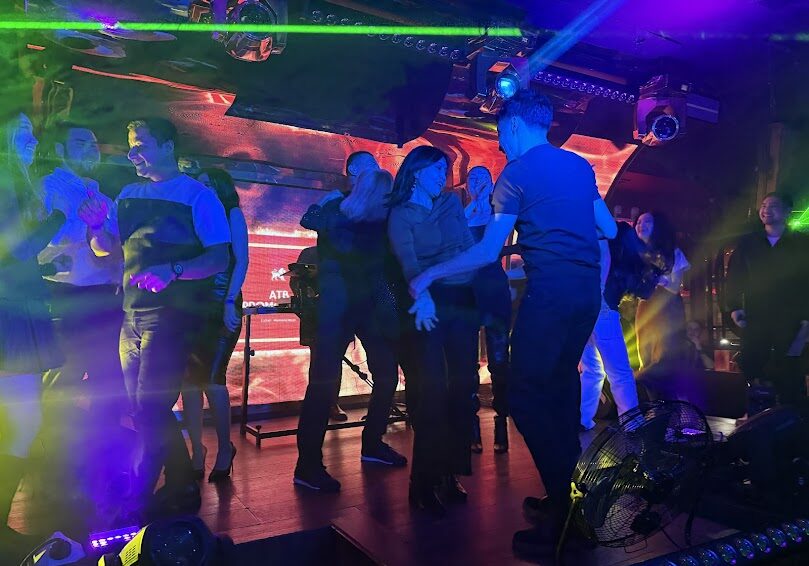
“That was the initial spark that gave me an idea to make parties and events in the future,” Abdrakhmanov told The Times of Central Asia. “That’s how ATB Promotions came up.”
The Kazakhstani community in the U.S. was receptive to Abdrakhmanov’s first networking foray, KazCommunity USA.
“I started KazCommunity USA back in 2016, because I had held many jobs and gained a lot of experience, and people were often asking me for advice, where to find a job, where to find a place to live, how to do this, how to do that. Based on those questions, I decided to create chats and groups on Facebook, Telegram, and WhatsApp, so they exist across different social media platforms.
“KazCommunity USA is really about the community. I never charged any money for it. It’s more like a nonprofit initiative that helps people find work, find a place to live, and connect with each other. That includes organizing meetups and events, some of which I later did through ATB Promotions. But KazCommunity itself is free and focused on helping people and building connections within the community.”
Abdrakhmanov’s efforts to connect U.S.-based Kazakhstani communities evolved from casual meetups and unofficial parties into a structured, for-profit business. ATB Promotions, named after the initials of Abdrakhmanov and his father, officially launched on June 27, 2018. ATB Promotions has brought Kazakh-themed nightlife events and major Kazakh artists to U.S. audiences, including Kalifarniya, The Limba, Irina Kairatovna, and RaiM, through concerts held in New York, Los Angeles, Chicago, and Miami.
“As the organizer and main event manager, I handle everything from start to finish, from logistics and basic needs to working directly with the artists. Organizing concerts requires a significant budget, so I also have to attract sponsors, investors, and potential partners. I tried to do that as much as possible, but most of the work was done by me personally.
“Concerts are much larger and more complex than parties, but they gave me valuable experience. Between 2022 and 2025, I organized a total of 14 concerts.”
Abdrakhmanov has observed that both audience size and musical atmosphere vary by city. While New York and Chicago draw the largest crowds, he notes that the overall feel of events and music preferences differ from place to place, with smaller Kazakh communities spread across cities such as Houston, Boston, Washington, DC, Seattle, and parts of North Carolina.
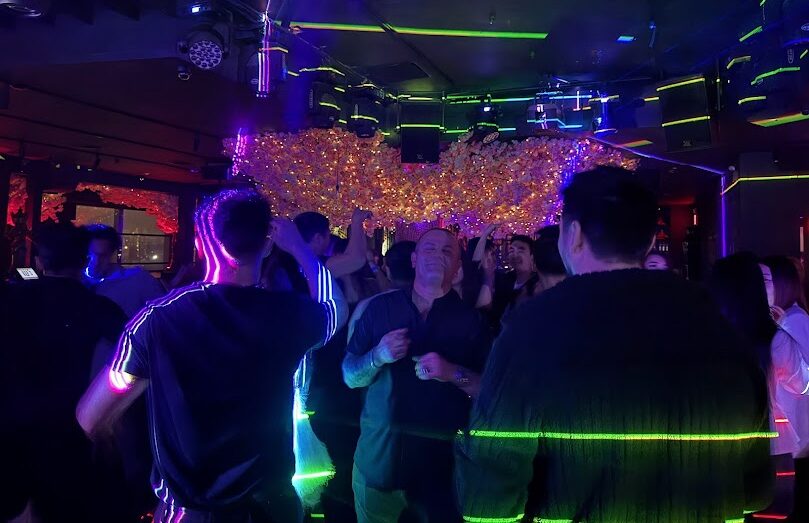
Abdrakhmanov notes that his events increasingly draw both first- and second-generation Kazakhstani Americans. While younger attendees often navigate hybrid identities, he points out that first-generation migrants tend to adapt pragmatically to American life while maintaining cultural ties. In his view, the events function less as entertainment alone and more as shared cultural spaces that ease the tension of living between identities. In some cases, the use of “NoMad” in the event series name even inspires guests to arrive in party attire, referencing Kazakhstan’s historic nomadic traditions.
“It’s a flexible, pragmatic balance, integration without full cultural abandonment, but also without strong resistance to Americanization.”
Looking at the community today, Abdrakhmanov believes that many Kazakhstanis who have spent several years in the U.S. now treat the country as their main base. He adds that while ties to Kazakhstan remain, they are “more emotional and cultural than practical, nostalgia, language, family ties, and periodic visits rather than concrete plans to return.”