On the eve of Valentine’s Day, Central Asia is once again debating whether to celebrate the holiday or regard it as a symbol of foreign influence. Yet the region has its own rich and diverse customs related to love, matchmaking, and marriage.
Accusations of Alien Influence and “Corruption”
Valentine’s Day, like Halloween, spread to the former Soviet republics after the collapse of the USSR. In the first decades, young people embraced the new holidays. In recent years, however, critics have increasingly argued that commemorating a Catholic saint in a format centered on romantic love contradicts the traditions of the region’s peoples.
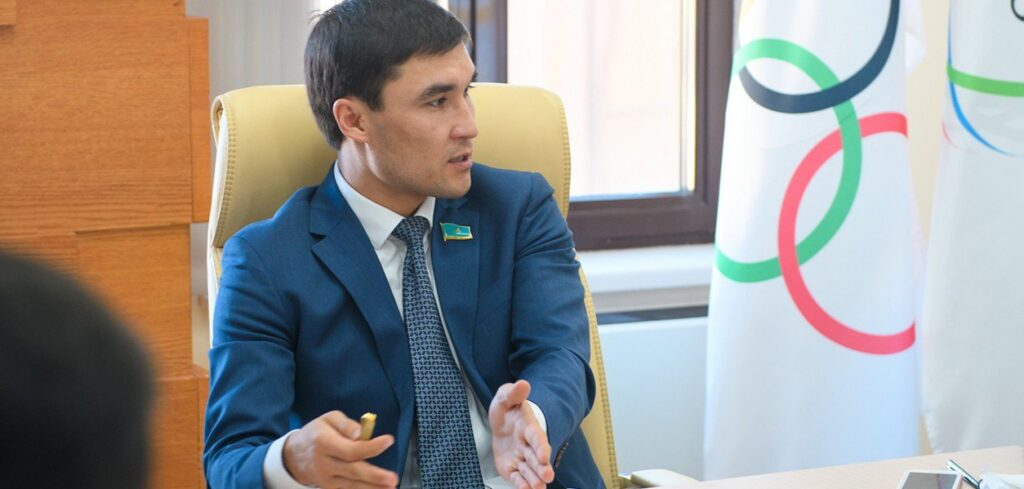
For example, in Kazakhstan last year, deputies of the Mazhilis, the lower house of parliament, sharply criticized Valentine’s Day. Some deputies argued that it corrupts young people, promotes “free love,” and even carries “homosexual overtones.”
It is worth noting that Kazakhstan recently adopted legislation prohibiting so-called “propaganda of non-traditional sexual relations.” The Spiritual Administration of Muslims of Kazakhstan has also stated that Valentine’s Day promotes alien values and encourages promiscuity.
Gratitude for Raising a Daughter
Many matchmaking and marriage customs remain common across Central Asia, particularly the significant role of the bride’s and groom’s parents in ceremonies and celebrations. While traditions have evolved, many are still practiced in modern engagements and weddings.
The well-known custom of paying bride price, kalym, has been preserved, though it has undergone significant change. Today, kalym varies depending on the wealth of the families. It may include apartments or cars, or it may amount to several hundred dollars. Importantly, kalym is now generally regarded as financial support for the young family and, as a rule, remains at the disposal of the bride and groom. Historically, in Kazakhstan and Kyrgyzstan, kalym was paid in livestock, and wedding celebrations could last more than a month.
One of the main Kazakh wedding rituals is the groom’s visit to the bride’s village or, in modern practice, her home. Before his first visit, the groom sends gifts to the bride’s family, known as Ilu, an expression of gratitude for raising their daughter.
In some regions of Kazakhstan, this ritual is called ana suty (“mother’s milk payment”). In the past, it included horses, camels, sheep, and riding equipment for the bride’s father. Today, it may consist of any valuable gift, and jewelry is often presented to the women in the bride’s family. The bride traditionally gives the groom a scarf as a symbol of her purity. Festivities then begin, with singing and dancing.
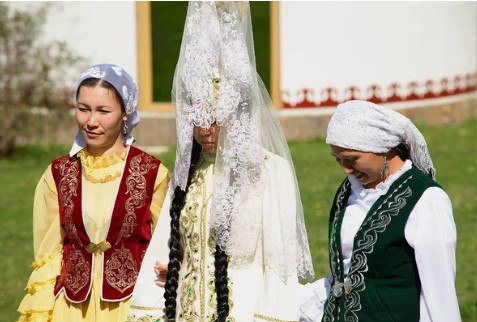
Kazakh traditions often involve two weddings: one at the bride’s home and one at the groom’s. The bride’s farewell from her family home remains especially significant, reflecting her relatives’ wishes for her future life. Today, this ceremony is often held in a restaurant. The bride does not wear a white wedding dress at the farewell celebration but appears in an elegant outfit and a traditional headdress known as a saukele.
During the farewell, the groom and his friends are subjected to playful pranks, for which they must pay with gifts or money. One of the oldest traditions is the performance of the zhar-zhar song contest. A group of women sings about the sorrow of parting and the uncertainties of married life, while a group of men responds with reassurance. Historians trace this tradition to pre-Islamic times, when marriages were sealed with community approval and communal singing.
Today, the main wedding ceremony begins with the official registration of marriage at a government office.
According to custom, the groom’s relatives were once not permitted to see the bride before the wedding. When she entered her husband’s home, the betashar (face-revealing) ceremony was performed, symbolizing her introduction to her new family and married life. Traditionally, the mother-in-law removed the bride’s shawl and cut it into pieces, symbolizing wishes for many children. Today, betashar is largely a ceremonial tradition, as families are typically well acquainted beforehand.
Religious Kazakh couples may also hold a marriage ceremony in a mosque on the same day. Modern weddings have incorporated European-style elements, including decorated car processions and visits to scenic locations.
Kyrgyz wedding customs closely resemble Kazakh traditions, with distinctive features of their own. For example, kulak choyu is a popular custom in which children playfully pull the groom’s ears until they receive money. Another ritual, chachyla, involves showering the newlyweds with sweets as the bride enters the groom’s home, symbolizing wishes for prosperity and happiness.
No Wedding Without Pilaf
In Uzbekistan, similar to European custom, the bride holds a kiz osh before the wedding, a women-only celebration comparable to a bachelorette party. The bride presents gifts to her friends. A similar men-only celebration is held at the groom’s home. The number of guests may reflect the family’s social standing.
This is followed by nikah-tui, the religious wedding ceremony conducted by an imam. The couple vows mutual respect and allegiance to each other and their families. The bride wears a traditional dress and veil, believed to protect her from the evil eye. The imam must obtain the bride’s consent, often communicated through a female representative.
Relatives then bid farewell to the bride before the traditional wedding feast begins. The main dish is pilaf, typically prepared by men. The celebration includes music, dancing, and abundant food.
In Tajikistan, matchmaking also plays a central role. During this process, the wedding date and the size of the mahr and kalina (dowry) are agreed upon. Neighbors and relatives attend the engagement ceremony, where rituals such as fotiha (a prayer marking the beginning of an undertaking) and nonshikanon (breaking of flatbread) are performed. The most respected elder breaks the bread and offers prayers for the couple’s future. The bride’s family distributes safedi, white fabric symbolizing purity and chastity.
In Turkmenistan, wedding customs are carefully preserved while incorporating modern elements.
Scarves play a significant role. At the gelin toy (wedding at the bride’s home), women carry gifts and sweets wrapped in scarves. Upon departure, they receive bundles of equal value. In men’s competitions, winning a scarf is considered a prestigious prize. The wedding procession, once composed of camels and horses and now of cars, is decorated with colorful scarves that are later distributed to guests and drivers.
One of the most complex elements of a Turkmen wedding is the ritual transition from girlhood to womanhood. The bride’s braids are tucked behind her back; a small scarf is removed and replaced with a larger one. Occasionally, a child attempts to seize the old scarf. The mother-in-law returns it to the bride for a small ransom. The bride keeps the scarf until her own child marries, when it is passed on to the next generation.
Thus, despite debates over foreign holidays devoted to love, Central Asia continues to preserve its distinctive traditions of matchmaking and marriage.