• KGS/USD = 0.01144 0%
  • KZT/USD = 0.00213 0%
  • TJS/USD = 0.10815 0.19%
  • UZS/USD = 0.00008 0%
  • TMT/USD = 0.28571 0%
  • KGS/USD = 0.01144 0%
  • KZT/USD = 0.00213 0%
  • TJS/USD = 0.10815 0.19%
  • UZS/USD = 0.00008 0%
  • TMT/USD = 0.28571 0%
  • KGS/USD = 0.01144 0%
  • KZT/USD = 0.00213 0%
  • TJS/USD = 0.10815 0.19%
  • UZS/USD = 0.00008 0%
  • TMT/USD = 0.28571 0%
  • KGS/USD = 0.01144 0%
  • KZT/USD = 0.00213 0%
  • TJS/USD = 0.10815 0.19%
  • UZS/USD = 0.00008 0%
  • TMT/USD = 0.28571 0%
  • KGS/USD = 0.01144 0%
  • KZT/USD = 0.00213 0%
  • TJS/USD = 0.10815 0.19%
  • UZS/USD = 0.00008 0%
  • TMT/USD = 0.28571 0%
  • KGS/USD = 0.01144 0%
  • KZT/USD = 0.00213 0%
  • TJS/USD = 0.10815 0.19%
  • UZS/USD = 0.00008 0%
  • TMT/USD = 0.28571 0%
  • KGS/USD = 0.01144 0%
  • KZT/USD = 0.00213 0%
  • TJS/USD = 0.10815 0.19%
  • UZS/USD = 0.00008 0%
  • TMT/USD = 0.28571 0%
  • KGS/USD = 0.01144 0%
  • KZT/USD = 0.00213 0%
  • TJS/USD = 0.10815 0.19%
  • UZS/USD = 0.00008 0%
  • TMT/USD = 0.28571 0%

Our People > Stephen M. Bland

Stephen M. Bland's Avatar

Stephen M. Bland

Managing Editor and Head of Investigations

Stephen M. Bland is a journalist, author, editor, commentator, and researcher specializing in Central Asia and the Caucasus. Prior to joining The Times of Central Asia, he worked for NGOs, think tanks, as the Central Asia expert on a forthcoming documentary series, for the BBC, The Diplomat, EurasiaNet, and numerous other publications.

His award-winning book on Central Asia was published in 2016, and he is currently putting the finishing touches to a book about the Caucasus.

Articles

Kazakh Authorities Open Investigation After Temir Mayor Found Dead

The authorities in Kazakhstan’s Aktobe Region have opened a pre-trial investigation after the mayor (akim) of Temir city, Erkin Dalmagambetov, was found dead on December 20. The Aktobe regional police department confirmed the death and said the circumstances are being established. "Police have opened a pre-trial investigation into the suicide. The circumstances of the incident are being investigated," according to an official statement. Local officials also confirmed the death. Almas Zhaksylykov, the akim of Temir District, told reporters that Dalmagambetov was found at home on the evening of December 20 and that authorities were conducting checks. Several Kazakh outlets reported that Dalmagambetov was 46 and left six children. Dalmagambetov led Temir, a small city in western Kazakhstan, for less than two years. He was appointed on June 3, 2024, after local elections held the day before, according to a Temir District akimat announcement published on the government’s portal. Temir is the administrative center of the Temir District in the Aktobe Region. The area sits in western Kazakhstan, a region known for energy, mining, and transport routes. The Aktobe Region has a population of about 928,000, based on recent official estimates. Kazakhstan’s akims serve as local executive leaders, with responsibilities that range from municipal services and budgeting to implementing national programs at a local level. In smaller cities such as Temir, the mayor’s office is often closely tied to day-to-day issues such as utilities, roads, schools, and public order. The case has drawn wide attention online. The authorities have not announced funeral arrangements or any interim leadership decision for Temir city. The Temir District akimat has not published additional details beyond confirming the death, with the police saying they will not disclose more information during the investigation.

7 months ago

No Disneyland Planned as Uzbekistan and Disney Hold Exploratory Talks

Uzbekistan has held early-stage discussions with The Walt Disney Company on possible cooperation in children’s media and creative industries, but no agreement has been announced to build a Disneyland or theme park in the country. The talks took place during a meeting between Saida Mirziyoyeva, the Uzbek president’s daughter and head of the Presidential Administration, and a Disney vice president responsible for international partnerships. According to an account cited by Uzbek media, the sides discussed potential cooperation in producing Uzbek-language children’s content, training specialists in animation and filmmaking, and developing a creative hub focused on film and media production. [caption id="attachment_41248" align="aligncenter" width="1200"] Image: Saida Mirziyoyeva, Telegram[/caption] Public attention intensified after Zamin.uz published an English-language article titled “Disneyland Park Planned for Construction in Uzbekistan.” The article itself, however, stated that the idea was under discussion rather than approved, and did not cite any signed agreements, confirmed investment figures, or construction timelines. Subsequent reporting by other Uzbek outlets aligned more closely with the official summaries, with Gazeta.uz reporting that the meeting focused on content production, professional training, and the possible opening of a Disney regional office serving Central Asia, without reference to a theme park project. UzDaily similarly reported discussions centered on children’s television programming and creative education initiatives, noting that the talks were exploratory in nature. Neither Disney nor the Uzbek authorities have released statements confirming plans to build a theme park. No land allocation, development partner, regulatory approval, or financing structure has been announced. Disney has not included Uzbekistan in its list of active or planned theme park developments. Disney theme park projects are typically announced only after extended negotiations and formal agreements. When the company confirmed a new theme park resort project in Abu Dhabi in 2025, it disclosed the local development partner, project framework, and governance structure at the time of announcement. Uzbekistan has made the creative industries and tourism development policy priorities in recent years, seeking partnerships with major international companies to expand film production, animation, and cultural exports. Officials say discussions with global media firms are part of that broader strategy. For now, the talks with Disney remain preliminary. Until formal agreements are announced by both sides, officials have indicated that references to a Disneyland under construction in Uzbekistan do not reflect the current status of discussions.

7 months ago

Mirziyoyev Begins Japan Visit With Central Asia Leaders’ Reception in Tokyo

President Shavkat Mirziyoyev of Uzbekistan began his visit to Japan on Thursday by attending an official reception hosted by Japan’s Prime Minister Sanae Takaichi at the Akasaka Palace in Tokyo. The event marked the opening of a series of engagements bringing together the leaders of Central Asia and Japan, with a focus on strengthening regional cooperation. The reception brought together the presidents of all five Central Asian states. Alongside Mirziyoyev were President Kassym-Jomart Tokayev of Kazakhstan, President Sadyr Japarov of Kyrgyzstan, President Emomali Rahmon of Tajikistan, and President Serdar Berdimuhamedov of Turkmenistan. The gathering underscored Japan’s effort to engage the region as a group, rather than solely through bilateral ties. Mirziyoyev’s presence at the Akasaka Palace, a venue reserved for state-level diplomacy, highlighted Uzbekistan’s growing role in Central Asia and its expanding foreign policy outreach beyond the immediate region. In recent years, Tashkent has sought to deepen ties with Asian partners, including Japan, in areas ranging from infrastructure and energy to education and technology. According to the visit programme, Mirziyoyev will hold high-level talks with Japanese government officials on December 20. Those discussions are expected to focus on trade and investment, technological cooperation, and sustainable development, including green energy and climate resilience. Japan has been a long-standing development partner for Uzbekistan, providing loans, grants, and technical assistance through agencies such as the Japan International Cooperation Agency. The visit will feature the inaugural leaders-level “Central Asia + Japan” Dialogue Summit, bringing all six sides together in a multilateral format. The summit is intended to build on earlier dialogue mechanisms and explore joint approaches to economic connectivity, regional stability, and long-term growth. For Mirziyoyev, the Tokyo meetings offer an opportunity to reinforce Uzbekistan’s reform agenda on an international stage and to position the country as an active participant in shaping Central Asia’s collective engagement with major partners such as Japan.

7 months ago

UK Adds Uzbekistan-Based Companies and Tashkent Businessman to Russia Sanctions List

Britain has expanded its Russia sanctions regime to include four companies based in Uzbekistan and one Tashkent-born businessman, according to official documents published on 18 December 2025. The measures form part of a wider update that added 24 new individuals and entities to the UK’s consolidated sanctions list under the Russia (Sanctions) (EU Exit) Regulations 2019. The update was set out in a Financial Sanctions Notice issued by HM Treasury and an accompanying Foreign Office policy paper, “List of Russia sanctions targets, 18 December 2025.” The documents confirm that all newly designated names are now subject to an asset freeze and associated financial restrictions in the UK. The four Uzbekistan-linked companies named in the notice are Fargona Kimyo Zavodi LLC, also listed under the English alias Fergana Chemical Plant; Gelion Business Trade MCHJ, registered in Tashkent; Raw Materials Cellulose MCHJ, based in the Jizzakh region; and LLC JV Chemistry International, located in the Navoi region. Each company is subject to an asset freeze, requiring that any funds or economic resources they own or control in the UK be frozen and that UK persons do not make funds or resources available to them without a licence. The Treasury notice also applies restrictions on trust services. Under UK sanctions law, this restricts UK persons from providing trust services to or for the benefit of designated persons unless an exemption applies or a licence is granted. Compliance guidance is published by the Office of Financial Sanctions Implementation and linked through the British government’s Sanctions List. The documents do not provide detailed descriptions of the companies’ commercial activities, instead using standard statutory wording. In each case, the Secretary of State notes that there are reasonable grounds to suspect the entity “is or has been involved in destabilising Ukraine or undermining or threatening the territorial integrity, sovereignty or independence of Ukraine,” including by making available goods or technologies that could contribute to those outcomes. The sanctions update also includes Rustam Muminov, born in Tashkent in 1953. The Treasury notice lists his nationalities as Uzbek, Israeli, and Russian. Muminov is subject to an asset freeze and trust services restrictions, with the reason stated being that the British authorities have reasonable grounds to suspect he has been involved in destabilizing Ukraine by providing financial services or by making available funds, economic resources, goods, or technology. The Foreign Office policy paper groups the new designations with others added on the same date, which include entities linked to Russia’s energy sector, financial circumvention, and the military-industrial complex. The government says the measures are intended to limit access to financial services and resources that could support Russia’s actions against Ukraine.

7 months ago

Japan Opens First Leaders-Level Summit With Central Asia

Japan hosted its first leaders-level summit with the five Central Asian republics on Friday, marking a diplomatic advance in a relationship that has existed for more than two decades but has rarely drawn wide attention. Prime Minister Sanae Takaichi opened the “Central Asia + Japan” summit in Tokyo, with discussions set to continue through December 20. The summit elevates a dialogue that until now has been conducted mainly at foreign ministers’ or senior diplomatic levels. Japan launched the original “Central Asia + Japan” initiative in 2004 to build cooperation with the Central Asian states through economic, educational, and political channels. In a bilateral meeting linked to the summit, Japanese Foreign Minister Toshimitsu Motegi met with his Tajik counterpart Sirojiddin Muhriddin, with the two sides agreeing on a cooperation program covering 2026–2028 and an investment treaty. These agreements represent the most concrete, publicly documented outcomes from the summit’s opening day and highlight Japan’s focus on strengthening bilateral ties alongside the broader multilateral dialogue. In parallel with the leaders’ meeting, Japan is hosting a “Central Asia + Japan” business forum organized by the Ministry of Economy, Trade and Industry to promote trade and private-sector cooperation. The leaders’ summit follows high-level bilateral diplomacy earlier in the week. On December 18, Prime Minister Takaichi met Kazakh President Kassym-Jomart Tokayev in Tokyo, where the two leaders signed a strategic partnership statement focused on energy, critical minerals, and expanded cooperation. Central Asia’s geopolitical significance has increased in recent years as its governments pursue multi-vector foreign policies aimed at broadening their external partnerships beyond traditional ties with Russia and China. Japan’s decision to elevate its dialogue with the region reflects this shift and Tokyo’s effort to remain an active partner amid growing engagement from the European Union, the United States, South Korea, and others. For Friday, the summit’s significance lies less in headline announcements than in its symbolism and early bilateral outcomes. The opening confirmed Japan’s intent to engage Central Asia at the highest political level, with broader commitments expected once the leaders conclude their talks and release a joint statement or action plan.

7 months ago

Tokayev Meets Emperor Naruhito Ahead of Landmark Japan–Central Asia Summit

President Kassym-Jomart Tokayev met Japan’s Emperor Naruhito in Tokyo on December 18, opening Kazakhstan’s first official presidential visit to Japan ahead of a landmark summit between Japan and all five Central Asian states. Japan’s imperial meetings are ceremonial, but they also signal political warmth and set the tone for high-level talks that follow. According to Nippon.com, Naruhito and Tokayev held a 20-minute meeting at the Imperial Palace before attending an hour-long luncheon with Crown Prince Akishino. The palace discussions included water issues, a long-standing focus of the emperor’s research and public work. Naruhito expressed sympathy over flooding in Kazakhstan last year – described by Tokayev as the “largest natural disaster in the last 80 years” - and raised concerns about water shortages linked to falling water levels in the Caspian Sea. Tokayev told the emperor that Kazakhstan is seeking a comprehensive United Nations approach to water problems. Tokayev’s Japan trip encompasses the first leaders-level “Central Asia + Japan” summit, scheduled for December 19–20 in Tokyo. The format began in 2004 and has operated through ministerial meetings and technical projects, so the move to the heads-of-state level marks a step-change. The summit - chaired by Japanese Prime Minister Sanae Takaichi - will bring together the leaders of Kazakhstan, Kyrgyzstan, Tajikistan, Turkmenistan, and Uzbekistan, with bilateral meetings and a business forum taking place on the sidelines. Japan’s government has been seeking stronger economic security and supply chain resilience, and Central Asia sits at the intersection of trade corridors, mineral resources, and infrastructure planning. Japan also plans to create a new framework for cooperation in artificial intelligence with the Central Asian states, using AI in mineral resource development and supply chain construction. This could be included in a joint leaders’ declaration, which is expected to mention infrastructure for transport routes connecting Central Asia and Europe via the Caspian Sea, backed by Japan’s official development assistance. Tokayev’s schedule includes meetings with Japanese business leaders, with major commercial deals tied to energy, renewables, digitalization, mining, and transport worth more than $3.7 billion expected to be finalized, according to Ruslan Zheldibay, press secretary to the Kazakh president. The optics are also important. Kazakhstan has long balanced relations with major powers, and Japan offers a different model of engagement from its larger neighbors. Tokyo’s outreach tends to focus on long-term financing, technology cooperation, and skills development rather than security blocs. That approach gives Central Asian governments another channel for investment and expertise, especially as they pursue energy transition projects and modernize transport routes such as the Middle Corridor. Tokayev’s meeting with Emperor Naruhito offers a high-profile opening to a visit that now moves into summit diplomacy and business negotiations. The Tokyo summit will test whether the upgraded Central Asia + Japan format can deliver concrete outcomes on technology, logistics, and investment, and whether Japan can translate symbolic moments into sustained influence in a region where trade routes and resources are again driving foreign policy.

7 months ago

Tajikistan Condemns Fatal Stabbing of Boy in Russia Citing Ethnic Hatred

Tajikistan has condemned what it called an “ethnic hatred” attack in Russia after a 10-year-old boy from a Tajik family was stabbed to death at a school near Moscow, in a rare public rebuke aimed at a key partner for labor migration and security ties. The killing happened on December 16 in the village of Gorki-2 in the Odintsovo district of the Moscow region, according to Russia’s Investigative Committee, which said a minor attacked people at an educational institution, killing one child and injuring a school security guard. A video of the attack circulated on Russian social media after the incident. According to reporting by Asia-Plus, footage published by the Telegram channel Mash shows the teenage assailant approaching a group of students while holding a knife and asking them about their nationality. The video then shows a school security guard attempting to intervene before the attacker sprays him with pepper spray and stabs him. The assailant subsequently turns the knife on the children, fatally wounding the 10-year-old boy. A statement released by Tajikistan’s interior ministry said it feared the case could “serve as a pretext for incitement and provocation by certain radical nationalist groups to commit similar crimes.” Tajikistan’s response also drew attention after the foreign ministry said the attack was “motivated by ethnic hatred.” Dushanbe subsequently summoned the Russian ambassador to protest the attack, handing him a missive “demanding that Russia conduct an immediate, objective, and impartial investigation into this tragic incident.” The condemnation is particularly notable as Tajikistan rarely issues public criticism of Russia, which remains its main destination for migrant labor and a key security partner. According to Russian media, the attacker, who has admitted their guilt, subscribed to neo-Nazi channels and had sent his classmates a racist manifesto entitled "My Rage," in which he expressed hostility toward Jews, Muslims, anti-fascists, and liberals, a few days before the incident. Tajik migrants form one of the largest foreign labor communities in Russia and across Central Asia. Millions of Tajik citizens work abroad each year, most of them in Russia, sending remittances that are a critical source of income for families at home. According to the World Bank, remittances account for roughly half of Tajikistan’s gross domestic product in some years, making labor migration a cornerstone of the country’s economy. Many Tajik migrants work in construction, services, and transport, often in precarious conditions and with limited legal protections. The killing comes as Central Asian migrants in Russia face growing pressure to enlist in the war in Ukraine, with coercion through detention, deportation threats, and promises of legal status having been reported. The killing has also renewed scrutiny of rising xenophobia in Russia, particularly toward migrants from Central Asia. The Times of Central Asia has previously reported an increase in hate speech, harassment, and violent attacks targeting migrants, especially following major security incidents. Human Rights Watch has warned that Central Asian migrants in Russia face growing discrimination, arbitrary police checks, and racially motivated abuse, trends that have intensified in recent...

7 months ago

Turkmenistan and Spain Eye Regional Center to Combat Desertification in Central Asia

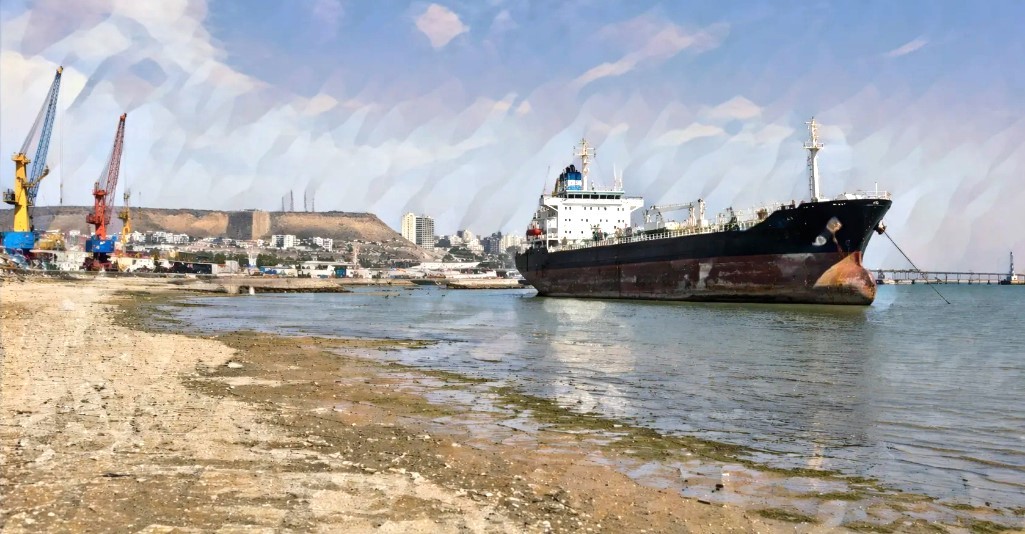
Turkmenistan and Spain have discussed closer cooperation to address desertification in Central Asia, including the possible creation of a regional center focused on land degradation. The talks took place in Ashgabat during a meeting between Turkmenistan’s Minister of Environmental Protection and Spain’s ambassador to Russia, Ricardo Martínez Vázquez, who is also accredited in Turkmenistan. The discussions followed Turkmen President Serdar Berdimuhamedov’s proposal at the United Nations General Assembly to establish a specialized regional center to combat desertification in Central Asia. The initiative is intended to strengthen cooperation among regional states and attract international expertise and funding. [caption id="attachment_41076" align="aligncenter" width="1000"] Image: mineco.gov.tm[/caption] Desertification is a growing concern across Central Asia, a region where arid and semi-arid landscapes dominate much of the territory. The United Nations Convention to Combat Desertification defines desertification as land degradation in dry areas caused by climatic variations and human activities. According to the UNCCD, more than 20% of land in Central Asia is already degraded, affecting around 30% of the population. Much of this damage is linked to unsustainable water use, intensive agriculture, overgrazing, and the long-term effects of climate change. Spain’s interest in desertification in Turkmenistan is rooted in their shared status as nations on the front lines of climate change. As one of the European countries most vulnerable to soil degradation, Spain co-launched the International Drought Resilience Alliance (IDRA) to export its expertise in "dryland" management and water conservation, which is directly applicable to the arid landscapes of Central Asia. This common challenge has fostered a diplomatic partnership focused on the United Nations Convention to Combat Desertification (UNCCD), where countries exchange strategies for land restoration and drought resilience. Beyond environmental solidarity, Spain views Turkmenistan as a critical emerging market for its advanced engineering and agricultural sectors. Major Spanish firms, such as TYPSA, are already active in the region, providing technical assistance for massive infrastructure projects, such as desalination plants on the Caspian Sea, and modernizing irrigation systems for thousands of hectares of farmland. This commercial engagement is bolstered by Spain's support for Turkmenistan’s proposal to host a Regional Center for Climate Change Technologies, which would serve as a hub for Spanish green tech in Central Asia. The bilateral relationship also aligns with the broader EU Strategy for Central Asia, which prioritizes environmental stability as a means of ensuring regional security. By helping Turkmenistan manage its dwindling water resources and combat the encroaching Karakum Desert, Spain contributes to the EU for a Green Turkmenistan initiative. This cooperation helps prevent resource-driven migration and instability, and strengthens trade ties in a region that is becoming increasingly vital for global energy and logistics. One of the most visible examples of desertification in the region is the collapse of the Aral Sea. Once the world’s fourth-largest inland lake, the Aral Sea began shrinking rapidly in the 1960s after its feeder rivers were diverted for large-scale irrigation projects. By the early 2000s, the sea had lost roughly 90% of its volume. [caption id="attachment_13621" align="aligncenter" width="2560"] Desert ships on the former...

7 months ago

From the Steppe to Space: Kazakhstan Tests First Direct-to-Cell Phone Call

In a remote part of Kazakhstan, a standard 4G smartphone has made Central Asia’s first satellite-linked phone call, thanks to a field test by Beeline Kazakhstan and SpaceX’s Starlink network. The trial successfully routed a WhatsApp voice call and text messages through Starlink Direct-to-Cell satellites, demonstrating that ordinary phones can stay connected even where traditional mobile coverage ends. The demonstration was carried out in Kazakhstan’s Akmolinskaya region and confirmed the interoperability between Starlink’s satellites and Beeline’s terrestrial network. During the test, Beeline Kazakhstan CEO Evgeniy Nastradin and Kazakhstan’s Deputy Prime Minister Zhaslan Madiyev placed a WhatsApp audio call via Starlink to VEON Group CEO Kaan Terzioglu using a regular smartphone and SIM card. They also exchanged SMS and WhatsApp messages, effectively merging satellite links with the country’s mobile infrastructure for the first time. Kazakhstan has vast stretches of steppe and mountains where cell towers are sparse. Officials involved in the project say satellite-enabled connectivity offers a vital new layer of coverage for these remote regions. “Starlink’s Direct-to-Cell satellites make it possible to stay connected in places where traditional infrastructure is unavailable: in the mountains, the steppe, forests, and across long distances,” Madiyev noted, calling the technology “more than just a convenience – it is an important safety measure [that will ensure people] can stay connected in any part of the country.” Madiyev added that the ability to send a message from a dead zone without any special equipment “has the potential to save lives” in emergencies. Beeline Kazakhstan’s leadership similarly emphasized the significance of the milestone. By blending Starlink’s space-based relays with Beeline’s ground towers, customers will be able to stay connected anywhere in Kazakhstan. The initiative has government support and is backed by Kazakhstan’s Ministry of Artificial Intelligence and Digital Development as part of a push to improve nationwide connectivity. Starlink Direct-to-Cell is a new capability of SpaceX’s Starlink satellite internet constellation that effectively turns satellites into cell towers in space. The satellites carry special cellular antennas (eNodeB modems) and link with ground networks via laser backhaul, allowing a phone to connect to the satellite as if roaming on a normal network. Crucially, this works with existing phones without requiring any new hardware or apps. The technology aims to eliminate mobile dead zones, as over 50% of the world’s land area still lacks cellular coverage. The Kazakhstan trial is part of a broader wave of satellite-cellular convergence. In November, Ukraine became the first country in Europe to launch Starlink’s direct-to-phone service, with VEON’s subsidiary Kyivstar initially offering satellite-powered text messaging to keep people connected during wartime blackouts and disaster situations. Voice calling and data services are expected to follow next year, underscoring the technology’s value for resilience when traditional infrastructure is disrupted. Following this week’s successful test, Beeline Kazakhstan plans to roll out Starlink Direct-to-Cell connectivity for its own customers, beginning with SMS text services in 2026, pending regulatory approval. Data connectivity would come next, expanding to full-service coverage in phases. Beeline serves over eleven million mobile subscribers in...

7 months ago

Uzbekistan Announces New Electricity Rationing Amid Power Shortages

Uzbekistan has announced a new electricity rationing schedule as power shortages strain the national grid. The Ministry of Energy said temporary evening outages would help stabilize supply while repairs and emergency measures continue. The outages, which began this week, are concentrated during peak hours between 5:00 p.m. and 9:00 p.m. and are expected to last until mid-January. Causes of the Shortfall The crisis stems from a major failure at the Syrdarya thermal power plant, one of the country’s largest. A newly installed Mitsubishi gas turbine suffered a mechanical fault in late November, forcing the station to shut down part of its capacity. A replacement 114-ton rotor was delivered by air on December 8, and engineers expect to finish installation and testing in four weeks. Seasonal factors have also reduced the available power supply. With winter’s shorter daylight hours, output from solar stations has dropped significantly, increasing the load on the grid. An unexpected gas supply disruption has further strained generation: Energy Minister Jurabek Mirzamakhmudov revealed that an accident in a neighboring country’s network cut Uzbekistan’s gas intake by about 6 million cubic meters per day. Natural gas fuels a large share of the country’s power plants, so this drop in fuel supply, combined with cloudy weather, has constrained electricity production. “Because of rain, there was neither wind nor sun,” Mirzamakhmudov said. These factors combined have left the grid struggling to meet peak demand in early December. Peak-Hour Outages to Balance Demand Officials have emphasized that rolling blackouts will be kept brief and targeted; each outage is not expected to last more than about two hours, and consumers will be notified in advance whenever possible. By shedding some load at peak times, the grid can avoid more dangerous unplanned breakdowns and ensure critical facilities remain powered. Residents have also been urged to use electricity sparingly and to monitor official announcements, rather than panic if an interruption occurs. The Energy Ministry has stressed that rumors of any nationwide “blackout” are unfounded, and any power cuts will be localized and limited in scope, not a return to the wide-ranging outages seen in the past. Citizens have been cautioned against spreading unverified information on social media and encouraged to rely on updates from authorities. Winter Energy Challenges and Reforms Winter months have historically tested Uzbekistan’s energy infrastructure. In previous years, electricity deficits forced scheduled outages – commonly known as rolling blackouts – across the country. However, officials note that the situation has improved markedly due to new power projects and efficiency measures. According to Energy Ministry data, the volume of electricity consumption that had to be curtailed through such restrictions fell from about 4 billion kWh in 2013 to just 357 million kWh in 2024. Even during the Central Asian energy crisis of winter 2022, Uzbekistan’s forced power cuts totaled around 2 billion kWh, a figure that has since sharply declined as new capacity comes online. Uzbekistan has been racing to expand its electricity generation to meet growing demand and reduce chronic winter shortages....

7 months ago