• KGS/USD = 0.01144 0%
  • KZT/USD = 0.00196 -0%
  • TJS/USD = 0.10899 -0%
  • UZS/USD = 0.00008 -0%
  • TMT/USD = 0.28490 0%
  • KGS/USD = 0.01144 0%
  • KZT/USD = 0.00196 -0%
  • TJS/USD = 0.10899 -0%
  • UZS/USD = 0.00008 -0%
  • TMT/USD = 0.28490 0%
  • KGS/USD = 0.01144 0%
  • KZT/USD = 0.00196 -0%
  • TJS/USD = 0.10899 -0%
  • UZS/USD = 0.00008 -0%
  • TMT/USD = 0.28490 0%
  • KGS/USD = 0.01144 0%
  • KZT/USD = 0.00196 -0%
  • TJS/USD = 0.10899 -0%
  • UZS/USD = 0.00008 -0%
  • TMT/USD = 0.28490 0%
  • KGS/USD = 0.01144 0%
  • KZT/USD = 0.00196 -0%
  • TJS/USD = 0.10899 -0%
  • UZS/USD = 0.00008 -0%
  • TMT/USD = 0.28490 0%
  • KGS/USD = 0.01144 0%
  • KZT/USD = 0.00196 -0%
  • TJS/USD = 0.10899 -0%
  • UZS/USD = 0.00008 -0%
  • TMT/USD = 0.28490 0%
  • KGS/USD = 0.01144 0%
  • KZT/USD = 0.00196 -0%
  • TJS/USD = 0.10899 -0%
  • UZS/USD = 0.00008 -0%
  • TMT/USD = 0.28490 0%
  • KGS/USD = 0.01144 0%
  • KZT/USD = 0.00196 -0%
  • TJS/USD = 0.10899 -0%
  • UZS/USD = 0.00008 -0%
  • TMT/USD = 0.28490 0%
08 December 2025

Kazakhstan’s Youth Struggle with Access to Sexual Health Information

One in five young people in Kazakhstan lacks access to information about reproductive and sexual health, according to an analysis by Ranking.kz based on a survey conducted by the Youth Research Center.

Where Young People Seek Information

The study reveals a significant gender disparity: 34.2% of female respondents seek information from medical specialists, compared to only 19.4% of male respondents. Alarmingly, 24.4% of young men report having no information on reproductive health at all, versus 14.9% of young women.

The most commonly cited sources of reproductive health information are gynecologists, urologists, and reproductive specialists (26.6%), followed by online resources and articles (17.9%). Family discussions (16.6%), conversations with peers (15.4%), consultations with family doctors (15.3%), social media (14.4%), and printed materials from medical institutions (11.3%) also play a role.

Despite these resources, 9.3% of respondents admitted they feel uncomfortable discussing such topics, while 19.8% reported receiving no information at all, underscoring the persistent knowledge gap.

Infections and Awareness

Sexually transmitted infections (STIs) remain a pressing concern. Only 16.8% of respondents said they are well informed about STIs. A further 36.7% reported partial awareness, 26.9% had only heard vague references, 15.4% were entirely uninformed, and 4.4% found the question difficult to answer.

According to the Ministry of Health, Kazakhstan recorded 89.1 cases of STIs per 100,000 population in 2024, down from 96.4 in 2023, but still considered high. The most common infections included chlamydia (13.9 cases per 100,000), trichomoniasis (13.8), syphilis (8.5), and gonorrhea (6).

The highest infection rates were recorded in Shymkent (247.7 per 100,000), Almaty (139.3), and Astana (127.1), followed by the Abai (125.9) and North Kazakhstan (118.6) regions. The lowest rates were reported in Zhambyl (24.6), Ulytau (30.7), and West Kazakhstan (31.4).

Debate Over Sex Education in Schools

When asked about the introduction of sex education in schools, 58.9% of survey respondents supported the idea, citing benefits such as improved understanding of physiology and anatomy, and a reduced risk of unwanted pregnancies and STIs.

However, 35.6% opposed such initiatives. Among them, 15% found the topic too “embarrassing,” while 20.6% feared that sex education might encourage early sexual activity among teenagers.

Kyrgyzstan Sees Continued Growth in Foreign Direct Investment

Kyrgyzstan continues to show steady growth in attracting foreign direct investment (FDI), with figures exceeding pre-pandemic levels. According to the National Statistical Committee, FDI reached over $1 billion in 2024, and the positive momentum has continued into 2025.

In the first quarter of 2025, Kyrgyzstan attracted $288.3 million in direct investment, up 44% compared to the same period in 2024. The National Statistical Committee categorizes investments as coming from either Commonwealth of Independent States (CIS) countries or non-CIS countries, with volumes from both sources remaining roughly comparable.

Among non-CIS nations, China maintained its position as Kyrgyzstan’s largest investor, contributing $66.3 million during the first quarter. Among CIS countries, Russia led with $56 million, while Kazakhstan remained a key regional partner with nearly $50 million invested from January to March 2025. Other CIS countries contributed considerably smaller amounts.

Turkey also continues to play a significant role, investing $62 million in Kyrgyzstan’s production sector. Other notable contributors include the Netherlands, with $23.8 million.

Uzbekistan demonstrated marked growth, following the signing of a bilateral agreement on the demarcation of certain border areas and water resources. Uzbek investments reached more than $5 million in the first quarter of 2025, up sharply from $237,000 in all of 2024.

India likewise recorded a surge in investment, increasing from $91,000 in 2024 to $1.9 million in the first three months of 2025, an almost 2,000% rise.

Bishkek remains the country’s most attractive destination for foreign investment, drawing more than $525 million in 2024. The Chui region ranks second, driven by the expansion of factories and processing enterprises with foreign participation.

The manufacturing sector continues to be the primary target for foreign investment, followed by financial intermediation and insurance. Additional capital is flowing into mineral extraction, trade, and equipment repair.

Kyrgyz Car Owners Receive $200,000 in Insurance Payouts Since Start of 2025

Since the beginning of 2025, car owners in Kyrgyzstan have received approximately $200,000 in insurance payouts under the country’s compulsory motor insurance (CMI) program, according to the State Insurance Organization (SIO).

The rise in payouts has been matched by growing coverage of motor insurance, particularly after fines were introduced for individuals without insurance policies on July 1, 2025. The fine is set at $35, while the cost of an annual policy ranges from $20 to $50, depending on engine size and the number of insured persons.

For legal entities and foreign nationals, the cost of an annual policy is $150. Compulsory insurance for these groups has been in effect since April 1, 2023. Additionally, insurance is now mandatory when re-registering or purchasing a vehicle, as part of the phased implementation of universal motor insurance in Kyrgyzstan.

According to the SIO, 38,345 individuals purchased policies in the first month following the introduction of penalties. Between January 1 and July 28, 2025, a total of 266,465 vehicles were insured through the SIO.

The organization told The Times of Central Asia that many citizens had voluntarily obtained insurance before the penalties were introduced, reflecting a growing culture of legal compliance and personal responsibility among car owners.

During the reporting period, the SIO registered 190 insurance claims. The largest payout in 2025 was $3,500, which was divided between two parties involved in a traffic accident.

Insurers report that the sector is prepared to handle further growth in claims.

The SIO was initially capitalized with $12 million from the state budget. Its authorized capital has since been increased at least twice. Additionally, all state institutions are required to insure their assets through the SIO.

Alongside the state-run insurer, 14 private insurance companies operate in the Kyrgyz market, contributing to a competitive environment.

As previously reported by The Times of Central Asia, the SIO’s financial model includes a fund reservation mechanism for insurance payouts, ensuring the organization’s ability to meet its obligations even amid a rise in accident claims.

While some experts caution that the market could face saturation in the coming years, the short-term outlook for the industry remains one of steady growth.

Kazakhstan to Launch Agricultural Marketplace for Businesses

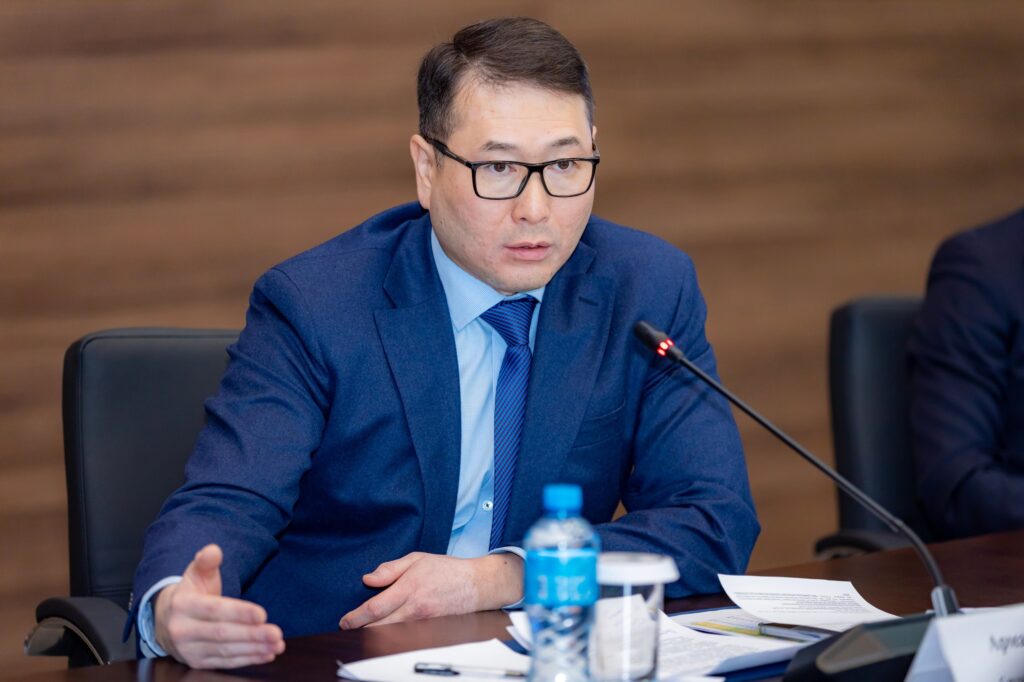
Kazakhstan’s Ministry of Trade and Integration is developing a domestic digital platform aimed at streamlining the purchase of agricultural products, reducing their cost, and enhancing government oversight of the agricultural sector.

Speaking at a government meeting on August 5, Minister of Trade and Integration Arman Shakkaliev said a pilot project is currently underway to introduce a nationwide information system for tracking goods, implemented in partnership with the national telecom operator, Kazakhtelecom JSC. The goal is to ensure a transparent and accessible supply of socially important food products to the population.

“This project aggregates real-time data on the stock and volume of such goods, based on invoices across the supply chain,” Shakkaliev stated. “Using this system, we are creating an innovative agri-marketplace that will provide digital connectivity between producers, retail chains, and government agencies, eliminating intermediaries and opaque schemes.”

The ministry is also preparing to launch a domestic B2B platform to facilitate wholesale imports, primarily from China, and support small and medium-sized enterprises. Plans include the introduction of digital tools, streamlined procedures, and integration with suppliers via direct channels, including JD.com and Alibaba. Full implementation will require removing technical certification barriers with the Chinese side.

According to Shakkaliev, over 25 million fiscal receipts are generated daily in Kazakhstan. In response, the ministry will launch a dedicated module to monitor trade markups by analyzing electronic invoices and cash register receipts. “The system will enable monitoring of purchase and retail prices, identifying price anomalies, assessing markup levels by category, region, and supplier, and detecting potential shortages in a timely manner,” he explained.

Further digital initiatives include expanding Kazakhstan’s product labeling system. By the end of 2025, motor oils will be subject to digital labeling, followed by beer in February 2026, light industry goods in March, and jewelry by December. From 2027, biologically active supplements (BAS) will also be included.

Shakkaliev said these reforms are expected to boost trade volumes, reduce the shadow economy, and increase labor productivity in the retail sector.

As previously reported by The Times of Central Asia, Kazakhstan launched a domestic online marketplace, Teez, in December 2024, offering next-day delivery and opening pick-up points in 24 cities across the country.

Kyrgyzstan Eases Licensing Rules to Expand Private School Sector

The Kyrgyz government is taking steps to simplify the licensing process for private schools in response to a growing shortage of student places in the country’s public education system, particularly in urban centers such as Bishkek and Osh.

On August 4, Chairman of the Cabinet of Ministers Adylbek Kasymaliyev announced a reform initiative aimed at easing regulatory requirements for licensing private institutions offering primary education. The goal, he stated, is to expand access to quality education and alleviate pressure on the overburdened public school network.

Kasymaliyev noted that rapid population growth has led to severe overcrowding in schools in major cities, where students are often taught in three shifts instead of the standard two, negatively affecting learning outcomes.

“Addressing the shortage of school places is a key priority for the government,” Kasymaliyev said. While new public schools are under construction, he emphasized that the private sector plays an important role in meeting rising demand.

Kyrgyzstan currently has 219 private schools, with 108 located in Bishkek and 54 in Osh. In 2024, 33 licenses were issued to private education providers, and 21 more have been granted since the beginning of 2025.

“We see strong interest from the private sector in the education field, particularly in large cities,” Kasymaliyev said. “Creating real opportunities for opening high-quality private schools is one of our tasks.”

The reform is part of a broader initiative to improve educational access and quality amid demographic expansion and urbanization.

Class sizes in Bishkek far exceed recommended limits, according to educators. “The average class size in Bishkek is 36 to 45 students, while the sanitary norm is up to 35,” a deputy director of a public school in the capital told The Times of Central Asia. “In some popular schools, the number exceeds 50.”

Uzbek Trade Delegation Visits U.S. to Promote “Made in Uzbekistan” Exports

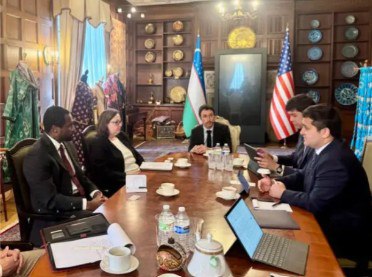
From July 23 to 29, a delegation from Uzbekistan’s Ministry of Investment, Industry and Trade (MIIT) visited the United States to promote Uzbek-produced goods, expand export channels, and strengthen bilateral trade ties, according to the ministry’s press service.

As part of the mission, 25 Uzbek textile companies showcased their products under the national “Made in Uzbekistan” brand at three major trade exhibitions in New York: Texworld NYC, Apparel Sourcing USA, and Home Textiles Sourcing Expo. Delegates met with industry leaders and trade associations, including Bunzl plc, Levi Strauss & Co., PVH Corp., GIII Apparel Group, Kontoor Brands, American Eagle Outfitters, Tapestry Inc., Macy’s, the American Apparel & Footwear Association (AAFA), and the United States Fashion Industry Association (USFIA), to discuss integrating Uzbek brands into U.S. sourcing channels.

In Washington, ministry representatives met with the U.S. Department of Commerce to explore opportunities for enhancing trade, reducing regulatory barriers, and increasing investment cooperation.

They also engaged with the Commercial Law Development Program (CLDP) under the Commerce Department, agreeing to organize webinars and seminars aimed at helping Uzbek firms meet U.S. certification and packaging standards. A separate meeting with the U.S. Department of Agriculture and the U.S. Cotton Association addressed expanding Uzbekistan’s access to the GSM-102 export credit guarantee program, increasing credit limits, and launching a “Made from U.S. Cotton” initiative. The proposed initiative would allow processed Uzbek goods made from American cotton to carry the label in international markets.

The delegation also explored ways to deepen investment cooperation with U.S. industry associations and develop mechanisms to integrate more Uzbek products into American retail and sourcing ecosystems.

As previously reported by The Times of Central Asia, on April 30, U.S. Labor Secretary Lori Chavez-DeRemer announced the termination of more than $38 million in foreign aid programs during a cabinet meeting at the White House. This included funding for a labor rights initiative in Uzbekistan’s cotton sector. The program, launched in 2022 and scheduled to run through 2026, aimed to improve labor conditions and prevent forced labor. It received $2 million in its first year, with $1 million earmarked for 2025.