• KGS/USD = 0.01144 0%
  • KZT/USD = 0.00214 0%
  • TJS/USD = 0.10508 0.48%
  • UZS/USD = 0.00008 0%
  • TMT/USD = 0.28571 0%
  • KGS/USD = 0.01144 0%
  • KZT/USD = 0.00214 0%
  • TJS/USD = 0.10508 0.48%
  • UZS/USD = 0.00008 0%
  • TMT/USD = 0.28571 0%
  • KGS/USD = 0.01144 0%
  • KZT/USD = 0.00214 0%
  • TJS/USD = 0.10508 0.48%
  • UZS/USD = 0.00008 0%
  • TMT/USD = 0.28571 0%
  • KGS/USD = 0.01144 0%
  • KZT/USD = 0.00214 0%
  • TJS/USD = 0.10508 0.48%
  • UZS/USD = 0.00008 0%
  • TMT/USD = 0.28571 0%
  • KGS/USD = 0.01144 0%
  • KZT/USD = 0.00214 0%
  • TJS/USD = 0.10508 0.48%
  • UZS/USD = 0.00008 0%
  • TMT/USD = 0.28571 0%
  • KGS/USD = 0.01144 0%
  • KZT/USD = 0.00214 0%
  • TJS/USD = 0.10508 0.48%
  • UZS/USD = 0.00008 0%
  • TMT/USD = 0.28571 0%
  • KGS/USD = 0.01144 0%
  • KZT/USD = 0.00214 0%
  • TJS/USD = 0.10508 0.48%
  • UZS/USD = 0.00008 0%
  • TMT/USD = 0.28571 0%
  • KGS/USD = 0.01144 0%
  • KZT/USD = 0.00214 0%
  • TJS/USD = 0.10508 0.48%
  • UZS/USD = 0.00008 0%
  • TMT/USD = 0.28571 0%

Kyrgyzstan Plans Central Asia’s First Live-Line Energy Training Center

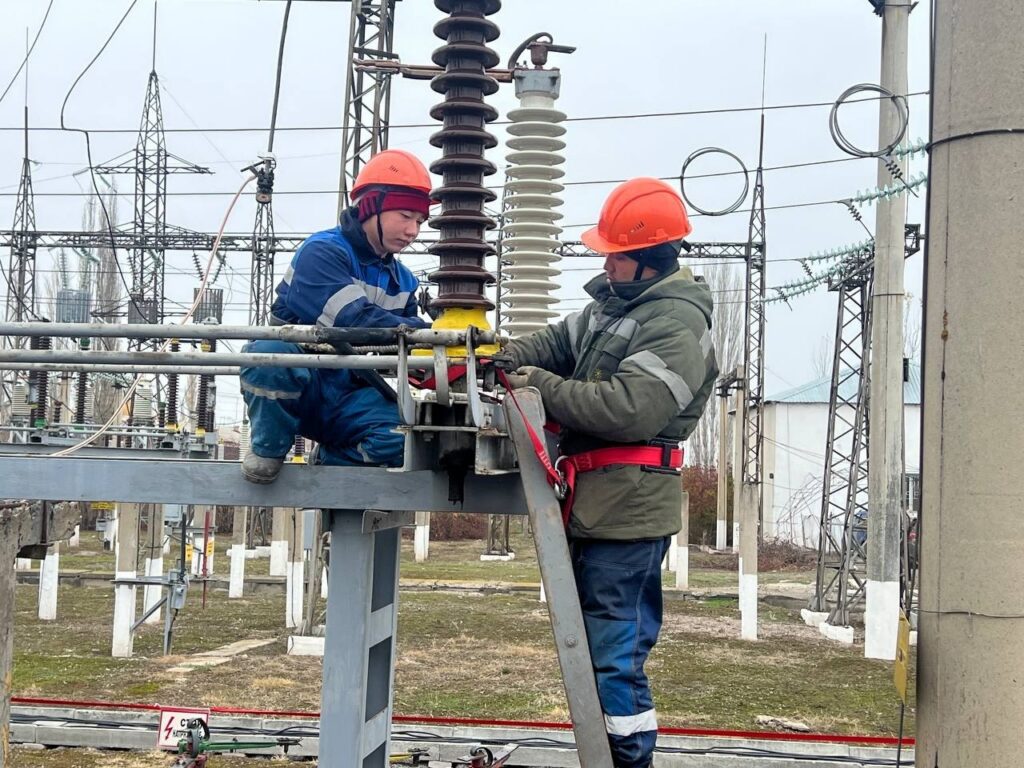
Kyrgyzstan plans to establish a competence center for live-line working technologies, with the aim of developing it into a regional hub for training highly qualified specialists from Kazakhstan, Uzbekistan, and Tajikistan. The center will focus on maintaining power grids and electrical equipment without de-energizing high-voltage lines.

The National Electric Network of Kyrgyzstan has signed a cooperation agreement with Grid Company of Tatarstan (Russia) to develop and introduce live-line working technologies, including the creation of a specialized training center.

The agreement was signed during the Energoprom-2026 international electric power forum in Kazan and was attended by Kyrgyz Energy Minister Taalaibek Ibrayev and Russian Energy Minister Sergey Tsivilyov.

The initiative aims to enable maintenance of electrical grids without disconnecting consumers. This is expected to reduce the frequency and duration of power outages, lower technical losses, and improve the reliability and quality of electricity supply for households and businesses.

The project is particularly relevant for Kyrgyzstan, where electricity supply is frequently interrupted due to the maintenance needs of aging infrastructure.

Authorities say the initiative could help modernize the country’s energy sector and strengthen its role in regional cooperation. The partnership with Russia also provides for the supply of electrical equipment and the localization of production in Kyrgyzstan, including cables, switchgear, and metering devices.

The project is also expected to position Kyrgyzstan as a regional training and competence hub for the electric power industry.

Uzbekistan’s Cotton Sector: Focus Shifts to Farmers as Dialogue Continues

The Times of Central Asia previously published an interview with Komoliddin Ikromov, head of the Agribusiness Association, addressing recent land disputes, legal processes, and ongoing reforms in Uzbekistan’s agricultural sector. In a separate conversation, Umida Niyazova, founder of the Uzbek Forum for Human Rights, has offered an additional perspective, focusing on the conditions faced by cotton and wheat farmers.

Her remarks come in the context of a recent joint report by the Uzbek Forum and Human Rights Watch examining structural issues in the agricultural system. While the report has drawn international attention, Niyazova emphasized that its primary focus differs from earlier discussions centered on cotton pickers.

Focus on farmers rather than pickers

Niyazova said public debate in recent years has largely focused on forced labor among cotton pickers, particularly prior to reforms introduced after 2019. However, she noted that the new report shifts attention to another group.

“Our recent report on the cotton sector in Uzbekistan does not focus on cotton pickers, but rather on cotton and wheat producers, farmers,” she told The Times of Central Asia. “This is a different segment of workers whose problems have, for decades, remained overshadowed by the issue of forced labor of cotton pickers… The central finding of our report is that the working conditions of farmers producing cotton and wheat in Uzbekistan place them at risk of forced labor.”

Basis for assessing risk

Niyazova explained that this conclusion is based on eleven indicators developed by the International Labour Organization, “which define warning signs that individuals may be at risk.”

However, the report does not conclude that specific cases constitute forced labor.

“We did not have sufficient information to determine that any particular farmer is working under forced labor conditions,” she told TCA. “However, we were able to conclude that cotton and wheat farmers in general are at risk due to the conditions in which they work.”

These indicators include factors such as vulnerability, intimidation, threats, withholding of wages, and abusive working conditions.

At the same time, she acknowledged that Uzbekistan has made progress in addressing earlier concerns related to cotton picking.

Changes in cotton picking practices

Niyazova said the situation for cotton pickers has changed significantly in recent years.

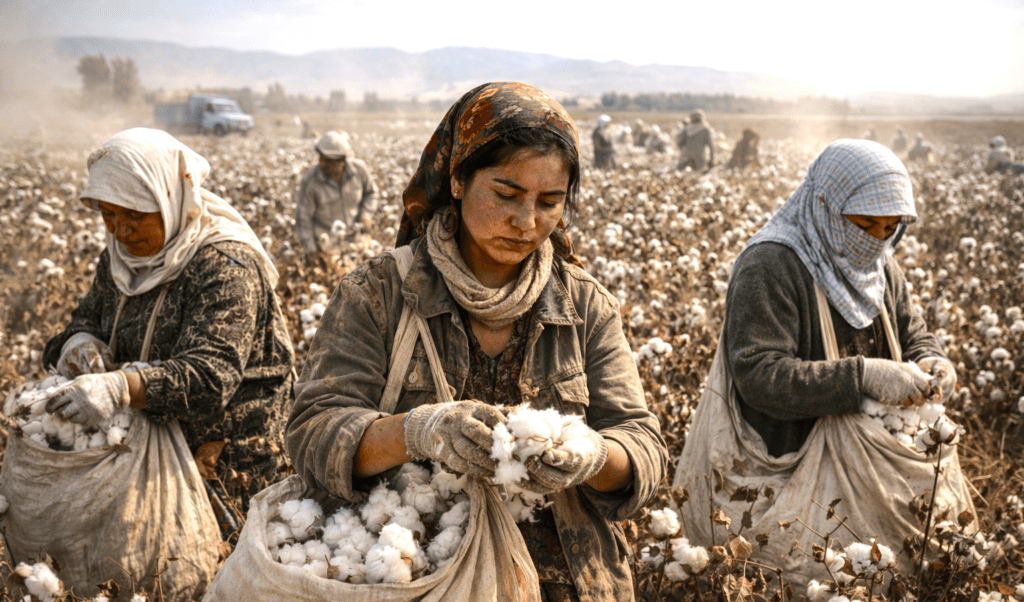
“These are seasonal workers, primarily rural residents, who are recruited by farmers or mahallas (neighborhoods) to harvest cotton over a two-month period,” she said. “Since the 2020 harvest, payment rates for manual cotton picking have increased. This has been an important, though not the only, factor in attracting voluntary laborers.”

According to the Ministry of Agriculture, a recommended price of 2,000 UZS ($0.16) per kilogram of hand-picked cotton was set for 2025. During the harvest, prices may also be determined through agreements between cluster operators, farms, and pickers.

Niyazova said additional reforms have contributed to changes in the sector, including the introduction of private clusters, increased mechanization, and government oversight.

“Mechanization has increased year by year, reducing the need for manual labor,” she said, adding that by 2025, more than 50% of the harvest was carried out by machines.

On March 13, a presidential decree on providing the agricultural sector with modern machinery was adopted, prioritizing increased mechanization, particularly in cotton harvesting. The authorities aim to raise the share of machine-harvested cotton to 70% by 2026.

Niyazova also pointed to awareness campaigns and enforcement measures.

“The government conducted information campaigns emphasizing the prohibition of forced labor, and the labor inspectorate held local officials accountable for coercion,” she said.

“Taken together, these measures contributed to the end of large-scale, systematic forced labor of cotton pickers.”

Engagement with authorities

During a visit to Uzbekistan in March, Niyazova said she discussed the report’s findings with representatives of several ministries.

“Overall, I assess these meetings very positively,” she told TCA, despite some disagreements, particularly over how the current system should be described.

“Some government representatives maintain that there is no longer a state order for cotton production,” she said, while adding that the report finds elements of a centralized system still exist in practice, sometimes referred to as a “forecast.”

“Disagreement does not preclude continued dialogue,” Niyazova said, emphasizing that there is common ground among stakeholders.

“Our goal is for Uzbek cotton to be fully free of its legacy of coercion,” she said.

Digital Gold Trading Launches on Kyrgyz Stock Exchange

On April 3, the Kyrgyz Stock Exchange, Kyrgyzaltyn, and Central Depository CJSC signed an agreement enabling the purchase and sale of precious metals, particularly gold.

The initiative aims to provide equal access to exchange-based gold trading for all categories of investors. The exchange will ensure automated and transparent transactions, with prices formed in real time based on supply and demand.

Participants in the trading include commercial banks, jewelry and brokerage firms, and other entities registered with the Department of Precious Metals under the Ministry of Finance.

“Using exchange infrastructure automates processes and guarantees equal access to the asset for all categories of investors,” said Aida Chodulova, CEO of the Kyrgyz Stock Exchange. She added that gold will function as both a digital and physical asset, with transactions recorded in the exchange’s automated system.

Officials say the platform will allow investors to trade gold without the need for physical transportation, while also offering a tool for long-term capital preservation.

Gold remains Kyrgyzstan’s main export commodity. In 2025, the country exported 6.2 tons of gold worth $682.8 million, according to preliminary data cited by local media.

According to the Ministry of Economy, gold accounted for nearly 24% of total exports.

The country’s largest deposit, Kumtor, is located in the Issyk-Kul Region at an altitude of about 4,000 meters. It is one of the world’s largest gold deposits and was nationalized in 2021 after previously being owned by Centerra Gold.

The mine is operated by Kumtor Gold Company, which is fully owned by Kyrgyzaltyn. In 2025, the company produced 12,081 kg of gold, generated $1.434 billion in revenue, and reported net profit of more than $706 million, while paying $246.5 million in taxes and other payments.

Kazakhstan Targets Growth in Real Household Income

The government of Kazakhstan plans to increase real household income by 2–3% by 2029, according to the Ministry of National Economy.

The program includes measures to stimulate employment, raise wages, support entrepreneurship, and create sustainable jobs.

Key priorities include increasing wages for public utility workers, civil servants, and agricultural workers; expanding the share of wages in GDP; creating jobs in the manufacturing sector; supporting export-oriented enterprises; and reducing the financial burden on households.

The ministry said 2026 will be a pivotal year for establishing sustainable income growth. A joint plan by the government, the National Bank, and the Agency for Regulation and Development of the Financial Market aims to reduce inflation to 9-11% in 2026, 5.5-7.5% in 2027, and 5-7% in 2028.

Authorities expect that slowing inflation will increase the purchasing power of incomes. Inflation has already declined from 12.9% in September 2025 to 11% in March 2026.

From April 1, tariff policy will be implemented more cautiously. The ministry estimates that tariff increases will add no more than 0.35 percentage points to inflation. At the same time, electricity and transportation tariffs for producers of socially significant goods are set to be reduced by up to 70%.

The government also plans to limit the growth of budget expenditures, with their share of GDP expected to decline to 15.1% in 2026. Reductions in transfers from the National Fund will continue, and for the first time in five years, the budget is expected to be executed without targeted transfers.

In 2025, targeted transfers from the fund amounted to approximately $6.9 billion, while the guaranteed transfer for 2026 has been set at $5.8 billion.

According to the National Statistics Bureau, nominal household income grew by 10.2% in 2025, while real income declined by 1.1%. Average per capita income stood at approximately $506.

The ministry noted that the decline in real incomes indicates that economic growth is not sufficiently translating into improved living standards, underscoring the need for additional measures to create jobs and raise wages.

The Times of Central Asia previously reported that Prime Minister Olzhas Bektenov called for increasing the share of wages in GDP to 40%. 

Ukrainian Deputy Foreign Minister: Astana and Kyiv Seeking to Restore Trade

Ukrainian Deputy Foreign Minister, Olexandr Mishchenko, discussed prospects for trade and economic cooperation, including the possible resumption of the Intergovernmental Commission on Trade and Economic Cooperation, during a meeting on April 2 with Serik Zhumangarin, Kazakhstan’s Deputy Prime Minister and Minister of the National Economy.

In comments to The Times of Central Asia, the Ukrainian Foreign Ministry representative said Astana and Kyiv are aiming to restore bilateral trade.

Trade between Kazakhstan and Ukraine reached approximately $5.5 billion annually before the war but has since declined sharply. However, according to Kazakh data, the situation has begun to improve. The Ministry of National Economy reported that trade turnover between the two countries totaled $415.8 million in 2025, up 5.4% from $394.3 million in 2024. Kazakhstan’s main exports to Ukraine include ferroalloys, fertilizers, and rice, while imports from Ukraine consist of chocolate and other cocoa products, flour and confectionery, medicines, cheese, and cottage cheese.
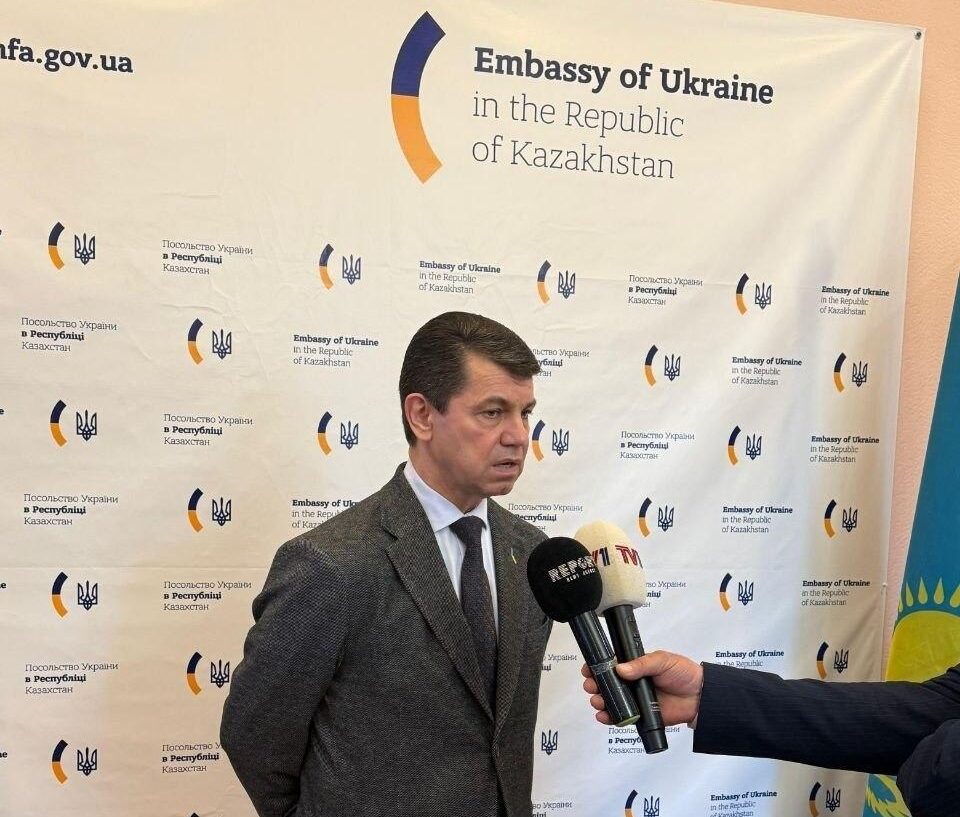
Image: Ukrainian Embassy in Kazakhstan

Astana and Kyiv also intend to expand the range of goods traded. During interdepartmental consultations held in Astana, the sides discussed trade, investment, agriculture, logistics, and humanitarian cooperation, with a focus on export diversification. They agreed to intensify business contacts, consider resuming the Intergovernmental Commission, and expand cooperation in priority sectors, particularly the agro-industrial complex.

Mishchenko said the countries also plan to strengthen cooperation in the energy sector and restore logistics chains. Until 2022, Ukraine provided key transit routes for Kazakh exports to Europe. Before 2022, a significant share of Kazakhstan’s westbound trade relied on routes passing through or near Ukrainian infrastructure. The war disrupted those pathways and forced a broader regional shift toward alternative corridors, including routes across the Caspian and South Caucasus, which remain longer, more complex, and often more expensive.

“Territorial integrity remains the cornerstone of our cooperation. We are deeply grateful to Kazakhstan for its humanitarian aid: more than 600 tons were collected, particularly during the winter. This support was critical to Ukraine’s resilience,” Mishchenko said.

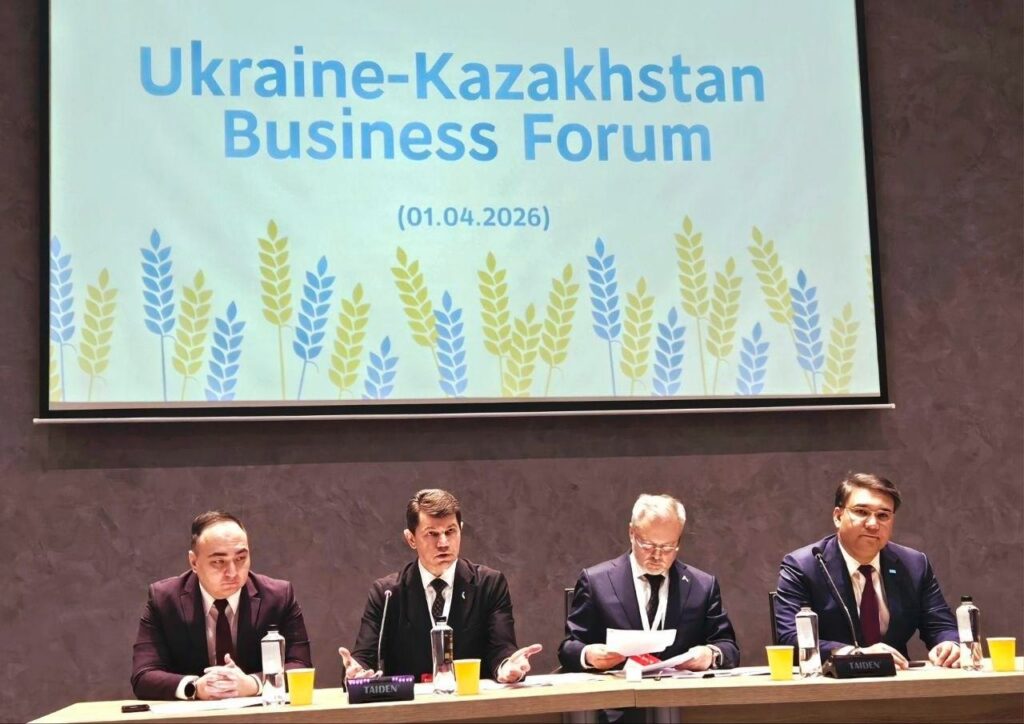
The visit marked the first trip by a senior Ukrainian government representative to Kazakhstan in recent years. A large delegation of Ukrainian entrepreneurs accompanied Mishchenko, seeking to re-establish business ties with Kazakh partners.

“Despite the ongoing conflict, Ukraine is already looking toward the post-war future, and concrete proposals for cooperation, including in energy, are being developed through bilateral engagement with Kazakhstan,” Mishchenko told The Times of Central Asia. “Kazakhstan’s energy resources create opportunities for mutually beneficial cooperation, including potential integration into Ukrainian markets.”

Mishchenko noted that a Ukrainian business mission, the first in many years, visited Kazakhstan, including the Pavlodar Region, a major industrial hub with significant heavy industry and energy capacity. “This creates real demand for modernization, engineering solutions, and equipment supplies,” he said.

The delegation held meetings with government officials, financial institutions, and business representatives, alongside regional visits aimed at launching joint projects.

In Astana, talks were held with the leadership of Baiterek National Management Holding. Ukrainian entrepreneurs also visited the Astana International Financial Centre and the city administration, where they were briefed on investment opportunities, special economic zones, and investor support mechanisms.

The regional program included a visit to the Karaganda Region and the Sary Arka Special Economic Zone, where participants examined investor conditions, state support tools, and production localization opportunities. Meetings with regional authorities focused on potential joint projects.

The delegation also visited several enterprises, including Qarmet, Qaragandy Power Silicon, and the Shans farm, to assess production capacity and identify areas for cooperation.

In the Pavlodar Region, Ukrainian representatives met with leading industrial companies, including Aluminum of Kazakhstan, Eurasian Energy Corporation, and EkibastuzFerroAlloys, to discuss cooperation in industry, energy, and equipment supply.
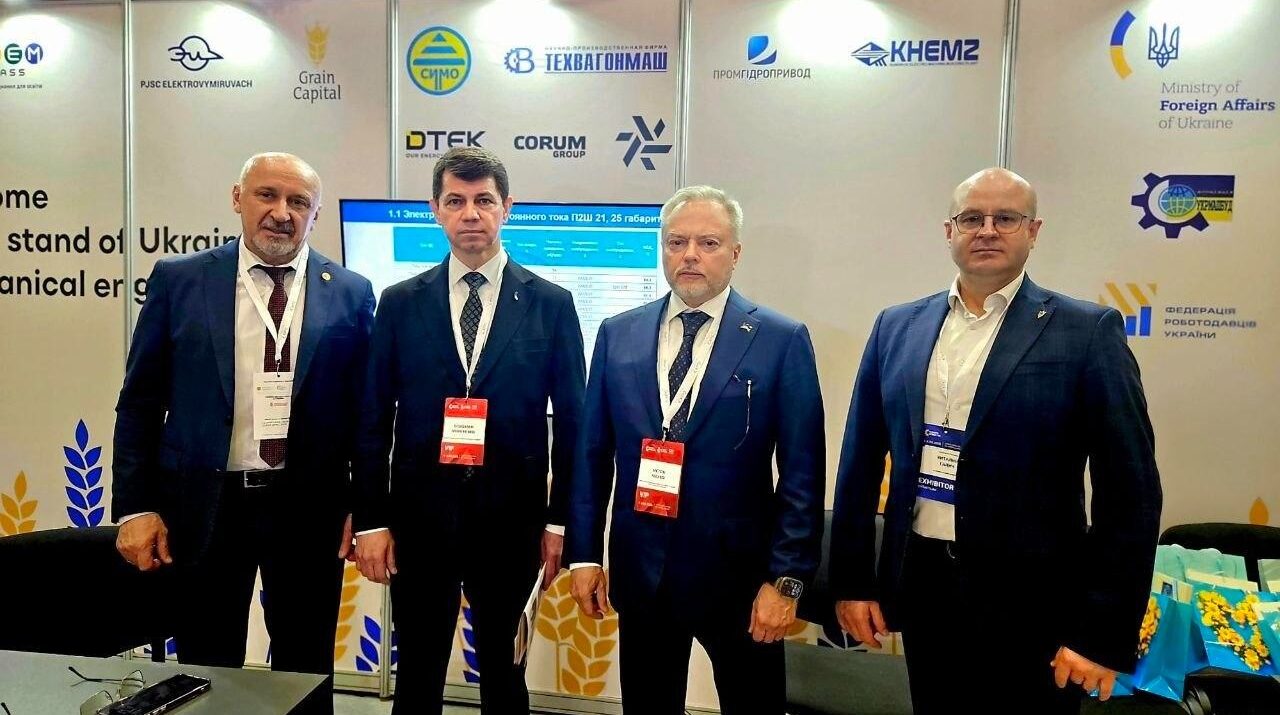
Image: Ukrainian Embassy in Kazakhstan

“Our entrepreneurs also visited the Pavlodar Special Economic Zone, where they reviewed investor conditions and state support measures, and met with regional authorities to discuss local needs and how Ukrainian technologies could address them,” Mishchenko added.

The delegation also traveled to Kokshetau, the administrative center of the Akmola Region, a key hub for Kazakhstan’s agro-industrial sector.

“Such visits allow Ukrainian businesses not only to present their capabilities but also to respond to the specific needs of regions and enterprises in Kazakhstan,” Mishchenko said. “We are ready to explore cooperation in mechanical engineering, agriculture, and other sectors. During my visit, I also met members of Kazakhstan’s parliamentary delegation to discuss industrial cooperation, humanitarian issues, and the possible resumption of academic exchanges.”

The agro-industrial sector remains a key area of cooperation. Dairy farms in several Kazakh regions have worked with the Ukrainian Milk Producers Association for years on breeding livestock supply and professional training. Logistics is also expected to play a central role in restoring bilateral ties.

“We are exploring the possibility of restoring transport routes via the Black Sea and the Caspian region, which could become a strategically important corridor,” Mishchenko said. “Before the war, trade between our countries reached $5.5 billion. We intend to actively restore and expand economic cooperation.”

Previously, Ukraine’s Ambassador to Kazakhstan Victor Mayko told The Times of Central Asia that the two economies are complementary and that bilateral trade could double pre-2022 levels.

Uzbekistan Drafts New Law to Strengthen Animal Protection

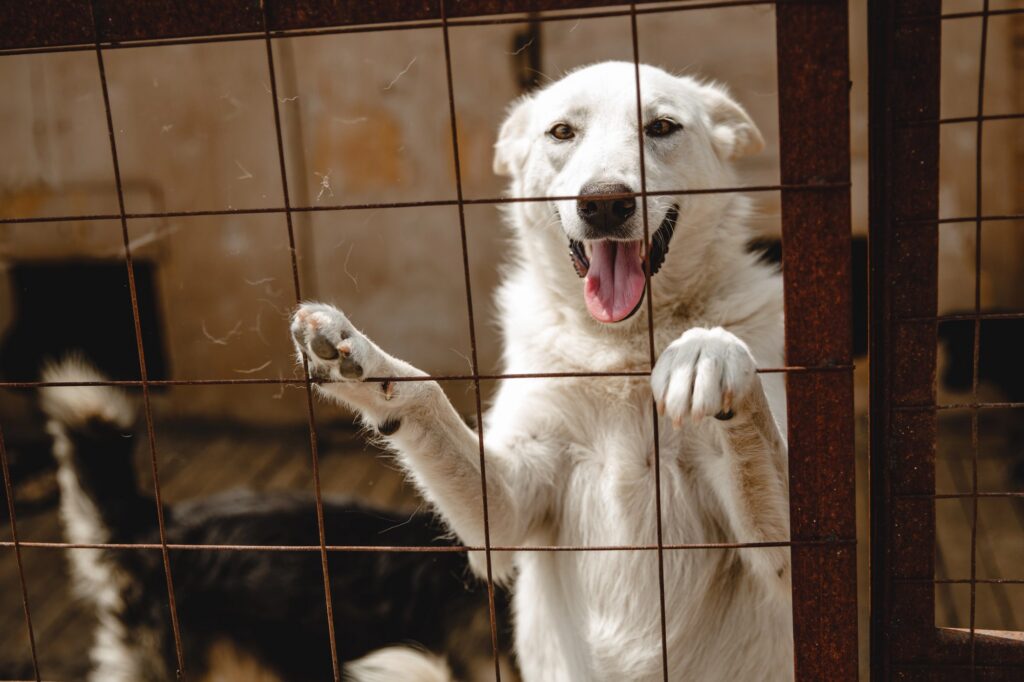
Lawmakers in Uzbekistan are preparing a draft law aimed at strengthening protections for animals and addressing animal cruelty more systematically, according to the Ecological Party’s faction in the Legislative Chamber.

Despite a reported decline in incidents in recent years, cases of animal cruelty continue to be reported, often without a clear motive and sometimes for entertainment, the party said. Deputies argue that existing measures, although recently tightened, remain insufficient to fully address the problem.

On March 25, Uzbekistan adopted amendments increasing penalties for animal cruelty. Under the revised rules, offenders may face fines ranging from 15 to 25 times the base calculation amount (approximately $34) or up to 15 days of administrative detention. However, lawmakers say these measures should be complemented by a broader legal framework.

The new draft law, titled “On the Protection of Animals from Cruel Treatment,” is being developed as a comprehensive response. According to the party, it draws on international experience and is designed not only to punish violations but also to prevent them.

Among its key provisions is a clearer legal definition of acts constituting animal cruelty, along with stricter prohibitions. The draft also proposes revising criminal liability, including increasing fines to up to 200 times the base calculation amount (approximately $6,775) or introducing prison sentences of up to one year.

In addition, the legislation would require offenders to fully cover veterinary treatment costs for injured animals, even if those costs exceed the animal’s market value. It also outlines responsibilities for pet owners, including proper care and a ban on abandoning animals.

The draft includes provisions to support the development of pet-friendly public spaces and proposes legal recognition of guide dogs and emotional support animals in public transport. It also emphasizes education and public awareness through schools and media to encourage more humane treatment of animals.