• KGS/USD = 0.01144 0%
  • KZT/USD = 0.00213 0%
  • TJS/USD = 0.10456 0.19%
  • UZS/USD = 0.00008 0%
  • TMT/USD = 0.28490 0%
  • KGS/USD = 0.01144 0%
  • KZT/USD = 0.00213 0%
  • TJS/USD = 0.10456 0.19%
  • UZS/USD = 0.00008 0%
  • TMT/USD = 0.28490 0%
  • KGS/USD = 0.01144 0%
  • KZT/USD = 0.00213 0%
  • TJS/USD = 0.10456 0.19%
  • UZS/USD = 0.00008 0%
  • TMT/USD = 0.28490 0%
  • KGS/USD = 0.01144 0%
  • KZT/USD = 0.00213 0%
  • TJS/USD = 0.10456 0.19%
  • UZS/USD = 0.00008 0%
  • TMT/USD = 0.28490 0%
  • KGS/USD = 0.01144 0%
  • KZT/USD = 0.00213 0%
  • TJS/USD = 0.10456 0.19%
  • UZS/USD = 0.00008 0%
  • TMT/USD = 0.28490 0%
  • KGS/USD = 0.01144 0%
  • KZT/USD = 0.00213 0%
  • TJS/USD = 0.10456 0.19%
  • UZS/USD = 0.00008 0%
  • TMT/USD = 0.28490 0%
  • KGS/USD = 0.01144 0%
  • KZT/USD = 0.00213 0%
  • TJS/USD = 0.10456 0.19%
  • UZS/USD = 0.00008 0%
  • TMT/USD = 0.28490 0%
  • KGS/USD = 0.01144 0%
  • KZT/USD = 0.00213 0%
  • TJS/USD = 0.10456 0.19%
  • UZS/USD = 0.00008 0%
  • TMT/USD = 0.28490 0%

Uzbek Products to Reach Europe and Africa Through Turkish Port

Uzbek diplomats recently visited Turkey’s Kocaeli region to strengthen trade and economic ties, holding discussions with local officials and business leaders.

The meetings addressed opportunities for expanding cooperation in trade, economic, cultural, educational, and humanitarian sectors. Uzbek representatives highlighted ongoing reforms in Uzbekistan and the incentives available to foreign investors in its free economic zones.

Key figures in the talks included Kocaeli’s Mayor Tahir Büyükakın, Regional Governor Ilhami Aktash, Regional Industrial Chamber Head Ayhan Zeytinoğlu, and Gebze Güzeller Industrial Zone Director Adem Ceylan.

Mayor Büyükakın provided an overview of Kocaeli’s economic and social strengths, while Ayhan Zeytinoğlu expressed interest in boosting bilateral economic collaboration. Zeytinoğlu proposed facilitating exchanges between Uzbek and Turkish business delegations to foster stronger partnerships.

Adem Ceylan suggested establishing a dedicated logistics center for Uzbek investors within the Gebze Industrial Zone. The center would provide storage facilities for Uzbek-made goods and serve as a gateway for exporting products to Europe and Africa via the Gebze seaport.

The visit concluded with an agreement to organize a business forum in the Kocaeli region. The planned forum will feature a delegation of Uzbek entrepreneurs, aimed at enhancing bilateral and regional cooperation.

Uzbekistan Continues to Lead Central Asian Fertility Rates

Four out of the five Central Asian countries are experiencing fertility declines, with the exception being Uzbekistan, where the total fertility rate (TFR) – the average number of children born to one woman in her lifetime – continues to rise.

According to analytical data from Finprom.kz, in 2023, Uzbekistan’s TFR was 3.4, the highest in the region. Tajikistan followed with a ratio of 3.1, Kazakhstan at 3.0, and Kyrgyzstan and Turkmenistan at 2.7 each.

In a global context, Central Asia’s fertility rates are still higher than average. According to OurWorldinData, the world TFR in 2023 was 2.3. By comparison, countries like the U.S., India, and China had rates between 1.2 and 2.2, while in some African countries such as Somalia or Niger, TFR exceeded 6.

In absolute numbers, Uzbekistan led the region in births with 962,000 newborns in 2023 – a 14.3% increase from 2020. Kazakhstan ranked second with 388,400 births, although its birth rate continued to decline after a pandemic-era baby boom. The highest TFR per 1,000 people was also recorded in Uzbekistan (26.4), followed by Tajikistan (24.6) and Kazakhstan (19.5), where births have fallen for the second consecutive year.

Despite declining fertility rates, Central Asia’s population is growing steadily. The Eurasian Development Bank (EDB) projects the region’s population to reach 80 million in 2025, marking a 2.2 million increase since 2020. Uzbekistan remains the most populous nation, accounting for 45.2% of the region’s total population at 36.9 million, followed by Kazakhstan (20.3 million), Turkmenistan (8.1 million), and Kyrgyzstan (8.9 million).

Population growth in the region is driven by natural increases, with annual rates of 2.5% in Uzbekistan, 1.9% in Tajikistan, 1.5% in Kazakhstan and Turkmenistan, and 1.4% in Kyrgyzstan. These figures reflect stable demographic dynamics across Central Asia.

Marriage Trends in Kazakhstan: What Young People Value Most

The Research Center “Youth” has published a survey examining the perspectives of young Kazakhs on marriage and divorce. Ranking.kz analysts analyzed the main points of this research, shedding light on the preferences and values of the younger generation in Kazakhstan.

According to the survey, 78% of respondents view formal marriage registration as essential, while only 15% accept civil unions. When selecting a life partner, key considerations included age (53.9%), appearance (45.4%), and nationality (39.4%). Notably, factors such as mutual love and moral values were cited by fewer than 1% of participants.

Gender-Based Preferences

Women prioritized their partner’s age, financial stability (30.6%), career prospects (22.9%), and even gender (18.7%). Men, meanwhile, focused on their partner’s physical attractiveness and youth but also emphasized the social status of the future spouse’s family (17.1%) and lineage (24.6%).

Trends in Marriage and Divorce

Kazakhstan has seen a decline in its marriage rate, dropping from 9.9 marriages per 1,000 people in 2013 to 5.7 in the first half of 2024. Analysts attribute this to the smaller generation born between 1995 and 2000, which tends to marry later in life. The average age at first marriage has increased from 26.7 years in 2003 to 27.8 years for men in 2023, and from 23.9 years to 25.2 years for women.

Divorce rates have fluctuated over the past 20 years, correlating with marriage statistics. Between 2013 and 2018, over 51,000 divorces were registered annually. However, this number dropped to 40,200 in 2023, before rising again in the first half of 2024 – 2.3 times higher than during the same period in 2023.

Causes of Divorce

The survey identified adultery (61%), physical violence (51%), and substance abuse (48%) as the leading causes of divorce. Women were more likely to cite physical (62.1%) and psychological (37.7%) violence, as well as gambling addiction (37.1%). Men highlighted personality incompatibility (36%) and lack of love (30.2%).

The Kazakhstan Institute of Public Development (KIPD) corroborated these findings, adding a lack of mutual understanding (24%), interference from parents (10.4%), infertility (11%), and cohabitation with relatives (5.6%) as additional factors. Despite these challenges, 14% of respondents stated that divorce is unacceptable under any circumstances.

Celebrating Global Family Day: Honoring Uzbek and Kazakh Traditions That Unite Generations

Every year, January 1 marks Global Family Day, an idea first introduced in 1997, when the United Nations launched the International Decade for the Culture of Peace and Non-Violence for the Children of the World. By 1999, the had UN invited its members to dedicate the first day of the year to developing strategies for peace, and since then this day has been observed annually as a reminder of the role families play in fostering a peaceful and compassionate world.

This year, The Times of Central Asia takes a closer look at family customs in Uzbekistan and Kazakhstan, nations where family values are deeply woven into the fabric of life.

In Uzbekistan, family is at the heart of society. Respect for elders and care for the young are not just taught — they are lived and celebrated daily. Parents and children share close relationships, turning to one another for advice and support.
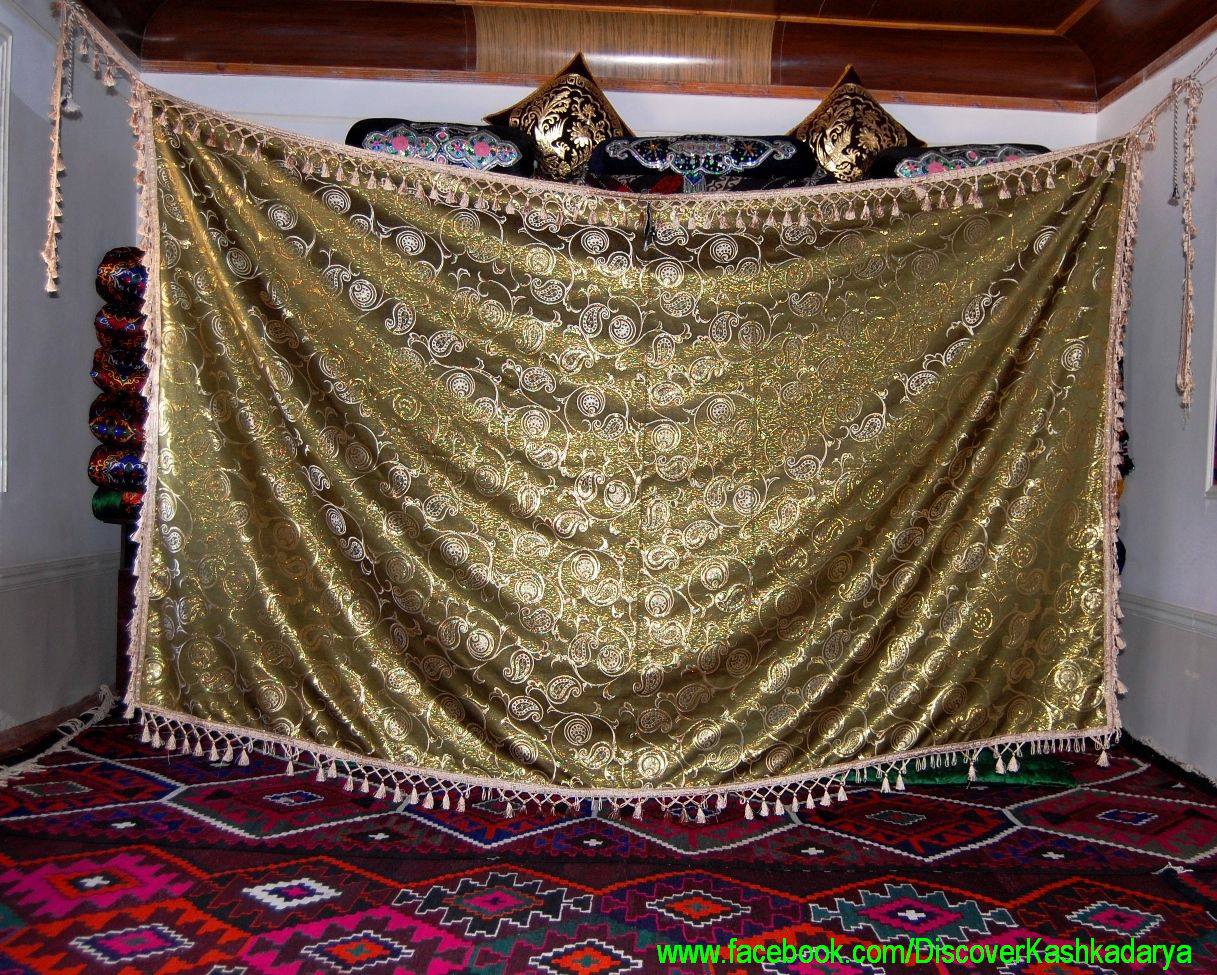
Chimildiq canopy; image: Facebook Discover Kashkadarya

Traditions add a rich layer to these connections, keeping families united. Weddings, for example, are deeply symbolic. One notable custom is the Chimildiq, a ceremonial canopy for newlyweds which marks the start of their life together and serves as a space for blessings and well-wishes for their future. Another beloved tradition is the Beshik tuyi, a joyous celebration of a baby’s first cradle wherein relatives and neighbors come together to share in the happiness of welcoming a new life, underscoring the communal nature of Uzbek culture.

“As an Uzbek woman, I’ve always been fascinated by the beauty and meaning behind our customs,” Rohila Mullayeva told TCA. The mother-in-law to three brides, for more than 20 years Mullayeva has been serving as a kayvoni, one appointed by women to preside over table work at weddings and other ceremonies. “They’re not just rituals but expressions of love, respect, and hope for the future,” she said. “Take Chimildiq, for instance – a special moment for young couples starting their journey together. One of the rituals in the ceremony is when the bride and groom give each other honey on their fingers. This is a sweet symbol of the joyful moments they hope to share in their life ahead. Another part of the ceremony is both meaningful and playful — when the groom attaches boiled eggs his bride’s dress. This gesture is a heartfelt wish for the couple to have many children.

“Then there’s the Beshik tuyi, the cradle ceremony, which is one of the most cherished traditions in our culture. When a bride gives birth to her first child, she is honored in a beautiful custom called Sallabandon, which is part of Beshik tuyi. An elderly grandmother, someone respected for having a big family, places a salla, a headdress wrapped in a special cloth, on the bride’s head,” Mullayeva explained. “During this ceremony, a kurpacha — a soft, colorful quilt — is placed under the bride’s feet, a gesture of respect and care. The meaning behind Sallabandon is deeply symbolic; it marks the bride’s transition from being a girl to a woman, a mother who has now joined the ranks of those who nurture and guide the next generation.”

According to Mullayeva, these traditions may seem simple, but they carry a huge depth of meaning, reminding us of the value we place on family, the importance of blessings, and the joy of welcoming new life.
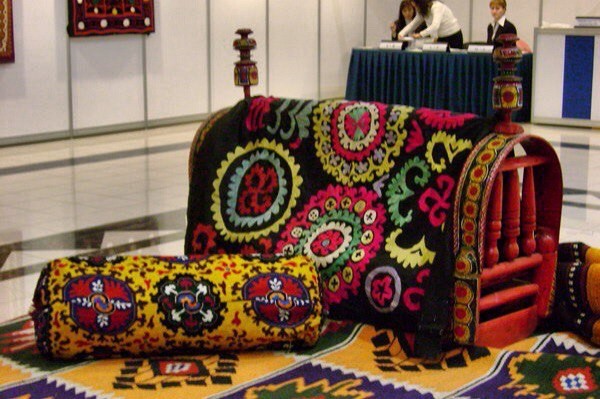
Beshiq Tuyi; image: VK Viktoria Larina

In Kazakhstan, family holds a similarly sacred role. Despite transitioning from a nomadic to a settled lifestyle, the Kazakh people have held onto their age-old customs with great pride. Hospitality stands at the center of their way of life, with guests treated to warm welcomes and the finest offerings in the household. The tradition of Zheti ata, which requires the knowledge of seven generations of paternal ancestors, highlights the importance of lineage and family continuity. The ritual of Betashar, where a bride’s face is unveiled, symbolizes the union of two families. This significant custom has even earned a place on UNESCO’s list of Intangible Cultural Heritage.

Despite rapid modernization, Kazakhstan remains deeply connected to its rich familial traditions, which are considered the bedrock of national identity. Ethnographer and historian Aigerim Alimova shared her insights with TCA on these customs.

“Family, clan, and home are fundamental for Kazakhs,” Alimova explained, highlighting Asar, a tradition where relatives, neighbors, and friends come together to provide mutual assistance, be this in building a home or organizing a significant life event. Another tradition, Erulik, fosters community spirit by welcoming new neighbors with an invitation to dine, allowing newcomers to quickly adapt to their new location.

“Family values in Kazakhstan are also reflected in wedding traditions, which have been preserved in various forms,” noted Alimova. “For instance, during matchmaking, a ritual called Kudagi zhuzik involves the bride’s mother gifting the groom’s mother, symbolizing the unification of two families. The Kyz uzatu ceremony, marking the bride’s departure from her family, features special dishes prepared by the bride’s side to honor and strengthen the new family ties.”

There are a vast multitude of traditions in Kazakhstan and Uzbekistan which reflect deep-rooted family values. For instance, it’s customary for the head of the family to taste food first at a meal, and young people never sit higher than their elders at the table. These traditions serve to embody respect, unity, and the continuity of family heritage.

ESPN’s Laura Sanko Dives into Kazakh Culture, Inspired by UFC’s Shavkat Rakhmonov

American TV host and ESPN journalist Laura Sanko, known for her admiration of Kazakh UFC fighter Shavkat Rakhmonov, has shared her journey of learning the Kazakh language​.

Sanko acknowledged that the process has been challenging but expressed enthusiasm for mastering new words and phrases.

“It’s difficult. You would laugh if you saw me. I sit in my hotel room, watch YouTube videos, and try to repeat after them. When I think I’ve succeeded, I send an audio file to Sayat Abdrakhmanov, Shavkat Rakhmonov’s manager, asking him to check. Then he translates my phrases into Kazakh, and I listen to them slowly, over and over,” she revealed during an interview with Schrödinger’s Sport.

Despite her dedication, Sanko modestly assessed her progress, emphasizing the significant effort required to learn Kazakh.

“I learned that ‘sәlemetsiz be’ means ‘hello.’ I picked that up through YouTube. I wanted to prepare for a simple conversation, but I’m far from that. Kazakh is very difficult for Americans. It requires using deep throat muscles, while English relies on more frontal sounds. It’s hard for us to get it right,” she explained.

Sanko has long been a familiar name among martial arts fans in Kazakhstan. She began following Rakhmonov’s career even before his debut in the UFC​. Her admiration for the fighter has occasionally sparked rumors of romantic interest, but Sanko maintains that her fascination is purely professional.

Sanko’s admiration for Rakhmonov extends beyond his fighting skills to Kazakhstan’s culture. She has made public appearances in traditional Kazakh attire, such as during a UFC weigh-in​. Ahead of Rakhmonov’s most recent fight, she appeared in a traditional Kazakh outfit and, after his seventh consecutive UFC victory, delivered a speech in Kazakh – a gesture widely appreciated by Kazakhstani fans.

Shavkat Rakhmonov is one of Kazakhstan’s most celebrated MMA athletes. Currently ranked No. 2 in the welterweight division, Rakhmonov remains undefeated with a 19-0 record.

Gender Expectations in Kazakhstan: How Boys and Girls are Raised Differently

From childhood, boys and girls in Kazakhstan are raised with clearly defined roles based on gender stereotypes. These attitudes are instilled through the family, media, and educational system, creating pressure on children to conform to specific expectations. Boys are prepared for leadership and career success, while girls are prepared for family life and the role of model kelinka (daughter-in-law).

The UNDP Analytical Report (2024) emphasizes that patriarchal attitudes still persist in Kazakhstan. These stereotypes are transmitted through key institutions of socialization, including the family, educational institutions, and the media, and shape the perception of gender roles as strictly fixed.

Expectations for boys and girls are established from an early age.

For boys, parents often buy cars, construction sets, and tool kits, reinforcing the idea that a man is a protector, provider, and builder. Boys are expected to do well in school and go to university. The phrase “You are a man; you must be strong” often defines their upbringing. It is believed that a boy should be raised to be independent and able to earn money.

Daniyar, 20, student from Almaty:
“When I was a teenager, I was constantly told that I should be responsible and strong. Crying or showing weakness was considered a shame. I couldn’t even express my emotions freely. I think this had a big impact on my worldview.

Madiyar, 22, artist:
“Like many boys, I faced the belief that creativity was not for men. Until I achieved some success, my parents constantly discouraged me, not because it didn’t seem lucrative, but simply because I’m a man.”

Girls are given dolls, toy kitchens, and dishes from an early age to instill domestic skills. Parents often say: “You must learn to cook to be a good wife.” Girls are taught to be obedient, modest and caring. Family conversations often boil down to the fact that a girl should marry and become an exemplary kelinka, responsible for caring for her husband, his parents, and their children.

Aizhan, 25, Taraz:
“When I was a child, my brother could do whatever he wanted – go out, play with friends, but I was constantly told: “Wash the dishes” or “Learn to cook, who will marry you otherwise?”. No one talked about my education, it was considered not as important as being able to bake baursaks (a Kazakh sweet bread).”

Karima, 26, a teacher from Astana:
“In our family, education for girls was not considered a priority. I was often told: “You will get married, why do you need higher education?” I had to fight this stereotype to go to university.”

Lera, 21, student, Astana:
“I didn’t really face any problem in choosing a profession. My parents encouraged my choice to enroll in physics. However, at the university, gender inequality is rampant. Some professors are always saying that math is not for women or that we came here to find husbands. I think that’s a big problem, too.”

In addition to parental guidance, traditional Kazakh gender roles are reinforced through the media.

Traditional gender stereotypes are frequently reinforced in Kazakhstani media through advertisements and TV series. In advertisements, women are often portrayed as housewives taking care of the family and doing household chores, while men are portrayed as successful professionals and leaders.

For example, in a study on gender stereotypes in Kazakhstani advertising, it is noted that women are often shown in the context of family responsibilities, emphasizing their role in the household, while men are portrayed in the professional sphere, emphasizing their career achievements.

Media images are supplemented by social pressure. For example, families often ask women aged 20-25: “When are you getting married?” or “Why aren’t you a kelinka yet?” For men, questions about marriage focus on the need for them to “achieve something in life” in order to be worthy grooms.

The gender roles that are laid down in Kazakhstan from childhood are deeply rooted in culture, but society is gradually beginning to redefine them. A difficult but necessary step is to educate the new generations without prejudice so that boys and girls will grow up free from the expectation that their choices are limited by gender.