• KGS/USD = 0.01144 0%
  • KZT/USD = 0.00193 -0%
  • TJS/USD = 0.10811 -0.28%
  • UZS/USD = 0.00008 0%
  • TMT/USD = 0.28490 0%
  • KGS/USD = 0.01144 0%
  • KZT/USD = 0.00193 -0%
  • TJS/USD = 0.10811 -0.28%
  • UZS/USD = 0.00008 0%
  • TMT/USD = 0.28490 0%
  • KGS/USD = 0.01144 0%
  • KZT/USD = 0.00193 -0%
  • TJS/USD = 0.10811 -0.28%
  • UZS/USD = 0.00008 0%
  • TMT/USD = 0.28490 0%
  • KGS/USD = 0.01144 0%
  • KZT/USD = 0.00193 -0%
  • TJS/USD = 0.10811 -0.28%
  • UZS/USD = 0.00008 0%
  • TMT/USD = 0.28490 0%
  • KGS/USD = 0.01144 0%
  • KZT/USD = 0.00193 -0%
  • TJS/USD = 0.10811 -0.28%
  • UZS/USD = 0.00008 0%
  • TMT/USD = 0.28490 0%
  • KGS/USD = 0.01144 0%
  • KZT/USD = 0.00193 -0%
  • TJS/USD = 0.10811 -0.28%
  • UZS/USD = 0.00008 0%
  • TMT/USD = 0.28490 0%
  • KGS/USD = 0.01144 0%
  • KZT/USD = 0.00193 -0%
  • TJS/USD = 0.10811 -0.28%
  • UZS/USD = 0.00008 0%
  • TMT/USD = 0.28490 0%
  • KGS/USD = 0.01144 0%
  • KZT/USD = 0.00193 -0%
  • TJS/USD = 0.10811 -0.28%
  • UZS/USD = 0.00008 0%
  • TMT/USD = 0.28490 0%
10 December 2025

Kazakhstan, UNDP, and Eurasian Development Bank Unite in Water Management

On 28 June, the Ministry of Water Resources and Irrigation of Kazakhstan, the United Nations Development Programme (UNDP) in Kazakhstan, and the Eurasian Development Bank (EDB) signed a letter of intent to cooperate on joint development projects in multi-purpose water resources management.

As reported by the EDB Media Centre, as part of the agreement, the EDB plans to allocate approximately US $5.3 million in technical assistance to implement several initiatives including water sector digitalization, the development of regional training centres for state-of-the-art irrigation technologies, piloting modern water-saving technologies, and developing a legal and institutional framework for the water sector.

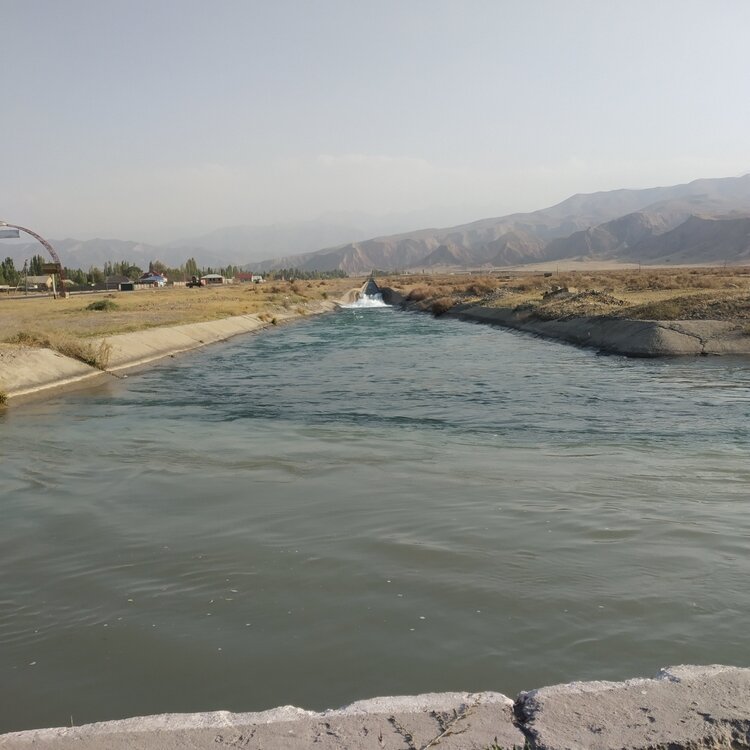
Kazakhstan is experiencing an increase in water-related disasters, as evidenced by recent severe floods and escalating water shortages caused by new infrastructure projects in neighbouring regions, and to mitigate future risks, must instigate improved irrigation and water management strategies.

Nurzhan Nurzhigitov, Kazakhstan’s Minister of Water Resources and Irrigation, commented: “Our Ministry faces many important tasks, one of which is the modernization and improvement of the country’s water management system. For this purpose, a concept and its comprehensive plan outlining specific measures for the development of water infrastructure in Kazakhstan and other large-scale projects were developed and approved. We intend to actively cooperate with international organizations and financial institutions, adopt the best practices of other countries, and jointly implement large projects that will bring benefits for decades to come. Today’s agreement is another step in this direction.”

Nikolay Podguzov, Chairman of the EDB Management Board, added: “We are on the verge of a water shortage in Central Asia – this is a complex regional challenge, but we are tackling it. This is the call we want to convey to all interested parties. We must act very quickly and together. We have only five years to get the region ready and avoid severe water shortages. To timely inform all interested parties, we have done significant work and will keep working to expand the network of partnerships.”

“Globally, the water sector suffers from insufficient funding and investment,” highlighted Sukhrob Khojimatov, UNDP Resident Representative a.i. in Kazakhstan. “Today, less than 10% of global investment goes into water infrastructure. In this context, we are encouraged by this partnership, which we believe will help address complex issues in water management, strengthen climate resilience, and develop regional cooperation in Central Asia under the water agenda.”


Central Asia Needs $12 Billion to Secure Drinking Water

According to the new research paper “Drinking Water Supply and Sanitation in Central Asia” released by the Eurasian Development Bank (EDB), almost 10 million people, or 14% of the population, have poor access to safe drinking water in Central Asia.

Water withdrawals for drinking and domestic use increased twofold to reach 8.6 km3 between 1994 and 2020. Investment in its supply infrastructure, however, failed to match growth in consumption. It is estimated that as much as 80% of the region’s water and sanitation equipment is no longer fit for purpose. In addition, physical and commercial water losses in distribution networks can be as high as 55%.

The EDB research paper highlights a clear lack of  financial support for plans adopted by Central Asia to develop the sector, and forecasts a deficit of over $12 billion, or around $2 billion per year, between 2025-30.

The largest shortfall is expected in Uzbekistan, estimated at $826 million per year, or almost $5 billion between 2025–30. A large shortfall is also projected for Kazakhstan at $700 million per year, or $4.2 billion from 2025–30. In Tajikistan, the shortfall will also be significant, given the size of the country’s economy, reaching $209 million per year, or more than $1.2 billion from 2025–30.

To address the issue, the EDB paper outlines three solutions that could help Central Asian countries raise the required investment capital.

First, the funding gap can be reduced by attracting finance from international financial institutions (IFIs), multilateral development banks, and development agencies. The water and sanitation sector in Central Asia currently accounts for only 6% of total IFI-approved sovereign funding provided to the region CA, with 147 projects valued at $4 billion (out of a total of $67.5 billion) completed from 2008–2023. Concerted efforts are required to improve the appeal of investment in the sector to attract more active involvement by IFIs. With the emergence of a new, favourable institutional environment and the arrival of private players, the potential of the corporate investment becomes significant.

Secondly, to attract the much-needed finance from private investors and major players, the CA water and sanitation sector must not only  modify the ownership and governance structure, but also create conditions conducive to the effective development of market relations. Regarding the above, Evgeny Vinokurov, EDB Chief Economist, stated, “The strengthening of public-private partnership institutions can be of great help. With PPPs active in the water sector, state and private structures will be able to cooperate in a more productive fashion. Expansion of the water sector services market will boost competitiveness and improve the operating efficiency of individual companies. The presence of strong PPP institutions is likely to encourage private operators to join water sector projects. The advent of private players will help the CA countries to attract investments and gain access to innovations, technologies, and experience required to modernise the sector.”

Thirdly, improving the tariff system is becoming increasingly compelling. Water tariffs in the region are extremely low and could therefore be raised to improve the financial sustainability of water and sanitation companies, and in turn, stimulate investment in developing the infrastructure and improving the quality of services. The CA countries can also delegate their tariff approval and review functions to  companies operating in the sector, with control functions vested in local government bodies or independent regulatory bodies. International best practices illustrate the importance to water and sanitation companies in retaining state support in the form of subsidies and soft loans, as well as preserving targeted subsidies for low-income and socially disadvantaged groups of the population.


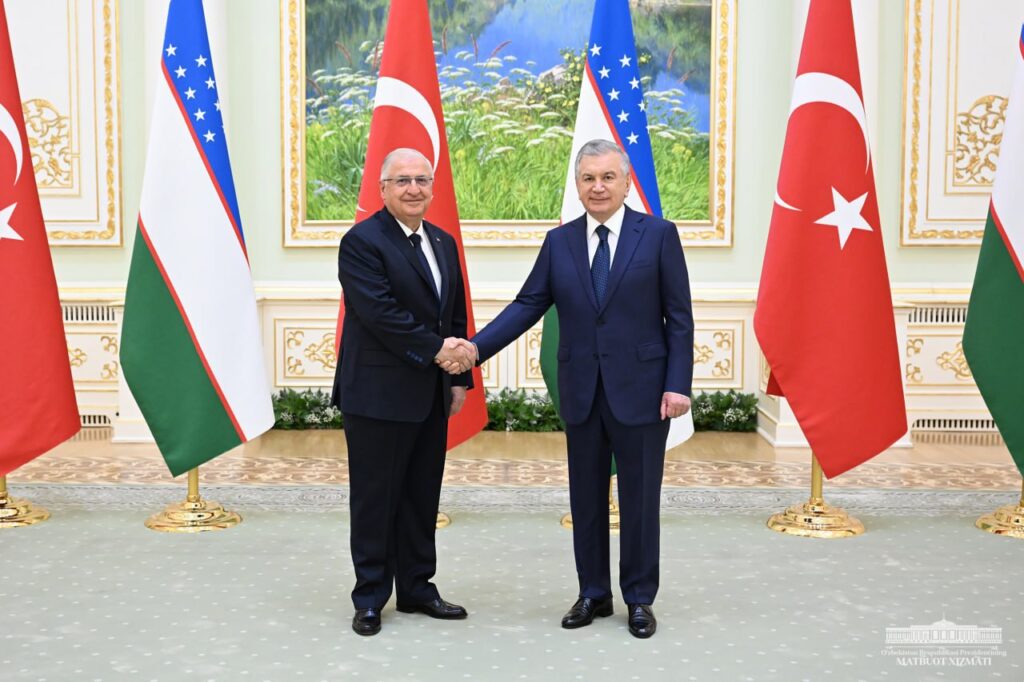
Uzbekistan and Turkey to Develop Military and Technical Cooperation

On June 26, the President of Uzbekistan, Shavkat Mirziyoyev, received a delegation headed by the Minister of National Defense of Turkey, Yashar Guler, who was in Tashkent on a business visit, the President of Uzbekistan’s press service has reported. Considering the agreements reached during Mirziyoyev’s high-level visit to Ankara on June 5-6, urgent issues of deepening the comprehensive strategic partnership between Uzbekistan and Turkey were discussed.

Prospects for developing military and military-technical cooperation, including strengthening close interdepartmental relations, organizing joint events, training military specialists, and other issues, were discussed. Special attention was paid to strengthening and coordinating cooperation in security and fighting terrorism, extremism, and radicalism. The delegations exchanged views on ensuring peace and stability in the region, including Afghanistan.

Journalist and Politician Ahmadshokh Komilzoda Detained in Tajikistan

Journalist and first deputy chairman of the Democratic Party of Tajikistan Ahmadshokh Komilzoda has been detained in Dushanbe. A source in Tajikistan’s law enforcement agencies said on condition of anonymity that Komilzoda has been held in a pre-trial detention center since June 15. He declined to provide other details.

Another source close to Tajikistan’s Prosecutor General’s Office confirmed Komilzoda’s detention, adding that his computer and a second phone were seized on June 16. According to him, “Komilzoda’s detention is related to the case of Saidjafar Usmonzod, a member of parliament and former chairman of the Democratic Party,” who was detained on June 12 in Dushanbe on suspicion of attempting to seize power. The source also reported that “a criminal case has been opened against Ahmadshokh Komilzoda,” but did not know under which article.

Ahmadshokh Komilzoda was an active member of the Rastokhez movement and director of Tajikistan Television in the late 1990s. In 1993, he was held along with several other journalists, who spent time in detention. Komilzoda was also a spokesman for the National Reconciliation Commission, which was established after the signing of the peace agreement which ended the civil war. Until 2011, he was a correspondent for Voice of America in Tajikistan.

Investigation into ISIS-linked Group Smuggling Uzbek Migrants into the U.S.

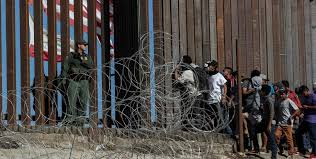
The US Department of Homeland Security is investigating a cross-border group that smuggled more than 400 migrants into the country in connection with ISIS, CNN reported.

Officials said the group claimed it was smuggling migrants into the country, not terrorists. However, another criminal organization related to this group was “blacklisted” last summer due to its links with ISIS. This led to all those associated being added to the list of suspects.

It has been confirmed that the group being investigated for its ties to ISIS, brought more than 400 people to the United States. The majority were citizens of Central Asia, and particularly, Uzbekistan.

In a press report issued on June 26, Secretary of Internal Security of the United States, Alejandro Mayorkas stated that no evidence had been found regarding connections between the 400 migrants and ISIS. However, it was noted that the group that brought them into the country may have provided indirect support to the terrorist organization.

Over the past month, the United States has intensified checks on immigrants from Central Asian countries such as Tajikistan and Uzbekistan. In recent raids, eight citizens of Tajikistan were arrested on suspicion of being connected to terrorist groups. The state leadership has been tasked to determine whether citizens of Uzbekistan are associated with criminal groups.

Russia Sends Some 10,000 Migrants to War in Ukraine

During recent raids, over 30,000 people who have obtained Russian citizenship but do not want to join the military register were identified.  Some 10,000 were then sent to fight in Ukraine , announced head of the Investigative Committee of the Russian Federation, Alexander Bastrykin.

“A year ago, I instructed our divisions to create groups on the ground to work with migrants. We actively participate in raids together with other law enforcers. We – discovered, by chance, a loophole through which – migrants began to leave the Russian Federation slowly,” stated Bastrykin. “The issue here is the implementation of the Constitution and Russian laws that requires anyone granted citizenship to register for military service and, if necessary, take part in a military operation.”

Bastrykin added that migrants who have obtained Russian citizenship “are now joining the ranks of rear units.”

According to experts, the bulk of the migrants sent to fight in Ukraine hail from Central Asia.