• KGS/USD = 0.01144 0%
  • KZT/USD = 0.00192 -0%
  • TJS/USD = 0.10849 0.37%
  • UZS/USD = 0.00008 0%
  • TMT/USD = 0.28571 0.28%
  • KGS/USD = 0.01144 0%
  • KZT/USD = 0.00192 -0%
  • TJS/USD = 0.10849 0.37%
  • UZS/USD = 0.00008 0%
  • TMT/USD = 0.28571 0.28%
  • KGS/USD = 0.01144 0%
  • KZT/USD = 0.00192 -0%
  • TJS/USD = 0.10849 0.37%
  • UZS/USD = 0.00008 0%
  • TMT/USD = 0.28571 0.28%
  • KGS/USD = 0.01144 0%
  • KZT/USD = 0.00192 -0%
  • TJS/USD = 0.10849 0.37%
  • UZS/USD = 0.00008 0%
  • TMT/USD = 0.28571 0.28%
  • KGS/USD = 0.01144 0%
  • KZT/USD = 0.00192 -0%
  • TJS/USD = 0.10849 0.37%
  • UZS/USD = 0.00008 0%
  • TMT/USD = 0.28571 0.28%
  • KGS/USD = 0.01144 0%
  • KZT/USD = 0.00192 -0%
  • TJS/USD = 0.10849 0.37%
  • UZS/USD = 0.00008 0%
  • TMT/USD = 0.28571 0.28%
  • KGS/USD = 0.01144 0%
  • KZT/USD = 0.00192 -0%
  • TJS/USD = 0.10849 0.37%
  • UZS/USD = 0.00008 0%
  • TMT/USD = 0.28571 0.28%
  • KGS/USD = 0.01144 0%
  • KZT/USD = 0.00192 -0%
  • TJS/USD = 0.10849 0.37%
  • UZS/USD = 0.00008 0%
  • TMT/USD = 0.28571 0.28%
11 December 2025

S&P Keeps Uzbekistan’s Credit Rating as “Stable”

The global credit rating agency S&P has maintained Uzbekistan’s sovereign credit rating at “BB-/B” (stable outlook).

Its latest report on Uzbekistan mentions that:

  • In 2024-2027, the average economic growth is forecasted to be 5.2%, slightly lower than last year’s 6%. Financial and governance reforms, including a planned increase in energy tariffs, will support the country’s investment prospects.
  • Decision-making remains centralized. Although the perception of corruption is improving, it remains high.
  • Growth in Uzbekistan is mainly due to domestic and international investments, which accounted for about 43% of the GDP last year.

From 2021 to 2023, Uzbekistan has seen strong real GDP growth, averaging around 6.4% annually, and we expect the outlook to remain strong, supported by public and private investment. Investments drive growth in Uzbekistan, and last year, investments were one of the highest in the world, accounting for about 43% of GDP. Within the “Uzbekistan – 2030” strategy framework, state, and public structures are activating energy, transport, telecommunications, agriculture, and tourism expenditures. At the same time, they are consistently continuing the work of reforming the energy sector, privatization, and improving the tax-budget policy.

Uzbekistan’s economy continues to weather the effects of the Russia-Ukraine war well, though remittance flows and remittances from Russia have declined from their 2022 peak. The flow of remittances was estimated to be approximately $11 billion in 2023 (11% of GDP) but was still nearly 40% higher than in 2021 and up 9% year-over-year in the first quarter of 2024. Russia remains Uzbekistan’s largest remittance source, at 78% of total remittances in 2023. In addition, the total volume of trade with Russia has increased. In the first quarter of 2024, compared to the same period in 2023, it was about 16%. Given the sanctions imposed on Russia by the Western Union, Uzbekistan’s exports to Russia have increased to meet the growing demand. In addition, Uzbekistan signed a two-year contract with Russia’s Gazprom in October 2023, importing 9 million cubic meters of gas daily.

Despite strong growth rates, our sovereign ratings for Uzbekistan remain limited by a low per capita GDP, projected to be $2,600 in 2024, compared to other countries globally. The country benefits from favorable demographics with a young population. Almost 90% of the population is of working age or below, providing an opportunity for growth based on labor supply. However, analysts say job growth will need help to keep up with demand. The weakness of the Russian economy, where most permanent and seasonal migrants in Uzbekistan are employed, may exacerbate this issue.

The effectiveness of Uzbekistan’s monetary policy has improved in recent years. One of the most significant reforms was the exchange rate liberalization in September 2017. The central bank intervenes in the foreign exchange market from time to time to moderate volatility and assess the appreciation of the local currency through large purchases of gold.
Kazakhstan’s Al-Farabi Innovation Hub Boosts Start-Up Opportunities in Saudi Arabia

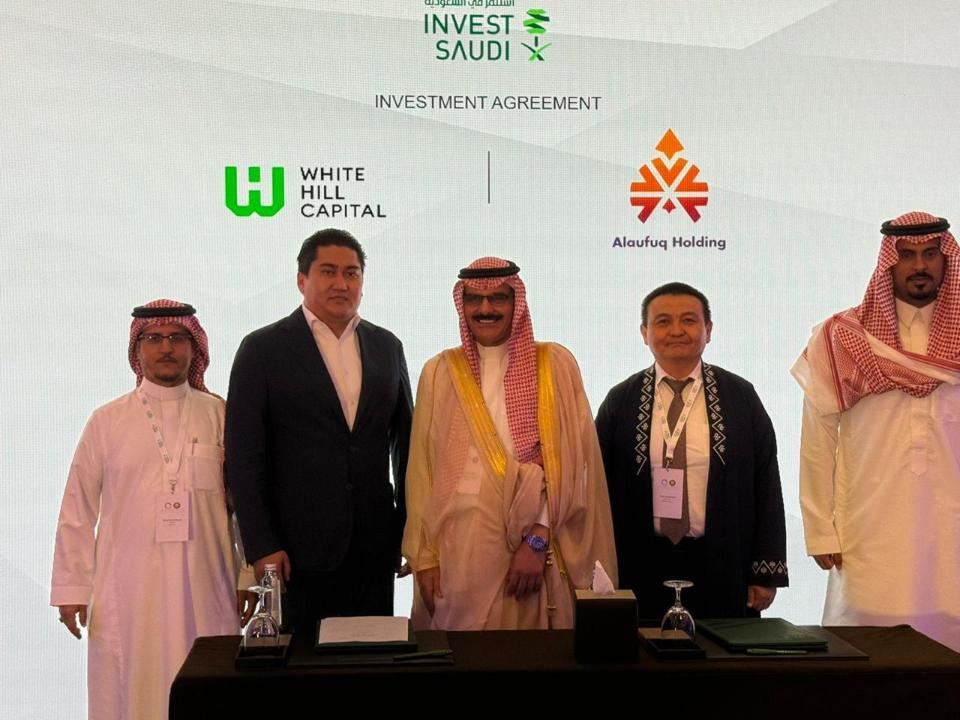
A memorandum of strategic partnership has been signed by Kazakhstan’s Al-Farabi Innovation Hub and Saudi Arabia’s Al Rajhi International for Investment.

The intention behind the agreement is to create a business accelerator for technology companies from Kazakhstan and Central Asia in Saudi Arabia, and provide opportunities for start-ups to pilot their practices, identify local business partners and secure venture capital.

Supported by the Kazakh Ministry of Digital Development, Innovation and Aerospace Industry, the Kazakh-Saudi Business Council, and Astana Hub, the partnership will help expand the potential of Central Asian start-ups in Saudi Arabia by providing easier access to new capital and opportunities to both expand and compete globally.

Emphasizing the significance of the agreement, Aslan Sultanov, founder, and CEO of Al-Farabi Innovation Hub, stated, “We are aimed at creating the best conditions for start-ups from Kazakhstan and Central Asia and strive to provide maximum development opportunities in the MENA market.”

The Al-Farabi Innovation Hub was set up to attract talented entrepreneurs and innovative start-ups from Kazakhstan and Central Asian countries to Saudi Arabia.


World Bank to Support Kyrgyzstan’s Food Industry

The World Bank’s International Development Association will loan Kyrgyzstan $35 million to develop agro-food clusters in the Chui, Jalal-Abad, and Naryn regions.

Of that amount, $5 million is a grant, and $30 million is an interest-free loan for 12 years with a six-year grace period.

Kyrgyzstan’s deputy minister for water resources and agriculture, Kubat Kaseyinov, said the allocated money will be used to develop a dairy cluster in Chui and Jalal-Abad.

There are also plans to improve the seed system and breeding farms throughout the country. This includes providing equipment for seed farms, developing infrastructure, improving animal breeding policies and regulations, developing a national meat and dairy farming plan, and supporting selected breeding farms.

Kazakhstan Promotes Investment Opportunities in South Korea

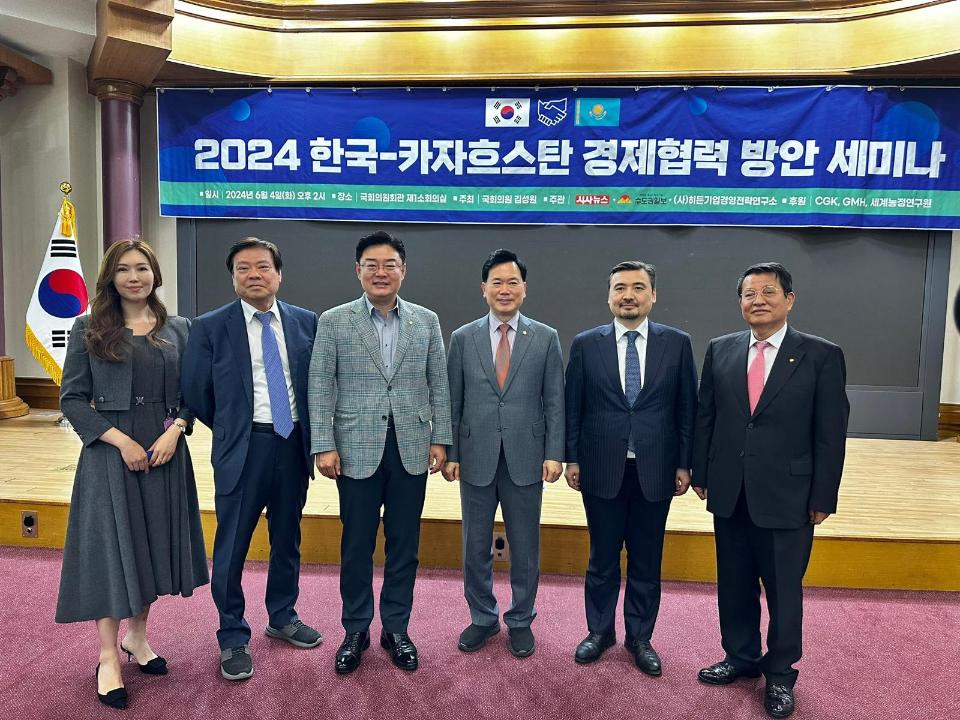
On June 4, Seoul hosted a seminar organized by Caspian Group Korea and several Korean organizations, on the development of bilateral economic cooperation and investment opportunities offered by Kazakhstan.

Endorsed by Kazakhstan’s Foreign Ministry as a significant platform for promoting investment opportunities to the Korean business community, the seminar was attended by deputies of the National Assembly of the Republic of Korea, Kim Song Won and Kim Seung Soo, and Korean companies including Samsung, Hyundai, KPMG Korea, KT, and CJ.

In his address, Deputy of the National Assembly Kim Song Won referred to the important relationship between Kazakhstan and Korea, and emphasized the need to create synergy by combining advanced Korean technologies and rich Kazakh natural resources.

Ambassador of Kazakhstan to the Republic of Korea, Nurgali Arystanov, likewise welcomed strengthening cooperation between the two countries and particularly, the input of Korea’s experience in Kazakhstan’s industrial development, smart city technologies, healthcare systems, as well as agriculture and smart farms.

Focus then turned to the new Alatau City project, an ambitious centre in Kazakhstan which designed to attract for Korean advanced technologies, will play a significant role in strengthening bilateral investment cooperation and the development of sustainable urban infrastructure.


Foreign Investment in Central Asia is Following Demographic Trends

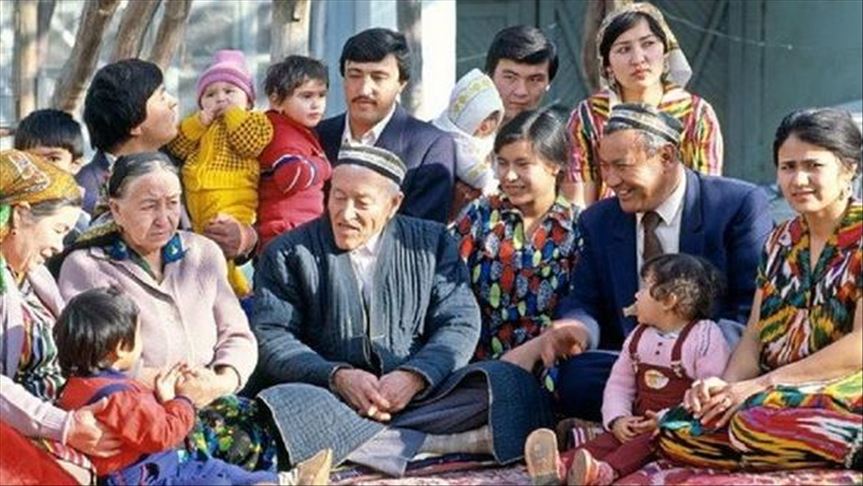
The population growth in Central Asia, combined with worsening demographic situations across the rest of the post-Soviet space, means a gradual shift in power and investment toward the regional powers of Uzbekistan and Kazakhstan.

Thanks to their growing markets – unlike Belarus and Russia, where the population is slowly declining, and especially Ukraine – Uzbekistan and Kazakhstan are starting large projects with the participation of foreign investors. In particular, Russia is showing increased interest in Central Asia, with the US and the EU also keen to engage financially.

Recently, Kazakhstani political scientist Marat Shibutov noted on social media that politicians have realized the benefits of investing in countries with major population growth. He argued that power dynamics across the post-Soviet space are changing in line with that.

Shibutov quoted an article that he co-authored with Yuri Solozobov in May 2019: “according to statistics, in 1991 there were 20 million people in Uzbekistan and 51 million in Ukraine. Now, there are officially 32.6 million in Uzbekistan (experts say about 34 million) and 42 million in Ukraine (the real figure is unknown). But soon, everything is set to change dramatically. In fact, in 2-5 years, Uzbekistan will equal or surpass Ukraine in population – this will be a turning point in the post-Soviet space. First and foremost, Uzbekistan’s investment and trade position will improve, especially in the consumer goods segment. Considering the nuclear power plant project being implemented with the help of Russia and the Ustyurt oil and gas fields, Uzbekistan will become a more promising country for foreign investors than Ukraine, whose development will be entirely about defense spending and internal political issues.”

Due to the war that started in 2022, Shibutov’s forecast has materialized even faster. According to UN estimates, Ukraine’s population this year is barely 37 million. No one has accurate data since the last census in this country was carried out in 2001. As of 2023, the Ministry of Social Policy of Ukraine put the figure even lower than the UN, at 36 million. Thus, after Russia (with a population of over 140 million), Uzbekistan is likely the second most populous country of the former USSR.

In Kazakhstan the population is growing even faster than in Uzbekistan. Russian and Kazakh businesses are implementing 135 projects worth $26.5 billion. Additionally, 67 joint projects worth $14 billion are being planned across key economic industries, including machine building, metallurgy, and chemicals. They are expected to create 11,000 jobs.

According to Russian ambassador to Kazakhstan Alexei Borodavkin, there are more than 18,000 enterprises with Russian capital in Kazakhstan and about 4,000 joint ventures with Kazakh partners. Overall, Russia and Kazakhstan have investments totaling $33.5 billion across 143 projects. In November last year, a memorandum of cooperation was signed between the countries’ ministries of energy to build three thermal power plants (TPP) in Kazakhstan – Kokshetau TPP, Semey TPP, and Ust-Kamenogorsk TPP. The combined capacity of the new coal-fired facilities will be about 1 GW (Kokshetau TPP 240 MW, Semey TPP 360 MW, and Ust-Kamenogorsk TPP 560 MW).

In addition, the Russians are one of the favorites in the stakes to be selected to build Kazakhstan’s first nuclear power plant, which is planned to be located in the densely populated Almaty region. The cost of the project, according to preliminary estimates, will be $10-15 billion.

To balance Russia’s growing influence in Central Asia, western countries are also showing increased interest in the region. In April of this year, British foreign minister David Cameron visited the five Central Asian countries, signaling the UK’s intention to invest in the rapidly growing regional economy. In September 2023, the Central Asian heads of state met with US president Joe Biden in the C5+1 format. The leaders were then hosted by German chancellor Olaf Scholz for a summit in Berlin, followed not long after by a visit to Kazakhstan and Uzbekistan by French president Emmanuel Macron.

Shibutov, in the abovementioned 2019 article, forecasts a further dwindling of the population in other post-Soviet countries like Lithuania, Latvia, Estonia, Moldova, Armenia, and Georgia. This forecast still looks well-founded, while all the Central Asian countries are seeing steady population growth.


French Cargo Airline Plans to Use Uzbekistan’s Navoi Airport

CMA CGM Air Cargo, a French cargo airline, plans to deliver cargo from China to Europe via Uzbekistan. The carrier intends to use Navoi Airport as a transit point.

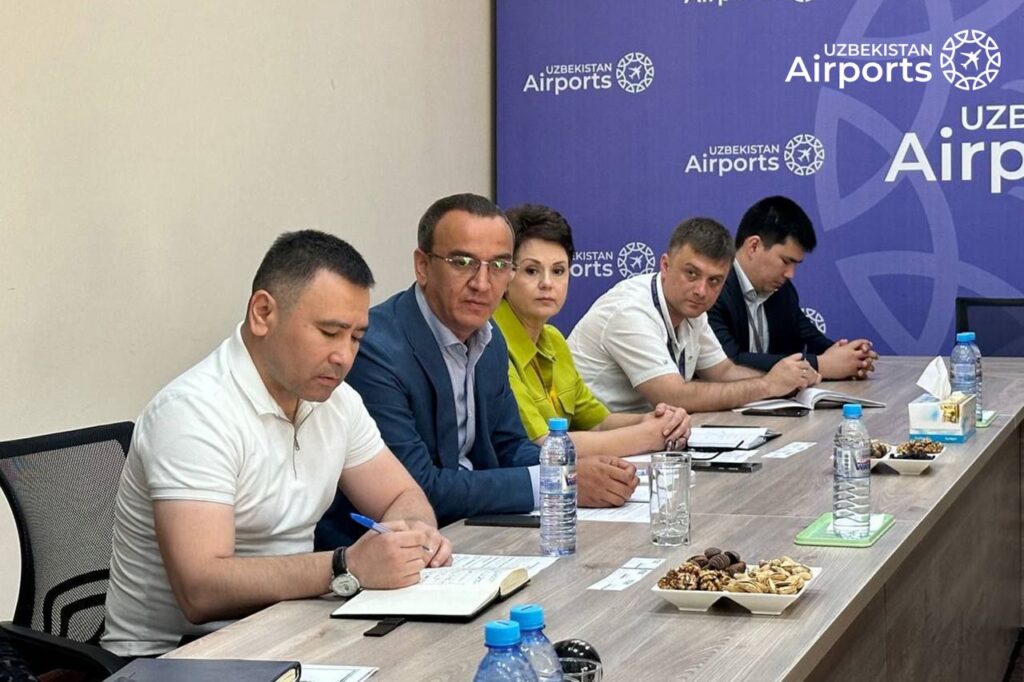
Representatives of Uzbekistan Airports, Uzaviation, and Uzaeronavigatsia Center recently met with the French CMA CGM Air Cargo delegation, headed by General Director Damien Mazauder, in Tashkent.

The airline will carry out five flights a week on Airbus A330 aircraft, and Navoi Airport will become a transit point for technical landings, refueling, and crew changes.

CMA CGM Air Cargo is headquartered in Paris; it was established in 2021 as an air division of the CMA CGM transportation group.