• KGS/USD = 0.01144 0%
  • KZT/USD = 0.00193 -0%
  • TJS/USD = 0.10811 -0.28%
  • UZS/USD = 0.00008 0%
  • TMT/USD = 0.28490 0%
  • KGS/USD = 0.01144 0%
  • KZT/USD = 0.00193 -0%
  • TJS/USD = 0.10811 -0.28%
  • UZS/USD = 0.00008 0%
  • TMT/USD = 0.28490 0%
  • KGS/USD = 0.01144 0%
  • KZT/USD = 0.00193 -0%
  • TJS/USD = 0.10811 -0.28%
  • UZS/USD = 0.00008 0%
  • TMT/USD = 0.28490 0%
  • KGS/USD = 0.01144 0%
  • KZT/USD = 0.00193 -0%
  • TJS/USD = 0.10811 -0.28%
  • UZS/USD = 0.00008 0%
  • TMT/USD = 0.28490 0%
  • KGS/USD = 0.01144 0%
  • KZT/USD = 0.00193 -0%
  • TJS/USD = 0.10811 -0.28%
  • UZS/USD = 0.00008 0%
  • TMT/USD = 0.28490 0%
  • KGS/USD = 0.01144 0%
  • KZT/USD = 0.00193 -0%
  • TJS/USD = 0.10811 -0.28%
  • UZS/USD = 0.00008 0%
  • TMT/USD = 0.28490 0%
  • KGS/USD = 0.01144 0%
  • KZT/USD = 0.00193 -0%
  • TJS/USD = 0.10811 -0.28%
  • UZS/USD = 0.00008 0%
  • TMT/USD = 0.28490 0%
  • KGS/USD = 0.01144 0%
  • KZT/USD = 0.00193 -0%
  • TJS/USD = 0.10811 -0.28%
  • UZS/USD = 0.00008 0%
  • TMT/USD = 0.28490 0%
10 December 2025

Major Industrial and Energy Projects for Uzbekistan

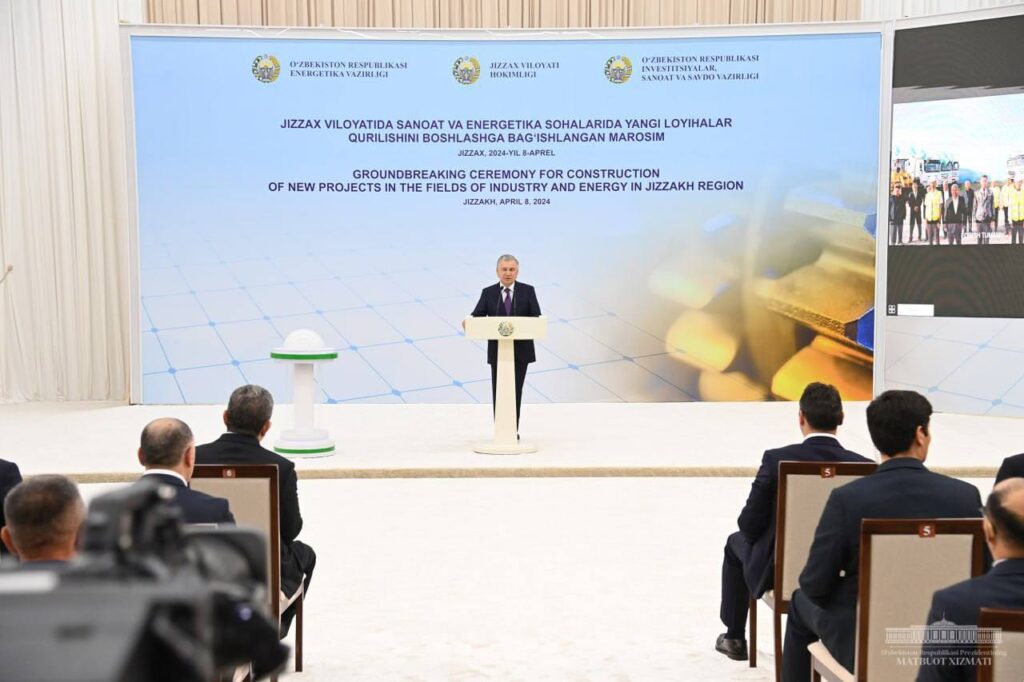
On April 8th, Uzbekistan President Shavkat Mirziyoyev attended a launch ceremony for the construction of two major industry and energy projects in the Jizzakh region.

The first, in the Gallyaaral district, comprises an industrial zone specializing in metallurgy. Encompassing a customs warehouse and 7 projects worth $500 million, the new zone will manufacture various fittings, steel balls, pipes, automobile bodies, and provide 5,000 jobs.

The second project to be established in the Farish district in collaboration with China Poly Group and China Electric, is a large 500-megawatt solar power plant. With investment of $350 million, the plant will generate 1.1 billion kilowatt-hours of electricity per annum and improve the supply of energy to 450,000 households. The first 200 megawatts will be put into operation later this year.

It was announced at the ceremony that in the coming years, additional thermal, wind and solar power plants with a total capacity of 1,660 megawatts will be built in the Jizzakh region. The new facilities will improve the standard of living of the local population and provide a new impetus to the region’s economic development.

Bishkek Locals Bemoan Corruption Which Yields Terrible Roads

Residents of Bishkek are outraged by the condition of roads in the city. In their opinion, every spring the asphalt literally disappears. President Sadyr Japarov has said he shares the citizens’ dissatisfaction. Responding to the criticism, representatives of the Ministry of Transport and Communications said that the presence of potholes and holes on highways is a natural process.

“The situation depends on many factors, including weather and climatic conditions and the intensity of road traffic. The Ministry of Transport and Communications makes every effort to repair and properly maintain the roads of international state and local importance on its balance sheet and tries to fulfill the adopted plan for their construction and maintenance as much as possible, even exceeding this plan,” the press service of the Ministry of Transport said. The ministry stressed that only 19,000 kilometers of roads are on the balance sheet of the Ministry, whilst the quality of the remainder of Kyrgyzstan’s roads is monitored by municipal authorities in cities – and therefore Bishkek residents should complain to the city authorities.

The capital’s municipal services were also criticized by President Japarov, who said in an interview that it was time to change the system of road construction and maintenance completely.

“How did the Ministry of Transport work in road construction for 30 years? If they needed to asphalt a road 100 kilometers long, they attracted private companies, calculated the cost of the work and demanded 10% of that amount from those same companies. Of course, they did not pay this 10% to the ministry, but into their own pockets. And after the private companies completed construction, they gave [more] money in order to put it into operation,” Japarov stated.

The President instructed the government to change the rules: roads should be repaired not by private companies, but by government agencies. The government is now allocating funds to buy its own equipment to help solve the problem of corruption, he said. Consequently, over the past two years, about 300 units of special equipment have been purchased and distributed to the regions. Another 450 special vehicles are expected to be delivered this year. The quality of roads will improve, though not immediately, Japarov said. Finding qualified personnel and strengthening their technical know-how will take time.

“We have not increased funds for asphalting roads. The result is due to the fact that we started to build it ourselves… Of course, there are certain shortcomings in quality. However, as the saying goes, ‘everything has its time,’ and our transport workers will gradually achieve high quality. I think this process will take three to five years,” the President concluded.

This year, the capital’s municipal authorities have barely reacted to the complaints of citizens; roads in Bishkek are being repaired slowly with the arrival of spring. However, after harsh criticism from the head of state, the situation has changed.

Mayor of Bishkek, Aibek Junushaliyev recently went on an inspection to check construction work. “Bishkeksafalt service [has been tasked with] monitoring the quality of asphalt. Otherwise, strict measures will be taken against those responsible for road repair,” threatened the head of the city in comments made during the inspection.

Turkmenistan Stops Selling Tickets to Russia for Migrant Laborers

In a number of regions of Turkmenistan, the sale of air tickets to citizens who have received an official offer to work in Russia has been suspended, according to news portal Turkmen.news. The halting of ticket sales is related to the terrorist attack on the Crocus City Hall near Moscow on March 22 of this year.

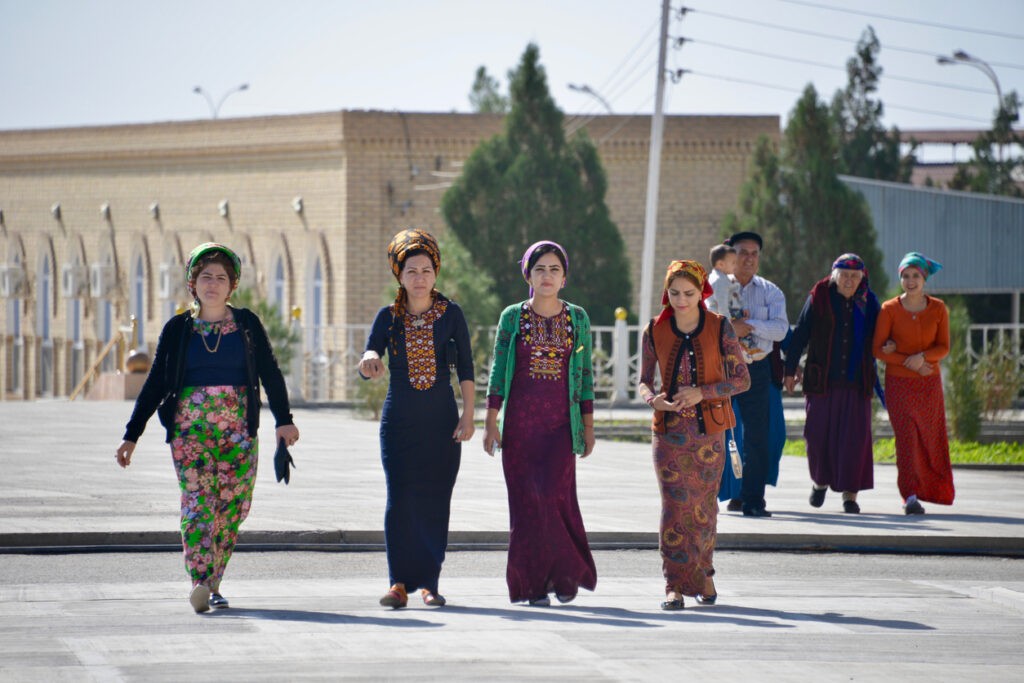
Following the attack on March 22, the departure of labor migrants from Turkmenistan to Russia suddenly stopped. Those who have received invitations to work and applied for visas have learned that they cannot purchase tickets for the time being.

Recently, twelve undocumented workers from Turkmenistan, who worked in one of the markets in Domodedovo near Moscow, were arrested. Four were released after being fined, and eight were transferred to a special detention center in the city of Yegoryevsk, Moscow region, for deportation.

According to Chronicles Turkmenistan, there are 47 citizens of Turkmenistan being held at a pre-trial detention center in Vidnoye who are awaiting deportation. The Ministry of Foreign Affairs of Turkmenistan and the Russian Government has begun discussing the possibility of suspending the issuance of visas for Turkmens for at least one and a half years. An exception will be made only for diplomats and representatives of large businesses, according to a report.

OCA Magazine Celebrates Fifteenth Anniversary

The sole English-language magazine dedicated to Central Asia and the CIS region, since 2009 OCA Magazine has been promoting diplomatic relationships and international partnerships between Eurasia and the global community. With a list of contributors which includes heads of state, ambassadors, ministers, celebrities, academicians, business-people, and others, in 2024 the magazine will celebrate its fifteenth anniversary with both new and special editions, as well as international events bringing together readers, contributors, and partners of the publication.

A special issue, OCA: Creative Industries & Tourism Expertise, has already been published as part of the celebrations, which includes articles about the best tourist experiences, modern projects, and key challenges in the creative economies of Uzbekistan, Kazakhstan, Kyrgyzstan, Belarus, and more. Written by experts from the U.K., Spain, Russia, and others, the first edition was presented during the OCA Zoom International Conference on “Sustainable Development of the Creative Economy: A New Model for Tourism in Central Asia.”

This conference brought together experts to discuss current issues and trends in tourism development resulting from the volatile global situation. During the session, new opportunities for Eurasian tourism were explored, with Gulchekhra-begim Makhmudova proposing the creation of an edutainment park called SILKROADLAND, and suggesting that video content based on her children’s books about the legends of the Great Silk Road should be produced. Makhmudova noted that while many are familiar with Western cartoon characters, there is a great opportunity to showcase the unique and diverse culture of Central Asia through animation.

Gregory Schafer discussed sustainable cultural tourism and its management, highlighting the significance of preserving cultural authenticity, promoting eco-friendly practices, and exploring gastro-tourism. Irina Kharitonova, meanwhile, addressed the topic of developing the creative economy and related industries, noting that some may not be familiar with terms such as “creative tourism,” and the need to promote better understanding. Artem Klykov, a professor at Silk Road University and SWISS University, highlighted the significance of human capital as the basis for sustainable tourism and the creative economy. “Increasing the competitiveness of tourism requires effective management of human capital,” Klykov stated.

Despite the business-oriented nature of the conference, there was still an opportunity for celebration. Marat Akhmedjanov, the founder of Silk Road Media (U.K.) and publisher of OCA Magazine, congratulated everyone on the fifteenth anniversary and expressed his gratitude to all of the participants.

Later this year, the magazine will see several more special issues and related conferences, such as the 4th OCA Magazine: Education (an opportunity for universities, experts and media representatives to promote education and research opportunities inside the region and abroad), the 5th OCA Magazine: People (featuring 40 interviews with outstanding creative people from  Eurasia), the 4th OCA Magazine: North America Edition (a special edition observing the wide range of issues related to Central Asia, the CIS, the U.S. and Canada), and the 1st OCA Magazine: Real Estate (a new opportunity for international investors).

The year’s activities will culminate with the OCA Dialogue Forum, “New Dimensions of International Investment Attractiveness of Eurasia. Global ReFace,” which is scheduled to take place in London in November.

Ice Drifts, Nets and Oil: Caspian Seals Dying En Masse

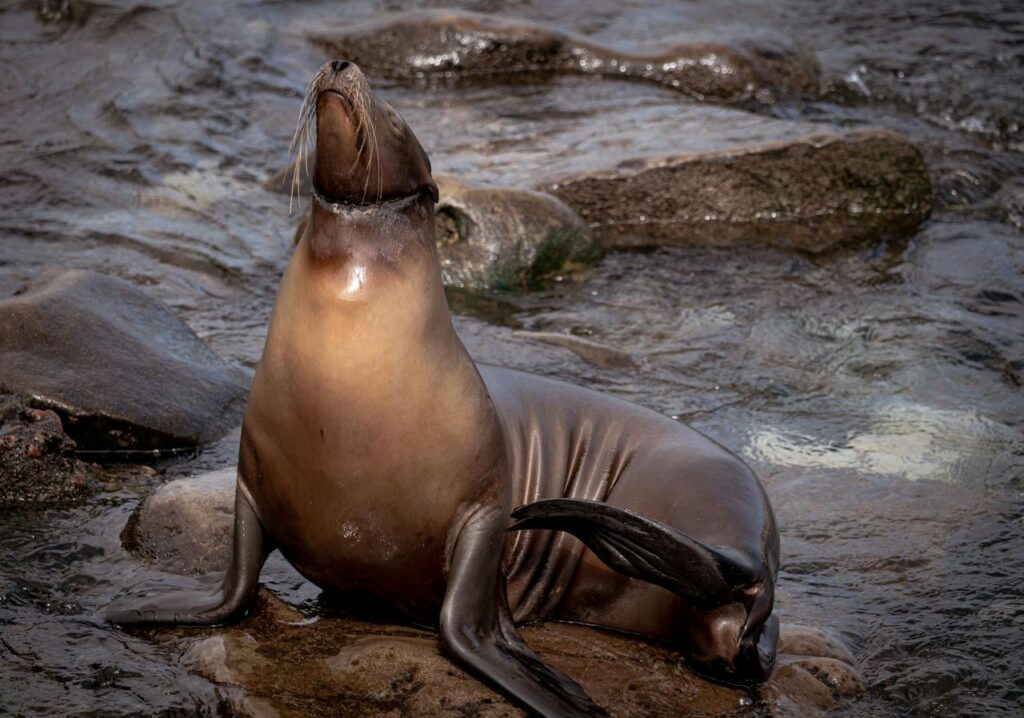
According to a report issued by the Committee of Fisheries of the Ministry of Agriculture of Kazakhstan, sea mammals in the coastal region of Mangistau region are dying at an alarming rate.

On March 31, whilst monitoring the Kazakh coast of the Caspian Sea, fisheries inspection staff alongside the local executive body, discovered 16 seal carcasses, bringing the total of dead seals found this year to 78. Only one of the carcasses showed signs of physical damage.

To ascertain the cause of death, samples of tissues of internal organs as well as fangs, claws and hair, were taken from 20 carcasses for examination by scientists at the Institute of Hydrobiology and Ecology.

“Two major factors influence the death of Caspian seals: natural and anthropogenic,” researcher Zhazira Sydykova told The Times of Central Asia. “The anthropogenic factor includes pollution of the Caspian seals’ habitat, the impact of fishing and poachers’ nets, as well as the extraction of oil products, which has a very negative impact on the Caspian seals’ population. The natural factor we can attribute to ice drift and the death of seals during extremely warm winters.”

The samples are being currently being processed, and only after receiving the results will scientists be able to more accurately identify the mammals’ cause of death. Until then, experts are reluctant to offer even a hypothetical explanation.

Sydykova did however, highlight the fact that the institute has been monitoring the periodicity of emissions into the Caspian Sea on an annual basis since 2017. Data from the coastal zone is usually taken each spring but emissions are sometimes detected as late as autumn. The last significant death toll in the seal population was recorded back in 2021. Several pregnant cows were found amongst the carcasses. Based on the presence of traces of toxins and heavy metals in the animals’ tissues, experts attributed the cause of death to pollution by heavy gases and in particular, hydrogen sulfide.

The Institute of Hydrobiology and Ecology is now looking at ways to prevent the death of Caspian seals including the introduction of environmental requirements for shipping companies and the extraction of hydrocarbon resources. Scientists have also called for a stricter compliance with certain regulations and more thorough reportage on all industrial discharges released into the sea to improve their ability to monitor environmental changes and take appropriate measures.

Jizzakh, Uzbekistan Set to Manufacture 100,000 Cars per Annum

On April 8th, Uzbek President Shavkat Mirziyoyev inspected the ADM Jizzakh automobile plant where he was shown the new Kia Sonet, hot off the production line.

Established in 2021 with investments of 234 million US dollars and the creation of 1.8 thousand jobs, ADM Jizzakh has assembled 36 thousand cars for Kia, Chery, and Haval over the past three years.

The plant was recently expanded and furnished with cutting-edge technology, including 30 robots, imported from South Korea, Japan, and Germany. Operational since March, the upgraded facilities will provide the plant with a capacity to produce 100 thousand cars per annum.

In addition to investing in equipment, the plant has also initiated a scheme to develop and maintain quality control. This year, specialists from South Korea, India, China, and Vietnam will spend time on site training employees and fifty of the plant’s engineers will receive advanced training in research and design centres in South Korea and China.

Further to his visit, the president issued instructions for the plant to increase its production to 348 types of components between 2024-2027.