• KGS/USD = 0.01144 0%
  • KZT/USD = 0.00193 -0%
  • TJS/USD = 0.10811 -0.28%
  • UZS/USD = 0.00008 0%
  • TMT/USD = 0.28490 0%
  • KGS/USD = 0.01144 0%
  • KZT/USD = 0.00193 -0%
  • TJS/USD = 0.10811 -0.28%
  • UZS/USD = 0.00008 0%
  • TMT/USD = 0.28490 0%
  • KGS/USD = 0.01144 0%
  • KZT/USD = 0.00193 -0%
  • TJS/USD = 0.10811 -0.28%
  • UZS/USD = 0.00008 0%
  • TMT/USD = 0.28490 0%
  • KGS/USD = 0.01144 0%
  • KZT/USD = 0.00193 -0%
  • TJS/USD = 0.10811 -0.28%
  • UZS/USD = 0.00008 0%
  • TMT/USD = 0.28490 0%
  • KGS/USD = 0.01144 0%
  • KZT/USD = 0.00193 -0%
  • TJS/USD = 0.10811 -0.28%
  • UZS/USD = 0.00008 0%
  • TMT/USD = 0.28490 0%
  • KGS/USD = 0.01144 0%
  • KZT/USD = 0.00193 -0%
  • TJS/USD = 0.10811 -0.28%
  • UZS/USD = 0.00008 0%
  • TMT/USD = 0.28490 0%
  • KGS/USD = 0.01144 0%
  • KZT/USD = 0.00193 -0%
  • TJS/USD = 0.10811 -0.28%
  • UZS/USD = 0.00008 0%
  • TMT/USD = 0.28490 0%
  • KGS/USD = 0.01144 0%
  • KZT/USD = 0.00193 -0%
  • TJS/USD = 0.10811 -0.28%
  • UZS/USD = 0.00008 0%
  • TMT/USD = 0.28490 0%
10 December 2025

Turkmenistan and Italy Expand Transport Cooperation

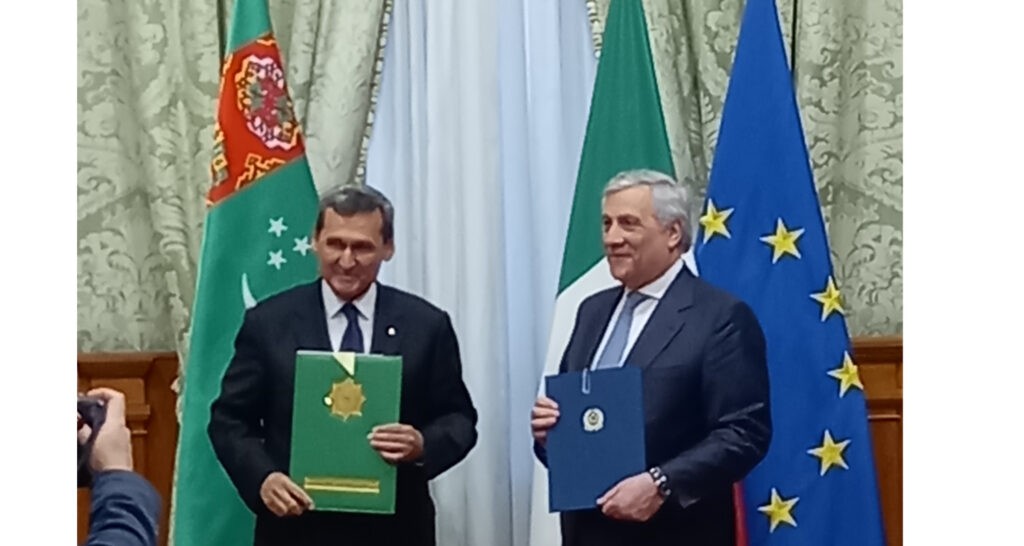
A Turkmen delegation led by the Deputy Chairman of the Cabinet of Ministers, Minister of Foreign Affairs of Turkmenistan, Rashid Meredov visited Italy on March 20th for negotiations with the Deputy Prime Minister and Minister of Foreign Affairs of Italy Antonio Tajani.

The foreign ministers discussed bilateral relations in political, diplomatic, trade, economic, cultural and humanitarian sectors.

The Turkmen Foreign Minister also held talks with the Deputy Prime Minister, Minister of Infrastructure and Transport of Italy, Matteo Salvini and top representatives of the Italian transport sector.

The parties discussed expanding cooperation in the field of railway and maritime transport, and signed a Memorandum of Cooperation between the ports of Turkmenbashy (Turkmenistan) and Naples (Italy).

Kazakhstan and Qatar to Implement Projects Worth $17.6 Billion

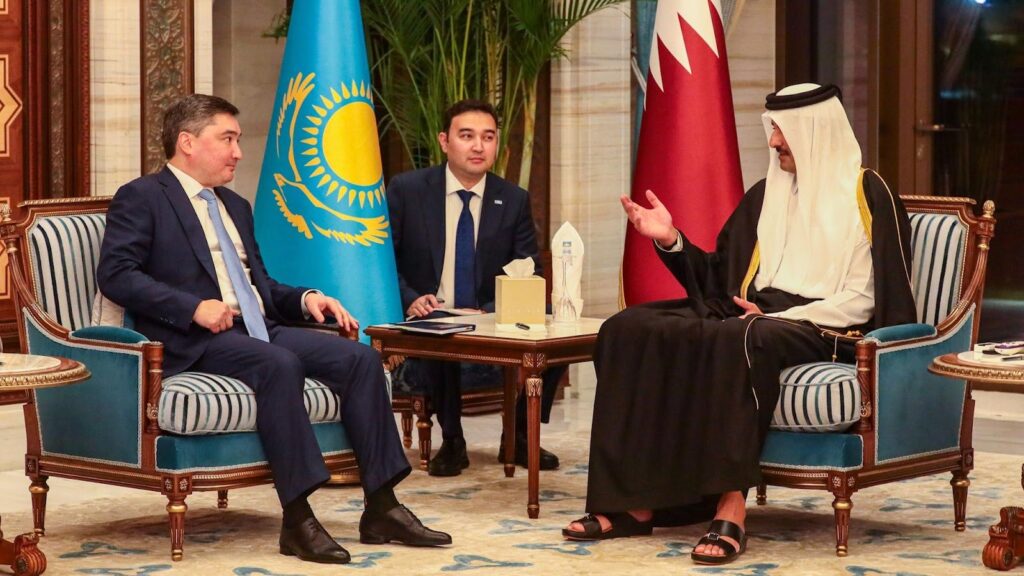
On March 20th the Prime Minister of Kazakhstan Olzhas Bektenov attended a meeting in Qatar with the Emir of Qatar, Sheikh Tamim bin Hamad Al Thani.

During discussions, Bektenov emphasized the importance of the two countries’ economic partnership in the Arab world and reported on the imminent implementation of large-scale and strategically significant investment projects worth an unprecedented amount of $17.6 billion. The governments of Kazakhstan and Qatar subsequently signed an agreement on establishing a long-term strategic partnership for the development of projects in priority sectors.

Projects include the construction of gas processing plants in Kazakhstan at a cost of around $5.7 billion. The additional construction of a Aktobe-Kostanay gas pipeline and the second section of the Beineu-Bozoy-Shymkent gas pipeline for a total cost of around $7.7 billion, will develop gas supplies to Kazakhstan’s northern regions.

A further investment of around $2.7 billion will fund the construction of a combined cycle gas power plant with a capacity of 1,100 MW, and a hydroelectric power plant with a capacity of 350 MW, to ensure long-term energy security of Kazakhstan.

With reference to agriculture, the Prime Minister declared Kazakhstan’s readiness to supply halal and organic products to Qatar, and stated that the two countries are on course to construct plants for the deep processing of wheat, peas and milk in Kazakhstan.

Kyrgyz Parliament Developing a Russian-Kyrgyz Legislative Dictionary

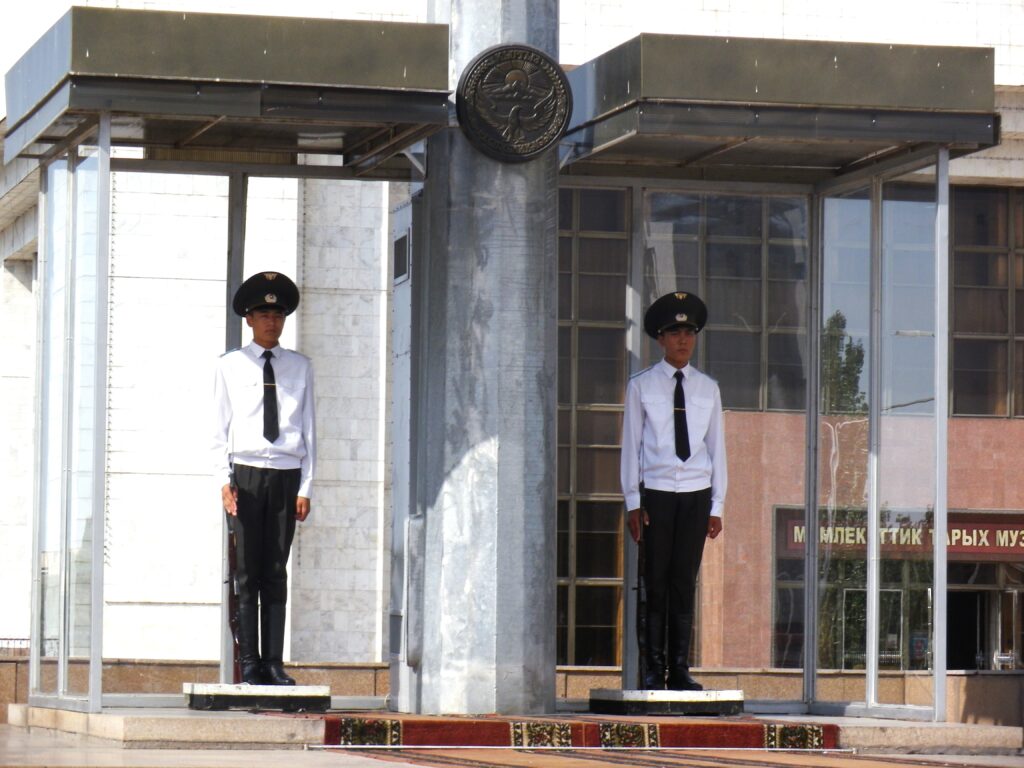
Last summer, the Kyrgyz Republic adopted a law on the official state language, according to which all civil servants must speak Kyrgyz, and speak only the state language in Parliament and the ministries. As one of the members of the working group in Parliament notes, a lot of international terms have appeared in legal practice today, and civil servants – sometimes not knowing their exact meaning in Kyrgyz – use the terms in their work, often incorrectly, causing potentially grave misunderstandings.

“The main purpose of the initiative is to eliminate confusion in the terms used in the application of legal acts – bringing them into a unified system,” said Nurlan Azygaliev, Deputy Speaker of the Parliament. Another member of the working group, the Chairman of the State Commission on Language, said the initiative would have a positive impact on the development of the Kyrgyz language as a whole.

After officials develop a dictionary for legislative acts, they will work on creating an explanatory Russian-Kyrgyz dictionary of legal terms. “These issues should have been given attention since the first years of independence. We all need to work together in this direction,” said State Language Commission Chairman, Melis Murataliyev.

Several years ago, Kyrgyz President Sadyr Japarov urged officials to switch to Kyrgyz language documents. As the president noted, if officials remain indifferent, the Kyrgyz language will not develop. The head of the republic cited statistics that indicate ministries and agencies of Kyrgyzstan use Kyrgyz language only in 10-15% of the documents in circulation. The rest of the documents are printed in Russian. “These indicators should not be less than 50%,” Japarov emphasized.

According to the law adopted by the president, the Kyrgyz language should be used also for administrative dealings such as court proceedings, concluding international agreements, and conducting elections. It should also be used in more common communication in education, science and culture, as well as in the media and other areas. Today, Kyrgyzstan’s mass media must publish more than half of all their publications in the state language.

According to the republic’s constitution, the authorities are also obliged to support the development of other languages spoken in the country. “Kyrgyzstan adheres to the principle of the free use of languages of representatives of all ethnic groups living on the territory of the country, and guarantees the creation of conditions for the development of these languages. Every citizen has the right to create conditions for the preservation, study and development of his or her native language,” the law stipulates.

Currently, most state orders, decrees and administrative legal acts, especially in the capital, Bishkek, are issued in Kyrgyzstan’s de jure official language – Russian.

Kazakhstan Sells More Sunflower Oil to Afghanistan; Imports More Matches and Jade

Exports and imports between Kazakhstan and Afghanistan showed significant changes in 2023. Exports of goods from Kazakhstan to Afghanistan fell by 16.4% last year, declining by $615.3 million compared to 2022.

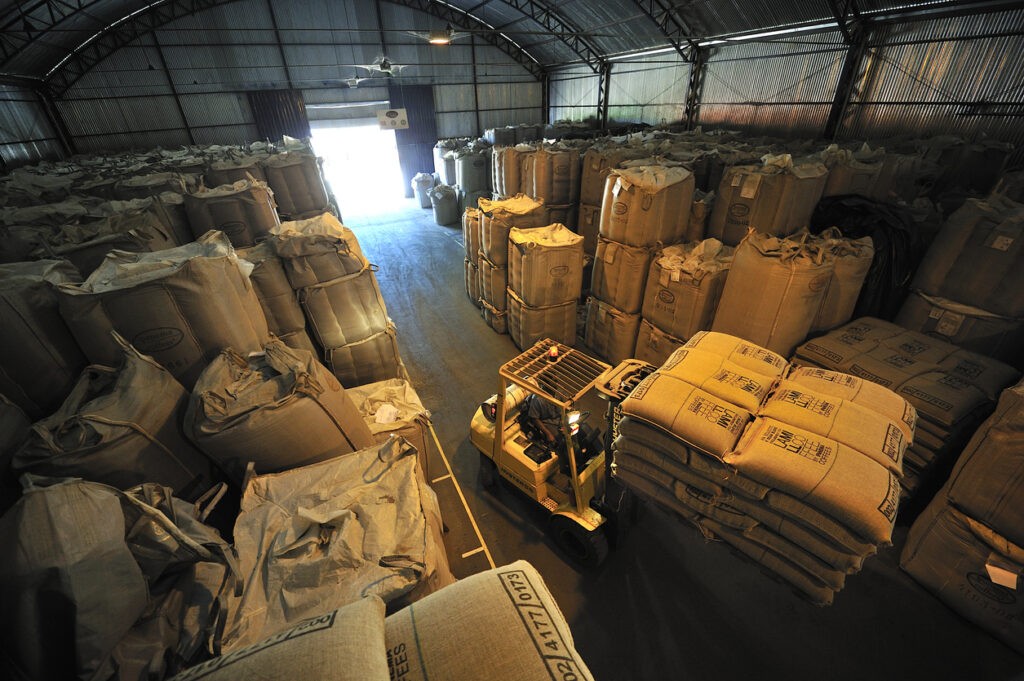
According to analysts, the traditional export cargo of flour from Kazakhstan to Afghanistan decreased by 1.2 million tons (6.3%). Wheat exports fell by a measure of 448,000 tons, flax seeds by 42,000 tons, and peas, chickpeas and lentils by 49,100 tons (1.7%). The supply of oil products also decreased by 26.8%, which amounted to 71,700 tons. Exports of flat-rolled steel products declined by 50% to 62,500 tons.

But there are also positive indicators. For example, the export of sunflower and safflower oil has grown. Last year it amounted to 20,300 tons, which is 16% higher than in 2022. Additionally, there was an increase in the export supply of cigarettes, up to 269 million pieces, which is 2.2 times higher than in 2022. Fertilizer exports grew 1.5 times to 30,900 tons.

Imports of goods from Afghanistan to Kazakhstan also improved. Compared to 2022, Kazakhstan imported three times more Afghan goods in 2023. They totaled 55,000 tons of cargo worth $21.1 million. These goods mainly included sweetened drinks, onions, licorice root, grapes, as well as value-added products such as clothing, washcloths, brooms, brushes and matches. Additionally, Kazakhstan imported much more jade — 74.3 tons, up 39.1 times year-on-year, and talc — 261.3 tons, up 1.9 times.

Kazakhs Owe Almost Quarter Million Dollars in Alimony and Child Support

Authorities in Kazakhstan registered 172 criminal offenses for non-payment of alimony in favour of children, incapacitated parents and former spouses in the first two months of 2024. The figure represents a fall of 1.1 percent compared to 2023.

The most frequent evaders were residents of the regions of Almaty (38 cases), Kostanay (19 cases), East Kazakhstan (17 cases), Karaganda (13 cases) and Pavlodar (11 cases). The least culpable locales in non-payment of family support were Turkestan, Aktobe, and Almaty city, with one case in each.

In 2023, 166 people nationwide, did not receive support payments. This year, the recorded number of adult victims is 158; a decrease of 4.8 percent. Among them are 151 women, nine minor children and two students. The largest sector of adults not receiving alimony comprises 82 Kazakh women aged 30 to 39; 38 women aged 18-30; 24 women aged 40-49; one citizen aged 50-59, and four senior citizens aged over 60.

It’s worth noting that the number of offenders for non-payment of family support in Kazakhstan increased by 29.6 percent to 70 people over the past year. According to official data, most are unemployed. Similar to the age demographics of those denied court-ordered payments, the culprits were often young or middle-aged adults. In the 30-39 age bracket, 39 Kazakhs were in arrears on alimony; in that of 40-49, 17, and in the 21-29 bracket, 11. In addition, two violators were under 20 and one was aged 50-59.

The total outstanding amount owed by persistent child support defaulters to children, as well as disabled parents and spouses, currently stands at $222,500; 43.6 percent more than in 2023. As a result of pre-trial proceedings, authorities managed to recover $40,600 owed to individuals. Last year, more than 6,000 Kazakhstanis were subject to administrative proceedings for evasion of alimony and 300 more were sent to court on criminal charges.

The most common reasons for non-payment are a lack of stable income or property that can be seized. According to the latest data, almost 15,000 citizens of Kazakhstan are forbidden to leave the country because of liens against them for non-payment of alimony and other incurred debts.

Kazakhstan’s Public Debt Falls Below $60 Billion

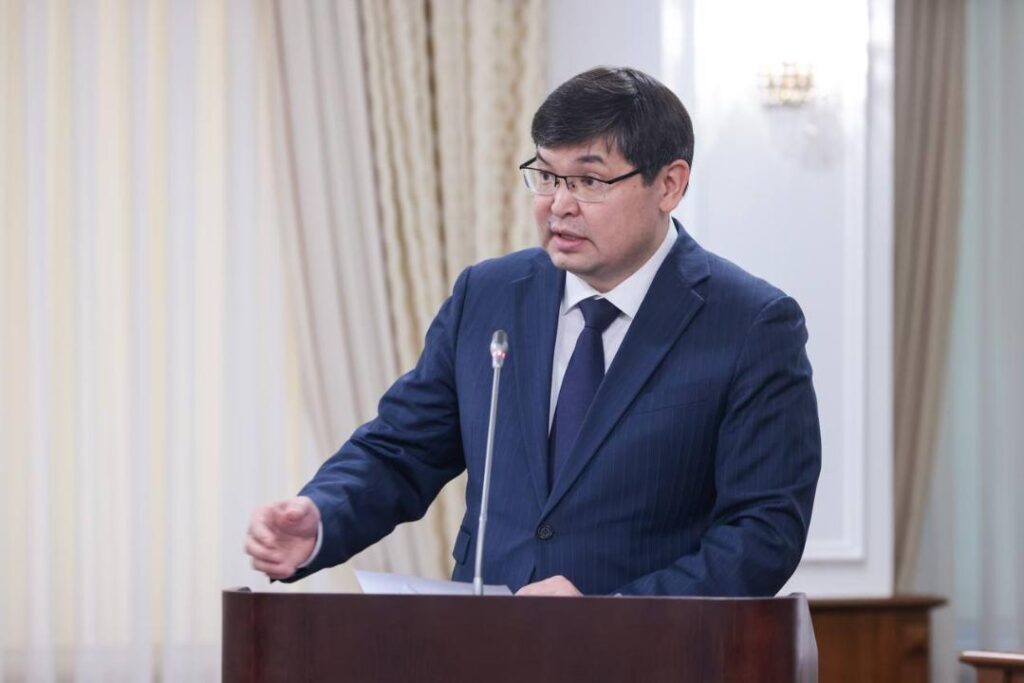
At a government press conference on Kazakhstan’s fiscal policy, finance minister Madi Takiev said that as of January 1 this year the country’s outstanding public debt was $59.9 billion, According to Takiev this figure is considered safe under a government rule. “In terms of GDP [gross domestic product], it is 22.8%. We have a limit — 33%. It is considered safe,” commented Takiev.

In October of last year, Kazakhstan’s state debt stood at $64.7 billion. At the end of 2023, the Mazhilis (lower house of parliament) reported that the size of Kazakhstan’s public debt comprised 40% of the entire federal budget. According to Mazhilis representatives, that creates certain risks for the country. At a joint session of the two chambers of parliament, former prime minister Alikhan Smailov promised that over the next five years, Kazakhstan’s total public debt will remain at a safe level — and will not exceed 25% of annual GDP.

Last year, the countries with the largest amounts of government debt were Japan ($9.57 trillion), Italy ($3.1 trillion), and the U.S. ($1.6 trillion). This month, developed countries of the Organization for Economic Cooperation and Development (OECD) increased their total government debt via sovereign bonds to $54 trillion. Over the past 15 years, this amount has grown by $30 trillion, according to the OECD report.