• KGS/USD = 0.01143 -0%
  • KZT/USD = 0.00192 -0%
  • TJS/USD = 0.10820 0.19%
  • UZS/USD = 0.00008 0%
  • TMT/USD = 0.28575 0%
  • KGS/USD = 0.01143 -0%
  • KZT/USD = 0.00192 -0%
  • TJS/USD = 0.10820 0.19%
  • UZS/USD = 0.00008 0%
  • TMT/USD = 0.28575 0%
  • KGS/USD = 0.01143 -0%
  • KZT/USD = 0.00192 -0%
  • TJS/USD = 0.10820 0.19%
  • UZS/USD = 0.00008 0%
  • TMT/USD = 0.28575 0%
  • KGS/USD = 0.01143 -0%
  • KZT/USD = 0.00192 -0%
  • TJS/USD = 0.10820 0.19%
  • UZS/USD = 0.00008 0%
  • TMT/USD = 0.28575 0%
  • KGS/USD = 0.01143 -0%
  • KZT/USD = 0.00192 -0%
  • TJS/USD = 0.10820 0.19%
  • UZS/USD = 0.00008 0%
  • TMT/USD = 0.28575 0%
  • KGS/USD = 0.01143 -0%
  • KZT/USD = 0.00192 -0%
  • TJS/USD = 0.10820 0.19%
  • UZS/USD = 0.00008 0%
  • TMT/USD = 0.28575 0%
  • KGS/USD = 0.01143 -0%
  • KZT/USD = 0.00192 -0%
  • TJS/USD = 0.10820 0.19%
  • UZS/USD = 0.00008 0%
  • TMT/USD = 0.28575 0%
  • KGS/USD = 0.01143 -0%
  • KZT/USD = 0.00192 -0%
  • TJS/USD = 0.10820 0.19%
  • UZS/USD = 0.00008 0%
  • TMT/USD = 0.28575 0%
13 December 2025

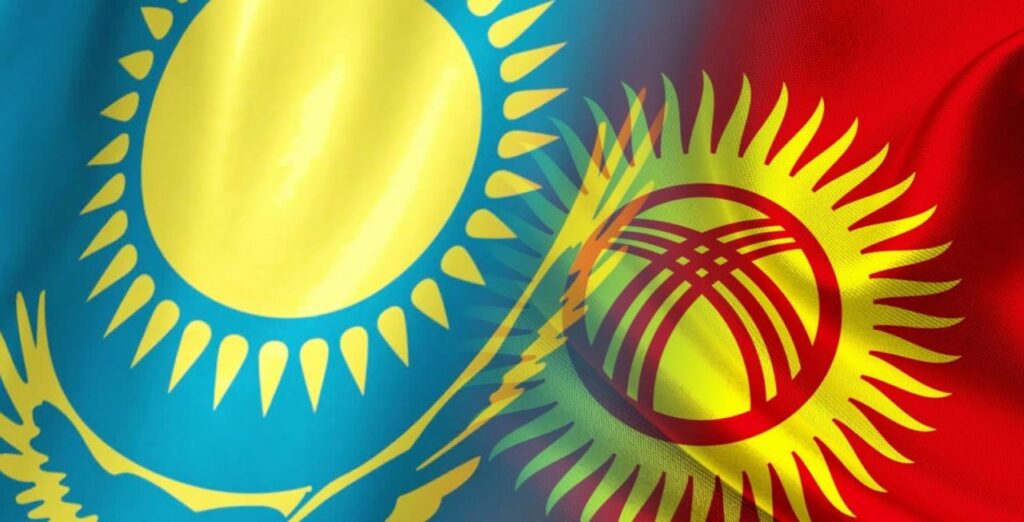
Kazakhstan Refuses to Ban Kyrgyz-Licensed Products Despite Threat

The Ministry of Trade and Integration of Kazakhstan had drawn up a document which would have introduced a ban on the import of products licensed in Kyrgyzstan from July 2024. The ministry explained that Bishkek issues licenses for goods without proper testing, instead using “gray schemes” from the shadow or informal economy.

Kazakhstani authorities estimated that by the end of 2023 the country had 413 laboratories that could issue quality certificates for products, while Kyrgyzstan had only 43. At the same time, Kyrgyz certification laboratories have issued an exponentially higher number of permits than laboratories in Kazakhstan over the past few years. Moreover, Kyrgyzstan issued half of all permits to Kazakhstani business owners. According to Kazakhstani authorities, they have repeatedly received complaints about the unfair work of Kyrgyz licensing and product-conformity verification bodies.

After talks with the Kyrgyz Ministry of Economy and Commerce, Kazakh deputy prime minister Serik Zhumangarin said the decision to completely ban Kyrgyz certification laboratories is premature. “First of all, the problem is not only in Kyrgyzstan, there is a problem in every Eurasian Economic Union country. It’s just that in some countries, of course, it’s all off the scale. The point here is that I consider the Trade Ministry’s decision to be premature. The draft decree is not a government decision. It was not properly approved, so we stopped it,” Zhumangarin told Kazakhstani media. According to the him, this is an issue that needs to be negotiated, and the process is already underway.

In turn, the Kyrgyz Ministry of Economy said it had consulted with its Kazakh counterparts to strengthen control over laboratories in the area of product-conformity assessment. As a result, it was decided to develop a joint plan to combat gray — meaning falsely obtained — certificates without imposing restrictions and bans on the circulation of products.

As a result of negotiations, the parties agreed to unite information systems in this area, as well as to exclude from a single register of unscrupulous laboratories those who previously issued certificates for products without quality-verification assessments. From now on, Bishkek and Astana will also exchange information on identified violations and fully digitize the process of issuing permits — from application to issuance of certificates for products. The Kazakhstani side is satisfied with this.

Earlier this month, the Times of Central Asia reported that hundreds of trucks have become backed up on the Kyrgyz-Kazakh border and are unable to cross into Kazakhstan. Last week, hundreds of trucks were queued up on the Kyrgyz side, waiting in line. This situation has happened many times in the past, and merchants and transporters have suffered financial losses. Each time it occurs, one side blames the other. The Kyrgyz side believes that Kazakhs create artificial administrative obstacles at the border to weaken competition from Kyrgyz imported goods — and Kazakh authorities accuse Kyrgyz truckers of unwillingness to comply with Astana’s requirements, using fraudulent documents for transported cargo.

Coincidence or not, after the parties agreed that they would not ban Kyrgyz laboratory certificates in Kazakhstan, the queue of trucks at the border began to shrink. About 240 trucks are now waiting in line to enter Kazakhstan, according to Kyrgyz border guards. A week ago, there were about 500 trucks in line, and the number of vehicles continued to increase. The situation appears to be improving, and 653 trucks have crossed the border over the past day.

German Company to Make Cosmetics From Kazakh Mare’s Milk

The German skincare company Zollmann Stutenmilch GmbH is looking to expand its range of products — including some containing horse’s milk from Kazakhstan’s S-Agro-Borovskoe. In September 2023 the Kazakhs opened a farm for producing powdered mare’s milk under the ‘Local Food’ brand in the Kostanay region, employing 150 people.

“The German company has been breeding horses since the 1970s, and in 1990 started producing freeze-dried mare’s milk. Its farm in the town of Mühlben is the largest and oldest enterprise in Germany specializing in the production of kymyz [mare’s milk]. We signed an agreement for further cooperation in Germany,” said the director of S-Agro-Borovskoe, Meiram Akhmetzhanov.

Local Food’s kymyz is produced on a farm equipped with an automated milking system that collects fresh milk in cooling tanks without contacting air, which prevents pathogenic bacteria from entering the product. The milk is then pasteurized, cooled and frozen in a freeze dryer to produce a 100% organic, dry product with a shelf life of up to two years — a major improvement, considering that fresh mare’s milk can only be stored for two hours.

Hans Zollmann, founder of Zollmann Stutenmilch GmbH, emphasized that the Kazakh company has become an exclusive partner and explained that the new agreement will include the production of organic cosmetics based on mare’s milk. “The signed agreement is a new stage of our cooperation with Kazakhstan, especially with Kostanay. We plan to produce [all the same products that] we produce in Germany here in Kazakhstan. I have devoted my whole life to the production of mare’s milk and I believe that Kazakhstan has great opportunities in this area, as this drink is their national treasure,” Zollmann added.

The launch of Local Food cosmetics is scheduled for the third quarter of 2024, and will create an additional 30 jobs. In the future, S-Agro-Borovskoe is also considering the production of sports nutrition products, baby food and pharmaceutical supplements.

Kazakhstan Admits There Are Three Russian Military Test Sites On Its Territory

Kazakhstan’s Ministry of Defense has revealed that Russia is currently leasing three test sites in Kazakhstan. This disclosure comes after a complaint was lodged by residents of the West Kazakhstan region (WKO), who notified local authorities that a Russian landfill named Kapustin Yar, containing unprocessed waste, is operating in the region and making people ill.

The ministry confirmed that there is indeed a training ground in the WKO — the Number 4 State Central Intermilitary Training Ground — with the ground’s facilities and battlefields located partly on Russian territory. Russia conducts an average of 4-5 test launches each year. The location is not used by Kazakhstan’s armed forces.

In total there are three Russian military test sites in Kazakhstan: the 929 State Flight Test Center is located in the West Kazakhstan and Atyrau regions, and the Sary-Shagan test site occupies parts of the Karaganda, Ulytau, Zhambyl, Kyzylorda and Aktobe regions.

“The coordinates of the [military] polygons’ borders are regulated by agreements between Kazakhstan and Russia, which are available in the open information system of normative and legal acts,” the Kazakh defense ministry said.

The lease agreement between Kazakhstan and Russia states that Russia may conduct tests within the boundaries allocated to the test site, to ensure the safety of operations and missile launches, search, evacuation and disposal of the remains of space objects and targets, timely cleaning of battlefields and eliminating the aftereffects of accidents, as well as to compensate for any damage caused to Kazakh land. It’s also stipulated that representatives of Kazakhstan’s state sanitary and environmental supervision may have unimpeded access to the test sites. In addition, the Russian side must improve the environment on the territory of the test site by developing and implementing long-term and annual programs to protect the environment, as well as reclaim the land where targets sat and missiles struck. The Kazakh ministry notes that Russia is unconditionally fulfilling its obligations, and there is no confirmation of cancer cases amid the test launches.

“So far, there has been no information confirming the infliction of moral and physical damage on local residents as a result of the test sites’ activities. The Russian side is obliged to comply with environmental regulations, operating rules and norms of water and land use of Kazakhstan. Environmental damage caused by the activities of the test site shall be eliminated by the Russian Federation. In this case, the amount of damage and forms of its compensation are determined by a specially created interstate commission,” summarized the ministry.

According to the agreement, the lease term for all three Russian ranges runs until July 27, 2030, and the cost is $2.33 for each hectare of land. The total amount of the lease of the battlefields is $20 million, and the settlement of payments is conducted between the two countries’ national banks.

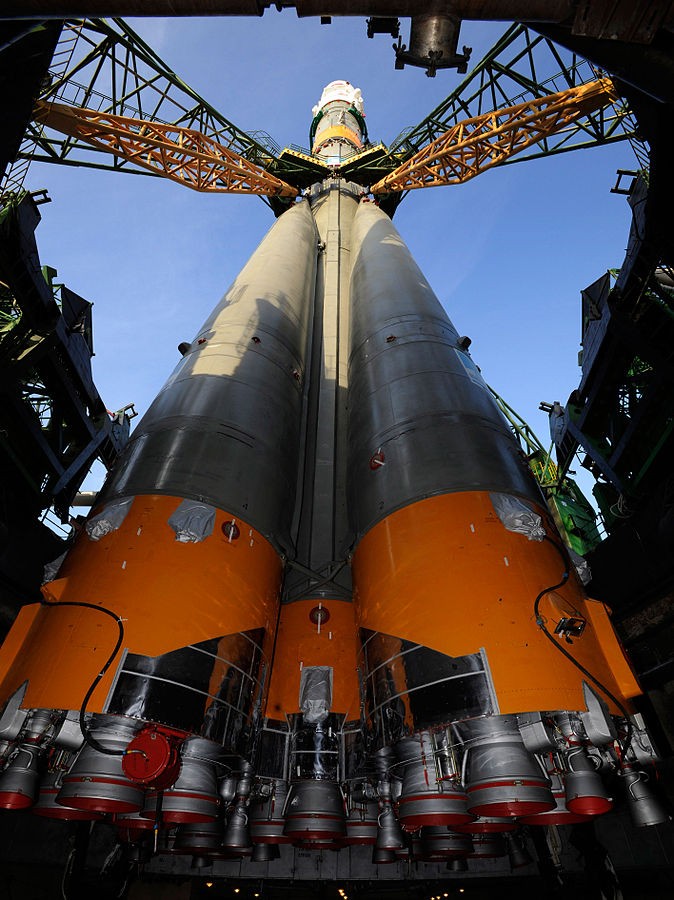
Baikonur Launch to ISS Scheduled for Saturday 23rd March

ALMATY, Kazakhstan – A spacecraft carrying three crewmembers from Russia, Belarus and the United States is scheduled to launch Saturday to the International Space Station. The mission was aborted Thursday with seconds to lift-off from the Baikonur Cosmodrome in Kazakhstan.

The scrapped launch was caused by a “voltage drop in the chemical current source,” said Yuri Borisov, head of Roscosmos, the Russian space agency. Tass, the Russian state news agency, quoted Borisov as saying the crew is safe and well.

The Soyuz spacecraft was expected to take about three hours after a launch on Thursday to reach the station, where seven people already aboard are awaiting the new arrivals. If a Saturday afternoon launch goes ahead, the travel time will be longer and docking is expected to occur on Monday.

Those heading to the space station are mission commander Oleg Novitsky of Roscosmos (his fourth trip to space), Belarusian Marina Vasilevskaya (her first trip) and NASA’s Tracy Caldwell Dyson (her third).

Novitsky, a lieutenant colonel in the Russian Air Force, and Vasilevskaya, a former flight attendant, will return to Earth after 12 days on the station, accompanied by NASA’s Loral O’Hara, who has spent six months in space. Dyson, a chemist with experience as an electrician and private pilot, is scheduled to return to Earth in September.

Coordination between the U.S. and Russian space agencies has continued despite international tension over the war in Ukraine.

“Russia and the United States are still cooperating in space. At least for now,” tweeted Eric Berger, senior space editor at Ars Technica, a technology publication.

Russia operates the Baikonur Cosmodrome in southern Kazakhstan. The Soviet Union opened the facility in the 1950s.

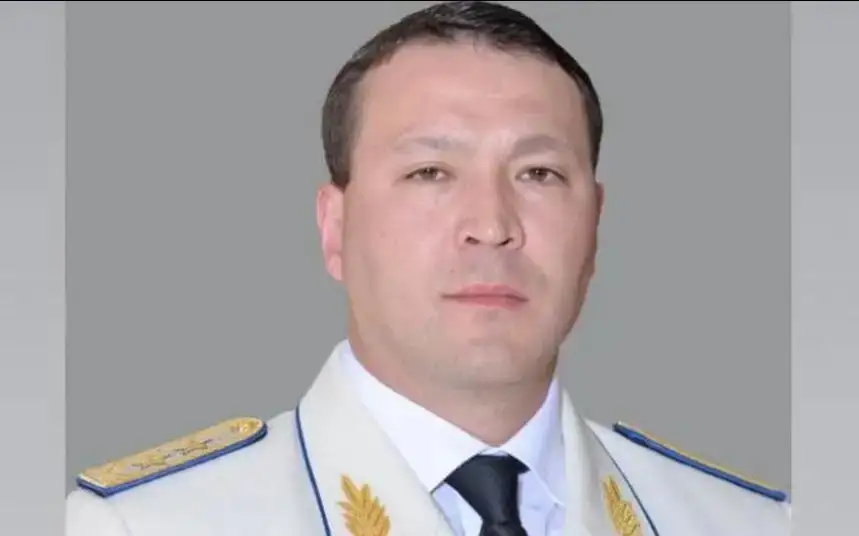
Nazarbayev’s Nephew Samat Abish Handed Eight-Year Suspended Sentence

An Astana court has found Samat Abish, a nephew of Kazakhstan’s former president Nursultan Nazarbayev, guilty of “exceeding power or official authority” and given him an eight-year suspended sentence. Abish, the former deputy chairman of the National Security Committee (KNB), had his criminal case classified as “secret,” and all court sessions were held behind closed doors.

“By the court’s verdict, [Abish] was found guilty of committing a crime under Part 4 of Article 362 of the Criminal Code of the Republic of Kazakhstan, and sentenced to eight years of imprisonment with deprivation of the right to hold certain positions for 10 years. On the basis of article 63 of the Criminal Code of the Republic of Kazakhstan, it [was] decided to consider the appointed punishment as conditional”, reads a message from the inter-district criminal court of Astana.

Mitigating circumstances for Abish included his young children, and the fact that he admitted his guilt and showed remorse.

The court made an additional ruling to strip Abish of all of his state awards.

Abish is the son of Satybaldy Nazarbayev, the younger brother of Kazakhstan’s first president. Abish’s father died in 1981 in a car accident. Nursultan Nazarbayev’s nephew was appointed deputy chairman of the National Security Committee in 2013, and in 2015 became first deputy. Abish lost this position on January 17, 2022 after the unrest in the country and the subsequent detention of KNB head Karim Masimov.  At the time, the country’s prosecutor general said that Abish was being held as a witness in the investigation into the unrest.

In September last year it emerged that a criminal case had been opened against Abish. He came under investigation after the former head of a KNB department said that he had been following orders from his first deputy during the unrest that January. Abish was charged with abuse of power and abuse of authority.

Another nephew of Nursultan Nazarbayev, Samat Abish’s older brother Kairat Satybaldy, is accused of money laundering. He has been in prison since 2022 on charges of grand embezzlement. The trial is scheduled for April 1.

Huge Increase in Gas Supplies to Uzbekistan Sparks Debate Over Russian Influence

In a significant development for energy dynamics in Central Asia, the volume of Russian natural gas transiting through Kazakhstan to Uzbekistan is poised for a substantial increase. By 2026, the annual transfer is set to leap from the current 3 billion cubic meters (bcm) to 11 bcm, as announced by Kazakhstan’s Minister of Energy, Almasadam Satkaliyev earlier this month.

The genesis of this increase can be traced back to last year, when Uzbekistan began importing gas from Russia. This came after a pivotal agreement was signed between UzGasTrade and the Russian energy giant, Gazprom, delineating a daily gas supply of up to 9 million cubic meters, or equivalently, 2.8 bcm annually. This initial arrangement set the stage for further negotiations aimed at securing medium and long-term contracts to bolster Uzbekistan’s energy security and support its economic development.

To accommodate this increase, substantial upgrades to Uzbekistan’s main gas distribution system are underway. An investment of $500 million, sourced from foreign and multilateral loans, has been earmarked for this purpose. These enhancements are crucial to ensure the efficient and reliable delivery of the increased volumes to meet domestic demand.

Adding another layer to this energy partnership, Gazprom’s CEO, Alexey Miller disclosed that discussions are ongoing for agreements that would solidify gas supply and transit obligations between Russia, Kazakhstan, Kyrgyzstan, and Uzbekistan for a duration of 15 years. Expected to be finalized by mid-2024, these agreements would signal a long-term commitment between the participating nations.

This significant increase highlights the growing energy needs of Uzbekistan, but experts are divided as to whether it represents or will serve as a catalyst for a strategic and geopolitical alignment with Russia.

Posting on Twitter, Dr. Luca Anceschi, Professor of Eurasian Studies at the University of Glasgow, argued that such “regimes have become even more entrenched in their authoritarian ways, [and] getting closer to the Kremlin – and this Kremlin more in particular – is a convenient move to establish an international environment conducive to regime maintenance.” In response, Professor at the National Defense University, Erica Marat cautioned against conflating “sentiments in the society” with the actions of the Uzbek authorities.

Senior Lecturer at the OSCE Academy in Bishkek, Asel Doolotkeldieva, meanwhile, stated that “economic inter-dependence [will] be the last to wane in changing influences in the region… The argument about the increasing economic role of Russia does not take into account the diversification of Central Asia’s other ties: with China, the Gulf States, and Asia.” Still, others have argued that since the invasion of Ukraine, Moscow’s influence has diminished, noting that Uzbekistan has “strictly [followed] international sanctions,” adopting a neutral stance. In October 2023, an Uzbek court even arrested a citizen for joining Russian troops fighting in Ukraine.

Speaking to TCA about the increase in gas supplies and its possible implications, long-standing Central Asia journalist Bruce Pannier of the Davis Center at Harvard stated that “Uzbekistan has turned from a gas exporter to a gas importer in recent years, and its major foreign investors in developing the gas industry for almost 20 years now have been Russia’s Gazprom and LUKoil. In 2018, Uzbekistan produced some 58.5 bcm. In January of that year, Uzbek President Shavkat Mirziyoyev called for increasing domestic gas production to 63 bcm, but in 2023, gas production was 46.7 bcm. After four consecutive winters of gas and heating shortages, Uzbekistan now has no choice but to import gas from Russia, a country Uzbekistan was exporting gas to only a few years ago. Worse, the 11 bcm of Russian gas Uzbekistan hopes to receive annually is approximately 20% of Uzbekistan’s domestic needs. It gives Russia huge leverage over Uzbekistan.”